Best Lures and Bait for Alaska Sockeye Salmon
Trying to figure out the best lures and bait for Alaska sockeye salmon can feel like chasing a phantom. Many anglers arrive in Alaska, armed with their trusty salmon gear, only to find sockeye seemingly ignoring everything they throw at them. It's frustrating when you see thousands of fish in the river, but they won't bite! This guide is going to peel back the layers of mystery surrounding sockeye fishing, revealing exactly what works and why, so you can land these powerful, delicious fish.
The Sockeye Salmon Enigma: Why They're So Tricky to Catch
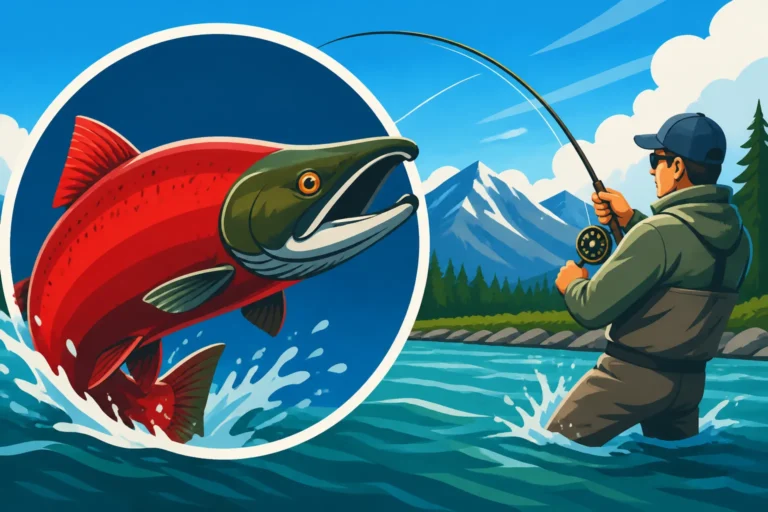
Sockeye salmon, often called "red salmon" for the vibrant crimson color they adopt during their freshwater spawning migration, are famous for their incredible fighting spirit and delectable table fare. However, they're also notorious for being incredibly challenging to catch once they leave saltwater and enter their natal rivers. Unlike other salmon species that might still actively feed as they journey upstream, sockeye undergo a significant physiological change that largely shuts down their feeding instincts.
Understanding Their Freshwater Diet (or Lack Thereof)
When sockeye salmon hit freshwater, their primary biological imperative shifts from feeding to spawning. Their stomachs actually begin to atrophy, making them virtually uninterested in consuming food. This is the biggest hurdle for anglers – you're trying to catch a fish that isn't really looking for a meal. This fundamental change means that traditional "bait" in the sense of something edible is often ineffective. They're not chasing down schools of baitfish or gorging on insects like trout might.
Instead, when we talk about "lures" and "bait" for sockeye, we're largely talking about presentations that elicit a different kind of response: a reaction strike, an aggressive territorial nip, or, most commonly, a method of intentionally (and legally) hooking them in the mouth as they swim upstream. It's less about tempting their appetite and more about understanding their migratory path and natural defensive behaviors. This unique challenge is why strategies that work for king salmon or even coho salmon often fall flat for sockeye.
Spawning Behaviors and Reaction Strikes
As sockeye move upstream, they become highly territorial and focused on their mission to reproduce. They're constantly jostling for position, fending off rivals, and preparing to dig their redds (nests) and deposit eggs. This heightened state of aggression and territoriality is what anglers can sometimes exploit. A brightly colored lure or bead that drifts into their personal space might trigger an involuntary snap or mouth closure. It's not a true "bite" out of hunger, but rather a defensive or annoyance reaction.
Understanding these behaviors is paramount. For instance, on rivers like the Kenai or Russian River, where sockeye runs are massive, the fish are often packed shoulder-to-shoulder. Presenting a lure precisely in their path, rather than trying to get them to chase it, becomes the key. The objective is to make your offering look like something they need to react to, not something they want to eat. This often means very subtle presentations and an acute awareness of where the fish are holding and how they're moving. Knowing the Alaska Sockeye Salmon Run Timing for your chosen river can give you a crucial edge, as fish behavior can vary slightly depending on how fresh they are from the ocean.
Essential Lures for Alaska Sockeye Fishing
Given their unique freshwater behavior, the "lures" that prove most effective for sockeye salmon are often those designed to provoke a reaction or to be presented in a specific, often controversial, method known as "flossing." It's less about flashy retrieves and more about precise placement and sensitivity.
The Dominance of the Sockeye Bead and Weighted Fly
Without a doubt, the most consistently effective method for catching sockeye salmon in Alaska's rivers is often centered around beads or weighted flies, utilized in a technique commonly referred to as "flossing" or "lining." This method is all about presentation and getting your offering in front of the fish's mouth as they swim upstream.
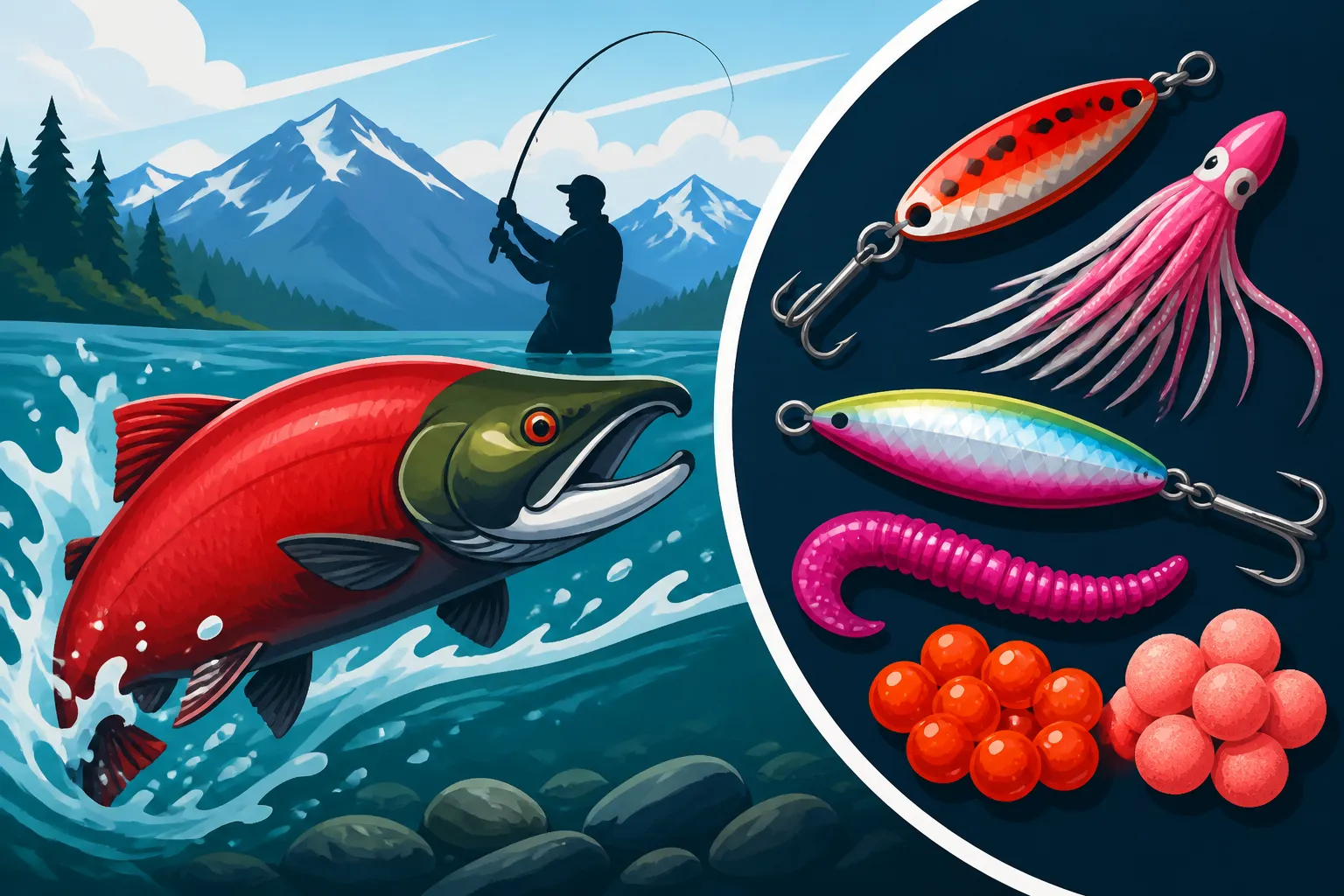
Sockeye Beads: These are small, spherical plastic or glass beads that closely imitate salmon eggs. They are typically rigged on your leader a short distance above a bare, single, barbless hook. The idea is that as your line drifts downriver, the bead floats naturally in the water column, and the small hook trails slightly behind it. When the bead (or sometimes the line itself) passes through a sockeye's mouth, a slight tug or "tick" is felt, prompting the angler to set the hook. This is often how a fish ends up legally hooked in the mouth. Alaska Department of Fish and Game regulations are very specific about the distance the bead must be from the hook – typically 2 inches. Always check the current Alaska Fishing Regulations Explained for the specific area you're fishing, as rules can change, especially regarding gear.
You'll find these beads in various sizes (often 6mm to 10mm) and colors. Popular colors include opaque orange, chartreuse, red, and even natural egg clear/amber. Many anglers swear by a specific shade of "roe" orange. You can find a huge selection of these on Amazon, making it easy to stock up before your trip. For more specific guidance, check out articles like How to Fish Beads for Alaska Trout, as many principles apply to sockeye too.
Weighted Flies: Similar in concept to beads, weighted flies are often small, sparsely dressed fly patterns, sometimes called "sockeye flies" or "Russian River flies." They are typically weighted with lead wraps or a tungsten bead head and often feature bright colors like chartreuse, fuchsia, or red. They are also fished with a bare, single, barbless hook. The weight helps them sink quickly and stay in the strike zone, which is crucial in swift river currents. The presentation is much the same as with beads, aiming for the line or fly to drift into the fish's mouth.
When using either beads or weighted flies, the key is proper weight distribution on your main line or leader, usually achieved with pencil lead or slinky weights, to get your presentation down to the level of the fish without snagging the bottom too frequently. It's a delicate balance that takes practice to master.
Spinners and Spoons: When and Where They Might Work
While less universally effective than beads or flies for sockeye in most river conditions, spinners and spoons can sometimes provoke a reaction strike, especially on fresh fish or in certain parts of a river.
Spinners: Small, brightly colored spinners, often in sizes #3 to #5, can occasionally entice a sockeye. Colors like chartreuse, bright red, or even silver with an orange blade can be effective. The flash and vibration can trigger an aggressive response from a sockeye, particularly when they are just entering freshwater and still have some residual oceanic aggression. Consider brands like Blue Fox Vibrax or Mepps Aglia. However, this is generally a low-percentage game compared to bead fishing for sockeye specifically targeting spawning runs. Spinners are far more effective for other salmon species, like coho. If you want to learn more about spin fishing, refer to How to Spin Fish for Alaska Salmon.
Spoons: Similar to spinners, small to medium-sized spoons (e.g., 1/4 to 3/8 ounce) in bright colors (orange, red, chartreuse) might occasionally get a reaction. The fluttering action can sometimes trigger a chase or a territorial strike. Again, their effectiveness for sockeye is generally limited to specific conditions or locations, often near river mouths or during the very early stages of a run. For example, if you're fishing in the estuary where fish are staging before pushing hard upstream, a spoon might get a curious glance. They are rarely the go-to for sockeye in the upper river systems like the world-famous Russian River, where hundreds of thousands of sockeye migrate each year.
The primary reason spinners and spoons are less effective is that sockeye aren't actively hunting. The retrieve required for these lures to work properly often pulls them too quickly past the non-feeding sockeye, who are simply holding their position against the current.
Jigs and Soft Plastics for Opportunistic Sockeye
Jigs and soft plastics are another less common but occasionally effective category for sockeye, especially when conditions allow for a slower, more deliberate presentation.
Jigs: Small jigs, often 1/8 to 1/4 ounce, dressed with marabou or rabbit fur in bright colors (again, chartreuse, pink, red) can sometimes work. The key is to jig them in a way that allows them to drift naturally with the current, occasionally hopping along the bottom. The pulsating action of the fur can be enticing. This method requires a very sensitive rod and a keen eye to detect the subtle "tap" of a sockeye.
Soft Plastics: Tiny soft plastic baits, such as Gulp! "eggs" or small worm imitations, can be fished in a similar manner to beads or jigs. They offer scent (if using scented varieties) and a very natural drift. These are often rigged on a small, unweighted hook, allowing them to drift freely, again relying on the fish to react defensively or for the line to "floss" into their mouth. While some anglers experiment with these, they haven't achieved the same legendary status as beads and weighted flies for sockeye in Alaska.
The main takeaway here is that for the vast majority of sockeye fishing scenarios in Alaska, especially on heavily fished rivers like the Kenai or Russian, the bead and weighted fly approach dominates due to its ability to consistently present an offering in a way that triggers an involuntary "hook-up" in a non-feeding fish.
The Role of Scent and Presentation in Sockeye Success
When fish aren't actively feeding, the concept of "bait" takes on a different meaning. For sockeye, it's not about providing a meal, but rather about triggering a reaction. This is where attractants and the mastery of presentation techniques become paramount.
Attractants: More Than Just Bait
Since sockeye salmon in freshwater aren't feeding, dousing your lures with traditional "bait scents" designed to stimulate hunger is largely futile. Instead, any "attractant" used for sockeye is typically aimed at triggering an instinctual, defensive, or even an irritant response.
Some anglers experiment with scents that mimic roe or other fish, believing it might provoke a territorial reaction. However, the science behind scent effectiveness on non-feeding sockeye is debatable, and many seasoned sockeye anglers will tell you that presentation is 99% of the battle. If you do use a scent, choose something subtle and fishy, available from brands like Pro-Cure or Pautzke. You can find these on Amazon or at local tackle shops across Alaska. The primary focus should remain on getting your offering into the fish's zone.
It's also worth noting that in some areas, the use of any bait (meaning something edible, even if just for scent) is prohibited in specific sockeye fisheries. Always double-check the current regulations for your specific fishing location and species. A bare bead or fly, without any added scent, often adheres to strict "no bait" rules and still performs exceptionally well.
Mastering the Art of "Flossing" Legal Definitions and Techniques
"Flossing" is the cornerstone technique for consistently catching sockeye in Alaska's rivers, but it's often misunderstood and incorrectly associated with illegal snagging. The key distinction lies in the intent and the method of hook-up. Legal flossing aims to hook the fish cleanly in the mouth, even if they aren't actively "biting."
The Principle of Flossing: Imagine a line of sockeye salmon swimming upstream, packed together like sardines. You cast your weighted leader (with a bead or weighted fly above a bare hook) upstream of the fish. As your gear drifts downstream, the current carries your main line over the backs of the fish, while your leader and bead/hook combination drift through the fish's open mouths or near their heads. When the line (or the bead) passes through the mouth, a subtle "tick" is felt, indicating contact. A quick, upward sweep of the rod tip sets the hook, ideally in the upper or lower jaw.
The Setup:
- Weight: This is critical. You need enough weight (pencil lead, slinky weight, or lead split shot) to get your gear down to the fish quickly and keep it in the "strike zone" near the bottom. The amount of weight will vary significantly with current speed and depth. A common setup involves sliding pencil lead attached to a swivel, with a monofilament leader extending to the bead and hook.
- Leader: Use a strong fluorocarbon or monofilament leader, often 20-30 lb test, as you'll be dealing with powerful fish and abrasive river bottoms. The length of the leader between your weight and your bead/hook setup is important for a natural drift.
- Bead/Fly: As discussed, a sockeye bead (often 8mm-10mm) or a small, weighted sockeye fly in a bright color (chartreuse, orange, pink) is used.
- Hook: A single, barbless hook is almost universally required for sockeye fishing in Alaska to minimize harm to released fish. Sizes typically range from #1 to 2/0. Remember, Alaska Barbless Hook Requirements are strictly enforced.
Technique:
- Cast Upstream: Cast well upstream of where you believe the sockeye are holding.
- Mend Your Line: Immediately after casting, "mend" your line (throwing a loop of line upstream) to allow your weight to sink quickly and prevent the current from dragging your line downstream too fast.
- Feel for the "Tick": Keep your rod tip slightly elevated and maintain a tight line to feel for the subtle "tick" as your gear passes through or bumps a fish. This is crucial for distinguishing between a fish and a rock.
- Set the Hook: When you feel a tick that might be a fish, set the hook with a strong, upward sweep. Don't be afraid to set it aggressively, as you need to drive that barbless hook home.
Flossing requires immense patience, practice, and a good understanding of river currents and fish holding patterns. It's often debated, but when done correctly and legally, it's the most productive method for catching non-feeding sockeye. Many anglers find the intense effort and reward incredibly satisfying. This method is extensively covered in guides like How to Catch Sockeye Salmon in Alaska.
Optimizing Your Gear for Sockeye Salmon
Success with sockeye fishing goes beyond just the lure; your entire setup, from rod to line to terminal tackle, plays a critical role. Given the specific techniques involved, having the right gear can make or break your trip.
Rod, Reel, and Line Recommendations
Choosing the right rod and reel combination is paramount for effective sockeye fishing, especially when employing the flossing technique.
Rods: You'll want a rod with a good balance of backbone for fighting strong fish and a sensitive tip for detecting subtle bites or "ticks."
- Length: A longer rod, typically 9 to 10.5 feet, is highly recommended. The extra length provides better line control, especially for mending your line effectively in powerful currents, which is crucial for flossing. It also helps with casting weighted rigs and providing leverage during a fight.
- Action/Power: A medium-heavy to heavy power rod with a fast action tip is ideal. The fast action allows you to feel those delicate bumps, while the medium-heavy backbone gives you the authority to set the hook hard and control a powerful sockeye in strong currents. Think of rods designed for steelhead or salmon. Popular choices include specific Okuma or Lamiglas models that excel in river salmon fishing.
- Material: Graphite rods offer the best sensitivity and are generally lighter, which is a blessing when you're casting and retrieving all day.
Reels: A durable spinning reel is the preferred choice for most sockeye anglers due to its ease of use for casting and line management.
- Size: A 3000 to 4000 series spinning reel is a good match for the recommended rod power. It provides sufficient line capacity and a smooth drag system.
- Drag System: A smooth, reliable drag is non-negotiable. Sockeye are powerful runners, and a sticky drag will lead to snapped lines and lost fish. Ensure your reel's drag can be finely adjusted.
- Durability: Choose a reel known for its robust construction, as it will be put through its paces against aggressive fish and potentially harsh Alaskan weather. Brands like Shimano, Daiwa, or Penn are always solid choices.
Line: The type of line you choose will significantly impact your sensitivity and fighting power.
- Main Line: Braided line, in the 20-30 lb test range, is highly recommended for your main line. Its zero-stretch properties offer superior sensitivity, allowing you to feel every slight bump from a fish or the river bottom. The thinner diameter of braid also cuts through the water better, reducing drag. PowerPro and Sufix are common, reliable brands available on Amazon.
- Leader Material: A fluorocarbon or heavy monofilament leader (20-30 lb test) should be used between your braided main line and your terminal tackle. Fluorocarbon is less visible in the water and more abrasion-resistant, which is a big plus when fishing rocky river bottoms or through dense schools of fish. Your leader length might vary depending on regulations and personal preference, but typically ranges from 18 inches to 3 feet. Getting familiar with your knots, especially a good braid-to-mono/fluoro connection like the FG knot, is essential. For a more general overview, check out an Alaska Fishing Gear and Tackle Guide.
Terminal Tackle and Rigging for Peak Performance
Your terminal tackle configuration is where the rubber meets the road (or the hook meets the fish, as it were). Precision in rigging is key to successful sockeye fishing.
Weights:
- Pencil Lead: This is the most popular choice for flossing. It's a thin, cylindrical lead weight that slides freely on your line or a leader. It's less prone to snagging than traditional bell sinkers and allows for a more natural drift. You'll need an assortment of weights, from 1/4 oz up to 1 oz or even more, depending on current conditions.
- Slinky Weights: These are small cloth tubes filled with lead shot, also designed to slide freely. They are even more snag-resistant than pencil lead in really rocky areas.
- Split Shot: While less common for the main weight, large lead split shot can be used for fine-tuning weight or for lighter presentations.
Swivels: High-quality barrel swivels or three-way swivels are essential for preventing line twist and for creating your leader sections. Use strong, appropriately sized swivels (e.g., #7 to #10).
Hooks: As mentioned, single, barbless hooks are the standard. The size should match your bead or fly – typically #1 to 2/0 for sockeye. You want a sharp, strong hook that can penetrate quickly and hold. Gamakatsu and Owner make excellent hooks.
Beads and Flies: Keep a variety of sizes and colors on hand. The exact size and color that fish prefer can change day by day, or even hour by hour, based on water conditions, light, and the mood of the fish. Having options (e.g., various shades of orange, chartreuse, pink) is a smart move.
Rigging Your Lures for Success
The specific rigging method for sockeye, especially with beads or flies, is highly specialized and crucial for legal and effective fishing.
The Sliding Weight/Leader Rig (Flossing Rig): This is the go-to setup:
- Main Line to Swivel: Tie your braided main line to one end of a strong barrel swivel.
- Pencil Lead to Swivel: Take a short section of heavier mono (e.g., 30-40 lb test) and tie a loop in one end. Thread your pencil lead onto this mono loop. Then, tie the other end of this mono section to the other end of your barrel swivel. This creates a sacrificial leader for your weight, so if the weight snags, you only lose the weight, not your entire rig.
- Leader to Swivel: To the third eye of a three-way swivel (or to the main line end of your barrel swivel if you're using a single barrel and running the weight on a dropper), tie a length of fluorocarbon or monofilament leader (e.g., 20-25 lb test, 18-36 inches long).
- Bead and Hook: Thread your sockeye bead onto this leader. Then, tie your single, barbless hook to the end of the leader. Crucially, slide the bead up the leader so it sits exactly 2 inches above the eye of the hook. This 2-inch rule is critical for legality in many Alaskan sockeye fisheries. Use a small bobber stop or a piece of tooth floss to keep the bead in place if it slides too freely.
Practice is key. Being able to quickly re-tie this rig, especially in cold, wet conditions, will save you valuable fishing time. The faster you can get your line back in the water, the more opportunities you'll have. Always review the Alaska Fishing Regulations by Region before you head out, as rigging rules can vary.
Here's a quick comparison of popular sockeye lure types:
| Lure Type | Primary Method | Effectiveness (Freshwater Sockeye) | Pros | Cons |
|---|---|---|---|---|
| Sockeye Bead | Flossing/Lining | Very High | Mimics eggs, highly effective | Requires specific rigging, can be snaggy |
| Weighted Fly | Flossing/Lining | High | Natural drift, often brightly colored | Requires specific rigging, can be snaggy |
| Spinner | Retrieve | Low to Medium | Flashy, can trigger reaction strikes | Less effective for non-feeding fish |
| Spoon | Retrieve | Low to Medium | Wobbles, bright flash | Less effective for non-feeding fish |
| Small Jig | Drift/Hop | Medium | Slower presentation, pulsating action | Requires sensitive feel, slower technique |
| Soft Plastic | Drift/Lining | Medium | Natural look, some have scent | Less proven than beads/flies |
Remember, the vast majority of your success with sockeye in Alaska will come from mastering the art of the bead or weighted fly, combined with precise casting, proper line management, and quick hook sets. While it's not always the most glamorous fishing, the reward of landing these chrome beauties makes all the effort worthwhile. For specific daily limits, refer to the Alaska Sockeye Daily Limit by River to ensure you stay within legal bounds.
Good luck out there, and tight lines!
Disclaimer
Please remember that fishing regulations in Alaska can change frequently due to emergency orders and conservation efforts. Always consult the latest Alaska Department of Fish and Game regulations specific to your fishing location and target species before heading out on the water. This guide is for informational purposes only and does not supersede official regulations.