How to Bottom Fishing for Salmon in Alaska
Trying to bottom fish for salmon in Alaska can feel like you're trying to solve a puzzle with half the pieces missing, especially if you're used to other types of fishing. Many anglers arrive thinking they can just drop a line to the bottom and wait, only to find themselves frustrated by snagged gear and empty nets. This guide will walk you through the realistic expectations, necessary gear, and effective techniques for targeting salmon near the bottom in Alaska's diverse waters, helping you navigate the challenges and increase your chances of success.
Why "Bottom Fishing" for Salmon in Alaska Isn't Always What You Think
When most folks think of "bottom fishing," they picture dropping a heavy weight to the seafloor and waiting for a bite, much like you would for halibut or cod. While that method works wonders for some species, salmon fishing, particularly in Alaska's rivers, requires a far more nuanced approach. Salmon in their freshwater migration are generally not feeding in the traditional sense; instead, they're reacting to instincts, aggression, or a need to clear obstructions. This makes direct "bottom feeding" a rare occurrence, but presenting your offering near the bottom is absolutely critical.
The Unique Nature of Alaska Salmon Runs
Alaska's salmon runs are truly a natural wonder, but they also dictate how we fish for them. Salmon, whether King, Sockeye, Coho, Pink, or Chum, are driven by an unyielding biological imperative to return to their natal streams to spawn. This journey upriver means they are constantly swimming upstream, often hugging the bottom to conserve energy and avoid strong currents. They’re also less interested in actively feeding on traditional prey items like smaller fish or insects as they would in saltwater. Their mouths become less about eating and more about navigating, defending territory, or just reacting.
This behavioral shift means that a true "bottom fishing" setup, where bait is simply left on the riverbed, is rarely effective for salmon in fresh water. Instead, successful techniques involve presenting your lure or bait in the lowest part of the water column, where the fish are traveling, and making it look like an irresistible target or an irritant they want to strike. Think of it less as casting and waiting, and more as a dynamic presentation that puts your offering directly in their path, mimicking a natural drift or enticing a reactionary bite. Understanding Alaska Salmon Run Timing Explained is key to knowing when these fish are even in the rivers to begin with.
When Salmon Are (and Aren't) Near the Bottom
Salmon aren't always hugging the bottom, but they do it a lot, especially when battling strong currents or seeking refuge. In wide, deep rivers like the Kenai or Kasilof, King Salmon are notoriously bottom-oriented, using the deeper channels and troughs as their highways. They'll often lay in these deeper spots, conserving energy, making these prime locations for presenting lures or bait close to the riverbed.
However, in shallower sections, or when a run is particularly thick, salmon might spread throughout the water column. Sockeye, for instance, often travel in dense schools, sometimes near the surface, sometimes deeper. Pinks and Chums might be found in shallower gravel runs or even in estuaries, where the "bottom" is quite different from a deep river channel. Water temperature, current speed, and the presence of other fish or obstacles all play a role in where salmon position themselves. Knowing when to target them near the bottom versus higher in the water column is crucial for success and reduces frustration from snagging.
Essential Gear for Targeting Salmon Near the Bottom
When you're aiming for those bottom-hugging salmon, especially the powerful King Salmon, your gear needs to be up to the task. This isn't light tackle territory. You're often dealing with heavy currents, significant weights, and incredibly strong fish that can test your equipment to its limits. Investing in the right tools is paramount, not just for catching fish, but for minimizing lost tackle and ensuring a smooth experience. You can find many of these specialized items, from heavy sinkers to durable line, readily available on platforms like Amazon.
Rod, Reel, and Line for River and Saltwater Bottom Setups
For river bottom fishing for salmon, particularly Kings, you'll want a stout rod. Think 9-10 feet in length with a medium-heavy to heavy power and a fast action. This length helps with line control, mending, and setting the hook from a distance, while the power is essential for handling big fish and heavy weights. A good example might be a Lamiglas G1000 or a custom built rod designed for Alaskan salmon fishing. Pair this with a robust baitcasting reel, like a Shimano Tekota or an Abu Garcia Ambassadeur, capable of holding a lot of line and delivering substantial drag. You’ll be casting and retrieving heavy setups, so a reel with a smooth retrieve and powerful gearing is invaluable.
When it comes to line, braid is often the go-to choice for the main line. A 50-80 lb braided line offers incredible strength-to-diameter ratio, minimal stretch for better bite detection, and excellent abrasion resistance, which is vital when fishing around rocky bottoms or submerged timber. Tie a monofilament or fluorocarbon leader to your braid; a 30-50 lb test leader, typically 2-4 feet long, provides a bit of stretch and is less visible to the fish. The lighter leader can also act as a sacrificial link, breaking before your more expensive main line if you get snagged. Make sure to check Alaska Fishing Gear and Tackle Guide for more detailed gear recommendations.
Weights, Leaders, and Hook Configurations
This is where "bottom fishing" for salmon really differentiates itself. You're not just dropping a weight; you're often trying to drift a weight. For river systems, you'll primarily use pencil lead, slinkies (filled with lead shot or tungsten), or pyramid weights. The exact weight needed varies drastically with current speed and depth, but expect to use anywhere from 1 ounce up to 6 or even 8 ounces in fast currents. The goal is to use just enough weight to allow your offering to bounce or tick along the bottom without getting swept away too quickly or snagging constantly.
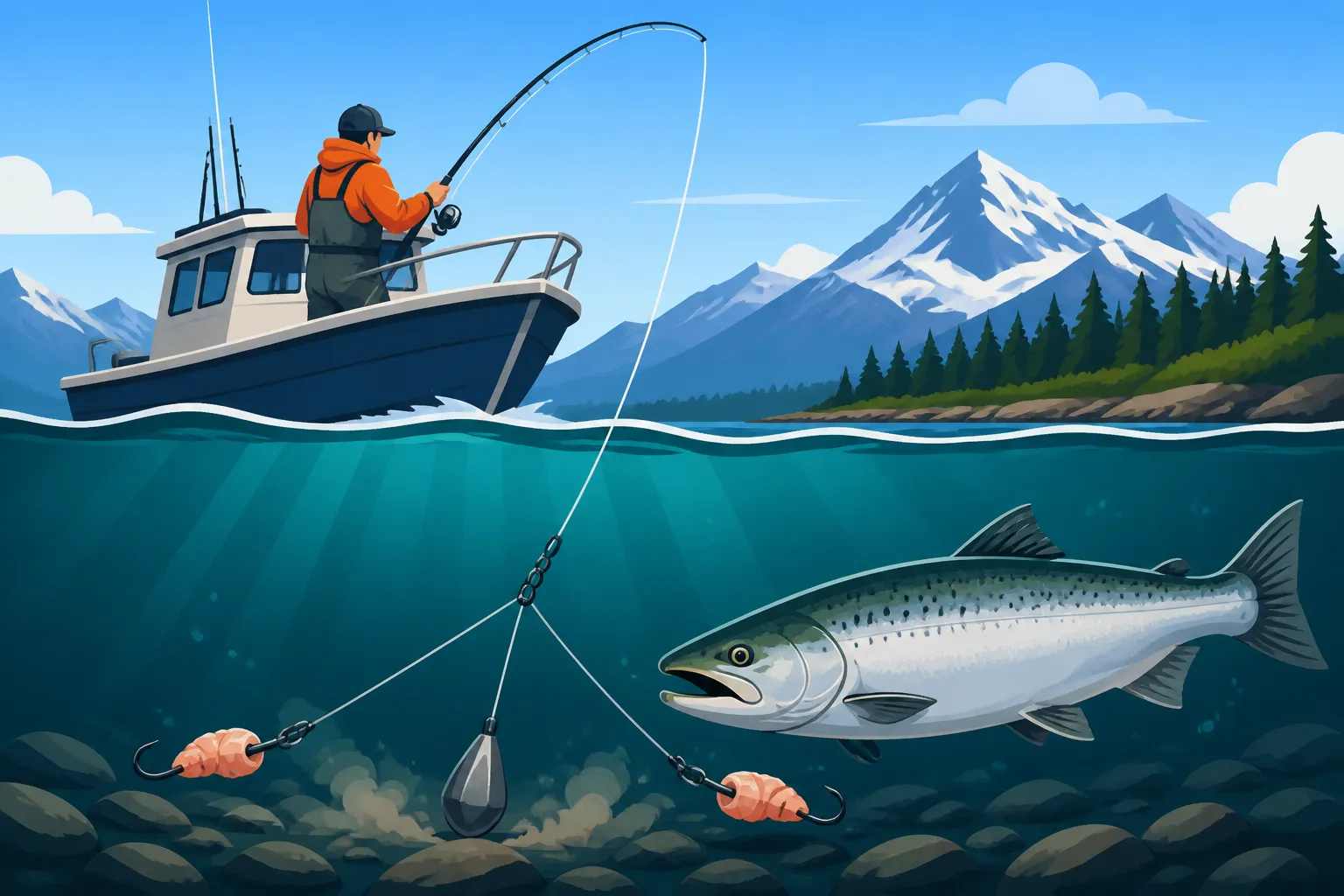
The leader setup is crucial. A common rig involves a three-way swivel or a sliding sinker setup. With a three-way, one eye connects to your main line, another to a short dropper line (6-12 inches) with your weight, and the third to your leader, which carries your bait or lure. This allows the weight to hit bottom while your bait drifts slightly above it. For sliding sinker rigs, the weight slides on your main line, terminating at a swivel, and then your leader (3-6 feet) extends from the swivel to the hook. This setup gives the fish less resistance when it bites. As for hooks, single, strong, sharp hooks are usually required, especially given Alaska Barbless Hook Requirements in many areas. Sizes typically range from 2/0 to 5/0, depending on the species and bait.
Baits and Scents for Bottom Presentation
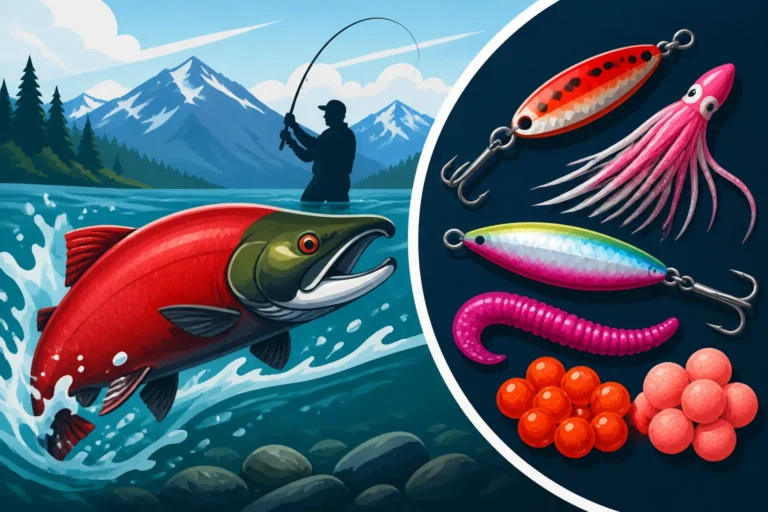
For bottom-oriented salmon fishing in Alaska, especially for King Salmon, bait often reigns supreme. Cured salmon roe (eggs) is a classic and highly effective choice. The scent trail it puts out in the current is undeniable, attracting fish from a distance. You can buy pre-cured eggs or learn How to Cure Salmon Eggs for Bait yourself. Other effective baits include chunks of herring, sardines, or even prawns, particularly in saltwater or brackish areas. These baits are often fished under a float or drifted on the bottom.
Scent is a huge factor. Even if you're using a lure, adding a good quality fishing scent can make a world of difference. Brands like Pautzke, Pro-Cure, or Mike's have a variety of popular options, from Anise to Garlic to Krill, which can be applied to your bait or even directly to soft plastic lures or Kwikfish plugs. Remember, Alaska Bait Restrictions Explained are in place for many rivers, so always check the current regulations for the specific river you are fishing before you use bait. For example, some rivers only allow artificial lures, especially during certain salmon runs, or may restrict the use of bait to specific times or areas. Always consult the Alaska Department of Fish and Game regulations for your specific area. For the best options to order online, you'll often find a comprehensive selection of these baits and scents on Amazon.
Effective Techniques for Bottom-Oriented Salmon Fishing
Successfully targeting salmon near the bottom isn't about blind luck; it's about understanding water dynamics, fish behavior, and precise lure presentation. These techniques often require active participation from the angler, not just casting and waiting. It's a dance between the current, your gear, and the fish, where subtle adjustments can mean the difference between a trophy catch and a frustrating snag.
Drifting the Bottom: The Art of the Controlled Bounce
Drift fishing, particularly when applied to the lower water column, is perhaps the most common and effective "bottom fishing" technique for salmon in Alaskan rivers. The idea is to use enough weight to allow your bait or lure to drift naturally along the riverbed, occasionally ticking or bouncing off the bottom. This simulates a natural food item or an injured baitfish tumbling downstream, directly in the path of migrating salmon.
To execute this, cast slightly upstream and across the current. As your weight sinks, maintain a semi-taut line, allowing the current to carry your rig downstream. You should feel the weight intermittently tap the bottom. If you're not feeling the bottom, you need more weight. If you're constantly snagging, you might have too much weight, or you're dragging rather than bouncing. The key is to find the sweet spot. When a salmon strikes, it often feels like a solid thud or a sudden stop, not necessarily a subtle "nibble." Set the hook firmly with a powerful sweep of your rod. This technique is especially potent for King Salmon in rivers like the Kenai and Kasilof. Learn more about this by reading How to Drift Fishing for Salmon in Alaska.
Back-Trolling Deep: Presenting in the Strike Zone
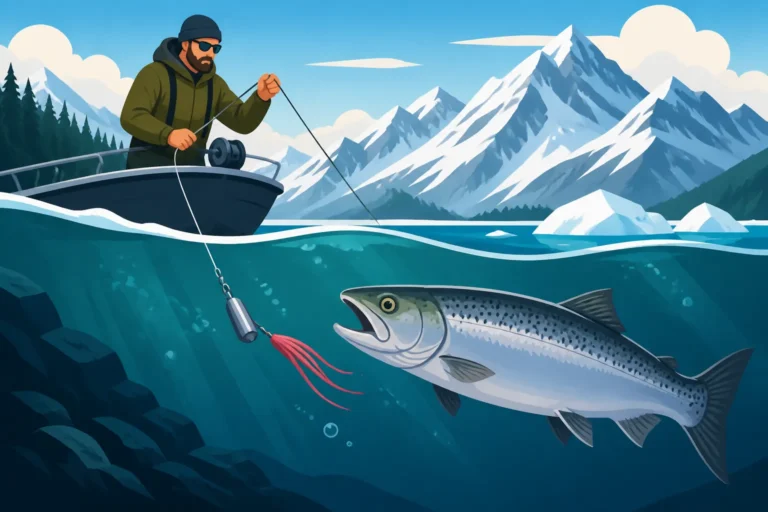
Back-trolling is a highly effective technique primarily used from a boat, particularly for King Salmon, that focuses on presenting lures or bait deep in the water column. In essence, you're using the boat's motor (often an outboard or a kicker motor) to slowly reverse or "back-troll" downstream, controlling the speed of your boat to be slightly slower than the current. This allows your lures, typically diving plugs like Kwikfish or FlatFish, or weighted bait rigs, to dive deep and "wiggle" right in the faces of salmon holding near the bottom.
When back-trolling, long, powerful rods are often used to handle the resistance of the diving plugs and the power of the fish. Anglers let out a calculated amount of line, ensuring their lure is digging and vibrating near the bottom where the Kings are holding. The boat's speed and angle are constantly adjusted to maintain this prime presentation zone. A strike can be incredibly violent, often bending the rod sharply over. This method is a staple on many guided trips on rivers like the Kenai and is incredibly effective for large, bottom-oriented Chinook. For a deeper dive, check out How to Back-Trolling for Salmon in Alaska.
Stationary Bottom Fishing: When and Where It Works
While active drifting and back-trolling are usually more productive, there are specific situations where a more stationary bottom fishing approach can work for salmon in Alaska. This typically involves fishing from shore or an anchored boat in areas where salmon are known to hold in distinct pockets or slower currents, such as behind large rocks, in deep pools, or at the confluence of two currents.
In these scenarios, you might use a heavier pyramid or bell sinker to anchor your bait or lure in place. A sliding sinker rig or a three-way swivel rig (as described earlier) allows your bait to flutter and move naturally with the subtle currents around the stationary weight. This method is often employed when targeting Chinook salmon in specific deep holes or when multiple rods are allowed per angler (always check regulations!). While less dynamic than drifting, it can be effective if you've pinpointed a holding area. Just ensure you're using strong enough tackle to prevent snags and manage potential bites, which can often be surprisingly subtle despite the stationary setup.
Species-Specific Bottom Fishing Tips
Not all salmon are created equal, and neither are their responses to bottom-oriented fishing techniques. Understanding the typical behavior of each species is paramount to tailoring your approach and maximizing your chances, whether you're chasing the mighty King or the abundant Sockeye.
King Salmon: The Prime Bottom-Oriented Target
King Salmon, also known as Chinook, are the undisputed champions of bottom-oriented salmon fishing in Alaska. These massive fish often hug the deepest parts of rivers, traveling upstream with a powerful, deliberate motion. They are aggressive and territorial, making them excellent candidates for lures and baits presented directly in their path near the bottom.
For Kings, methods like drift fishing with cured roe or large artificial beads are incredibly effective. Back-trolling diving plugs such as the Kwikfish K15 or large Brad's KillerFish in vibrant colors (chartreuse, hot pink, metallic blue) can trigger ferocious strikes. Many anglers will tip their plugs with a small piece of sardine or herring for added scent and visual appeal. When How to Catch King Salmon in Alaska, remember that strong currents often mean using heavy weights and stout tackle. In the salt or brackish waters, trolling with downriggers to get large spoons, flashers, or herring presentations deep is a common and very effective strategy for ocean-bright Kings. Keep an eye on Alaska King Salmon Fishing Regulations and Limits as they can change rapidly based on run strength.
Sockeye and Chum: Adjusting Expectations and Techniques
Sockeye salmon, also known as Red Salmon, are famous for their sheer numbers but infamous for their non-feeding behavior in fresh water. They primarily feed on plankton in the ocean and largely cease feeding once they enter rivers. This makes traditional "bottom fishing" with bait or lures designed to mimic prey largely ineffective. Anglers targeting Sockeye in rivers typically employ a technique called "flossing" or "lining," where an unbaited, weighted hook or small fly (often a lead-headed hook with a piece of yarn) is drifted along the bottom. The goal is to have the line pass over the fish's head, and as the rig drifts back, the hook "flosses" into the fish's mouth, resulting in a foul-hooking (snagging) or, ideally, a legal bite inside the mouth. While it's not "bottom feeding," it's certainly a bottom-oriented technique.
Chum salmon (Dog Salmon) are similar to Sockeye in their river behavior; they are not typically aggressive feeders in fresh water. However, they can sometimes be provoked into striking brighter, larger lures or flies presented near the bottom, especially if they are defending spawning grounds. Flashy spoons, large bright jigs, or even large weighted flies fished with a dead-drift along the riverbed can sometimes elicit a reactionary bite. While not as reliable as for Kings, it's worth trying if you see schools of Chums holding deep.
Coho and Pink Salmon: Opportunistic Bottom Biters
Coho salmon (Silver Salmon) are often more aggressive in rivers than Sockeye or Chum and will actively chase lures and bait. While they are often caught higher in the water column on spinners and flies, they will absolutely take offerings presented near the bottom, especially in deeper pools or during low light conditions. Drift fishing with cured roe, small jigs tipped with bait, or even brightly colored diving plugs can be effective. Coho are known for their acrobatic fights, so be ready when one hits your bottom-bouncing presentation.
Pink salmon (Humpies), while generally smaller and less sought after than other species, arrive in huge numbers on even-numbered years and can be very aggressive, especially in terminal fisheries or during their spawning phase. They will readily strike small, flashy lures, spoons, or jigs presented near the bottom. They are often found in shallower water and estuaries, so "bottom fishing" for Pinks might mean simply drifting a small, weighted spinner or spoon close to the sandy or gravelly bottom. They might not be trophy fish, but they offer consistent action and can be a lot of fun, especially for beginners.
Here's a quick reference for common bottom-oriented strategies by salmon species:
| Salmon Species | Primary Bottom Strategy | Recommended Lures/Baits | Key Considerations |
|---|---|---|---|
| King Salmon | Back-Trolling, Deep Drifting, Anchored Bait | Kwikfish, FlatFish, Cured Roe, Herring | Heavy tackle, strong current, territorial bites |
| Sockeye Salmon | Flossing/Lining (drift fishing weighted hook/fly) | Lead-headed hooks with yarn/fly | Not feeding, reactionary bites, precise drift, check regulations for legal flossing. |
| Coho Salmon | Deep Drifting, Jigs, Anchored Bait | Cured Roe, Spoons, Spinners, Jigs with bait | Opportunistic, aggressive, acrobatic fighters. |
| Chum Salmon | Deep Drifting (reactionary), Large Jigs | Flashy Spoons, Large Bright Jigs | Less aggressive, reactionary strikes, strong fighters. |
| Pink Salmon | Shallow Drifting, Small Jigs, Spoons | Small Spinners, Spoons, Bright Jigs | Abundant, aggressive, shallower water. |
Before you head out, always make sure you've got your Alaska Fishing License: Complete Guide squared away and that you've checked the latest Alaska Fishing Regulations Explained for your specific fishing area and species. Regulations on bait, gear, and even specific techniques can change frequently due to emergency orders, and staying informed is crucial for a legal and enjoyable trip.
Disclaimer
The information provided in this guide is for general informational purposes only and is not a substitute for official regulations. Fishing regulations in Alaska can change frequently due to emergency orders and specific area restrictions. Always consult the current Alaska Department of Fish and Game (ADF&G) regulations booklet or website for the most up-to-date and specific rules for your intended fishing location before you go fishing.