Best Weight for Alaska Halibut Fishing
If you've ever found yourself on the deck of a boat in Alaska, reeling endlessly, wondering if your bait even reached the bottom, you know the frustration. Choosing the right weight for halibut fishing in these vast Alaskan waters isn't just a minor detail; it's absolutely critical to your success. This guide will dive deep into how to select the perfect weight, ensuring your lure hits the strike zone every time.
Understanding the Crucial Role of Weight in Halibut Fishing
Let's be honest, standing on a boat in the choppy waters of Kachemak Bay or off the coast of Seward, trying to feel for the bottom, can be a real challenge. You're battling current, depth, and sometimes even a bit of seasickness. The weight you choose isn't just about getting your bait down; it's about control, presentation, and ultimately, whether you'll even get a bite from one of those magnificent barn doors.
Why Weight Matters More Than You Think
Imagine trying to serve a delicious meal at a fancy restaurant, but the plate keeps floating away before it reaches the table. That's essentially what happens with your bait if you don't have enough weight. In Alaska's strong tidal currents and deep ocean trenches, a lightweight rig might never reach the ocean floor where halibut typically lie in wait. It'll just drift aimlessly in the mid-water column, out of sight and out of mind for your target fish.
Moreover, the right weight ensures your bait presents naturally. Halibut are ambush predators, often hiding on the bottom. If your bait is swinging wildly or skipping too fast across the seabed due to insufficient weight, it looks unnatural and can easily spook a wary halibut. Conversely, too much weight can make your presentation feel clunky, especially if you're trying to jig or retrieve slowly. It’s a delicate balance that directly impacts your ability to entice a bite and also your ability to detect it when it happens.
The Frustration of Incorrect Weight Selection
Oh, the memories! I’ve been there, staring at my line, watching it bow out like a rainbow in a strong current, knowing full well my bait is probably halfway back to shore by now. It’s incredibly frustrating. You spend good money on a charter, you've got your prime bait ready, and you're just not connecting. Your fishing buddies might be hauling in fish while your line is still struggling to find purchase on the bottom. This isn't just about missing fish; it's about missing the entire experience.
Many anglers, especially those new to Alaska fishing, underestimate the sheer power of the currents here. What might work perfectly in calmer, shallower waters elsewhere simply won't cut it in the Gulf of Alaska or Prince William Sound. Without the proper weight, you're essentially blind fishing, hoping a halibut swims up to meet your drifting bait rather than presenting it effectively in their natural habitat. This often leads to wasted time, lost bait, and a whole lot of head-shaking as you try to figure out what went wrong.
Factors Influencing Your Weight Choice for Alaskan Halibut
Choosing the "best" weight isn't a one-size-fits-all answer. It's an adaptive process that depends on several critical factors you'll encounter on the water. Think of it like a chef adjusting spices; you need to taste and tweak based on the ingredients and conditions.
Water Depth and Current Conditions
These are arguably the two most significant factors. Alaska's halibut grounds can range from relatively shallow coastal shelves to abyssal depths over 600 feet, and the currents can be unbelievably swift. If you're fishing in relatively shallow water, say under 100 feet, and there's a gentle drift, you won't need nearly as much weight as you would off the deep ledges near Kodiak or the notoriously strong currents of Cook Inlet.
For example, if you're targeting halibut in a shallower, protected bay, like some spots within Kachemak Bay near Homer, you might start with a lighter 8-ounce or 1-pound weight. The goal is to feel the bottom with minimal effort, allowing your bait to drift naturally near structure. However, move out into the open ocean, especially if you're fishing a deep channel or during a strong tidal exchange, and that 1-pound weight will be utterly useless. It will get swept away, making it impossible to stay on the bottom. This is where you quickly realize you need to step up to 2, 3, or even 5 pounds of lead just to maintain contact. Learning how to read Alaska fishing regulations is also key, as some areas may have specific rules that indirectly impact your setup.
Type of Bait and Rig Configuration
The size and type of your bait also play a role. A small piece of herring on a single hook will sink much faster than a large, whole salmon head on a spreader bar with multiple hooks. Larger baits create more drag in the water, requiring additional weight to overcome that resistance and get to the bottom efficiently. Think about the difference between dropping a pebble and dropping a large piece of driftwood in water – the driftwood will take longer to sink due to its larger surface area and buoyancy.
Furthermore, the design of your rig itself affects the required weight. A simple lead-head jig will cut through the water differently than a complex setup involving a heavy pyramid sinker, a spreader bar for halibut, multiple gang hooks, and a large chunk of bait. Rigs with more components, especially those designed to spread out bait presentation, will often require more overall weight to overcome the combined drag and achieve the desired depth and bottom contact. This is particularly true when you’re setting up a robust bottom fishing rig, which often needs significant lead to keep everything where it needs to be.
Target Species and Fishing Technique
While we're primarily focused on halibut, it's worth noting that if you're on a combo trip targeting other species like rockfish or lingcod in deeper waters, your weight selection will still be driven by similar principles. However, the specific technique you're employing for halibut can also influence your choice. Are you planning on actively jigging, or are you simply trying to anchor your bait on the bottom and wait for a bite?
For active jigging, you want enough weight to get your jig to the bottom and feel its action, but not so much that it becomes tiresome to work. A slightly lighter weight might allow for a more erratic, attractive motion that triggers strikes. However, if your plan is to simply drop a large piece of bait to the bottom and let it sit (often referred to as still fishing), then getting and staying on the bottom is paramount, and you might opt for the heaviest weight you can comfortably manage with your rod and reel. Understanding how to jig for halibut in Alaska or how to bottom fish for Alaska halibut can really help fine-tune your approach.
Recommended Weight Ranges for Different Halibut Fishing Scenarios
Now, let's get down to the brass tacks: what kind of weight should you be thinking about? These are general guidelines, remember, and local conditions and your captain's advice will always trump a generic recommendation. Always start with a baseline and be prepared to adjust.
Shallow Water Under 100 feet and Light Current
When you're fishing in those beautiful, calm inlets or shallower nearshore areas, you'll feel every bump and nibble. In these conditions, you don't need to overdo it. Typically, weights in the 8 to 16 ounce range are sufficient.
This allows for excellent sensitivity, letting you feel when your bait hits the bottom and, crucially, when a halibut decides to mouth your offering. Using too much weight here can be counterproductive; it might make your rig fall unnaturally fast and spook fish, or simply be too heavy for comfortable, active jigging. If you're on a private boat or a smaller charter exploring an area like some parts of the Homer Spit, starting with a 12-ounce lead-head jig or a similar sinker is a good bet. This lighter approach can be fantastic for targeting smaller "chicken" halibut, which tend to be more active in shallower feeding grounds.
Moderate Depths 100-300 feet and Average Current
This is the most common scenario for many halibut charters, especially out of ports like Seward or Valdez. Here, you're dealing with substantial depth and often a respectable current, so you need a good amount of lead to ensure bottom contact. This is your sweet spot for 1 to 3-pound weights.
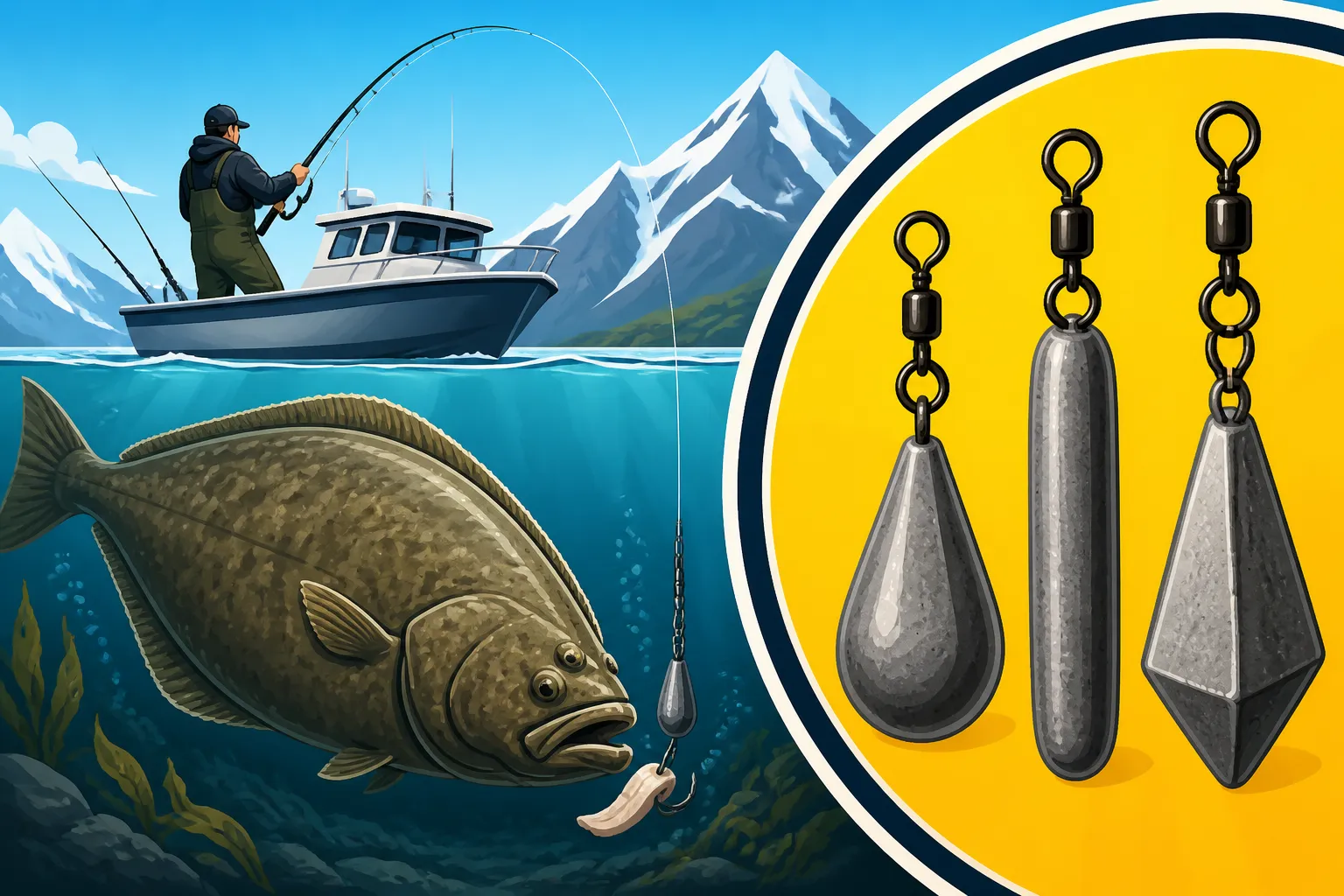
Many experienced anglers and charter captains will have a variety of 1.5-pound to 2.5-pound banana weights or cannonball sinkers on hand. The goal is to get your bait to the bottom relatively quickly, then maintain a vertical line without excessive drift. If you're on a full-day Seward Halibut Fishing Guide trip and the captain says "grab a two-pounder," that’s usually a solid starting point. These weights provide the necessary heft to fight the current but still allow for decent feedback through your rod. If you notice your line still bowing significantly or taking forever to hit bottom, don't hesitate to ask your deckhand or captain if you should increase your weight. It’s always better to be slightly heavy than too light.
Deep Water Over 300 feet and Strong Currents
Ah, the true test of wills! When you venture into the really deep stuff, especially if the tide is running hard, you're going to need some serious lead. We're talking 3 pounds, 4 pounds, 5 pounds, or even more. Sometimes, especially when fishing near the slack tide in extremely deep canyons, I've even seen guides use 8 or 10-pound weights to hold bottom!
These heavy weights are non-negotiable in deep water, like the infamous fishing grounds off Homer, where the depth can quickly drop to several hundred feet. Without adequate weight, your line will be swept almost horizontal, and you’ll have no chance of presenting your bait effectively. While it might sound daunting to reel in that much lead repeatedly, it’s the only way to ensure your bait is in the strike zone. Charter operations, particularly those specializing in Best Halibut Fishing in Alaska, will always have a good supply of these heavier weights. Don't be shy about asking for what you need; the crew is there to help you catch fish, and that often starts with getting your bait down properly.
Here's a quick reference table to help visualize these ranges:
| Scenario | Typical Depth Range (feet) | Current Conditions | Recommended Weight Range | Common Weight Types |
|---|---|---|---|---|
| Shallow & Light Current | < 100 | Light / Slack | 8 oz – 1.5 lb | Lead-head jigs, Pyramid |
| Moderate & Average Current | 100 – 300 | Moderate Drift | 1.5 lb – 3 lb | Banana, Cannonball, Torpedo |
| Deep & Strong Current | 300+ | Strong / Fast Drift | 3 lb – 8+ lb | Cannonball, Heavy Bar |
Tips for Fine-Tuning Your Weight Selection on the Water
Even with the best preparation, Alaska's dynamic marine environment means you'll almost always need to make on-the-fly adjustments. Conditions can change in a matter of minutes, and being able to adapt is a hallmark of a successful angler.
Reading Your Line and Sonar
The most immediate feedback you'll get is from your line itself. When you drop your bait, pay attention to how quickly it descends and how much arc is in your line. If your line is almost vertical and you feel a distinct thump as your weight hits the bottom, you're likely in a good spot. If it takes a long time to hit bottom, or your line is bowing significantly, you probably need more weight. A good rule of thumb is to be able to feel the bottom with a gentle lift-and-drop motion of your rod tip. If you can't feel the bottom, or you feel it only vaguely after a long drift, it’s time to size up.
Many modern charter boats also have excellent sonar systems. Don't hesitate to glance at the fish finder screen if it's visible. You might see your bait on the screen, a tiny dot descending. If that dot is being swept far away from the boat's direct vertical path, it's a clear sign you need to add more weight. Often, captains or deckhands will be watching this closely and can give you real-time advice. Paying attention to what your fellow anglers are using, especially if they are catching fish, can also be a good indicator.
The Importance of Having a Variety of Weights
Never, ever head out for halibut in Alaska with just one size of weight. That’s like bringing one wrench to fix a car engine – it just won't cut it. Conditions are too variable, and what works perfectly one hour might be completely inadequate the next. A good practice is to have a selection, especially if you're on a private boat. If you're charter fishing, they'll supply the weights, but it's still good to understand why they might be swapping sizes throughout the day.
This is where planning ahead comes in handy. Before your trip, if you're outfitting yourself, consider looking for a variety of lead-head jigs or conventional sinkers on platforms like Amazon. Having a range from, say, 12 ounces up to 4 or 5 pounds ensures you're prepared for whatever Mother Nature throws your way. The cost of a few extra weights is negligible compared to the frustration of missing out on fishing time because your gear isn't getting down to the fish. Make sure you also have the appropriate best bait for Alaska halibut to go with your chosen weight.
When to Adjust and Experiment
Alaska's tides are incredibly powerful, and they directly influence current speed. What was a gentle drift an hour ago might become a raging torrent as the tide changes. Always be prepared to adjust your weight accordingly. If the current picks up, add more weight. If it slows down, you might be able to lighten up a bit for better sensitivity and a more natural presentation. Your captain or deckhand will often announce these changes, but it's good to be proactive.
Don't be afraid to experiment! If you're not getting bites and others are, politely observe what they're doing. Sometimes, a slight change in weight, even just half a pound, can make all the difference. Sometimes, it’s not just the weight but also your retrieve or jigging motion that needs tweaking. The best anglers are those who are constantly observing, adapting, and learning from the conditions and their peers. The goal is always to have your bait effectively presented where the halibut are, and the right weight is your ticket to that prime spot. Understanding how to set up a halibut rig for Alaska is also part of this adjustment process.
Final Thoughts on Halibut Weight
Fishing for halibut in Alaska is an incredible adventure, full of potential for trophy catches and unforgettable memories. But it's also a challenge, and overcoming the unique environmental factors, like deep water and strong currents, is part of the game. Choosing the right weight is a fundamental skill that directly impacts your success and enjoyment. Don't underestimate its importance, and always be prepared to adapt. With the right lead, you'll spend less time wondering and more time reeling in those giant flatfish.
Disclaimer
The information provided in this guide is for general informational purposes only and is not intended as professional advice. Fishing conditions in Alaska can change rapidly, and local regulations, species availability, and safety considerations should always be confirmed with the Alaska Department of Fish and Game, experienced local guides, or charter operators before planning and undertaking any fishing trip. Always prioritize safety and adhere to all applicable laws and guidelines.