How to Fish Herring for Alaska Salmon
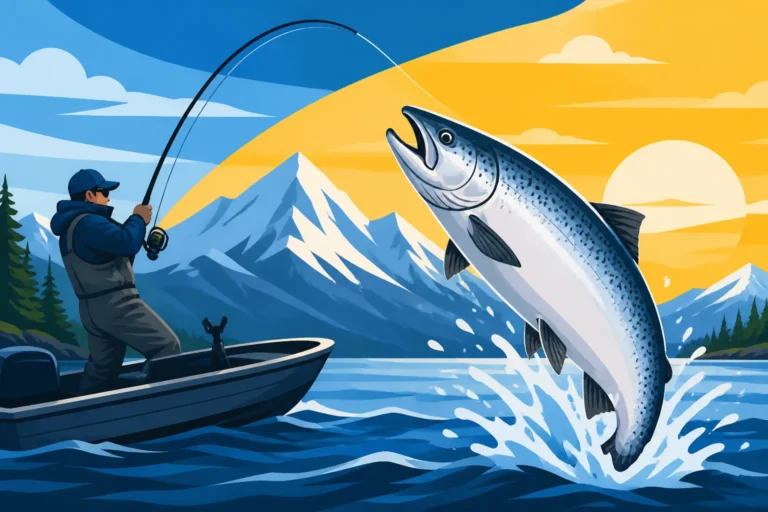
Few things are more frustrating than heading out on Alaska's legendary waters, full of hope, only to find the salmon are being finicky. You've got your gear, you've scouted your spot, but those magnificent Chinook and Coho just aren't biting what you're offering. It's a common challenge, but seasoned Alaskans know a secret weapon that often turns a slow day into a memorable one: herring. This guide will dive deep into why herring is such an effective bait for Alaska salmon and how you can master its use to consistently hook into those incredible fish.
Why Herring is a Go-To Bait for Alaska Salmon
Ask any old-timer along the Kenai River or out in Kachemak Bay, and they'll likely tell you that herring is a staple in their tackle box when targeting salmon, especially the big ones. There's a good reason for this unwavering loyalty: herring just works. It's not magic, it's biology, and an understanding of what makes this humble baitfish so irresistible can elevate your salmon fishing game significantly.
The Natural Appeal of Herring
Salmon, particularly the larger predatory species like King Salmon (Chinook) and Silver Salmon (Coho), are opportunistic feeders. When they're in the ocean, growing rapidly before their arduous spawning migration, herring is a significant part of their diet. It's packed with oils and protein, making it an energy-rich meal. This ingrained dietary preference doesn't disappear just because they've entered freshwater or are closer to shore.
When you present a piece of herring, you're not just offering any old bait; you're offering something that looks, smells, and feels like a natural food source they've been chasing their entire lives. The oily flesh of a herring releases a potent scent trail in the water, a beacon that can draw in salmon from a considerable distance. This scent, combined with the subtle flash and movement of a properly rigged herring, mimics a wounded or vulnerable baitfish, triggering a predatory response in salmon. It's a psychological advantage as much as a physical one.
Versatility Across Salmon Species
While herring might be most famous for its prowess in tempting trophy King Salmon, its versatility extends to other salmon species as well. Coho (Silver) salmon are incredibly aggressive and often respond ferociously to a well-presented cut plug herring, especially when it's trolled with an erratic action. The flash and darting movement of a cut herring, particularly in slightly choppier waters, can mimic a fleeing baitfish, triggering those energetic Coho strikes. Even the less predatory Pink and Chum salmon can be enticed by herring, especially if they are actively feeding or if other baitfish are scarce.
The key lies in understanding the preferred presentation for each species and conditions. For larger, more deliberate Kings, a slower, steady roll with a full-bodied cut plug might be the ticket. For acrobatic Silvers, a faster troll that gives the herring a frantic, darting motion often yields better results. This adaptability makes herring an indispensable bait choice whether you're chasing the biggest fish of your life or simply trying to fill your cooler. Always keep an eye on the Alaska Salmon Run Timing Explained to know which species are present and when to best deploy your herring strategy.
Essential Herring Preparations and Rigs for Alaska Fishing
Fishing with herring isn't just about throwing a piece of fish on a hook. To truly unlock its potential, you need to pay close attention to sourcing, preparation, and rigging. The difference between a limp, unappealing bait and a vibrant, irresistible presentation often comes down to these crucial steps.
Sourcing and Storing Your Herring
Getting good quality herring is paramount. Most anglers buy their herring frozen and pre-brined, often from local tackle shops or even online retailers like Amazon, especially for brining supplies. When selecting frozen herring, look for bait that is firm, intact, and still has its scales and eyes clear – signs of freshness. Avoid packages with freezer burn or mushy, discolored fish.
Once you have your herring, proper storage is key. Keep it frozen until you're ready to use it. The best way to thaw herring is slowly in the refrigerator overnight. Avoid microwaving or rapid thawing, as this can break down the flesh and make it mushy, impacting its action and durability on the hook. On the water, keep your herring in a cooler with ice, ideally submerged in a light brine solution. This brine (often a mix of salt, water, and sometimes a touch of scent like anise or garlic) helps firm up the herring, preserve its scales, and enhance its natural oils, making it tougher and more attractive to fish. Many anglers swear by their homemade brines, passed down through generations, but commercial brining solutions are also readily available.
The "Cut Plug" Technique
The cut plug is arguably the most famous and effective way to fish herring for Alaska salmon, particularly King Salmon. The magic of a cut plug lies in its unique, erratic, wounded-baitfish spin that mimics a struggling prey. Getting it right takes practice, but the rewards are well worth it.
Here's a step-by-step breakdown:
- Select Your Herring: Choose a firm, thawed herring. The size depends on your target species; smaller herring (4-6 inches) for Coho, larger (6-8 inches) for Kings.
- The Angle Cut: This is the most crucial step. Using a sharp, clean knife, make a diagonal cut from just behind the gills towards the tail. The angle and depth of this cut determine the spin. A good starting point is about a 45-degree angle. Experiment with the angle: a steeper angle creates a tighter, faster spin, while a shallower angle results in a wider, slower roll. The goal is to cut through the backbone but leave the belly intact.
- The Dorsal Fin Cut (Optional but Recommended): Some anglers make a small, shallow cut along the top of the herring, just behind the dorsal fin, towards the tail. This can further enhance the bait's action and scent dispersion.
- Rigging the Hooks: A common setup involves two single hooks or a tandem treble hook rig.
- Single Hook Setup: Pass the leader line through the mouth of the herring and out the belly, typically near the vent. Tie a strong leader, often 40-60 lb fluorocarbon for King Salmon, to a single, sharp 3/0 to 5/0 hook. Secure the hook so it lies along the side of the herring, ideally with the hook point exposed.
- Tandem Hook Setup: This is popular for trolling. Thread your leader and the trailing hook through the herring from the tail end, exiting through the belly. The trailing hook should sit near the tail. Then, take the lead hook (often a treble or a large single hook) and insert it near the head or gill plate of the herring, ensuring it's positioned to spin freely. The leader should exit the mouth.
- Test the Spin: Before deploying, drop your rigged cut plug into the water next to the boat. It should have a slow, seductive roll. If it's spinning too fast or not at all, adjust the cut or the hook placement. This spin is what makes the cut plug so effective.
Whole Herring Rigs for Trolling
While the cut plug reigns supreme in many freshwater and near-shore scenarios, whole herring rigs are also incredibly effective, particularly when trolling for larger salmon in saltwater, like off the coast of Homer or Seward. These rigs aim for a more natural, swimming presentation that can imitate a healthy baitfish trying to escape.
A typical whole herring rig involves a leader, usually 40-80 lb test fluorocarbon, and a tandem hook setup. Here’s how it generally works:
- Choose Your Herring: Again, select firm, fresh herring. Sizes can range from 6 to 10 inches depending on the salmon you're targeting.
- The Leader and Hooks: You'll typically use two single hooks or a single hook and a treble hook in tandem, spaced appropriately for the length of your herring. The lead hook is often a large single (e.g., 5/0 to 7/0), and the trailing hook can be slightly smaller or a treble.
- Threading the Herring:
- Start by inserting the trailing hook into the vent of the herring and out through the side, ensuring the point is exposed.
- Next, measure your leader from the trailing hook up to where the lead hook will sit, usually around the dorsal fin area. Thread the lead hook into the side of the herring, ensuring it is well-secured and the point is exposed.
- Some anglers use a "herring harness" or a small spring-loaded device to keep the mouth closed and provide a tow point. Others simply bring the leader out through the herring's mouth.
- Creating the Roll: The key to a whole herring rig is to impart a slow, wounded roll. This is often achieved by breaking the herring's back slightly or by making a small, strategic cut near the tail. You want a subtle, natural flutter, not a wild, uncontrollable spin. You can also achieve this by using a small plastic "herring helmet" or "rotator" that fits over the head, giving the bait an irresistible action.
- Adding Weight and Attraction: When trolling with whole herring, you'll often employ a banana weight, cannonball sinker, or a downrigger to get your bait to the desired depth. Dodgers and flashers are almost universally used ahead of the herring rig to attract attention and simulate a school of baitfish. Brands like Luhr Jensen and Pro-Troll make excellent flashers that work wonderfully with herring. Remember to check local regulations; sometimes Alaska Bait Restrictions Explained or Alaska Barbless Hook Requirements might apply to your fishing spot.
Mastering the Presentation: Fishing Herring Effectively
Rigging your herring properly is half the battle; presenting it effectively is the other. Salmon are discerning creatures, and even the best bait won't work if it's not where they are, or if it doesn't look natural. Understanding how to deploy your herring in various scenarios is crucial for success.
Trolling Strategies with Herring
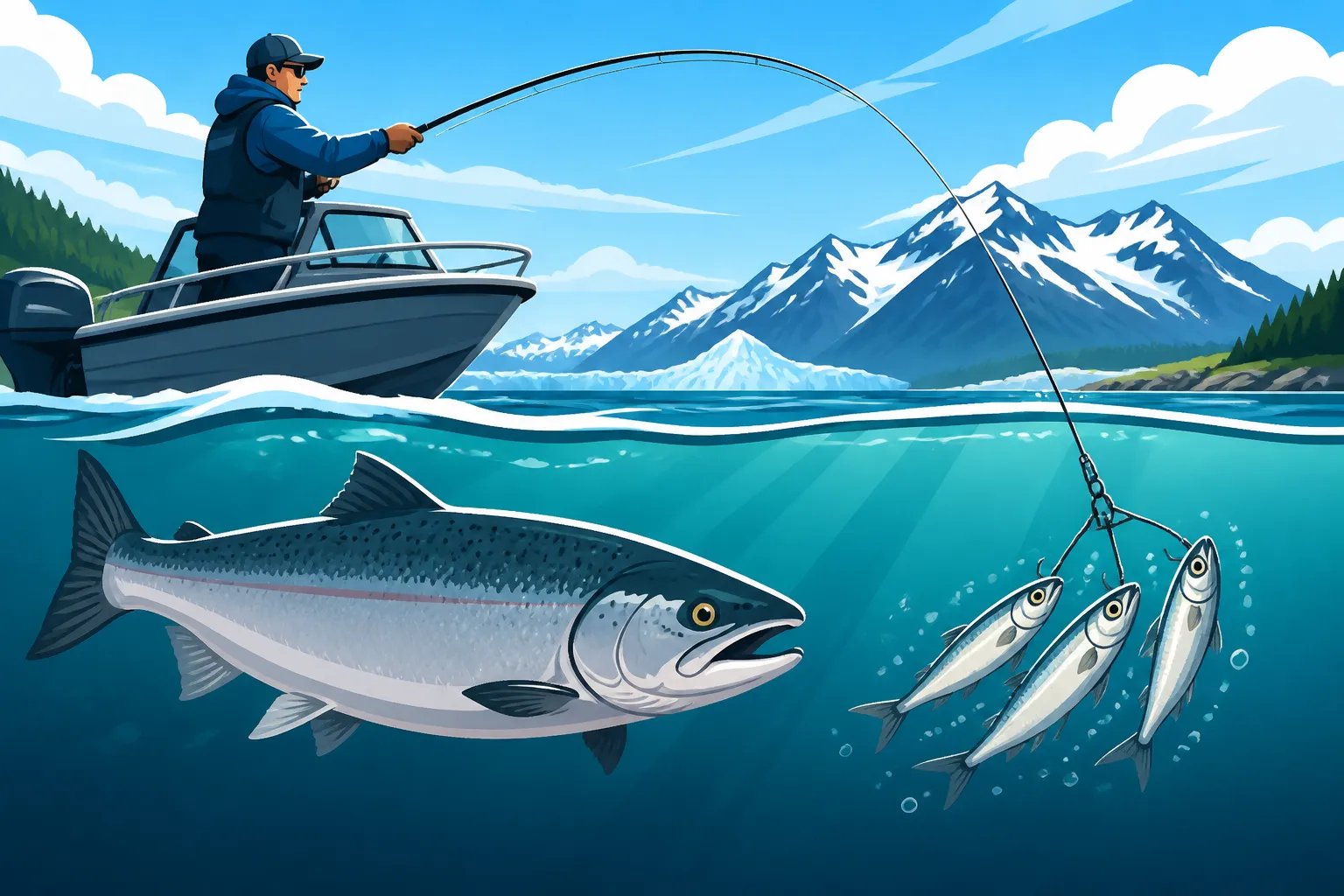
Trolling is perhaps the most common and effective way to fish herring, especially in open waters like Cook Inlet or Resurrection Bay, and even in larger rivers such as the Kasilof. The goal is to cover ground, present your bait at the correct depth, and impart a lifelike action.
- Speed is Everything: The ideal trolling speed varies depending on the current, water temperature, and the specific action you want your herring to have. Generally, a slow, steady troll that allows your cut plug or whole herring to roll seductively is best. For cut plugs, this might be between 1.5 to 3 miles per hour. Too fast, and your herring will spin unnaturally; too slow, and it might just drag lifelessly. Watch your rod tip: a steady, rhythmic pulse indicates a good spin.
- Depth Control: Salmon often hold at specific depths. Use a downrigger, diver (like a Dipsy Diver or a Jet Diver), or lead-core line to get your herring to where the fish are. Keep an eye on your fish finder for schools of baitfish or salmon marks. In saltwater, Kings and Silvers often feed in the top 50-100 feet, but sometimes deeper. In rivers, they might hug the bottom.
- Dodgers and Flashers: These are not optional when trolling herring; they are essential attractors. A dodger, like a Big Al's Fish Flash, or a flasher creates vibration, flash, and often an erratic movement that draws salmon to your bait. Position your herring rig behind the flasher, typically on a leader of 36-72 inches. The leader length is crucial for allowing the herring to move naturally within the water disturbed by the flasher. Check out How to Troll for Salmon in Alaska for more in-depth techniques.
- Vary Your Presentation: Don't just troll in a straight line. Make S-curves, speed up and slow down, and vary your depths. These changes in direction and speed can cause your herring to dart, drop, and rise, often triggering a strike from a following salmon.
Drift Fishing and Anchoring with Herring
While trolling dominates saltwater and large river mouths, drift fishing or anchoring with herring can be incredibly effective in specific river situations, particularly for King Salmon. This technique relies on the current to present your bait naturally.
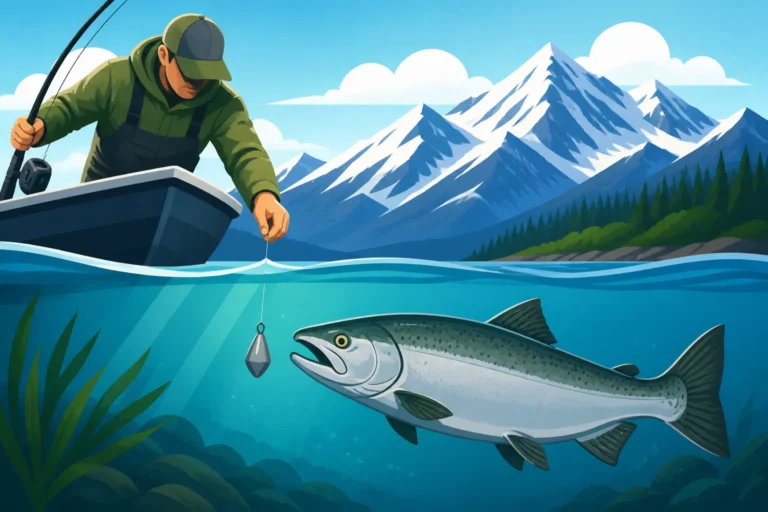
- Drift Fishing: In rivers like the Susitna or parts of the Kenai, drift fishing a cut plug herring can be deadly. You'll need enough weight (pencil lead, slinky weights, or cannonball sinkers) to keep your herring near the bottom, but light enough to allow it to tumble naturally with the current without getting hung up. The goal is to present the herring as if it's a piece of dislodged baitfish or a wounded morsel.
- Setup: Use a three-way swivel, attaching your main line to one eye, a short leader (12-24 inches) to your weighted cut plug to another, and a dropper line (6-18 inches) with your weight to the third. This setup keeps your bait slightly off the bottom and allows it to drift freely.
- Technique: Cast upstream and let your bait drift down, keeping your line taut enough to feel bites but loose enough to prevent drag. You want the herring to tumble and roll with the current, not zip through faster than the water flow.
- Anchoring and Bait Soaking: In certain river holes or channels where salmon are known to stack up, anchoring and letting a herring soak can be productive. This is common in rivers where King Salmon hold before moving further upstream.
- Placement: Anchor strategically upstream from a known holding lie, allowing your herring to drift into the strike zone.
- Rig: Similar to drift fishing, a three-way swivel with a dropper weight is common. Some anglers will use a float to suspend the herring at a specific depth if the fish are holding off the bottom.
- Patience: This technique often requires more patience, but when salmon are concentrated, it can be incredibly effective.
Reading the Water and Adjusting Your Approach
No matter how you rig or present your herring, success ultimately depends on your ability to read the water and adapt. Alaska's fishing conditions can change rapidly, and what worked yesterday might not work today.
- Structure: Salmon often hold in current breaks, behind submerged logs, under cut banks, or near sudden depth changes. Pay attention to these areas.
- Current: Understand how current affects your bait's presentation. Strong currents might require more weight or a different cut plug angle to achieve the desired spin.
- Water Clarity: In clear water, salmon might be more cautious, necessitating longer leaders and more subtle presentations. In murky water, the scent trail of herring becomes even more critical, and a flasher's vibration can help fish find your bait.
- Fish Activity: Observe the water for signs of fish – jumpers, rolling fish, or even other anglers hooked up. This tells you where the fish are and sometimes what they're biting.
- Emergency Orders: Always be aware of Alaska Fishing Emergency Orders Explained. Regulations, especially regarding bait or barbless hooks, can change quickly due to fish runs or conservation efforts. A simple check with the Alaska Department of Fish and Game website or hotline before you head out can save you a lot of trouble.
Tips, Tricks, and Common Mistakes to Avoid
Even with the best preparation, there are always little nuances that can make a big difference when fishing with herring. Learning from experienced anglers and avoiding common pitfalls will increase your success rate.
Scent, Brine, and Enhancements
While herring is naturally oily and fragrant, you can definitely enhance its appeal. Many anglers pre-brine their herring at home. A basic brine recipe includes non-iodized salt, water, and sometimes a hardening agent like borax. To kick it up a notch, consider adding:
- Anise Oil: A classic salmon attractant. Just a few drops in your brine or directly on the herring before fishing can make a difference.
- Garlic Oil: Another popular choice that salmon seem to love.
- Commercial Scent Gels/Sprays: Brands like Pro-Cure offer a wide range of salmon scents, including herring, krill, or various baitfish formulas. Applying a liberal amount to your herring, especially a cut plug, just before casting can leave a powerful scent trail. You can find these easily on Amazon or at local tackle shops.
- Dye: Some anglers dye their herring, particularly in darker colors like blue or green, believing it makes the bait more visible or appealing in certain water conditions.
When applying scents, remember that a little goes a long way. You want to enhance, not overpower, the natural appeal of the herring.
Gear Selection for Herring Fishing
Using the right gear is crucial to effectively present herring and land big salmon.
- Rod: For trolling or heavy drift fishing, a medium-heavy to heavy action rod, typically 8 to 10.5 feet long, is ideal. It needs enough backbone to handle a large salmon and enough sensitivity to detect subtle bites and ensure your bait is spinning correctly. For How to Catch King Salmon in Alaska, you'll want something robust.
- Reel: A reliable level-wind reel with a smooth drag system is a must. Line capacity for 200-300 yards of 20-30 lb monofilament or braided line is a good starting point. Braided line offers superior sensitivity, which can be crucial for feeling the delicate throb of a well-spinning cut plug or a tentative bite.
- Line: As mentioned, 20-30 lb main line is standard. For leaders, fluorocarbon is preferred due to its abrasion resistance and nearly invisible properties underwater. Leader strengths typically range from 25 lb for Coho to 60 lb or even 80 lb for trophy King Salmon, especially when fishing near structure.
- Hooks: Use high-quality, sharp hooks. Barbless hooks are often required in many Alaska freshwater fisheries, particularly for catch-and-release areas or conservation-minded rivers like the Kenai. Always verify Alaska Barbless Hook Requirements for your specific fishing location. For specific bait and lure recommendations, check out Best Lures and Bait for Alaska King Salmon and Best Lures and Bait for Alaska Coho Salmon.
Troubleshooting and Common Pitfalls
Even the most experienced anglers encounter issues. Here's how to troubleshoot common problems:
- No Spin or Bad Spin: This is the most common cut plug issue. Re-evaluate your cut angle. Is it too shallow? Too deep? Is the hook placement impeding the spin? Sometimes, simply re-cutting or repositioning the lead hook can fix it.
- Bait Washing Out Quickly: If your herring becomes mushy or falls apart quickly, it might be due to poor quality bait, improper thawing, or not enough time in a good brine. Ensure your brine is robust and that your bait is firm before deployment.
- Bait Stealers: Small fish, crabs, or even hungry birds can make off with your herring. If you're constantly losing bait without feeling a strike, try moving locations, increasing your trolling speed slightly, or inspecting your bait more frequently. Sometimes, using a slightly larger hook can help deter smaller nibblers.
- Missing Bites: If you're seeing your rod tip twitch but not getting solid hookups, your hooks might be too small, dull, or not exposed enough. Ensure your hook points are razor-sharp and clear of the herring's flesh. Sometimes, a subtle change in leader length behind your flasher can also improve hookups.
- Not Fishing the Right Depth: Salmon are often very depth-specific. If you're not getting bites, try adjusting your depth in increments. If you're trolling, watch your fish finder for marks and position your bait accordingly. For comprehensive details on getting your bait to the fish, consider checking out our Alaska Fishing Gear and Tackle Guide.
| Herring Rig Type | Best Use Cases | Key Advantages | Potential Disadvantages |
|---|---|---|---|
| Cut Plug | River King Salmon, Trolling for Coho in saltwater | Erratic, wounded-baitfish spin; powerful scent trail; highly attractive | Can be finicky to rig for perfect spin; requires frequent checking for wash-out |
| Whole Herring | Offshore trolling for King Salmon, Halibut bycatch | More natural "swimming" action; larger profile for bigger fish; durable | Can be less appealing in rivers; requires precise rigging for good action |
Fishing with herring for Alaska salmon is an art form, perfected over countless hours on the water. It requires patience, attention to detail, and a willingness to adapt. But when you feel that powerful tug on the end of your line, knowing you fooled a magnificent salmon with a perfectly presented piece of herring, there's a satisfaction that's hard to beat.
Disclaimer
The information provided in this guide is for general informational purposes only and is not intended as legal advice. Fishing regulations in Alaska are complex and subject to frequent change. Always consult the most current Alaska Department of Fish and Game regulations for the specific area you plan to fish before heading out. Failure to comply with regulations can result in significant fines and penalties.