How to Set Up a Halibut Rig for Alaska
There's nothing quite like the rush of feeling a monstrous halibut take your bait in the deep, cold waters of Alaska. But that incredible thrill can quickly turn to heart-wrenching disappointment if your rig isn't up to the task. Many anglers, especially those new to the Last Frontier, find themselves battling not just the fish, but also inadequate gear that snaps, twists, or simply can't withstand the immense power of a "barn door" halibut. This comprehensive guide is here to walk you through exactly how to set up a halibut rig for Alaska, ensuring your tackle is as ready as you are for the fight of a lifetime.
Understanding the Alaska Halibut Challenge
Fishing for halibut in Alaska isn't just another day on the water; it's an extreme sport that demands extreme preparation. These aren't your average bottom feeders; they're powerful, heavy, and often found in very deep water with strong currents. Skimping on your rig components will almost certainly lead to frustration and lost fish.
The Importance of a Robust Rig
Imagine dropping your line hundreds of feet down, feeling that satisfying thud as your weight hits the seafloor, and then a slow, deliberate pull that quickly escalates into a violent head shake. That's an Alaska halibut. These fish, especially the "barn doors" that can weigh well over 100 pounds, possess incredible strength and a surprising amount of speed when they decide to run. Their broad, flat bodies create immense drag in the water, and their powerful tails can deliver shocking blows. If your knots aren't perfect, your line isn't heavy enough, or your hooks aren't stout, you're just going to feed them.
A robust rig ensures that every component, from the rod tip to the hook, can withstand the immense pressure. It means choosing gear that won't give out under the strain of a prolonged fight, especially when you're trying to hoist a massive fish from significant depths. This isn't the time for finesse; it's the time for brute strength and reliability. Knowing How to Fight a Barn Door Halibut successfully starts with having a rig that can handle the battle.
Common Frustrations with Inadequate Gear
Many anglers arrive in Alaska with gear suitable for other types of saltwater fishing, only to find it completely outmatched by halibut. One common frustration is insufficient line capacity or strength. You might hook into a decent fish, only to watch your reel spool empty as it makes a powerful run into the depths. Another major headache is line twist, which can happen with lighter gear when your bait spins in the current, leading to tangles and weakened line.
Hooks bending out or snapping are also common failures, especially with lighter tackle not designed for the thick jaws and sheer power of a large halibut. Imagine fighting a fish for 20 minutes, getting it to the surface, only for the hook to straighten out right at the boat. It's soul-crushing. Leaders that fray easily against the rough bottom or the halibut's abrasive mouth also lead to snapped lines and lost opportunities. These frustrating experiences are precisely why a specialized, heavy-duty approach to halibut rigging is non-negotiable in Alaska.
Essential Components of an Alaska Halibut Rig
Building a halibut rig starts with selecting the right core components. Each piece plays a critical role in handling the unique challenges of Alaskan deepwater fishing.
The Rod and Reel Powerhouse
For Alaska halibut, you need a rod and reel combination that can deliver serious stopping power and withstand immense strain. Think heavy-duty.
- Rods: Look for a stout, fast-action boat rod in the 6 to 8-foot range, rated for 50-100 pound test line. The rod should have a strong backbone to lift heavy weights and large fish, but enough tip sensitivity to detect subtle bites hundreds of feet below. Graphite composite rods offer a good balance of strength and feel. A popular choice among seasoned anglers is a heavy-duty jigging or deep-drop rod. Brands like Penn, Shimano, and Ugly Stik offer models well-suited for this kind of abuse.
- Reels: A conventional star drag or lever drag reel is the weapon of choice. It needs a high line capacity (at least 300-400 yards of 80-100 lb braid) and a robust drag system that can be locked down tight without hesitation. A good gear ratio is also important; while a fast retrieve can be nice, sheer cranking power is more critical when pulling a heavy fish from the abyss. Think reels in the 4/0 to 6/0 size class, or equivalent metric sizes. You can often find solid options on Amazon if your local shop doesn't carry the specific heavy-duty model you're looking for.
Line Selection for Deepwater Giants
Your fishing line is the direct connection to your fish, and it absolutely cannot be the weak link in your setup.
- Main Line: Braided line is king for halibut fishing in Alaska. Its thin diameter for a given strength, minimal stretch, and superior sensitivity are huge advantages when fishing deep. Opt for 80-100 pound test braided line. The low stretch allows you to feel even faint bites and set the hook effectively. PowerPro, Berkley X9, and Daiwa J-Braid are all excellent choices. While 80 lb is often sufficient, moving up to 100 lb offers an extra margin of safety, especially around rocky structure or for truly gargantuan fish.
- Leader Material: A fluorocarbon leader is highly recommended. While some anglers use heavy mono, fluorocarbon offers superior abrasion resistance and is virtually invisible underwater, which can make a difference on wary fish. Use 100-200 pound test fluorocarbon leader material. The length can vary, but generally, a 4-6 foot section is adequate. It provides a buffer against the halibut's sandpaper-like mouth and offers shock absorption during the fight. Using a high-quality leader material, such as Seaguar or Yo-Zuri, is crucial here.
Terminal Tackle: Hooks, Swivels, and Leaders
This is where your bait meets the fish, and every component needs to be bomb-proof.
- Hooks: Circle hooks are almost universally preferred and often legally required for halibut fishing in Alaska, especially on charter boats. They are designed to hook fish in the corner of the mouth, reducing gut-hooking and making for easier release if you catch an undersized fish or reach your limit. They also tend to hold better during long fights. Look for large, heavy-gauge inline circle hooks, typically sizes 16/0 to 20/0, made from high-carbon steel. Brands like Mustad, Owner, and Gamakatsu make excellent Best Circle Hooks for Alaska Halibut. Some anglers prefer a tandem hook rig for larger baits.
- Swivels: Heavy-duty barrel swivels or ball-bearing swivels are essential to prevent line twist. Halibut baits can sometimes spin on the drop or in the current, and without a good swivel, your main line will quickly twist into a mess. Use swivels rated for 200-300 pounds. A high-quality snap swivel can be used on the leader for quick weight changes.
- Spreader Bars or Rigs: While a basic leader with a single hook is common, many halibut anglers use specialized rigs. A simple slider rig, where the weight slides on the main line above a barrel swivel tied to the leader, allows the fish to take the bait without feeling the weight. Spreader bars, like the heavy-duty T-bar rigs, help present two baits spread apart, increasing your chances. These can often be found pre-made from brands like Kodiak Custom Fishing Tackle or by browsing options on Amazon.
Table: Recommended Alaska Halibut Rig Components
| Component | Type/Specification | Notes |
|---|---|---|
| Rod | Heavy-duty boat rod, 6-8 ft, 50-100 lb line rating | Strong backbone, sensitive tip; graphite composite preferred. |
| Reel | Conventional (star/lever drag), 4/0-6/0 size | High line capacity (300-400 yds 80-100 lb braid), robust drag. |
| Main Line | Braided line, 80-100 lb test | Low stretch, high sensitivity, thin diameter; PowerPro, Berkley X9. |
| Leader | Fluorocarbon, 100-200 lb test, 4-6 ft length | High abrasion resistance, invisible; Seaguar, Yo-Zuri. |
| Hooks | Inline Circle Hooks, 16/0-20/0, heavy-gauge | Mustad, Owner, Gamakatsu; legal requirement often for charters. |
| Swivels | Heavy-duty Barrel or Ball-Bearing, 200-300 lb rating | Prevents line twist; essential for deep water and spinning baits. |
| Weights | Pyramid, Cannonball, or Disc Sinkers, 1-3+ lbs | Varies by current/depth; ensures bait reaches bottom quickly. See Best Weight for Alaska Halibut Fishing. |
| Bait | Herring, octopus, salmon heads, cod, sculpin, commercial bait | Fresh or well-preserved, securely attached. See Best Bait for Alaska Halibut. |
Step-by-Step Guide to Assembling Your Halibut Rig
Once you have all your components, it's time to put it all together. Precision and strong knots are paramount.
Preparing Your Main Line and Leader
The connection between your main braided line and your heavy fluorocarbon leader is critical. This is often the first point of failure if not done correctly.
- Tie the Main Line to a Swivel: Start by taking your main braided line from your reel and tying it directly to one end of a heavy-duty barrel swivel. The Palomar knot is a fantastic choice for braid due to its strength and reliability. Ensure you pull all knot components very tightly and trim the tag end closely. Some anglers prefer an Albright or FG knot to directly connect braid to fluorocarbon, but a swivel provides versatility and helps manage twist.
- Attach the Leader: Now, take your 100-200 pound test fluorocarbon leader material and tie it to the other end of the barrel swivel. A Uni-knot or an improved Clinch knot, tied carefully with multiple wraps, will work well with fluorocarbon. Again, moisten the knot before cinching it down tight and trim neatly. The length of your leader should be between 4 to 6 feet, giving ample room for bait presentation without risking the main line rubbing against the halibut's mouth or the rough bottom. If you're using a pre-made halibut spreader bar, you might attach the leader directly to one end of the spreader.
Attaching Hooks and Bait
This is where your offering to the halibut comes into play. Correct hook placement and bait presentation can make all the difference.
- Tie Your Hook(s): At the very end of your fluorocarbon leader, tie your large circle hook (16/0 to 20/0). An improved Clinch knot or a snell knot are both excellent choices for heavy monofilament or fluorocarbon. For a snell knot, thread the line through the eye of the hook, run it down the shank, create a series of wraps back up the shank, and then thread the tag end back through the eye in the opposite direction. This creates a very strong connection that aligns the hook perfectly for setting. If you're using a tandem rig, you'll snell one hook a foot or so above the end, and then tie the second hook at the very end of the leader.
- Baiting Your Hook: The key to successful halibut baiting is security and presentation. Halibut will often "mouth" a bait before fully committing, and you don't want it pulled off prematurely.
- Herring: A whole herring or a large fillet is a classic. Run the hook through the head, then once or twice through the body to ensure it's firmly attached and lays straight, preventing unnatural spinning. For tandem hooks, one hook goes through the head, the other near the tail.
- Octopus: Large chunks of octopus are incredibly effective. Cut generous strips or sections and thread them onto the hook several times. Octopus is tough and stays on the hook well, making it ideal for deep drops where re-baiting is a chore.
- Salmon Heads/Slabs: For truly giant halibut, a salmon head or a large slab of salmon belly can be irresistible. Securely pin the head through the eye sockets or gill plate. You might need heavy-duty zip ties or even dental floss to really secure these large baits.
- Commercial Baits: Many charter operations use commercial halibut baits, which are often highly scented and designed to stay on the hook. These are usually deployed with specialized bait threaders or a bait loop. Whatever bait you choose, ensure it looks natural in the water and won't spin excessively.
Selecting and Attaching Your Weight
Getting your bait down to the bottom and keeping it there in strong currents requires significant weight. This is one of the most variable components of your rig, depending on the fishing conditions.
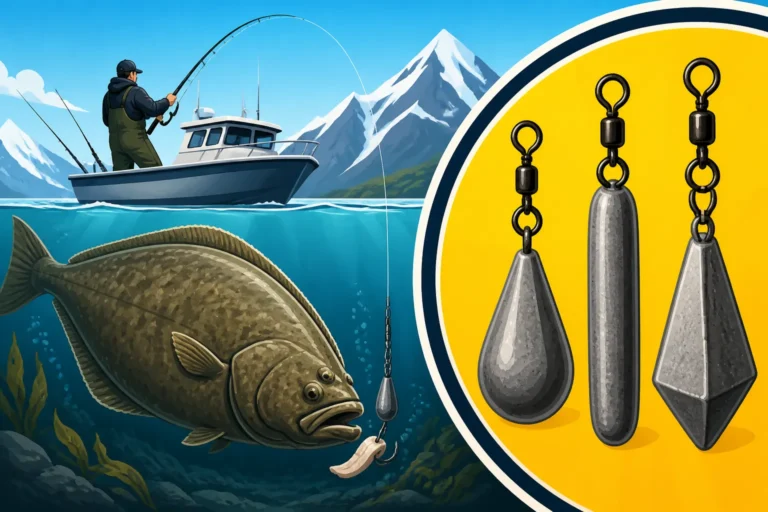
- Choosing the Right Weight: You'll typically need anywhere from 1 to 3 pounds of lead, sometimes even more, for Alaska halibut fishing.
- Pyramid Sinkers: Good for holding bottom in moderate current, as they dig in.
- Cannonball Sinkers: Excellent for getting down fast, but can roll in strong currents.
- Disc Sinkers (Pancake Weights): Often preferred by charter captains, these lay flat on the bottom, offering good stability in current and reducing snags.
- The exact weight you need depends on the depth, speed of the drift, and current. Always ask your captain or local tackle shop for advice on current conditions.
- Attaching the Weight: There are generally two methods for attaching the weight to your rig:
- Direct to Leader/Swivel: You can tie a short dropper line (often lighter mono, say 50-80 lb, designed to break away if snagged) from your main swivel or a separate dropper loop on your leader, then attach your weight to this dropper. This keeps the weight close to the bait.
- Slider Rig: Many prefer a slider rig, which allows the weight to slide freely on the main line above the main swivel (the one connecting your braid to the fluorocarbon leader). This setup ensures that when a halibut picks up the bait, it doesn't immediately feel the heavy lead, making them more likely to commit. Use a heavy-duty snap swivel on the weight for easy changes. Make sure the hole in your slider doesn't have any sharp edges that could fray your main line.
Tips for Maximizing Your Halibut Rig's Effectiveness
A perfectly tied rig is just the first step. Understanding how to use it effectively in Alaska's challenging environment will significantly improve your success.
Bait Presentation and Scent
Halibut are primarily sight and scent feeders, lurking on the bottom waiting for an easy meal. Your presentation needs to capitalize on this.
- Natural Movement: Your bait should look as natural as possible. If it's spinning uncontrollably, it's not appealing. Ensure herring or fish fillets are threaded straight. If jigging, use a slower, methodical lift-and-drop to imitate injured prey. Avoid rapid, jerky movements unless specifically targeting active fish with artificial lures.
- Freshness and Scent: The fresher your bait, the better. If using dead bait like herring, make sure it's firm and not mushy. Halibut have an incredible sense of smell. Using a good scent gel or oil, especially those infused with herring or shrimp, can make a huge difference, particularly in deep or murky water. Apply scent generously to your bait and even to your leader. Many anglers swear by commercial scents like Pro-Cure or Mike's Gel, which are widely available, including on Amazon.
- Vibrations and Action: Sometimes, an artificial lure can be combined with bait. Large lead-head jigs tipped with a strip of octopus or a herring fillet can provide both visual attraction and vibrations. The jigging action stimulates the halibut's lateral line, drawing them in even if they don't immediately see or smell the bait. Learning How to Jig for Halibut in Alaska can really up your game.
The Role of Current and Depth
Understanding the dynamics of the water column is crucial for keeping your bait where the halibut are.
- Staying on the Bottom: This cannot be stressed enough: halibut are bottom dwellers. If your weight isn't regularly touching the seafloor, you're not in the strike zone. You should periodically lift and drop your rod tip to feel the weight hit the bottom. If it's not hitting, you need to add more weight. This is why having a range of sinker sizes on hand is critical. Strong currents can easily lift lighter weights off the bottom, sweeping your bait away from the fish. Checking Alaska Fishing Regulations Explained will also give you an idea of the depth restrictions in certain areas.
- Managing Drift: Most halibut fishing in Alaska involves drift fishing from a boat. Your boat's speed and direction relative to the current will dictate how much line you need to let out and how much weight is required. If your line is trailing too far behind the boat (more than a 45-degree angle), you're probably not effectively presenting your bait. You'll need more weight or a slower drift. Your captain will often help manage this by using the boat's engines or a drift sock.
- Tidal Influence: Tides significantly impact current strength. Fishing during slack tide can sometimes be easier as less weight is needed, and your bait stays vertical. However, halibut also feed actively during stronger currents. Understanding How Tides Affect Alaska Salmon Fishing can give you insights into how to anticipate changes in current during your halibut trip.
Common Rigging Mistakes to Avoid
Even experienced anglers can make errors that cost them fish when targeting Alaska halibut.
- Weak Knots: This is perhaps the most common and devastating mistake. A strong knot is only as good as its weakest tie. Practice your knots until you can tie them quickly and securely, even in adverse conditions. Always moisten mono/fluoro knots before cinching them to reduce friction and heat, which can weaken the line. Ensure tag ends are trimmed closely but not so close that the knot can unravel.
- Undersized Tackle: Using a rod, reel, or line that's too light for the potential size of the fish and the deepwater conditions is a recipe for disaster. While tempting to bring lighter gear for other species, halibut demand their own heavy-duty setup. Don't underestimate these fish. For a complete overview, check out the Alaska Halibut: Complete Guide.
- Dull Hooks: A razor-sharp hook is essential for penetrating the tough, bony mouth of a halibut. Even new hooks can benefit from a quick touch-up with a file. Check your hook points frequently, especially after bouncing off the bottom, as they can quickly become dulled.
- Poor Bait Presentation: As mentioned, a spinning or mangled bait won't attract strikes. Take the time to properly rig your bait so it looks natural in the water column. Don't be afraid to pull your line up to check your bait after a few drifts, especially if you're not getting bites.
- Not Enough Weight: This is a cardinal sin in halibut fishing. If your bait isn't on the bottom, you're not going to catch halibut. Always start with enough weight to ensure you feel bottom regularly. It's better to start heavier and downsize if currents are lighter, than to be too light and miss the strike zone entirely. For more guidance on this, consider reading up on How to Bottom Fish for Alaska Halibut.
By mastering these rigging techniques and understanding the nuances of fishing for these magnificent creatures, you'll be well on your way to bringing home some delicious Alaskan halibut. Remember, preparation is key, and a well-built rig is your best friend in the battle against these deepwater giants.
Disclaimer
The information provided in this guide is for general informational purposes only and is not intended as legal or professional advice. Fishing regulations in Alaska can change frequently due to emergency orders and seasonal adjustments. Always consult the latest Alaska Department of Fish and Game regulations specific to your fishing location and target species before heading out. Safety should always be your top priority.