Alaska Two-Pole Fishing Rules
You're out there, rods rigged, lines in the water, soaking up that incredible Alaskan scenery, and a thought crosses your mind: "Wouldn't it be great to have another line out there?" It's a common feeling among anglers who want to maximize their chances or experiment with different techniques simultaneously. However, Alaska's fishing rules around using multiple poles aren't as straightforward as you might hope, often leading to confusion and even accidental violations. This guide is here to clear up all the mystery surrounding Alaska's two-pole fishing rules, explaining exactly when, where, and how you can legally fish with more than one rod.
Understanding the Basics of Two-Pole Fishing in Alaska
The concept of "two-pole fishing" sounds simple enough, doesn't it? Just put two fishing rods in the water. But in Alaska, like with many things, the reality is a little more nuanced than just rigging up a second rod. It's not just about having two rods; it's about actively fishing with them both at the same time, and that's where the regulations come into play. Many people, especially those new to the Last Frontier's unique angling landscape, assume a universal "one rod per person" rule. While that's often the default, there are specific provisions and exceptions that allow for more.
What Exactly Does "Two-Pole Fishing" Mean?
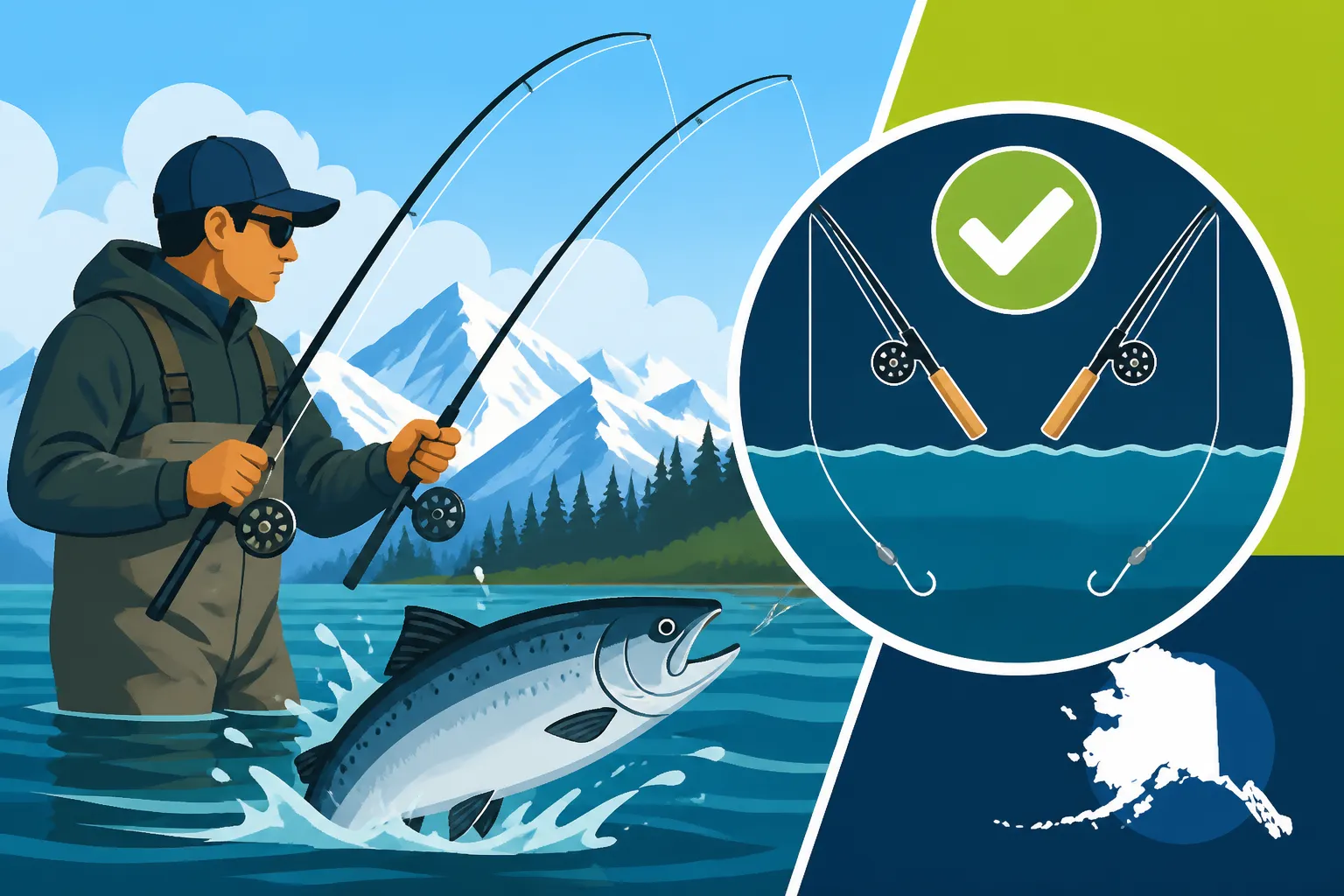
When the Alaska Department of Fish and Game (ADF&G) refers to "two-pole fishing," they are talking about the act of an individual angler actively using and controlling two separate fishing rods and lines at the same time. This is distinct from having a second rod assembled and ready on the bank, or a boat, as a backup. The key is that both lines are in the water, presenting bait or lures to fish. Think of it this way: if you hooked a fish on one rod, could you realistically manage to net it and still keep an eye on your second line for another bite? That's the essence of what two-pole fishing implies – active engagement with both.
For many, the appeal of deploying two poles is clear: it simply increases your odds. You can present two different types of bait, fish two different depths, or try two distinct techniques simultaneously. Imagine drift fishing with a cured salmon egg presentation on one rod while simultaneously casting a spinner with the other. Or, in a boat, having a bottom fishing rig deployed for halibut while casting for rockfish on another line. The flexibility and potential to double your success can be incredibly enticing, making understanding the specific allowances crucial for any angler hoping to make the most of their time on the water.
The General Rule: One Line, One Rod
Before we dive into the exceptions, it's essential to understand the baseline. In most freshwater and saltwater sport fisheries across Alaska, the general regulation dictates that an angler may only use one line with one unbaited or baited hook at any one time. This is the standard rule designed to ensure fair chase, prevent overharvest, and manage angler density, especially in popular, often crowded, fishing spots. If you're simply heading out to a local lake or stream without any specific research into the area's regulations, assume this one-pole rule applies. It's the safest bet to avoid any issues with local Fish and Wildlife Troopers.
This general rule applies to the vast majority of lakes, rivers, and even coastal marine areas for many species. Anglers often face fines or citations if they are found actively fishing with more than one line without the proper endorsement. It’s a common mistake, particularly for visitors from other states where multi-pole fishing might be standard practice with a general fishing license. Always remember that Alaska's fisheries are managed meticulously, and these rules are in place for the long-term health of its incredible fish populations.
When and Where Two-Pole Fishing is Allowed
Navigating Alaska's fishing regulations can sometimes feel like deciphering an ancient text, especially when it comes to specifics like two-pole fishing. It's not a blanket allowance; rather, it's a privilege granted under specific conditions and in certain areas. Understanding these nuances is key to a legal and successful fishing trip. The Alaska Department of Fish and Game (ADF&G) carefully delineates these areas to manage fishing pressure and protect sensitive fisheries.
The Two-Pole Endorsement: Your Ticket to More Lines
To legally fish with two poles simultaneously in designated areas, you absolutely need to purchase a Two-Pole Endorsement. This isn't just an option; it's a mandatory add-on to your regular Alaska fishing license. Think of it like a special stamp or endorsement for a specific activity. Without it, even if you're in an area where two-pole fishing is generally allowed, you'd be in violation.
The endorsement itself is usually an annual purchase, valid for the duration of your sport fishing license year (typically January 1st to December 31st). It allows you to use a maximum of two unbaited or baited lines while sport fishing in areas specifically open to two-pole fishing. It's crucial to remember that this endorsement doesn't override other specific regulations, such as bait restrictions, hook limits per line, or emergency orders. For example, if a river section has a "single hook, artificial lure only" rule, your two poles must still adhere to that, even with the endorsement. It merely adds a second line to your allowable gear. You can find detailed information about costs and types of licenses, including endorsements, in guides like Alaska Fishing License Cost and Types and Alaska Fishing License: Complete Guide.
Regional and Species-Specific Restrictions
This is where it gets really important to pay close attention. The Two-Pole Endorsement isn't a carte blanche for all of Alaska. There are significant geographical and species-specific limitations.
For instance, many freshwater systems, especially those critical for spawning salmon or with high angler densities like portions of the Kenai River, typically do not allow two-pole fishing, even with an endorsement. This is often to reduce conflicts between anglers, prevent accidental snagging, and protect fragile fish populations, especially during intense salmon runs. Specifically, fisheries targeting King Salmon often have strict one-rod rules to protect this highly valued and often struggling species. You'll find specific mention of this in sections like Alaska King Salmon Fishing Regulations and Limits. Similarly, designated "fly-fishing only" waters or certain trophy trout areas will never permit two poles, regardless of an endorsement.
Conversely, many saltwater fisheries, particularly those targeting halibut, lingcod, and various rockfish species, often do allow two-pole fishing with the endorsement. This is because these fisheries are typically conducted from boats, in larger areas, and often involve less direct angler-to-angler interaction compared to crowded riverbanks. For example, when you're out in Kachemak Bay chasing monster halibut, having a second line jigging for rockfish or another halibut can be incredibly productive and is usually permitted.
Areas commonly not allowing two-pole fishing:
- King Salmon fisheries: Often due to conservation concerns.
- Highly crowded freshwater river sections: To prevent tangles and maintain safety.
- Designated fly-fishing only waters: By definition, not compatible with multiple gear types.
- Specific trophy trout or steelhead waters: Management often focuses on quality over quantity.
Areas commonly allowing two-pole fishing with an endorsement:
- Many saltwater areas: Especially for halibut, rockfish, and general marine species from a boat.
- Certain freshwater lakes or slower-moving rivers: Where angler density is lower, and species are abundant.
- Ice fishing in many locations: Offering a great opportunity to spread lines for different species.
It's paramount to check the current Alaska Sport Fishing Regulations booklet for the specific region and water body you intend to fish. These regulations can change annually, and sometimes even in-season via Alaska Fishing Emergency Orders Explained. Ignorance of the rules is never an excuse for a violation, and the fines can be substantial.
Checking Current Regulations: Your Best Defense
I cannot stress this enough: always, always, always check the latest regulations. The ADF&G website is your absolute best friend. They publish detailed regulation booklets for different regions (Southcentral, Southeast, Arctic-Yukon-Kuskokwim, etc.), which are available online and at most license vendors. Before every trip, take a few minutes to review the specific rules for your intended fishing location, paying close attention to the "Methods and Means" section and any specific rules related to two-pole fishing.
It’s not uncommon for rules to be slightly different for residents versus non-residents, or for sport fishing versus personal use fishing, so make sure you're looking at the right section. For instance, you might find that Alaska Halibut Charter Regulations Explained have nuances about two poles, though typically, a charter client is only allowed one line, with the vessel often permitted more for baiting. This isn't personal multi-pole fishing, though.
Here's a quick table to help visualize common scenarios regarding two-pole fishing in Alaska:
| Scenario / Location Type | Species Targeted | Two-Pole Endorsement Required? | Generally Allowed? | Common Restrictions/Notes |
|---|---|---|---|---|
| Saltwater (Boat) | Halibut, Rockfish, Lingcod | Yes | Often | Check specific area, season, and bag limits. |
| Major Salmon Rivers (e.g., Kenai, Russian) | King Salmon, Sockeye, Coho | No | Rarely | Almost always one rod only, especially during runs. |
| Interior Lakes/Rivers | Trout, Pike, Grayling | Yes | Sometimes | Varies widely; check local regulations closely. |
| Ice Fishing | Trout, Pike, Burbot | Yes | Often | Can be very effective, but hook limits per line apply. |
| Designated Fly-Fishing Waters | Trout, Grayling | N/A | Never | Strictly one fly rod, artificial flies only. |
| Personal Use Fisheries (e.g., Dipnetting) | Salmon | N/A | No (different gear) | Personal use is a different fishery type with specific rules. See Alaska Personal Use Fishing Explained. |
This table provides a general overview, but again, the official ADF&G regulations are your ultimate source of truth.
How to Obtain and Use an Alaska Two-Pole Endorsement
So, you've done your homework, found a spot where two-pole fishing is allowed, and now you're ready to get that endorsement. The process is relatively straightforward, but there are a few practical considerations to keep in mind once you've got it. It's not just about paying a fee; it's about being prepared and responsible on the water.
Eligibility and Purchase Process
To be eligible for an Alaska Two-Pole Endorsement, you must first possess a valid Alaska Sport Fishing License. This applies to both residents and non-residents. You can't just buy the endorsement by itself; it's an add-on to your existing license. If you're wondering about your main license, check out Alaska Non-Resident Fishing License Guide or Alaska Resident Fishing License: Cost and How to Buy.
Purchasing the endorsement is quite simple:
- Online: The easiest and most convenient way is through the ADF&G online licensing system. If you're already buying your main license or a King Salmon Stamp, you can simply add the two-pole endorsement to your cart. You'll receive a printable license with the endorsement clearly listed. This is how many folks get their How to Get an Alaska Fishing License Online.
- License Vendors: Most sporting goods stores, general stores, and many charter offices across Alaska are authorized license vendors. You can purchase your license and endorsement in person there. They'll print it out for you on the spot.
- ADF&G Offices: You can also purchase licenses and endorsements directly from ADF&G offices located in major towns like Anchorage, Fairbanks, Juneau, and Soldotna.
The cost of a two-pole endorsement is typically quite reasonable, adding a small fee to your overall license cost. For residents, it's often around $10, and for non-residents, it's usually $30. Always confirm current pricing directly with ADF&G or a vendor, as these figures can be subject to change.
Practical Considerations for Two-Pole Angling
Once you have your endorsement and are fishing in an authorized area, there are some practicalities to consider to make your two-pole experience enjoyable and effective, rather than a tangled mess or a source of frustration.
- Gear Management: Fishing with two poles can be tricky, especially if you get a double hook-up. Consider rod holders if fishing from a boat or bank. For shore fishing, setting one rod in a stable holder while actively casting or attending to the other is a good strategy. Many anglers find products on Amazon like adjustable rod holders or bank sticks incredibly useful for managing multiple rods.
- Spacial Awareness: Be mindful of other anglers, especially in popular spots. Two lines take up more space and increase the chance of tangles with nearby fishermen. Ethical angling means being considerate.
- Technique Pairing: Think about how your two techniques complement each other. For example, a stationary bait rig on one pole and an active jigging or casting technique on the other. This allows you to cover different water columns or presentation styles.
- Line & Leader Strength: When you have two lines out, a sudden bite on one might distract you from potential snags or strikes on the other. Ensure your lines and leaders are robust enough to handle unexpected stresses.
- Weather Conditions: Wind and current can make managing two lines significantly harder, increasing tangles and requiring more constant attention. On a calm day, it might be a breeze; in a strong breeze, it might be a nightmare.
- Species & Bag Limits: Remember, the two-pole endorsement allows you two lines, but your overall daily and annual bag limits for specific species (e.g., Alaska Salmon Bag Limits by Species or Alaska Halibut Bag Limits Explained) remain the same. You can't keep more fish just because you're using two poles. You still need to accurately record any retained fish on your Alaska Harvest Record Card Explained.
Being prepared means not only having the right paperwork but also the right mindset and gear setup to manage both lines effectively and safely.
Important Considerations and Potential Pitfalls
Even with your two-pole endorsement in hand, fishing in Alaska with two lines isn't simply a matter of "go for it." There are crucial details, ethical considerations, and potential pitfalls that every angler needs to be aware of. The vastness of Alaska and the dynamic nature of its fisheries mean constant vigilance is required to stay on the right side of the rules and ensure a positive experience for yourself and others.
Enforcement and Penalties for Violations
Let's be blunt: Alaska Fish and Wildlife Troopers take fishing regulations very seriously. These rules are in place to protect the state's incredibly valuable natural resources and to ensure sustainable fishing for generations to come. Fishing with two poles without the proper endorsement, or in an area where it's prohibited, is a violation, and the consequences can be significant.
Penalties often include:
- Fines: These can range from hundreds to thousands of dollars, depending on the severity of the violation and any previous offenses.
- Confiscation of Gear: Troopers have the authority to confiscate fishing gear used in a violation, which could mean losing one or both of your expensive rod and reel setups.
- Loss of Fishing Privileges: In more serious cases, you could face a temporary or permanent suspension of your fishing privileges in Alaska, and sometimes across states that are part of the Interstate Wildlife Violator Compact.
- Criminal Charges: While rare for a simple two-pole violation, repeat offenders or those involved in other illegal activities could face more severe criminal charges.
The cost of a two-pole endorsement is minimal compared to the potential financial and legal repercussions of a violation. Always carry your valid fishing license and endorsement with you, ready to present to a Trooper. They're often out there on the water, patrolling popular spots and remote areas alike. For more details on what can go wrong, check out Alaska Fishing Violations and Fines.
Ethical Angling and Courtesy on the Water
Beyond the letter of the law, there's the spirit of ethical angling. When you're using two poles, you effectively double your footprint on the water.
- Managing Your Lines: Can you genuinely manage two lines responsibly? If you hook a fish on one, will the other line be left unattended, potentially snagging another fish or drifting into someone else's line? It's about maintaining control and not creating a nuisance or danger.
- Crowded Conditions: In Alaska, especially during peak salmon runs on rivers like the Kenai, "combat fishing" is a real thing. Using two poles in such tight quarters is almost universally frowned upon, if not outright illegal. It increases the likelihood of tangles, arguments, and frustration for everyone. Think about others.
- Preventing Snagging: Leaving a line unattended, especially with bait, increases the risk of snagging fish unintentionally, which can injure them or lead to waste. Responsible two-pole fishing means being actively engaged with both lines.
- Respecting Wildlife: More lines in the water can also increase the chances of interaction with wildlife, such as eagles or bears drawn to your catch. Always be aware of your surroundings, especially when distracted by multiple lines.
True enjoyment of Alaska fishing comes from a combination of successful catches and respectful participation in the outdoors. The two-pole endorsement is a privilege, and with it comes the responsibility to use it wisely and courteously.
The Dynamic Nature of Alaska Fishing Regulations
One last, but absolutely vital, point: Alaska's fishing regulations are not static. They are dynamic, constantly changing to adapt to fish stock health, run timings, and environmental factors. What was legal last year, last month, or even yesterday, might be different today. This is why resources like How Often Do Alaska Fishing Rules Change and Alaska Fishing Emergency Orders Explained are so important.
- Emergency Orders: The ADF&G frequently issues Emergency Orders (EOs) that can open, close, or modify fisheries on very short notice. These EOs can change bag limits, permitted gear, and even the allowance of two-pole fishing in certain areas. It's common to see King Salmon fisheries, for example, closed or restricted mid-season due to low returns.
- Annual Regulation Booklets: Always consult the current year's regulation booklet. Don't rely on an old one or information from forums that might be outdated. The ADF&G website and physical copies from vendors are your definitive sources.
- Asking the Experts: If you're unsure about specific local rules, don't hesitate to ask local guides, reputable charter operators, or personnel at ADF&G offices. They often have the most up-to-date information for their specific areas. Many charter companies, like those in Homer or Seward, will clarify what's allowed on their vessels.
Being an informed and responsible angler in Alaska means doing your homework every single time you head out. While the two-pole endorsement offers a fantastic opportunity to enhance your fishing experience, it's a tool that must be used within the specific, and sometimes changing, boundaries set by the state to protect its irreplaceable fisheries.
Disclaimer
The information provided in this guide is for general informational purposes only and does not constitute legal advice. Fishing regulations in Alaska are complex and subject to change. Always consult the most current Alaska Department of Fish and Game (ADF&G) regulations, emergency orders, and local advisories for the specific area and species you intend to fish before heading out. Failure to do so may result in fines or penalties.