Alaska Rainbow Trout Slot Limit Explained
Navigating Alaska's fishing regulations can feel like trying to untangle a particularly stubborn knot in your fishing line – it’s often complex, frustrating, and if you get it wrong, it can lead to a lot of headaches. One of the trickier regulations, especially for those new to the Last Frontier, is the rainbow trout slot limit. This guide is here to break down exactly what a slot limit means for Alaska's prized rainbow trout and how to stay compliant while enjoying some incredible fishing.
Understanding Slot Limits in Alaska Fisheries
When you hear "slot limit," it might sound like something out of a casino, but in the world of fishing, it's a vital tool for wildlife management. Alaska, with its incredible, yet sometimes fragile, fisheries, employs various methods to protect its fish populations, and slot limits are a key part of that strategy. It’s all about ensuring there are enough fish for tomorrow, even while we enjoy catching them today.
Why Alaska Uses Slot Limits for Rainbow Trout
The decision to implement slot limits for species like rainbow trout in Alaska isn't arbitrary; it's a carefully calculated conservation measure designed to achieve specific ecological goals. Think about it: if everyone kept every fish they caught, regardless of size, what would happen to the population? Over time, you’d see a decline in the number of larger, more reproductively successful fish, which are crucial for spawning and passing on strong genetics.
Slot limits aim to protect these vital breeders and ensure a healthy age structure within the population. By allowing anglers to keep fish within a specific "slot" (e.g., smaller, younger fish), while requiring the release of larger, more mature fish (or sometimes very small ones), the Alaska Department of Fish and Game (ADF&G) can help sustain the fishery for future generations. It’s a delicate balance between providing recreational opportunities and safeguarding the natural resources that make Alaska such a fishing mecca. This careful management is often discussed in broader terms when examining topics like Alaska Fishing Regulations Explained.
General Principles of a Slot Limit
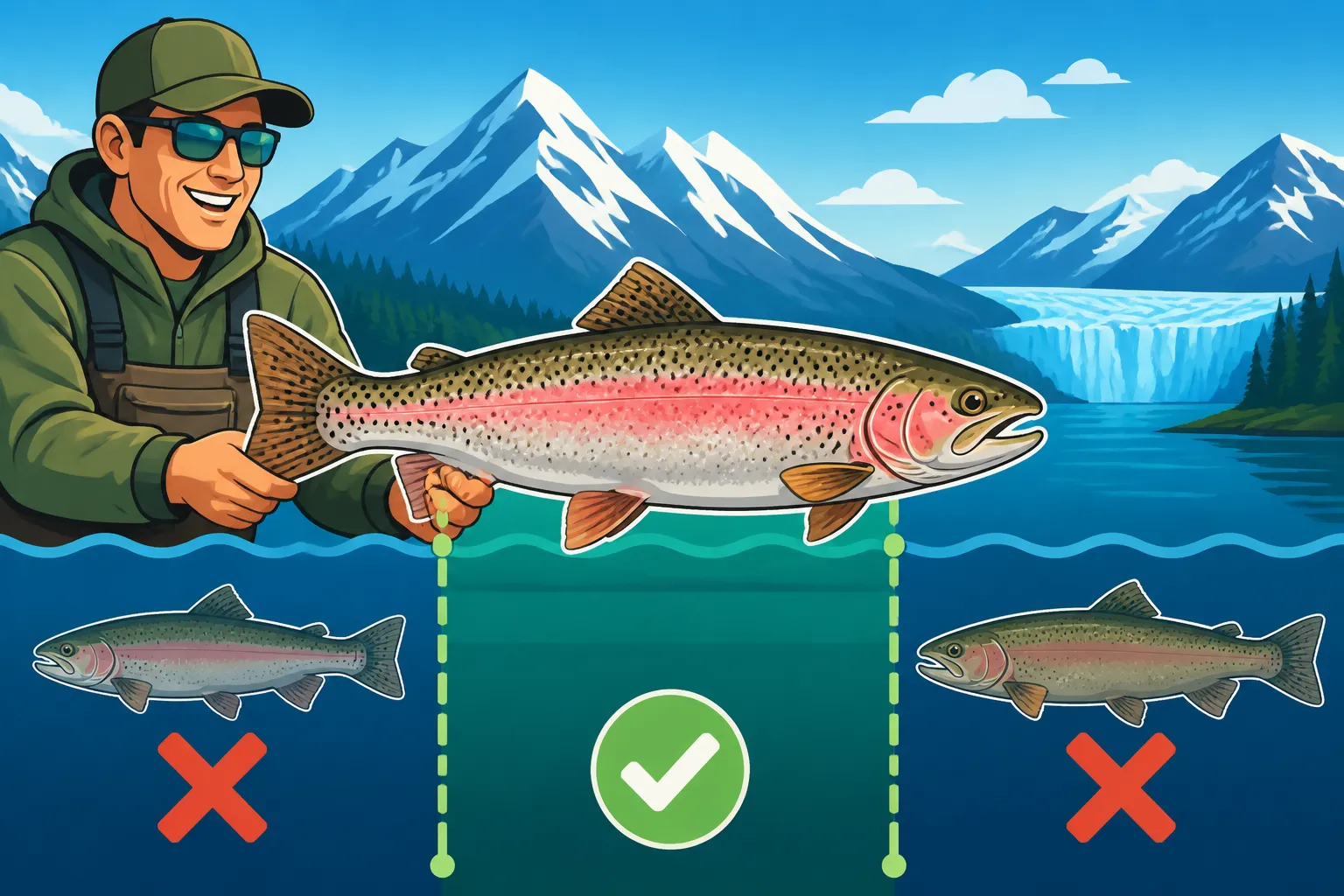
At its core, a slot limit defines a range of fish sizes that anglers are either permitted or prohibited from keeping. It's not a blanket "keep all fish under X inches" or "release all fish over Y inches." Instead, it creates a specific "slot" of allowable fish. For instance, a common slot limit might allow you to keep fish under a certain size, or over a certain size, but not fish within an intermediate range.
Conversely, some slot limits might permit you to keep fish only within a specific size range, requiring the release of anything smaller or larger. This nuanced approach helps managers protect juveniles that haven't had a chance to spawn, as well as the large, mature adults that contribute most significantly to the gene pool. It’s a way to selectively harvest while building or maintaining a robust fishery.
The Alaska Rainbow Trout Slot Limit Specifics
Now, let's get into the nitty-gritty of how these slot limits actually work on the ground. The most important thing to remember about Alaska's fishing regulations is that they are rarely one-size-fits-all. What's legal on one river might be a violation on another, or even a different section of the same river!
Statewide vs. Region-Specific Regulations
When it comes to Alaska rainbow trout, there isn't one universal slot limit that applies across the entire state. Alaska is vast, with an incredible diversity of ecosystems, and fishing pressure varies dramatically from one region to the next. Because of this, ADF&G implements highly localized regulations, often specific to a particular river, lake, or even a stretch of river. For a deeper dive into these localized rules, check out articles like Alaska Fishing Regulations by Region.
For example, a river in Southcentral Alaska might have a completely different slot limit than a remote stream in the Interior. The famous Kenai River, particularly its "trophy trout" sections, has very restrictive regulations, often mandating catch-and-release for all rainbow trout, effectively acting as an infinite slot limit where all fish must be released. Other areas might allow for the retention of smaller trout while protecting the larger ones. It's absolutely crucial for anglers to consult the specific regulations for the body of water they intend to fish before wetting a line.
How to Interpret the Slot Limit Chart/Language
The first step to understanding any slot limit is knowing how to read the official ADF&G regulation booklet. These booklets, available online and at local sporting goods stores, are your bible for legal fishing. When you look up rainbow trout regulations, you'll often see specific language that outlines the slot limits.
Let's imagine a hypothetical example: "Rainbow Trout: daily bag limit of 2 fish, only 1 of which may be 18 inches or greater. No retention of fish between 16 and 18 inches." What this means is:
- Daily Bag Limit: You can keep a maximum of two rainbow trout per day.
- Size Restrictions:
- You can keep one fish that is less than 16 inches.
- You cannot keep any fish that is between 16 and 18 inches (this is the "slot" of protected fish).
- You can keep one fish that is 18 inches or greater.
- Since your total bag limit is 2, if you keep one fish 18 inches or greater, your second fish must be less than 16 inches. You could also keep two fish under 16 inches.
This example illustrates how a slot limit allows for some harvest while protecting the intermediate-sized fish that are often just reaching maturity or are vital to the spawning population. Learning How to Read Alaska Fishing Regulations effectively is truly one of the most valuable skills an angler can possess here.
Common Slot Limit Examples for Rainbow Trout
While a single statewide slot limit for rainbow trout doesn't exist, we can look at common approaches and specific regional examples to illustrate the concept.
Consider a section of the Susitna River drainage. Regulations might state: "Rainbow Trout: daily bag limit of 2 fish, 16 inches or less. No retention of rainbow trout over 16 inches." In this scenario, the slot limit dictates that any rainbow trout you wish to keep must be 16 inches or shorter. Any fish larger than that, regardless of how beautiful or tempting, must be immediately released. This protects the larger, more mature trout, ensuring they can continue to spawn and contribute to the population.
Another common scenario, especially in certain designated trophy waters like portions of the Kenai River (particularly the famous sections around Cooper Landing and the middle Kenai), is often "Catch-and-Release Only." Here, the slot limit is effectively infinite – all rainbow trout, regardless of size, must be released. These areas are specifically managed for their exceptional size and numbers of rainbow trout, offering anglers the thrill of catching truly massive fish without impacting the population. Anglers interested in these areas should specifically research Alaska Kenai Rainbow Trout Catch-and-Release Areas.
| Regulation Type | Description | Example Scenario | Fish to Keep | Fish to Release |
|---|---|---|---|---|
| Simple Length Limit | Keep fish under a maximum size. | Daily bag 2 fish, 16 inches or less. | 2 fish, each under 16" | Any fish over 16" |
| Protected Slot | Keep fish outside a protected size range. | Daily bag 2 fish; no retention 16-18". | 2 fish under 16" OR 1 under 16" & 1 over 18" | All fish 16" to 18" |
| Minimum Length Limit | Keep fish over a minimum size. (Less common for trout but good to know) | Daily bag 2 fish, 18 inches or greater. | 2 fish, each over 18" | Any fish under 18" |
| Catch-and-Release | All fish must be released. | Daily bag 0 fish. | None | All fish |
Always remember that these examples are illustrative. Your actual fishing trip demands you check the current ADF&G regulations for the specific waters you'll be fishing.
Practical Implications for Anglers
Understanding the slot limit is one thing; actually adhering to it while you're out on the water is another. There are practical steps you can take to ensure you're always fishing legally and responsibly, especially when a significant portion of your catch might need to be released.
Essential Gear for Measuring and Releasing
When slot limits are in play, a reliable measuring device is non-negotiable. You can't just guess a fish's length and hope for the best. A sturdy, waterproof tape measure is essential. Many anglers prefer self-adhesive measuring tapes that can be stuck to the side of a boat or cooler for quick, easy, and accurate measurements. You can find excellent options for these on Amazon, often designed specifically for kayak or boat use.
Beyond measuring, having the right tools for a gentle release is paramount. Look for knotless, rubberized landing nets. These nets are much kinder to a fish's slime coat, fins, and scales compared to traditional knotted nylon nets. Investing in a good pair of long-nosed pliers or a de-hooking tool is also wise, especially if you're using treble hooks or deeply hooked lures. These tools minimize handling time and reduce stress on the fish. Again, a quick search on Amazon will show you a variety of specialized fishing pliers and release tools that can make a huge difference in a fish's survival rate. For more on this, consider exploring Alaska Catch-and-Release Best Practices.
Best Practices for Catch-and-Release with Slot Limits
Since a significant number of fish caught under slot limits will need to be released, mastering proper catch-and-release techniques is crucial. The goal is always to maximize the fish's chances of survival.
First, fight the fish quickly and efficiently. While it's tempting to "play" a fish, a prolonged fight can exhaust it, building up lactic acid that makes recovery difficult. Once landed, minimize its time out of the water. Handle the fish gently with wet hands, or better yet, keep it in the water while you remove the hook and take a quick measurement. Avoid squeezing the fish or touching its gills, as these are highly sensitive areas. If a fish is deeply hooked, it's often better to cut the line as close to the hook as possible rather than tearing its throat trying to remove the hook. By taking these steps, you contribute directly to the health of the very fishery you're enjoying.
Avoiding Violations and Penalties
Ignoring or misunderstanding slot limits can lead to serious consequences, including hefty fines, confiscation of gear, and even loss of fishing privileges. Alaska State Troopers and ADF&G enforcement officers are diligent, and "I didn't know" is rarely an acceptable excuse. Ignorance of the law truly is no defense.
To absolutely avoid violations, always purchase your Alaska Fishing License: Complete Guide and a King Salmon Stamp if needed, review the regulations for your specific fishing area before you go, and always be prepared with your measuring tools. If in doubt about a fish's size or the regulation, the safest bet is always to release it. Double-checking regulations, especially for sensitive species like rainbow trout, is a core responsibility of every angler. You can learn more about the potential pitfalls in our guide on Alaska Fishing Violations and Fines.
Locating Current Rainbow Trout Regulations
Given how often regulations can change, knowing where to find the most up-to-date information is just as important as knowing the regulations themselves. Relying on outdated information, or even word-of-mouth from fellow anglers, can get you into trouble.
Official Sources for Alaska Fishing Regulations
The primary and most authoritative source for all Alaska fishing regulations is the Alaska Department of Fish and Game (ADF&G). Their website, adfg.alaska.gov, is a treasure trove of information. Here you can download the annual Sport Fishing Regulations Summary booklet for your specific region – usually Southcentral, Southeast, Arctic-Yukon-Kuskokwim, or Interior. These booklets detail all the species-specific rules, including bag limits, possession limits, and, of course, any applicable slot limits for rainbow trout.
It’s always a good idea to download the digital version to your phone or print a copy to carry with you, especially if you're heading to an area with unreliable cell service. Sporting goods stores across Alaska, like Sportsman's Warehouse in Anchorage or Fred Meyer locations, also typically have physical copies of these booklets available free of charge.
The Importance of Checking Emergency Orders
Here's where things can get tricky: even after you've read the annual regulation booklet cover to cover, you're not entirely in the clear. Alaska's fisheries are incredibly dynamic, and conditions can change rapidly due to factors like salmon run strength, water levels, or environmental concerns. When these changes occur, ADF&G issues "Emergency Orders."
Emergency Orders supersede the printed regulation booklets and can modify bag limits, close fisheries entirely, change legal gear, or adjust slot limits – sometimes with very little notice. For instance, a particular river known for its large rainbow trout might suddenly go from a "2 fish, 16 inches or less" slot to "catch-and-release only" if the underlying salmon populations (which rainbow trout prey on) are struggling. It’s imperative to check these emergency orders just before you head out on your trip. The ADF&G website has a dedicated section for emergency orders, and many local tackle shops or guide services will also post them prominently. We can't stress enough the importance of knowing How to Check Alaska Emergency Orders Before Fishing – it could save your trip!
Disclaimer
The information provided in this guide is for general informational purposes only and is not a substitute for the official Alaska Department of Fish and Game (ADF&G) regulations. Fishing regulations in Alaska are complex, subject to change through emergency orders, and vary by location and time of year. Always consult the current official ADF&G Sport Fishing Regulations Summary for the specific area you plan to fish and check for any active Emergency Orders before commencing any fishing activity. Failure to comply with regulations can result in significant fines and penalties.