Alaska Steelhead Fishing Regulations and Limits
Planning a trip to fish for Alaska steelhead can feel like deciphering ancient hieroglyphs, especially when it comes to understanding all the regulations and limits. It’s not just about knowing where to find these incredible, sea-run rainbow trout, but how you can legally and ethically pursue them, keeping track of every detail to avoid disappointment or, worse, a violation. This guide will meticulously break down Alaska's steelhead fishing regulations, offering clear insights into limits, gear restrictions, and how to stay on the right side of the law.
The Elusive Steelhead and Alaska's Unique Approach to Its Conservation
Steelhead fishing in Alaska is often considered the pinnacle for many fly anglers and dedicated sport fishermen. These anadromous rainbow trout, meaning they migrate from freshwater to the ocean and back to spawn, offer an incredible challenge and reward. But their migratory nature and relatively smaller populations compared to salmon runs mean they require very specific, and often more stringent, management to ensure their survival and future abundance. Ignoring these nuanced rules isn't just a risk for your trip; it can genuinely impact these vulnerable fish stocks.
What Makes Alaska Steelhead Fishing So Special and Challenging
Picture this: you're standing in a remote Alaskan river, perhaps on the Alaska Peninsula or a pristine stream in Southeast Alaska, the mist hanging low, and the only sounds are the rushing water and the call of a bald eagle. Suddenly, your line goes tight, and a chrome-bright steelhead erupts from the water, peeling line from your reel with incredible speed. It’s an experience that defines wilderness fishing. What makes these fish so special is not just their beauty and fighting prowess, but their often elusive nature. They aren't found in every river, and their runs can be less predictable than the massive salmon migrations. This scarcity and high value for sport fishing place them under intense scrutiny by the Alaska Department of Fish and Game (ADF&G), resulting in regulations designed to protect them at every stage of their life cycle. Anglers often spend years refining their techniques, studying specific river flows, and understanding local nuances just for a handful of opportunities at these magnificent fish.
Understanding the "Rainbow Trout" Connection and Regulatory Distinctions
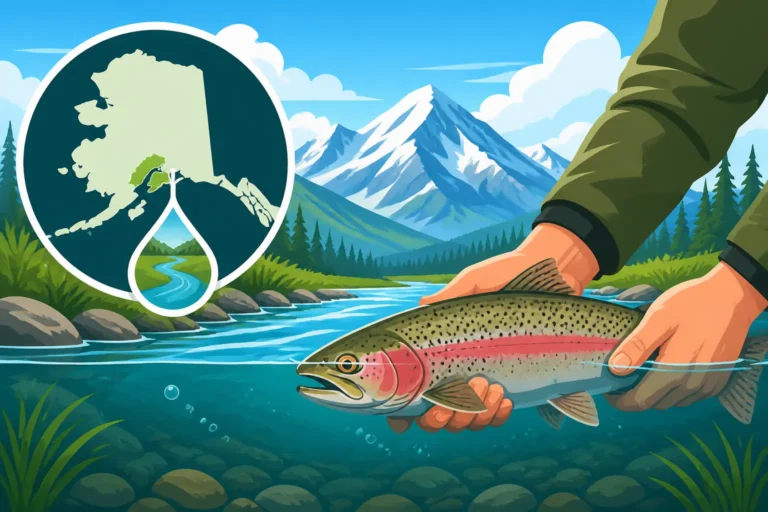
Here's where it often gets confusing for many anglers, especially those new to Alaska or coming from other states: steelhead are rainbow trout. Specifically, they are the sea-run form of rainbow trout. However, for regulatory purposes in Alaska, they are often treated as a distinct species due to their unique life history and ecological vulnerability. You might read about Alaska Rainbow Trout Regulations, but it's critical to understand that when a rainbow trout decides to migrate to the ocean, it transforms into a steelhead, both physically and in the eyes of the law regarding harvest limits and specific seasonal closures. The ADF&G typically defines steelhead as rainbow trout that are 20 inches or larger in length and are either found in salt water or are clearly returning from salt water to spawn in freshwater systems. This distinction is paramount because the regulations governing their harvest are usually much stricter than for resident rainbow trout that spend their entire lives in freshwater lakes and rivers. Failing to correctly identify a fish can lead to accidental violations, which is a frustration many anglers face.
Navigating Statewide and Regional Steelhead Regulations
Alaska's vastness means that fishing regulations are rarely a one-size-fits-all affair. While there are some overarching principles, the specific rules for steelhead fishing can vary dramatically depending on which region you're in, and even down to individual river systems. This regional variation is a direct response to the differing health and characteristics of steelhead populations across the state. It’s why simply knowing "Alaska regulations" isn’t enough; you need to dig into the specifics for your planned fishing location.
General Statewide Rules and Key Distinctions
Before you even step foot in a boat or cast a line, remember that a valid Alaska Fishing License: Complete Guide is always required for residents and non-residents alike, with some exceptions for very young children or specific subsistence fisheries. For steelhead, the most critical statewide rule that frequently applies is the emphasis on catch-and-release fishing. Many prime steelhead rivers operate under strict catch-and-release mandates, meaning no steelhead can be kept. This conservation measure is in place to protect spawning populations and ensure maximum reproductive success.
Beyond catch-and-release, other statewide considerations often include:
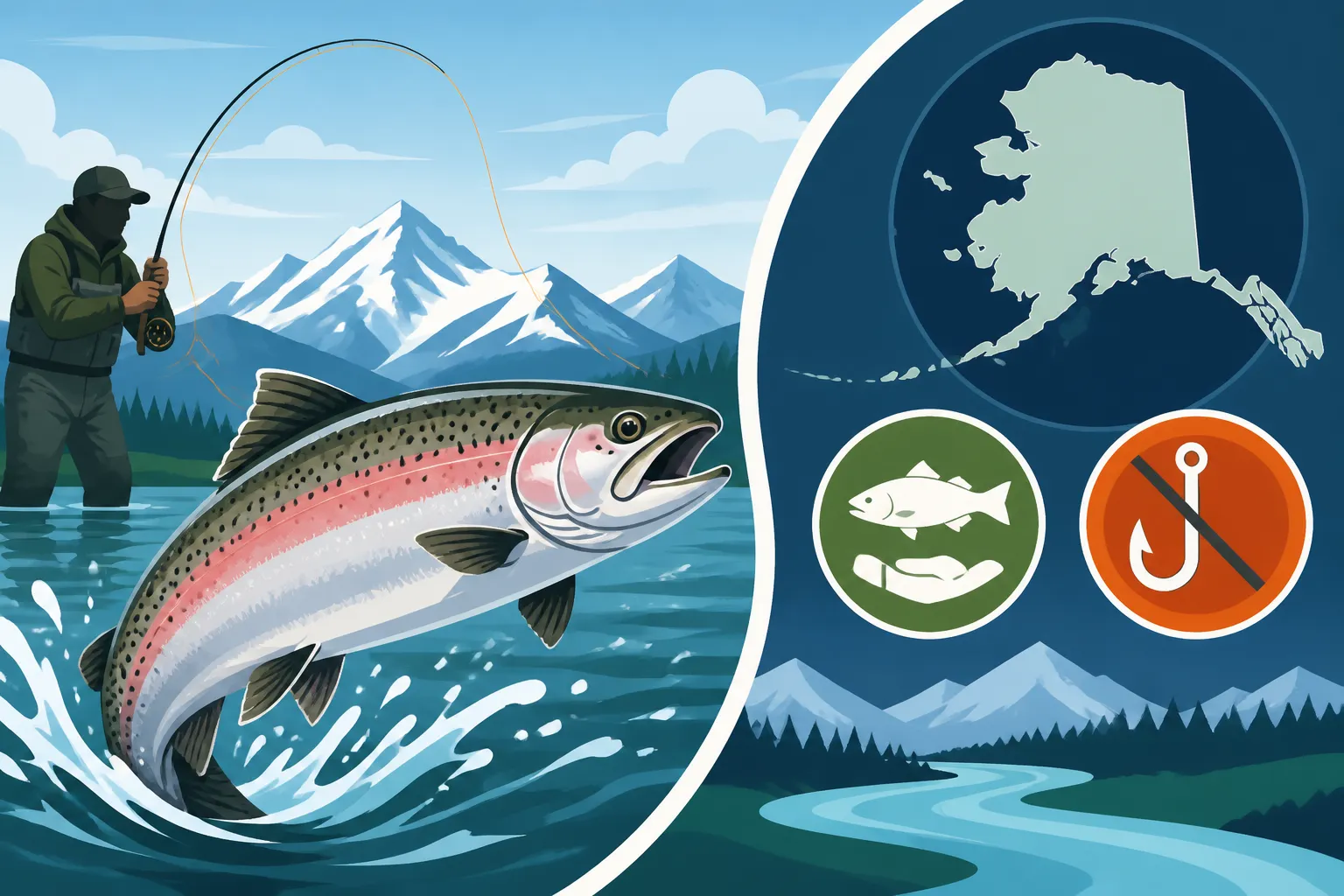
- Barbless Hooks: In many steelhead fisheries, especially catch-and-release areas, the use of barbless hooks is mandatory. This makes it easier to remove the hook with minimal damage to the fish, increasing its chances of survival. You might want to check out Alaska Barbless Hook Requirements for more detail.
- Bait Restrictions: The use of bait can be completely prohibited in certain steelhead rivers, particularly where there are strong catch-and-release philosophies or a need to protect juvenile salmon and trout. Understanding Alaska Bait Restrictions Explained is crucial.
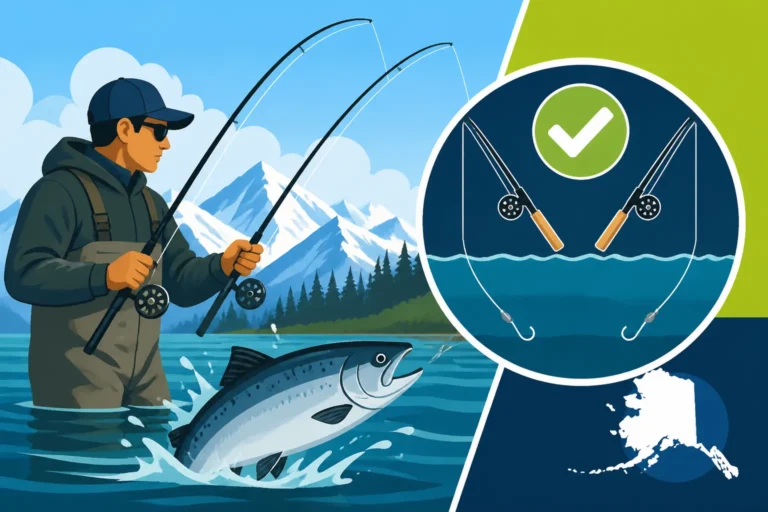
- Single-Hook Rule: Sometimes, even if bait is allowed, only single hooks may be permitted, further reducing the potential for deep hooking and harm. These gear restrictions are not arbitrary; they are carefully designed conservation tools.
These general rules serve as a baseline, but the complexity truly sets in when you consider the unique management zones.
Diving Into Specific Regional Management Areas
Alaska is divided into several major regulatory regions, each with its own ADF&G management plans that cascade down to specific bodies of water. For steelhead, some regions are particularly renowned and, consequently, have very detailed regulations.
- Southeast Alaska (Region 1): This region, encompassing areas like Ketchikan, Juneau, and Sitka, is a stronghold for steelhead. Many rivers here, such as those on Prince of Wales Island or near Sitka, have specific daily and annual limits, often with size restrictions (e.g., only one fish over 36 inches per year, or a complete catch-and-release mandate). Some rivers might be completely closed to steelhead harvest for extended periods or have highly compressed seasons. The ADF&G regulation booklets for Southeast Alaska are notoriously detailed, and checking emergency orders is paramount.
- Southcentral Alaska (Region 2): While not as famous for steelhead as the Southeast, some systems in Southcentral, like those on the Kenai Peninsula or near Valdez, do have steelhead runs. These fisheries are often managed even more conservatively, with many being strictly catch-and-release or having very low, single-fish limits and short seasons. For instance, some Kachemak Bay drainages might have unique rules you need to be aware of.
- Bristol Bay and Western Alaska (Region 3 & 4): These areas are more known for their incredible salmon and rainbow trout fishing, but some rivers do see steelhead. Regulations here might be folded into general rainbow trout rules, but again, the 20-inch distinction for steelhead often applies, and harvest limits are usually minimal or non-existent for the larger, anadromous fish.
It’s not uncommon to find that even within a region, one river might allow for a limited harvest, while an adjacent river 10 miles away is entirely catch-and-release. This highlights the absolute necessity of consulting the most current Alaska Fishing Regulations Explained for the exact waters you plan to fish, right before your trip. These booklets are available online through the ADF&G website or at most sporting goods stores in Alaska.
Daily and Annual Bag Limits for Steelhead Anglers
When it comes to steelhead, the concept of "limits" is often very conservative, if they exist at all for retention. Unlike some salmon species where daily bag limits can be quite generous during peak runs, steelhead are typically managed with extreme caution due to their sensitive populations and fluctuating returns. This is where many anglers, particularly non-residents, can get caught off guard, expecting to take home a trophy. The reality is usually quite different, leaning heavily towards preservation.
Resident vs. Non-Resident Limits and Size Restrictions
One of the most significant distinctions in Alaska fishing regulations is often between residents and non-residents, and steelhead are no exception. Historically, and still in some areas, non-resident anglers face much stricter limits, or outright prohibitions, on harvesting steelhead compared to residents. This policy aims to prioritize local harvest opportunities while minimizing the overall impact on the resource from the larger volume of visiting anglers.
Here’s a general breakdown, though always check current regulations for specific areas:
| Angler Type | Daily Bag Limit (Typical) | Annual Bag Limit (Typical) | Size Restrictions (Common) | Notes |
|---|---|---|---|---|
| Resident | 1 Steelhead (often) | 1-2 Steelhead (often) | Varies, sometimes over 36" | Highly variable by region/river. Some areas are strictly C&R. |
| Non-Resident | 0-1 Steelhead (rarely) | 0-1 Steelhead (rarely) | Often over 36" if allowed | Many areas are strictly C&R for non-residents. |
Important Note: The "typical" numbers above are highly generalized. For a vast majority of Alaska's premier steelhead fisheries, the limit for all anglers, resident or non-resident, is zero retention—meaning it is strictly catch-and-release. When retention is allowed, it’s usually one steelhead per year, often with a significant minimum size restriction (e.g., 30 inches or 36 inches total length). This makes catching a legally harvestable steelhead a truly rare event. For instance, in some Southeast Alaska drainages, non-residents cannot retain any steelhead at all, while residents might be allowed a single trophy-sized fish annually. It’s a testament to how prized and protected these fish are.
The Importance of the Alaska Harvest Record Card for Steelhead
If you are fortunate enough to fish in an area where steelhead retention is permitted, even for a single fish, the Alaska Harvest Record Card becomes absolutely essential. This card, which is typically printed on your physical fishing license or obtained separately, is your personal ledger for certain species. For steelhead, similar to king salmon, you are often required to immediately record any retained fish on this card.
What you need to record:
- Date of Harvest: The exact day you caught and kept the fish.
- Location: The specific body of water where the fish was taken.
- Species: Clearly mark "Steelhead."
- Length: The total length of the fish, often required for size-restricted species.
This data is vital for ADF&G biologists to monitor harvest rates and assess the health of specific fisheries. Failing to record a retained steelhead immediately, or not having your harvest record card with you while fishing for species requiring it, can result in significant fines and penalties. Think of it as your personal legal fishing diary. For a deeper dive, check out What Is the Alaska Harvest Record Card and How to Fill Out an Alaska Harvest Record Card. It's a small administrative step that holds enormous importance for conservation.
Mandatory Gear Restrictions and Responsible Angling Practices
Alaska's commitment to conserving its wild fisheries, particularly sensitive populations like steelhead, extends deeply into the types of gear anglers are permitted to use. These restrictions aren't designed to make fishing harder, but rather to minimize harm to fish, particularly those that are caught and released. Responsible angling practices, combined with adherence to gear rules, are the backbone of sustainable steelhead fishing in the Last Frontier.
Barbless Hooks, Bait Bans, and Single-Hook Requirements
These three restrictions are the most common and crucial regulations you'll encounter in steelhead fisheries. They are paramount for increasing the survival rate of released fish.
- Barbless Hooks: In virtually every designated steelhead river or watershed in Alaska, especially those managed for catch-and-release, barbless hooks are mandatory. This means any hook you use, whether on a fly, a lure, or for bait (if allowed), must have the barb either filed off or crimped down completely. The reason is simple: barbless hooks come out cleaner and easier, causing less tissue damage to the fish's mouth and reducing the time the fish is out of the water. This significantly increases its chances of survival post-release. It's a quick modification you can do to any hook with a pair of pliers, and it's something every responsible angler carries. You can often find barbless hooks available for purchase on platforms like Amazon, but crimping down existing barbed hooks works just as well. For more on this, consult Alaska Barbless Hook Requirements.
- Bait Bans: Steelhead are incredibly opportunistic feeders, but bait can be problematic. When a fish swallows bait, the hook can often embed deep in its throat or gills, leading to fatal injuries even if released. Therefore, many steelhead rivers have a complete ban on the use of natural bait. This often includes cured eggs, roe, worms, and even scented artificial baits. Anglers must stick to artificial lures or flies. This regulation helps ensure that nearly all hooked fish are caught in the mouth, making for a cleaner release. Always double-check Alaska Bait Restrictions Explained for your specific fishing location.
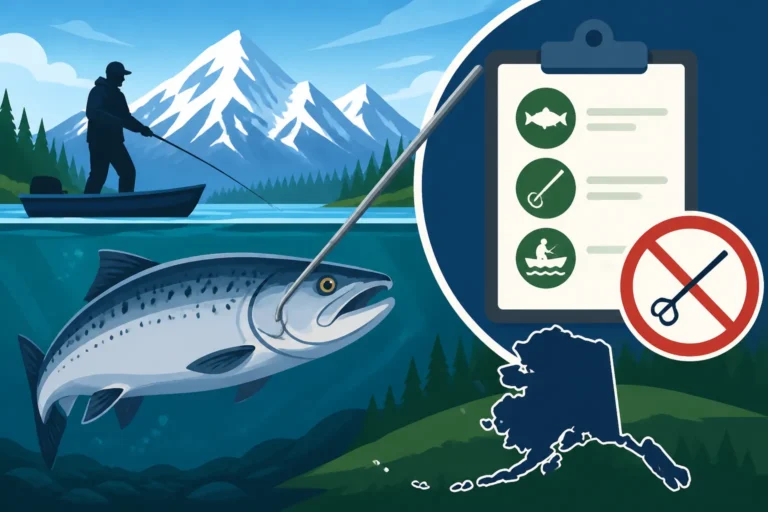
- Single-Hook Requirements: In certain situations, particularly in rivers with strong conservation efforts or during specific periods, regulations might dictate that only single hooks can be used. This means no treble hooks or multiple-hook rigs are permitted. The fewer hooks, the less chance of accidentally foul-hooking a fish or causing unnecessary trauma during a fight. This rule sometimes coincides with Alaska Single-Hook Rules During King Closures, but can also be a standalone rule for steelhead.
These gear restrictions underscore the ADF&G's commitment to protecting steelhead. It’s not just about what you catch, but how you catch it.
Best Practices for Catch-and-Release to Protect Steelhead
Since most steelhead fishing in Alaska is effectively catch-and-release, knowing how to properly handle these precious fish is as important as knowing the regulations. Your goal should be to maximize the fish's survival chances once it swims away.
Here are some essential catch-and-release best practices, expanded from our guide on Alaska Catch-and-Release Best Practices:
- Minimize Fight Time: Use appropriate tackle that allows you to land the fish as quickly as possible without over-stressing it. A long, exhausting fight can deplete the fish's energy reserves, making it more vulnerable to predators or disease after release.
- Keep the Fish in the Water: This is perhaps the single most important rule. Keep the steelhead in the water as much as possible, especially during unhooking and any photography. Removing a fish from the water, even for a few seconds, can damage its protective slime coat, gills, and internal organs due to gravity and lack of oxygen. If you must lift it for a quick photo, do so gently and support its belly horizontally, never vertically by the tail.
- Wet Hands Only: Always wet your hands thoroughly before touching a fish. Dry hands can rub off the fish's vital slime coat, which protects it from infection and parasites.
- Use Proper Unhooking Tools: Carry a pair of long-nosed pliers or a hemostat (forceps) to quickly and gently remove hooks. If the hook is deeply embedded and cannot be easily removed, cut the line as close to the hook as possible. Barbless hooks make this process much easier.
- Revive the Fish: After unhooking, gently hold the fish in the current, facing upstream, allowing water to flow over its gills. Support it until it regains its strength and can swim away under its own power. Sometimes a gentle forward and backward motion can help push water through the gills, but avoid over-handling. The fish will let you know when it's ready.
- Avoid Crowding Spawning Beds: If you see steelhead actively spawning (often recognizable by pairs or groups of fish on redds—clean gravel nests), avoid casting to them. This is a critical time in their life cycle, and disturbing them can severely impact reproductive success.
Adopting these practices ensures that your pursuit of Alaska steelhead contributes to, rather than detracts from, their long-term health.
Staying Ahead of Emergency Orders and In-Season Changes
Just when you think you've got all the regulations locked down, Alaska throws a curveball: emergency orders. These in-season regulation changes are a constant reality of fishing in the state and can drastically alter bag limits, gear restrictions, or even completely close a fishery with little notice. For steelhead, given their sensitive nature, emergency orders are particularly common and can be devastating if you're not prepared.
How Emergency Orders Can Impact Steelhead Fisheries
Emergency orders (EOs) are issued by the Alaska Department of Fish and Game when unforeseen circumstances arise that threaten fish populations or when harvest levels are not meeting conservation goals. For steelhead, EOs are most frequently triggered by:
- Low Escapement: If too few steelhead are returning to their spawning grounds, an EO might be issued to reduce or eliminate harvest, or to implement stricter catch-and-release rules.
- Poor Environmental Conditions: Things like low water levels, high water temperatures, or prolonged drought can stress fish and make them more vulnerable. An EO might close a fishery to reduce angling pressure during these critical times.
- Unanticipated Harvest Rates: If anglers are harvesting fish at a higher rate than projected, potentially threatening the run, an EO can quickly adjust limits or restrictions.
Imagine you've planned a dream trip for a week to the Sitka area, expecting to fish for steelhead with a small chance of retention, only to wake up one morning to news of an emergency order that closed the river to all steelhead fishing due to low returns. This scenario, while frustrating, is a very real possibility in Alaska. These changes can come with as little as 24-48 hours' notice, completely changing your fishing plans. You can learn more about this in Alaska Fishing Emergency Orders Explained.
Essential Resources for Checking Current Regulations
Given the dynamic nature of Alaska's fisheries, relying solely on a regulation booklet you picked up months ago is a recipe for trouble. You need to consult the most current information right before and even during your trip.
Here are the essential resources:
- ADF&G Website: The official Alaska Department of Fish and Game website is the ultimate source. They have dedicated pages for each region, species, and up-to-date emergency orders. Navigate to the "Sport Fishing" section and then select the region and species you're interested in. The site is comprehensive, though it can take some practice to navigate effectively.
- Emergency Order Hotline/Webpage: Many regions have a dedicated phone hotline or a specific webpage that lists all current emergency orders. For instance, the Southeast Alaska region often has its own list of EOs that are distinct from other parts of the state. Make it a habit to check this daily if you're targeting sensitive species like steelhead.
- Local Tackle Shops and Guides: Once you're on the ground in Alaska, local tackle shops, bait stores, and professional fishing guides are invaluable resources. They often have the most up-to-the-minute local knowledge and can interpret confusing regulations or EOs. Don't hesitate to strike up a conversation; they're usually happy to help keep you legal.
- ADF&G Sport Fishing Regulation Booklets: While dynamic EOs override them, these annual booklets (available both online and in print) provide the foundational rules for the entire year. It’s imperative to How to Read Alaska Fishing Regulations effectively. Always read the section specific to your chosen region and target species carefully, paying close attention to any fine print or maps.
By diligently checking these resources, you significantly reduce your risk of running afoul of the regulations and ensure your Alaska steelhead adventure is both successful and compliant.
Disclaimer
Please note that fishing regulations in Alaska are subject to frequent change by the Alaska Department of Fish and Game through emergency orders. While we strive to provide accurate and up-to-date information, it is the angler's responsibility to verify all regulations for their specific fishing location and time frame with the official ADF&G resources before fishing.