Where to Catch King Salmon in Alaska
The allure of an Alaska King Salmon is powerful, isn't it? Many anglers dream of feeling that mighty tug on their line, but the sheer vastness of Alaska can make it incredibly daunting to figure out where to even begin looking for these magnificent fish. It's easy to get overwhelmed by all the regulations, the different rivers, and the varied run timings. This comprehensive guide is here to cut through the confusion and help you pinpoint the best places in Alaska to cast your line for a chance at catching a King Salmon.
Understanding King Salmon Runs and Habitats
Before we dive into specific locations, it’s really helpful to grasp how King Salmon, also known as Chinook Salmon, operate in Alaska. They’re apex predators, the largest of the Pacific salmon species, and they require specific conditions for their arduous journey from the ocean to their spawning grounds. Unlike some other salmon, King runs are often spread out over several weeks or even months, with different "pulses" of fish entering the river systems. Their habitat needs vary, but generally, they favor larger river systems with deep pools, strong currents, and plenty of cover, even if they're just holding before moving upstream.
Key Regions for King Salmon
Alaska is a massive state, and King Salmon populations are found in various regions, each offering a distinct fishing experience. You can't just pick any river and expect Kings; you need to understand the regional differences.
In Southcentral Alaska, particularly the Kenai Peninsula and the rivers flowing into Cook Inlet, you'll find some of the most famous and accessible King Salmon fisheries. This region is popular because it's relatively easy to reach from Anchorage, offering both guided and DIY opportunities. Rivers like the Kenai, Kasilof, and Susitna draw thousands of anglers annually, especially during the peak summer months. The Kings here are known for their impressive size and powerful fights, making them a prime target for many. The sheer volume of fish can be astounding when the runs are strong, creating an unforgettable experience even with the crowds.
Southeast Alaska, with its intricate network of islands and fjords, offers a different kind of King Salmon fishing. Here, many anglers target Kings in saltwater, often by trolling. Places like Sitka, Juneau, and Ketchikan are renowned for their ocean-bright Kings, often caught as they stage before entering their natal streams. This is often a more boat-centric fishery, with charter captains using downriggers and specific baits or lures to entice the Kings. While river fishing for Kings does occur in Southeast, the saltwater opportunities are arguably more prominent and consistent.
Then there's the truly wild country of Bristol Bay, home to some of the world's most robust salmon runs. While most famous for its Sockeye, rivers like the Nushagak host incredible King Salmon runs. These are often fly-in destinations, requiring more planning and a higher budget, but they offer an unparalleled wilderness experience with potentially fewer crowds and more pristine waters. The remoteness means that the fish often see less pressure, making for eager biters and a truly wild encounter.
Finally, the Interior Alaska region also has significant King Salmon populations in rivers like the Yukon and its tributaries. These are often subsistence fisheries, but sportfishing opportunities exist, particularly for the early runs. Fishing here can be even more remote and often involves smaller, more specialized operations, providing a unique glimpse into traditional Alaskan fishing. The journey to these rivers can be part of the adventure, offering a true backcountry experience for those willing to venture off the beaten path.
The Importance of Timing
Timing is absolutely everything when it comes to King Salmon. Unlike Steelhead or Rainbow Trout which might be present year-round, Kings are migratory, appearing in specific windows as they return from the ocean to spawn. Missing the peak of a run by even a week can significantly impact your success.
King Salmon typically begin entering Alaska's rivers in late May, with runs continuing through June and July. However, this window isn't uniform across the state. Rivers in Southeast Alaska, being closer to the ocean migration routes, often see their first Kings earlier in May, with strong runs extending into June. As you move north and inland, the runs tend to shift later. For example, the early run on the Kenai River might start in late May and run through June, while the later, larger run often kicks off around the first week of July and continues through the end of the month. In rivers further north or west, like the Nushagak, the peak might be more concentrated in late June and early July. Always check specific river forecasts and regulations for the exact timing. You can learn more about this in our guide on Best Time to Catch King Salmon in Alaska.
Factors like water levels and water temperature also play a crucial role. A cold spring with high glacial melt can delay runs, while a warm, dry spell might see fish pushing upriver faster. Emergency orders from the Alaska Department of Fish and Game (ADF&G) are common for King Salmon, especially if runs are weaker than projected, often leading to closures or gear restrictions. It's not uncommon to arrive for a highly anticipated King Salmon trip only to find that the fishery has been restricted or closed due to conservation concerns. Staying updated on these orders is paramount, which we'll cover later.
Top River Systems for King Salmon
When you picture King Salmon fishing in Alaska, certain rivers immediately come to mind. These destinations have earned their legendary status for a reason, offering some of the best opportunities to hook into a trophy Chinook.
The Legendary Kenai River
Ah, the Kenai. It’s impossible to talk about King Salmon without mentioning this iconic river. Flowing through the Kenai Peninsula in Southcentral Alaska, the Kenai River holds the world record for the largest King Salmon ever caught by rod and reel – a monstrous 97-pound, 4-ounce behemoth caught way back in 1985. While fish of that size are incredibly rare today, the Kenai still produces some truly massive Kings, with fish over 50 pounds landed every season.
Fishing on the Kenai is a unique experience. It’s often done from specially designed drift boats or powerboats, especially in the lower and middle sections. Techniques like back-trolling Kwikfish with bait, or back-bouncing cured salmon roe are incredibly popular. You'll find a bustling scene, particularly during the late-run Kings in July, with boats lining up, shoulder-to-shoulder, in famous drifts. While the crowds can be a bit much for some, the thrill of hooking into a powerful Kenai King often outweighs the jostling. Bank access is also available in certain areas, particularly around Cooper Landing and the Kenai River estuary, though these spots can be very competitive. Navigating the regulations here, especially for specific gear and boat types, can be complex, so it's wise to review our detailed guide on Kenai River Fishing: What to Know Before You Go.
Nushagak River: Bristol Bay's King Mecca
If the Kenai is the King of accessibility, the Nushagak River in Bristol Bay is the King of sheer numbers. Located in Southwest Alaska, the Nushagak is a truly wild river that sees incredible King Salmon returns, often in the hundreds of thousands. This river offers a much different experience than the road system fisheries. Most anglers visit the Nushagak via fly-in lodges or remote tent camps, making it a more immersive wilderness adventure.
The Nushagak Kings typically run from mid-June through mid-July, and during the peak, it's not uncommon for anglers to hook into multiple Kings a day. While the average size might be slightly smaller than the Kenai's giants, you'll still encounter plenty of 20-30 pound fish, with 40-50 pounders making regular appearances. The primary fishing methods here include back-trolling plugs, casting spinners, and drift fishing with bait. The remote setting, the abundance of wildlife, and the sheer volume of fish make the Nushagak a bucket-list destination for serious King Salmon anglers seeking a high-volume experience away from the crowds. For more insights into this incredible fishery, check out our Nushagak River King Salmon Guide.
Rivers of Southeast Alaska
Southeast Alaska, the panhandle of the state, offers abundant King Salmon opportunities, though often with a different flavor. Instead of massive river systems, you'll find numerous smaller rivers and vast saltwater fishing grounds. Major hubs like Sitka, Juneau, and Ketchikan are prime spots for targeting "feeder Kings" or ocean-bright Kings as they migrate or stage before heading into their spawning rivers.
Saltwater trolling is the dominant method here. Charters utilize downriggers to present herring, spoons, or plugs at specific depths where Kings are feeding. The beauty of Southeast fishing is the incredible scenery – towering fjords, lush forests, and abundant marine wildlife like whales and eagles. While you might not be battling fish in a river, the ocean Kings are incredibly strong and vibrant, often arriving at the boat in their prime, chrome condition. Many charters offer combo trips, targeting both King Salmon and Halibut, providing a diverse fishing experience. While specific river regulations vary wildly, the opportunity to intercept these powerful fish in the ocean before they enter freshwater is a thrilling prospect. For those visiting Sitka, our Sitka Salmon and Halibut Fishing Guide offers excellent information.
Accessible Road System King Salmon Fisheries
Not everyone has the budget or desire for a remote fly-in trip. Thankfully, Alaska offers fantastic King Salmon fishing that's accessible by road, providing excellent opportunities for locals and visitors alike. These rivers offer a more DIY-friendly experience, though guided trips are still very popular and often recommended for first-timers.
Mat-Su Valley Rivers
For those based in or near Anchorage, the Matanuska-Susitna (Mat-Su) Valley rivers offer some of the most convenient King Salmon fishing. The Deshka River, a tributary of the Susitna River, is a prime example. Easily accessible by a short boat ride from the Susitna Landing near Willow, the Deshka sees a strong early King run from late May through June. It's a narrower, more intimate river compared to the Kenai, often fished from smaller powerboats or even drift boats. Anglers frequently use cured salmon roe under a bobber or back-troll Kwikfish plugs. Due to its accessibility, the Deshka can get quite busy, especially on weekends, but it remains a consistent producer of Kings. Learn more in our Deshka River King Salmon Guide.
The main stem of the Susitna River itself, and other tributaries like the Talkeetna River, also hold Kings. These are often larger, braided rivers that can be challenging to navigate without local knowledge or a guide. Fishing here often involves jet boats to access remote gravel bars and confluence areas. The size of the river means fish can be more spread out, but the reward is a truly wild setting close to the road system. The run timing is similar to the Deshka, generally peaking in June. For those who want to buy specific gear for these conditions, a quick browse on Amazon can help you find heavy-duty rods and reels capable of handling the powerful currents and big fish.
Kasilof River
Just south of the Kenai River, the Kasilof River offers a slightly different, often less crowded, King Salmon experience. The Kasilof is primarily a drift-only river for guides during much of the King season, meaning no motorized boats, which creates a more peaceful atmosphere. This makes it a fantastic choice for those who prefer the tranquility of a drift boat or rowed raft.
The Kasilof has two distinct King runs. The early run starts in late May and peaks in early to mid-June, with some truly large fish making their way upstream. The late run typically begins in late June and runs through July, often providing good numbers of hatchery-origin Kings. Fishing methods include drift fishing with cured roe, sometimes paired with an "egg-sucking" bead, or back-trolling plugs. The Kasilof Kings are known for their feisty fights in the river's clear, swift waters. While it requires a bit of specific knowledge and often a guided trip due to the drift-only regulations, it's a fantastic alternative to the busier Kenai, offering a genuine shot at a beautiful King. Our Kasilof River Fishing: What to Know Before You Go article provides an in-depth look.
Important Considerations for King Salmon Anglers
Hooking into an Alaska King Salmon is often a dream come true, but it's crucial to be prepared for the realities of fishing in the Last Frontier. Responsible angling involves understanding the rules and having the right equipment.
Regulations and Emergency Orders
This cannot be stressed enough: Alaska King Salmon regulations are incredibly dynamic and can change at a moment's notice. King Salmon are a highly managed species, and their populations fluctuate year-to-year. The Alaska Department of Fish and Game (ADF&G) constantly monitors returns and will issue Emergency Orders to restrict fishing effort if runs are weaker than forecast. This could mean:
- Catch-and-release only: You can fish, but must immediately release all Kings.
- Bait bans: Prohibiting the use of bait (like cured roe) to reduce mortality.
- Gear restrictions: Limiting anglers to a single, barbless hook.
- Full closures: Completely shutting down the fishery for Kings.
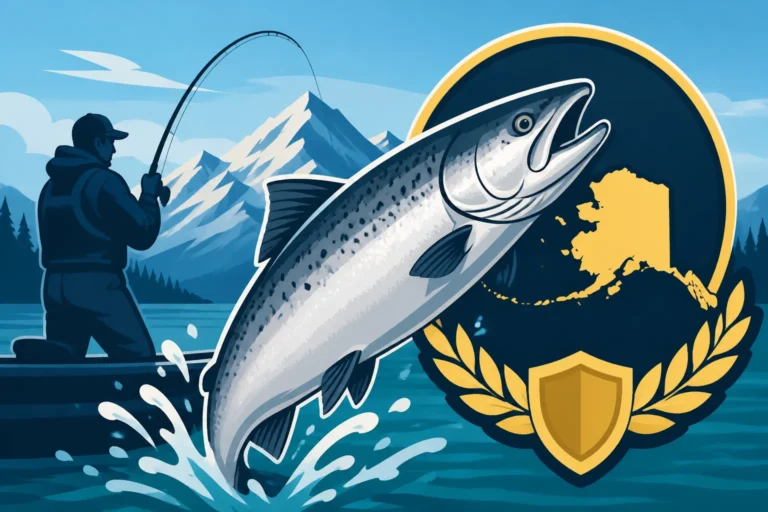
These changes can happen with very little warning, sometimes just days before or even during your planned trip. It is YOUR responsibility to check the latest ADF&G regulations and emergency orders for your specific fishing location daily leading up to and during your trip. You'll also need an Alaska Fishing License: Complete Guide and often an Alaska King Salmon Stamp Requirements to legally fish for Kings. These stamps are an additional endorsement required for anyone, resident or non-resident, looking to retain a King Salmon. Even if you're planning catch-and-release, it's generally a good idea to have the stamp if there's any chance of retention. Ignorance of the rules is not an excuse, and violations can lead to hefty fines and even confiscation of gear.
Gear and Tackle
King Salmon are powerful fish, and they demand serious tackle. You don't want to show up with gear designed for trout and expect to land a 30-pound King.
Here's a general breakdown of what you'll need:
| Item | Recommendation | Purpose |
|---|---|---|
| Rod | Heavy-action, 8.5-10.5 feet, rated for 15-40 lb line | Provides leverage and backbone for fighting large fish |
| Reel | High-quality baitcasting or spinning reel, size 4000+ | Strong drag system, good line capacity (200+ yards) |
| Line | 30-65 lb braided main line; 20-30 lb monofilament/fluorocarbon leader | Strength for fighting, abrasion resistance, less stretch |
| Lures/Baits | Kwikfish, Magnum Wiggle Warts, Spin-N-Glos, cured salmon roe | Attracts Kings through vibration, color, or scent |
| Weights | 2-8 oz lead weights or Slinkies | Getting bait/lure to the bottom in strong currents |
| Hooks | 4/0-6/0 Octopus or circle hooks | Strong and sharp for penetrating tough mouths |
Many anglers prefer to use braided line as their main line because it has virtually no stretch, allowing for better feel and more powerful hook sets. However, it's essential to use a monofilament or fluorocarbon leader, as braid is highly visible and can spook fish in clear water. When buying tackle, Amazon is a great resource for finding a wide array of options, from robust rods to durable reels and all the terminal tackle you could need before your trip. Don't skimp on quality here; a cheap reel with a faulty drag can mean losing the fish of a lifetime. A dedicated guide on Alaska Fishing Gear and Tackle Guide will provide even more detail.
Guided vs. Unguided Trips
The choice between a guided trip and going it alone for King Salmon is a big one, often depending on your experience level, budget, and desired adventure.
Guided trips are highly recommended, especially for first-timers to Alaska King Salmon fishing or those targeting remote locations like the Nushagak. A professional guide brings invaluable local knowledge:
- Where the fish are: Guides spend hundreds of hours on the water and know the subtle holding lies and travel routes.
- What they're biting on: They have current information on successful baits, lures, and techniques.
- Navigating regulations: They stay on top of daily emergency orders and ensure you're fishing legally.
- Safety: They know the river's hazards and can operate boats safely in challenging conditions.
- Gear provided: Most charters provide all the necessary high-quality gear, bait, and tackle, saving you the expense and hassle of bringing your own.
While more expensive, a good guide drastically increases your chances of success and provides a safer, more enjoyable experience. You can find more information in our Guided vs Unguided Fishing in Alaska comparison.
Unguided trips are certainly possible, especially on road-system rivers like the Kenai (from the bank) or rivers with public boat launches like the Deshka. This option offers more freedom and can be significantly cheaper. However, it requires extensive research, a deep understanding of the local regulations, excellent navigation skills (if boating), and a willingness to accept that success might be harder to come by. You'll also need to invest in all your own gear and tackle. For those with significant angling experience and a DIY spirit, it can be a rewarding challenge, but it's not for the faint of heart, especially when targeting such a prized species.
No matter where you choose to pursue these magnificent fish, remember that flexibility and a good attitude are your best assets in Alaska. The Kings are worth the effort!
Disclaimer
Fishing in Alaska carries inherent risks, including but not limited to adverse weather conditions, wildlife encounters, and dynamic regulations. Always prioritize safety, understand and follow all current Alaska Department of Fish and Game regulations and emergency orders, and consider consulting with local experts or guides. This guide is for informational purposes only and does not substitute professional advice or current official regulations.