Rainbow Trout vs Steelhead in Alaska
It's incredibly common for even seasoned anglers to scratch their heads when trying to tell the difference between a Rainbow Trout and a Steelhead in Alaska. Both are stunning fish, offer incredible fights, and share similar looks, leading to a lot of confusion, especially for those new to the Last Frontier's diverse fisheries. This guide aims to clear up that mystery, diving deep into what makes each fish unique, where you'll find them, and how to appreciate these magnificent creatures that call Alaska home.
Understanding the Resident Rainbow Trout in Alaska
The resident Rainbow Trout is arguably one of Alaska's most beloved freshwater fish, revered for its beauty, acrobatic fights, and widespread presence. When we talk about "Rainbow Trout" in most Alaskan rivers and lakes, we're usually referring to the fish that spend their entire lives within the freshwater system, never venturing out to sea.
Freshwater Life Cycle and Habitat
These intrepid freshwater fighters spend their entire lives in rivers, streams, and lakes, particularly in Southcentral and Interior Alaska. They thrive in cold, clean, well-oxygenated waters with plenty of cover, like undercut banks, submerged logs, and deep pools. Their diet is varied and opportunistic, ranging from aquatic insects, nymphs, and worms to salmon eggs, smolt, and even small rodents if they're particularly ambitious. For instance, on the legendary Kenai River, during the colossal sockeye salmon runs, you'll find large resident rainbows gorging themselves on the protein-rich eggs, growing to impressive sizes. These fish are true opportunists, constantly on the prowl for their next meal, making them a fantastic target for fly fishing or spin fishing. Their reliance on healthy freshwater ecosystems underscores the importance of pristine habitats for their survival and growth.
Physical Characteristics of Resident Rainbows
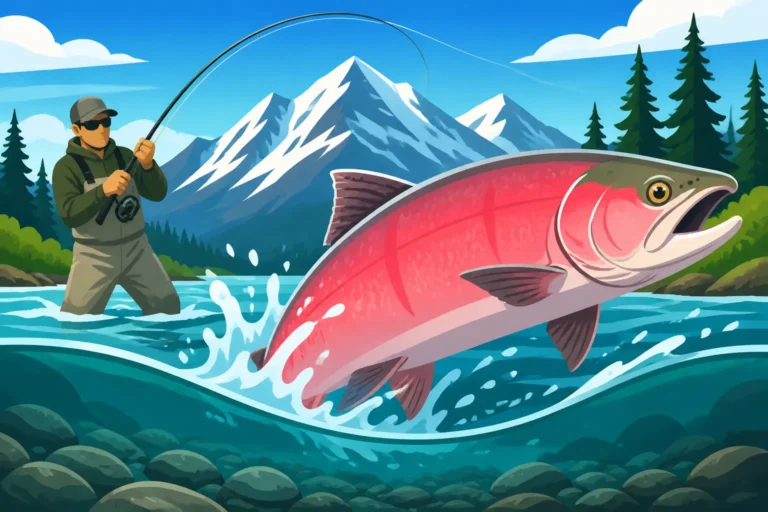
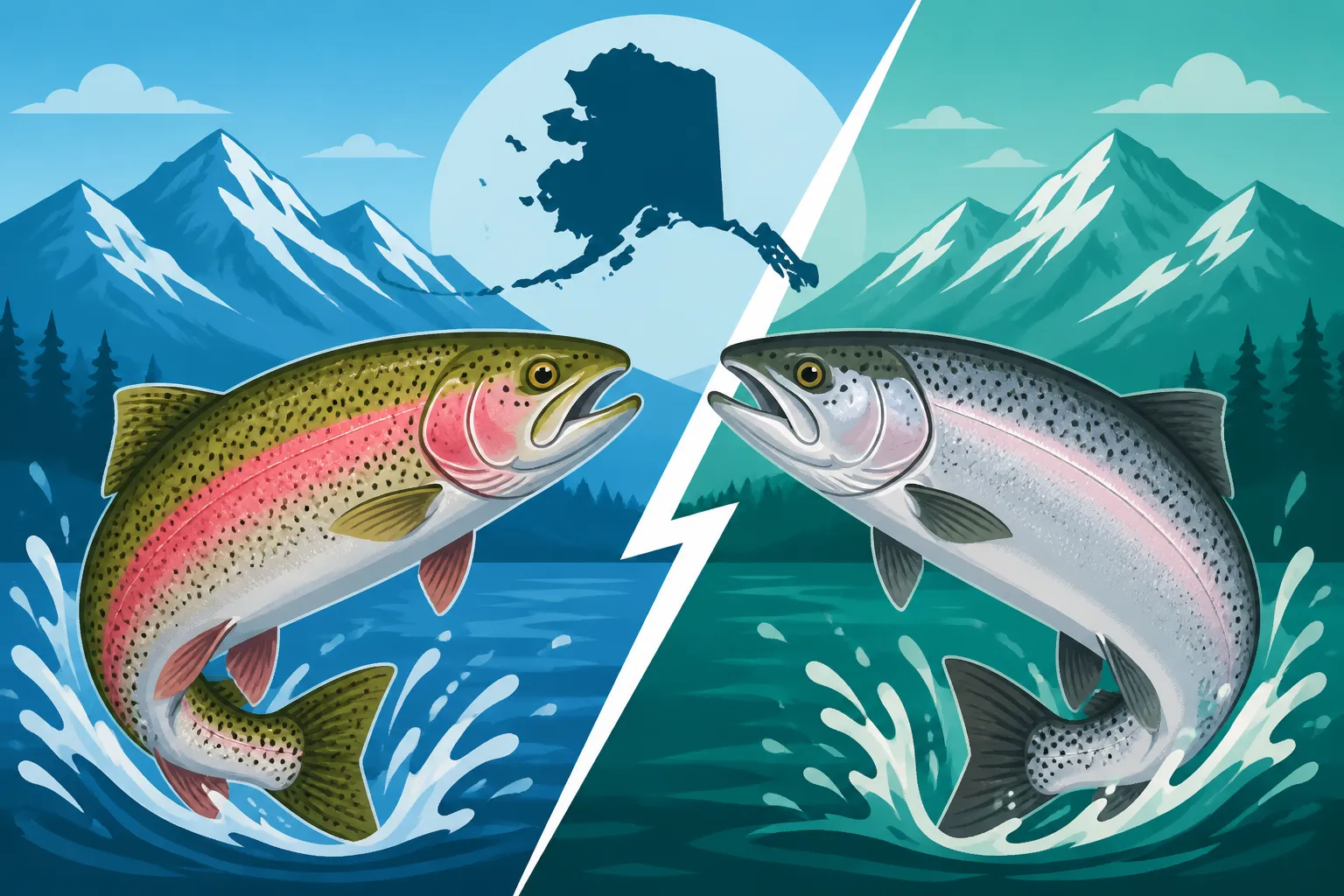
Visually, resident Rainbow Trout are striking. They typically exhibit a beautiful olive-green to bluish-silver back that fades into silvery sides, often adorned with a prominent pink or reddish band running horizontally along their lateral line. This band can intensify in color, especially during spawning season or when they are particularly healthy. Their bodies are covered in numerous small, dark spots, which extend onto their dorsal, adipose, and caudal (tail) fins. The spotting pattern can vary, sometimes sparse, sometimes dense, but it's always present. Their mouths are generally smaller, and their overall body shape tends to be more torpedo-like, perfectly adapted for navigating river currents and chasing prey in freshwater environments. A true trophy resident rainbow from a system like the Naknek River or a remote fly-out lake is a sight to behold, often chunky and deep-bodied from years of feasting.
Popular Fishing Spots and Techniques
Alaska is absolutely brimming with incredible spots to target resident Rainbow Trout. The Kenai Peninsula, in particular, is a hotspot, with rivers like the Kenai and Russian River holding robust populations. Further north, the Susitna River drainage and its tributaries, as well as various lakes in the Mat-Su Valley, offer fantastic opportunities. For those seeking a truly wild experience, the rivers flowing into Bristol Bay, such as the Naknek, Kvichak, and Alagnak, are world-renowned for their massive, egg-fed rainbows. When it comes to techniques, fly fishing is incredibly popular, especially with bead patterns, flesh flies, and various nymph imitations. Spin fishermen often have great success with small spinners, spoons, or even drifting cured salmon eggs. Finding the right gear for these varying conditions is crucial, and you can find a wide array of options on platforms like Amazon, from specialized fly rods to durable waders. No matter your preferred method, understanding the Best Lures and Bait for Alaska Rainbow Trout can significantly improve your chances.
Diving into the World of Alaskan Steelhead
Steelhead, often called "sea-run rainbows," are a truly magnificent and enigmatic fish. They represent the anadromous form of rainbow trout, meaning they are born in freshwater, migrate to the ocean to feed and grow, and then return to freshwater to spawn. This incredible journey makes them one of the most sought-after sportfish in Alaska.
Anadromous Journey and Unique Adaptations
The life cycle of an Alaskan Steelhead is nothing short of epic. After hatching in a freshwater stream, often far upriver, juvenile steelhead (smolt) will spend a year or two in their natal waters. When they reach a certain size and physiological readiness, they undergo a transformation called smoltification, adapting their bodies to survive in saltwater. They then embark on a perilous journey to the ocean, where they will spend anywhere from one to several years growing rapidly on a rich diet of marine organisms. This period at sea allows them to reach much larger sizes than their resident counterparts. When maturity calls, they return to the very same freshwater rivers and streams where they were born, driven by an instinct to spawn. This incredible migration makes them a prime example of Alaska Fish Species Guide highlighting a fish's remarkable adaptability.
Physical Traits of Sea-Run Steelhead
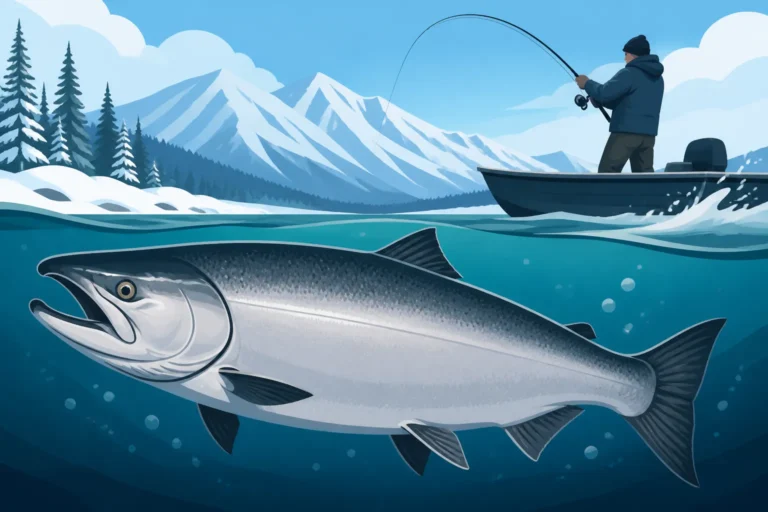
When Steelhead first enter freshwater from the ocean, they are typically stunningly chrome-bright, almost silvery, with very few visible spots or a faint, subtle pink stripe. Their bodies are sleek and powerful, built for endurance and speed in both marine and river environments. Their jaws are often more pronounced, sometimes even hooked (kype) in mature males, particularly when they've been in freshwater for a while. As they spend more time in the river, preparing to spawn, their coloration can begin to deepen, developing more pronounced pink or reddish lateral bands and more visible spotting, starting to resemble their resident rainbow cousins. However, they almost always retain a more streamlined, silvery appearance compared to resident rainbows of similar size. Their sheer power and impressive girth set them apart immediately; a fresh-from-the-ocean Steelhead will pull like a freight train.
Prime Steelhead Rivers and Fishing Approaches
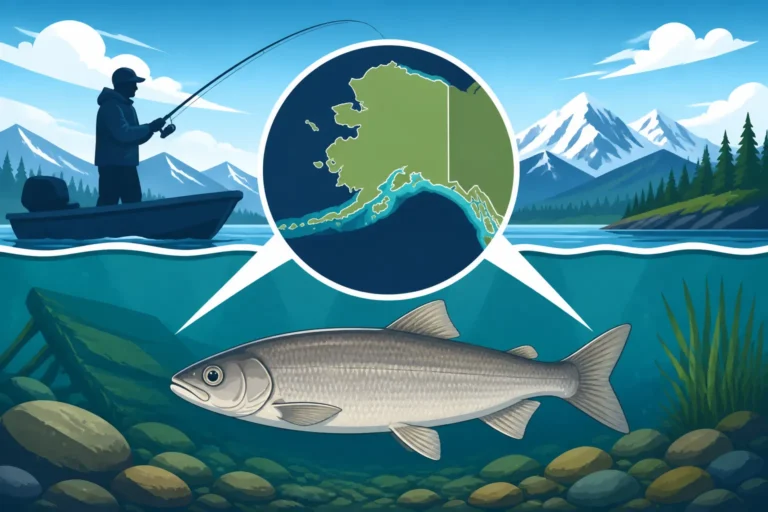
In Alaska, Steelhead runs are predominantly found in the Southeast and Southcentral regions. Rivers like the Situk River near Yakutat are legendary for their strong Steelhead runs, attracting anglers from all over the world. Other notable rivers include those on Prince of Wales Island and some systems in the western Kenai Peninsula. Unlike the massive salmon runs, Steelhead runs are often more subtle and require a dedicated pursuit. The Best Time to Catch Steelhead in Alaska is typically in the spring (April-May) and fall (September-November), though specific timings vary by river system.
Fishing for Steelhead is a highly specialized and often challenging endeavor that demands patience and skill. Fly fishing is the most common method, using techniques like swinging large flies, often spey or switch rods, or nymphing with indicator rigs. Common fly patterns include Intruder-style flies, egg patterns, and various stonefly or caddis imitations. For spin fishermen, drifting roe bags, small jigs, or even hardware like small spoons can be effective. Steelhead are notoriously wary, making a stealthy approach and precise presentations paramount. This is where durable, reliable gear becomes essential, and many anglers invest in top-tier rods and reels from reputable brands that can be found on online marketplaces.
Key Differences: More Than Just a Name
The distinction between Rainbow Trout and Steelhead goes far beyond a simple name. While genetically they are the same species (Oncorhynchus mykiss), their life history strategies, physical adaptations, and behavior diverge significantly, creating two distinct angling experiences.
Genetic and Life History Distinctions
Biologically, both resident Rainbow Trout and anadromous Steelhead are the same species, which is where much of the confusion stems from. However, within this single species, there are different "life history types" or populations that have evolved distinct behaviors. Resident rainbows are essentially landlocked, completing their entire life cycle in freshwater. Steelhead, on the other hand, have the genetic predisposition and physiological adaptations to migrate to the ocean. This anadromous behavior is what truly defines a Steelhead. It's a fascinating example of genetic plasticity within a species, where environmental factors and inherited traits dictate whether an individual will stay in freshwater or venture to the vast ocean before returning to spawn. This difference in life history has profound impacts on their growth, size, and migratory patterns.
Size, Coloration, and Fin Markings
One of the most immediate and noticeable differences between the two, especially to the experienced eye, is their general appearance upon capture.
- Size: Steelhead, due to their rich feeding grounds in the ocean, typically grow much larger than resident Rainbow Trout. While a 20-inch resident rainbow is a trophy, a 20-inch Steelhead might just be considered an average catch, with many reaching well into the 30-inch range and pushing double-digit weights.
- Coloration: As mentioned earlier, fresh-run Steelhead are usually chrome-bright with a silvery sheen, often with a faint or absent pink stripe. Their spots might be very subtle. Resident Rainbows, in contrast, tend to have more vivid and deeper coloration – greens, blues, and a prominent red or pink lateral band, with more distinct and numerous spots.
- Fin Markings: While both have spotted fins, the overall appearance of the fins can differ. Steelhead often have very clean, crisp fins that show little wear, especially when they first enter freshwater. Resident rainbows, particularly older ones, might show more wear and tear on their fins from their freshwater existence.
To help visualize these differences, consider this table:
| Feature | Resident Rainbow Trout | Steelhead (Sea-Run Rainbow Trout) |
|---|---|---|
| Life Cycle | Spends entire life in freshwater rivers/lakes. | Born in freshwater, migrates to ocean, returns to spawn. |
| Average Size | Smaller, typically 12-25 inches; trophy > 20 lbs rare. | Larger, typically 20-35 inches; can exceed 20 lbs. |
| Coloration | Olive-green/bluish-silver back, vibrant pink/red lateral band, distinct spotting. | Chrome-bright/silvery when fresh from ocean, faint or absent pink band, subtle spotting. |
| Body Shape | More torpedo-shaped, often deeper body for freshwater current. | Sleek, powerful, more elongated for ocean travel. |
| Fins | Often show more wear, distinct spotting. | Clean, crisp, often less prominent spotting. |
| Mouth | Generally smaller. | Can be more pronounced, males may develop a kype. |
| Habitat | Rivers, lakes, streams, relies on freshwater food sources. | Spawns in freshwater, feeds in ocean. |
Habitat Preferences and Behavior
Their distinct life histories naturally lead to different habitat preferences and behaviors. Resident Rainbow Trout are creatures of their freshwater environment. They'll hold in runs, pools, and eddy lines, often near structure, where food is abundant and they feel secure. Their movements are generally localized within a specific river or lake system, though they might migrate short distances for spawning or foraging. Their feeding is more constant throughout the year, adapting to seasonal hatches, salmon runs, or available forage. For those exploring Best Trout Fishing Rivers in Alaska, understanding these localized behaviors is key.
Steelhead, on the other hand, are migratory. Their behavior in freshwater is heavily influenced by their spawning imperative. They'll typically hold in deeper pools, slower runs, and areas with good cover, often resting before or after their strenuous upstream migration. Their feeding behavior in freshwater is often reduced, as they rely on the energy reserves built during their time in the ocean. They are often more challenging to entice to bite, requiring specific presentations and patterns. After spawning, kelts (spent Steelhead) may drop back to the ocean, often ravenously feeding to regain strength. The rules surrounding Alaska Steelhead Catch-and-Release Rules are often very strict to protect these vulnerable migratory fish.
Fishing Considerations and Conservation
Targeting both Rainbow Trout and Steelhead in Alaska offers immensely rewarding experiences, but each demands specific considerations regarding gear, techniques, and, crucially, conservation. Understanding these nuances not only enhances your success but also ensures the sustainability of these incredible fisheries.
Gear and Tackle for Each Species
While there's some overlap, optimizing your gear for either resident Rainbows or Steelhead can make a significant difference.
For resident Rainbow Trout, especially on river systems with strong salmon runs, you'll want versatile gear.
- Fly Fishing: A 6-8 weight fly rod, typically 9 feet long, is a good all-around choice. This allows you to cast heavier nymph rigs with beads or larger flesh flies during salmon spawning, but still handle lighter dry fly presentations when needed. A good quality reel with a smooth drag is essential, especially when a larger rainbow decides to bolt. For lines, a weight-forward floating line is standard, though a sink-tip can be useful in deeper runs.
- Spin Fishing: A medium-light to medium action spinning rod, 7-9 feet in length, paired with a reliable spinning reel spooled with 8-12 lb test monofilament or braided line, is ideal. This setup provides the sensitivity to detect subtle bites and the backbone to fight strong fish in current. You'll want an assortment of small spinners (like Mepps or Blue Fox), spoons (e.g., Pixie or Little Cleo), and lead weights for drift fishing egg patterns or jigs. A selection of these essentials can easily be found on Amazon, helping you prepare for your trip.
For Steelhead, the demands are often greater due to their size and power.
- Fly Fishing: Spey or switch rods (7-9 weight, 11-14 feet long) are increasingly popular for swinging flies, allowing for longer casts and better line control in larger rivers. For single-hand rods, a strong 7-9 weight, 9-10 foot rod is recommended. Skagit or Scandi shooting heads with various sink tips are crucial for getting your flies down to the fish in different current conditions. Larger, durable fly reels with excellent drag systems are a must, loaded with ample backing.
- Spin Fishing: A heavy-action spinning or casting rod, 8.5-10.5 feet, capable of handling heavier lines (15-25 lb test) and larger lures, is appropriate. Longer rods help with line management and casting distance, especially when drift fishing or casting heavy spoons and jigs. Good quality braided line with a fluorocarbon leader is a common choice for its strength and sensitivity. You'll need heavier lead, larger jigs, and robust hardware that can withstand powerful runs. Remember to check specific Alaska Fishing Gear and Tackle Guide for detailed recommendations.
Regulations and Ethical Angling Practices
Alaska's fishing regulations are designed to protect its precious fish populations, and they can vary significantly by species, region, and even specific river sections. It's an angler's responsibility to understand and adhere to these rules. For Steelhead, regulations are often very stringent, with many areas having catch-and-release only rules, single-barbless hook requirements, and specific gear restrictions. This is because Steelhead populations can be more vulnerable due to their complex life cycle and reliance on both freshwater and marine habitats. Similarly, some resident Rainbow Trout fisheries, especially those with trophy potential or sensitive spawning areas, may also have catch-and-release rules or slot limits. For example, some parts of the Kenai River have a Alaska Rainbow Trout Slot Limit Explained to protect larger, spawning-size fish.
Always check the current Alaska Fishing Regulations Explained booklet or the Alaska Department of Fish and Game (ADF&G) website before heading out. Beyond regulations, ethical angling practices are paramount. This includes:
- Minimizing Handling: Reduce the time fish are out of water.
- Wet Hands: Always wet your hands before touching a fish to protect its slime coat.
- Barbless Hooks: Crimping down barbs on your hooks makes for easier, less harmful releases.
- Respecting Spawning Fish: Avoid targeting fish on redds (spawning beds).
- Practice Catch-and-Release: Especially with Steelhead and larger trophy Rainbows, consider releasing them to ensure future generations. More information on proper techniques can be found in our guide to Alaska Catch-and-Release Best Practices.
The Importance of Catch-and-Release
For both Steelhead and trophy-sized resident Rainbow Trout, catch-and-release fishing plays a critical role in conservation. Steelhead populations globally have faced declines, and responsible angling is crucial for their recovery and sustainability. By releasing these magnificent fish, especially the large, healthy spawners, we ensure they have the opportunity to contribute to the next generation. The same applies to the larger resident rainbows, which are often the most prolific spawners in their freshwater systems.
Practicing proper catch-and-release techniques reduces stress and injury to the fish, maximizing their chances of survival. This includes:
- Using appropriate gear to land the fish quickly.
- Keeping the fish in the water as much as possible.
- Using a knotless, rubberized net to minimize scale and slime coat damage.
- Reviving the fish gently in the current until it can swim away strongly on its own.
Embracing catch-and-release isn't just a rule; it's a philosophy that respects the resource and helps preserve Alaska's incredible fishing heritage for generations to come.
Common Misconceptions and Local Terminology
The overlapping genetics and similar appearances of Rainbow Trout and Steelhead often lead to a lot of confusion, even among local anglers. Understanding some common misconceptions and regional terminology can help clarify things.
"Half-Pounders" and Other Local Naming
One of the most frequent sources of confusion, particularly in Southeast Alaska, revolves around "half-pounders." These are juvenile Steelhead that have migrated to saltwater, spent a short period feeding and growing, and then returned to freshwater, often much smaller than full-fledged Steelhead. They might weigh anywhere from a few ounces to a couple of pounds, hence the "half-pounder" moniker. While genetically Steelhead (anadromous Oncorhynchus mykiss), their size and appearance can sometimes lead anglers to mistakenly identify them as resident Rainbow Trout, especially if they are caught further upstream away from the direct influence of saltwater. These young Steelhead are often chrome-bright and incredibly feisty for their size, providing a thrilling fight on light tackle. Anglers should be aware that if fishing in an area known for Steelhead, even small trout-like fish exhibiting silvery coloration might indeed be juvenile Steelhead, and thus subject to Steelhead regulations.
In other regions, particularly in Southcentral, you might hear "rainbows" used universally for all Oncorhynchus mykiss in freshwater, without necessarily distinguishing between a resident fish and a true Steelhead that might have made a rare ocean venture into that specific river system. However, for the most part, if you're fishing inland systems like the Kenai, Talkeetna, or Susitna drainages, you're almost certainly targeting resident Rainbow Trout. The term "steelhead" is generally reserved for fish caught in the coastal rivers of Southeast or specific drainages on the western Kenai Peninsula that are known for anadromous runs.
Distinguishing Juvenile Steelhead from Resident Rainbows
The challenge of distinguishing a small, chrome-bright juvenile Steelhead from a small resident Rainbow Trout can be quite tricky. Here are a few pointers to help you tell them apart:
- Parr Marks: Juvenile trout, both rainbows and steelhead, often have vertical bars along their sides called "parr marks." In juvenile Steelhead (smolt), these parr marks tend to be elongated and spindle-shaped, fading as they prepare for saltwater migration. In resident rainbow trout parr, these marks are often more blocky and retain their prominence throughout their freshwater life.
- Fin Edges: Juvenile Steelhead tend to have very clean, often clear, or faintly spotted fins with crisp edges. In contrast, juvenile resident rainbows might have slightly more coloration or opaque fin edges.
- Overall Body Shape: Juvenile Steelhead that are preparing for or have recently returned from saltwater will often have a more streamlined, silvery appearance, built for speed. Resident rainbows, even as juveniles, might appear slightly stockier, more adapted to holding in currents within a river or lake.
- Habitat Context: Perhaps the most reliable indicator for smaller fish is the location where you catch them. If you're fishing a coastal river system known for Steelhead runs, especially near the mouth or lower sections, a silvery trout-like fish is very likely a juvenile Steelhead. If you're far inland in a landlocked river or lake, it's almost certainly a resident Rainbow Trout. Always consider the specific fishery regulations for the area you are in, as misidentification could lead to unintentional violations.
Remember, the goal isn't just to label the fish, but to appreciate its unique journey and ensure its survival through responsible angling.
Disclaimer
The information provided in this guide is for general informational purposes only and is subject to change. Fishing regulations in Alaska are complex and frequently updated. Always consult the most current Alaska Department of Fish and Game (ADF&G) regulations booklet or website before engaging in any fishing activity. It is the angler's responsibility to know and follow all applicable laws and regulations.