Which Fish Must Be Recorded in Alaska
Many anglers, both seasoned veterans and first-time visitors, often find themselves a bit bewildered when trying to navigate the complex world of Alaska's fishing regulations. One particularly common point of confusion revolves around knowing exactly which fish species you are legally obligated to record on your Alaska Harvest Record Card. It’s a critical piece of the puzzle, not just for staying on the right side of the law, but for contributing to the health of Alaska’s incredible fisheries. This guide will meticulously clarify precisely which fish require recording, why these rules exist, and how to make sure you’re always compliant.
The Mandate of the Alaska Harvest Record Card
The Alaska Harvest Record Card isn't just an extra piece of paper to carry; it's a vital tool for the Alaska Department of Fish and Game (ADF&G) to manage the state's precious fish populations. For many anglers, the initial thought might be, "I bought my license, isn't that enough?" And while purchasing your Alaska fishing license is absolutely the first step, the Harvest Record Card serves a distinct and equally important purpose.
Why ADF&G Requires This Specific Documentation
Imagine trying to manage a pantry without knowing what food you have or how quickly it's being used. That's essentially the challenge ADF&G faces with Alaska's vast and dynamic fisheries. Recording specific catches helps them gather real-time data on harvest levels, which is indispensable for effective fisheries management and conservation.
This data goes far beyond simple curiosity. It informs crucial decisions like setting daily bag and annual limits, adjusting seasons, and implementing emergency orders. Without accurate harvest data from anglers, managers would be flying blind, potentially jeopardizing the long-term sustainability of these iconic species. For instance, if King Salmon returns are lower than expected in a given year, the recorded harvest data helps determine if immediate management actions, such as reducing limits or closing a fishery, are necessary. This proactive management, often outlined in the comprehensive Alaska Fishing Regulations Explained, is what helps keep Alaska's fisheries robust for future generations.
The Card: A Separate, Essential Requirement
It’s easy to conflate your fishing license with the Harvest Record Card, especially since they're often printed together or come as part of a package. However, they are distinct legal requirements. Your fishing license grants you the privilege to fish, while the Harvest Record Card (or specific permit sections) mandates the detailed accounting of certain species you retain. Failing to record a required fish is a violation, even if you have a valid license and haven't exceeded your bag limit. It's akin to having a driver's license but forgetting to register your vehicle; both are necessary. Understanding this distinction is key to navigating the unique demands of fishing in Alaska. You can learn more about this essential document in our guide on the Alaska Harvest Record Card Explained.
Specific Fish Species Mandating Recording
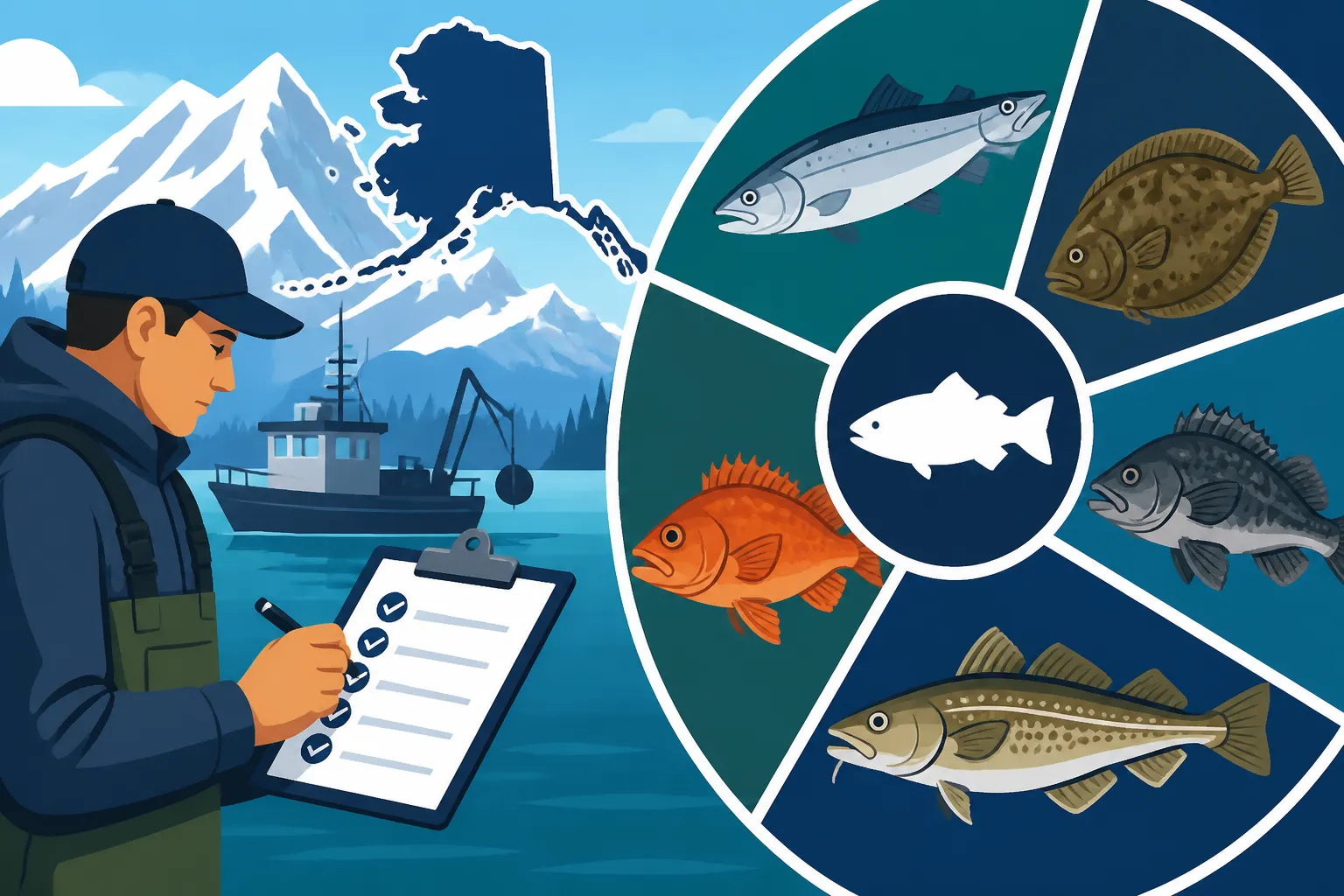
Alright, let's cut to the chase and pinpoint the exact species that trigger that recording requirement on your Alaska Harvest Record Card. It's fewer than you might think, but incredibly important to get right. For most sport fishing scenarios, there are three primary species you need to be diligent about: King Salmon, Steelhead, and Halibut.
King Salmon (Chinook)
King Salmon, also known as Chinook salmon, are the undisputed royalty of Alaska's rivers and saltwater. Their immense size, powerful fights, and delicious meat make them a top target for many anglers. However, their populations can be highly sensitive, and managing them requires careful monitoring.
Every single King Salmon you retain in any sport fishery in Alaska must be immediately recorded on your Harvest Record Card. This isn't just a suggestion; it's a firm regulation. This includes both resident and non-resident anglers. The information required typically includes the date of catch, the specific location (river, stream, bay), and the species (King Salmon). In some instances, depending on the specific regulations or emergency orders, you might also need to record the length or indicate if it's a hatchery-marked fish.
It's also crucial to remember the Do You Need a King Salmon Stamp in Alaska requirement. If you plan to fish for King Salmon, you'll need to purchase a King Salmon Stamp in addition to your regular fishing license. This stamp is linked to your license and supports King Salmon management and enhancement programs. Both the stamp and the harvest card are part of a comprehensive strategy to monitor and sustain these magnificent fish. Keep in mind that annual and daily limits for King Salmon can vary wildly by region and even change in-season due to Alaska Fishing Emergency Orders Explained, so always check the latest regulations for your specific fishing area.
Steelhead (Trout)
Steelhead are anadromous rainbow trout, meaning they spend part of their lives in the ocean before returning to freshwater to spawn. They are celebrated for their beauty, strength, and elusive nature. While many steelhead fisheries in Alaska are primarily catch-and-release, any steelhead you retain and keep, where legal to do so, must be recorded on your Harvest Record Card.
The recording requirements for steelhead are similar to King Salmon: date, location, and species. Given the sensitive nature of steelhead populations, particularly in regions like Southeast Alaska, precise harvest data is paramount. Many areas have very strict catch-and-release rules, often requiring barbless hooks and specific handling practices to ensure their survival. If you're targeting steelhead, be absolutely certain you understand the local regulations regarding retention, size limits, and gear restrictions. Our guide on Alaska Steelhead Catch-and-Release Rules offers more in-depth information on this topic. Even a single retained steelhead is a valuable data point for biologists, so accurate recording is non-negotiable.
Halibut
Ah, the "barn door" of the deep! Halibut fishing is a quintessential Alaskan experience, known for epic battles and substantial fillets. Due to the high commercial value and popularity of halibut, their recreational harvest is closely monitored through a complex quota system. Consequently, all retained halibut by sport anglers must be recorded on the Harvest Record Card.
When recording halibut, you'll typically need to note the date of catch, the location (often a general area like "Cook Inlet" or "Prince William Sound" for saltwater), and the species. Additionally, for halibut, you usually need to record the total length of the fish. This length data is especially important because many areas have complex size restrictions, such as reverse slot limits or daily bag limits that vary based on size. Understanding Alaska Halibut Fishing Regulations and Limits is crucial before you head out, as these rules can be quite intricate and subject to change. For example, some charter operations might operate under the Guided Angler Fish (GAF) program, which has its own set of rules that impact how fish are managed and recorded.
Other Fish: When Recording Isn't Required (on the card)
It's equally important to know which fish do not require recording on the main sport fishing Harvest Record Card. This includes:
- Sockeye Salmon (Red Salmon)
- Coho Salmon (Silver Salmon)
- Pink Salmon (Humpy Salmon)
- Chum Salmon (Dog Salmon)
- Rainbow Trout (unless it's a Steelhead you retain)
- Dolly Varden
- Arctic Char
- Arctic Grayling
- Northern Pike
- Lingcod
- Rockfish
- …and most other common freshwater and saltwater sport fish in Alaska.
While you don't record these on your Harvest Record Card, you must still adhere to all daily bag and possession limits for these species. These limits are typically printed in the annual sport fishing regulations booklet or are available through the ADF&G website. For instance, if you're targeting sockeye on the Kenai River, you'll need to know the specific Alaska Sockeye Salmon Fishing Regulations and Limits for that system, even if you're not recording them on your card.
It's also vital to distinguish between the sport fishing Harvest Record Card and specific permits for personal use or subsistence fisheries. For example, if you participate in a personal use dipnet fishery on the Kenai or Chitina rivers, you'll be issued a separate permit (often integrated with your license) that does require you to record every salmon you catch and retain in that specific fishery. These are different from the general sport fishing Harvest Record Card requirements.
To summarize the main sport fishing Harvest Record Card requirements:
| Fish Species | Requires Recording? | Details to Record | Key Considerations |
|---|---|---|---|
| King Salmon | Yes | Date, Location, Species | Immediate recording, King Salmon Stamp often required, strict daily/annual limits. |
| Steelhead | Yes | Date, Location, Species | Immediate recording, often catch-and-release, retention rare but requires recording if kept. |
| Halibut | Yes | Date, Location, Species, Total Length | Immediate recording, length crucial for size limits, complex regulations for guided vs. unguided anglers. |
| All Other Salmon | No | N/A | Adhere to daily bag and possession limits, some personal use fisheries require separate permits/recording. |
| Other Trout | No | N/A | Adhere to daily bag and possession limits, some areas have specific slot limits or catch-and-release rules. |
| Other Saltwater Fish | No | N/A | Adhere to daily bag and possession limits, specific rockfish release device rules may apply. |
This table highlights the core distinctions, making it clear which species demand your immediate attention on the Harvest Record Card.
How to Properly Fill Out Your Harvest Record Card
Filling out your Harvest Record Card correctly might seem like a small detail amidst the excitement of an Alaskan fishing trip, but it's critically important. Just like knowing How to Read Alaska Fishing Regulations, understanding how to complete this card can save you headaches and ensure you're contributing valuable data.
Preparing for the Field
Before you even cast your first line, make sure you're properly equipped. First, ensure you actually have your physical Harvest Record Card, which is typically attached to or printed with your sport fishing license. Many anglers keep their license and card in a clear, waterproof pouch, easily found on Amazon, to protect it from the elements. Alaska weather is notoriously unpredictable, and a soggy, illegible card is as useless as no card at all.
Second, always carry a reliable, waterproof pen or pencil. A standard ballpoint pen can easily smudge or bleed in the damp Alaskan environment. Brands like Rite in the Rain make pens and notebooks specifically designed for wet conditions, and these are often available on Amazon or at local sporting goods stores in Alaska. Having these small but essential items ready will make on-the-spot recording quick and painless.
Immediate Recording: The Golden Rule
The most crucial rule for filling out your Harvest Record Card is immediate recording. This means as soon as you retain a King Salmon, Steelhead, or Halibut, you must stop what you're doing and fill out the required information before you resume fishing or move to a different location. Delaying could lead to forgetting, misremembering details, or an encounter with a Fish and Game Trooper who won't be pleased if your card is incomplete.
For each fish, you'll need to accurately record:
- Date: The exact date the fish was caught.
- Location: Be as specific as possible. For river fishing, this might be "Kenai River, Cooper Landing" or "Kasilof River, above Tustumena Lake." For saltwater, it could be "Kachemak Bay, near Homer" or "Prince William Sound, outside Valdez." General areas are usually sufficient, but precision is helpful.
- Species: Clearly indicate King Salmon, Steelhead, or Halibut.
- Length (for Halibut): Measure the total length from the tip of the snout to the end of the tail (with the tail in a natural position). Some regulations might specify fork length, but total length is most common for sport halibut.
Remember, this card is a legal document. Treating it with the same care and accuracy as you would any other important record is paramount. Our detailed guide on How to Fill Out an Alaska Harvest Record Card provides step-by-step instructions and visual aids to help you master this process.
Common Recording Mistakes to Avoid
Even with the best intentions, anglers can make mistakes. Here are some of the most common pitfalls to steer clear of:
- Forgetting to Record: This is perhaps the most frequent violation. In the excitement of the moment, it's easy to put off recording, only to completely forget later. Make it a habit – catch, retain, record, then celebrate.
- Illegible Entries: Mud, water, and cold fingers can make writing a challenge. Use your waterproof pen and take your time to ensure your entries are clear and readable. If an entry can't be read, it might as well not be there.
- Incorrect Information: Double-checking the date, location, and especially the length for halibut, is vital. Guessing can lead to inaccuracies that undermine the data's integrity and could lead to violations.
- Altering Entries: Do not try to erase or scratch out incorrect entries. If you make a mistake, it's usually best to draw a single line through the incorrect entry and write the correct information next to it, along with your initials. This shows transparency rather than an attempt to falsify records.
By being mindful of these details, you ensure your trip is not only successful but also fully compliant with Alaska's regulations.
Consequences of Non-Compliance and the Bigger Picture
Ignoring the rules for recording your catch on the Alaska Harvest Record Card isn't just a minor oversight; it carries real consequences, both for you as an angler and for the future of Alaska's fisheries. Understanding the potential penalties and the broader impact of your actions emphasizes why diligence in recording is so important.
Penalties for Harvest Record Card Violations
Alaska takes its fishing regulations seriously, and violations of harvest recording rules can result in various penalties. These can range from significant fines to the forfeiture of your catch, and in some cases, even the suspension of your fishing privileges.
- Fines: The most common penalty is a monetary fine. The amount can vary depending on the severity of the violation, whether it's a first offense, and the species involved. For example, failing to record a King Salmon might incur a higher fine than a less critically managed species, if it were required. These fines are often substantial enough to make you wish you'd taken those extra 30 seconds to fill out the card.
- Forfeiture of Catch: In many instances, if you are found with unrecorded fish that should have been recorded, those fish can be confiscated by law enforcement. This means all your hard work and that delicious salmon or halibut could be taken away.
- License Suspension: For repeat offenders or particularly egregious violations, your Alaska fishing license could be suspended, preventing you from fishing in the state for a specified period. This is a severe penalty, especially for those who travel to Alaska specifically for its world-class fishing.
- Criminal Charges: While rare for a simple recording oversight, severe or repeated violations, especially those involving intentional misrepresentation or exceeding bag limits in conjunction with recording failures, could lead to more serious legal ramifications.
These penalties are not arbitrary; they are designed to deter non-compliance and protect the state's natural resources. It's far better to spend a few moments recording your catch than to face the financial and legal headaches of a violation. More information on general violations can be found in our guide to Alaska Fishing Violations and Fines.
Your Role in Conservation and Sustainable Fisheries
Beyond the personal repercussions, failing to accurately record your catch has a detrimental effect on the larger effort to manage Alaska's fisheries sustainably. Every single piece of data from those Harvest Record Cards contributes to a clearer picture of fish populations.
If too many anglers neglect to record their catches, the ADF&G's data becomes incomplete or skewed. This could lead to:
- Overestimating Fish Stocks: If harvest numbers are underreported, biologists might mistakenly believe there are more fish in a run than there actually are. This could lead to overly generous bag limits or extended seasons that aren't sustainable, potentially harming future generations of fish.
- Underestimating Harvest Pressure: Conversely, if the actual number of fish being taken is much higher than what's reported, it means management strategies aren't truly reflecting the pressure on the stock. This can delay necessary conservation measures.
- Misguided Management Decisions: Ultimately, inaccurate data can lead to poor management decisions, impacting everything from commercial fishing quotas to sport fishing regulations. This could mean more frequent emergency closures or stricter limits for everyone down the line.
By diligently filling out your Harvest Record Card, you're not just following the law; you're actively participating in the conservation efforts that keep Alaska the world's premier fishing destination. You're providing critical information that ensures species like King Salmon, Steelhead, and Halibut continue to thrive for years to come. It’s a small effort with a massive impact, directly influencing the Alaska Fishing Limits and Bag Limits Explained and helping preserve the magic of fishing in the Last Frontier.
Disclaimer
Please note that fishing regulations in Alaska are dynamic and can change frequently due to emergency orders issued by the Alaska Department of Fish and Game (ADF&G). Always consult the most current Alaska Sport Fishing Regulations booklet and check for emergency orders before you head out on your fishing trip. This guide is for informational purposes only and should not be considered a substitute for official regulations.