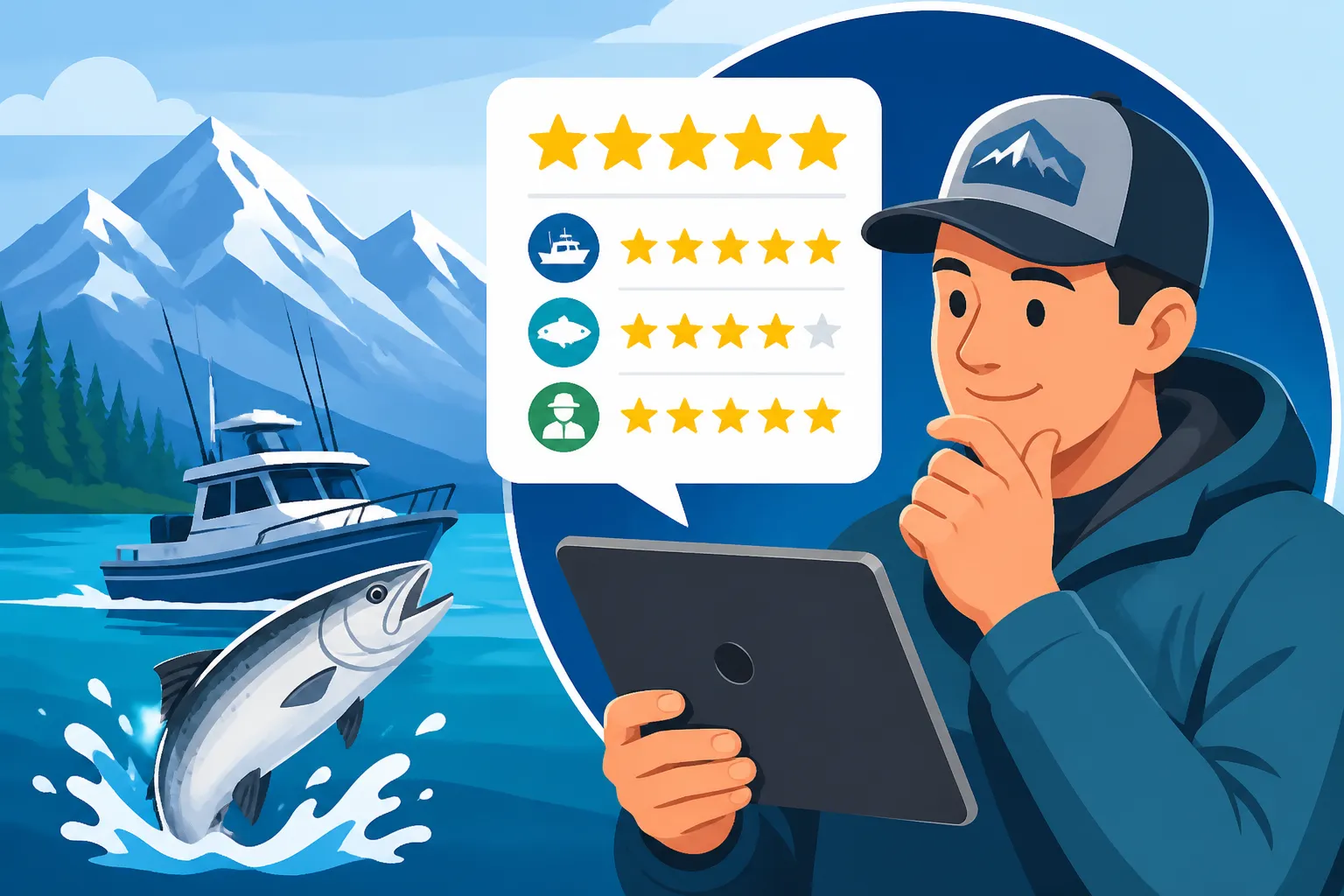
How to Read Alaska Charter Reviews
Planning an Alaska fishing trip is a dream for many, but the sheer number of charter options can feel overwhelming. Trying to sift through endless online reviews to find a truly great guide and boat can quickly turn excitement into frustration, leaving you wondering if you're making the right choice for your hard-earned vacation. This guide will help you cut through the noise, showing you exactly how to read and interpret Alaska fishing charter reviews so you can book with confidence and maximize your chances of a successful and memorable adventure.
Why Charter Reviews Are So Crucial for Alaska Fishing
When you're shelling out good money and traveling all the way to Alaska for a fishing trip, you're not just buying a boat ride; you're investing in an experience. The wrong charter can turn a potential trip of a lifetime into a costly disappointment. That's why diving deep into reviews isn't just a suggestion, it's a necessity.
Navigating the Sheer Volume of Options
Alaska is a vast state, and every popular fishing destination, from Homer to Seward to Sitka, is brimming with charter operations. Each one promises the best catches, the most experienced captains, and the most comfortable boats. Without a solid strategy for evaluating them, you might as well throw a dart at a map. Online platforms like FishingBooker aggregate thousands of reviews, which is fantastic for choice but daunting for decision-making. Learning to filter and understand these reviews allows you to systematically narrow down the field, focusing on charters that align with your specific desires – whether it's trophy halibut, a limit of sockeye, or a family-friendly experience. Think of reviews as your personal focus group, giving you insights from anglers who have already been there, done that, and wrestled with the fish (or lack thereof).
Managing Expectations vs. Reality
Let's be real: no fishing trip guarantees a "fish on" every minute, and anyone promising that is probably stretching the truth. Reviews are invaluable for understanding the reality of a charter, not just the marketing hype. They help you gauge what a typical day looks like, how often anglers hit their limits, and what kind of fish are realistically targeted. For instance, if a charter consistently gets rave reviews for catching silver salmon in August, but you're hoping for a monster king salmon in July, those reviews, while positive, might not directly apply to your specific goals. It's about aligning what you read with what you want. This insight can prevent the common disappointment of arriving with unrealistic expectations fueled by glossy brochures. Understanding Alaska Fishing Seasons: Month-by-Month Guide can help you set realistic expectations before you even start looking at reviews.
Protecting Your Investment
An Alaska fishing charter isn't a cheap endeavor. Costs can range significantly depending on the duration, location, and target species. From a half-day trip out of Valdez to a multi-day fly-in lodge experience near Bristol Bay, your money is on the line. A thorough review analysis is your first line of defense against wasting that investment. Reviews can alert you to hidden costs, inconsistent service, or even safety concerns that wouldn't be apparent from a charter's website. They provide accountability, as captains and crews know their reputation hinges on the feedback they receive. Before you commit a significant deposit, spending time understanding Alaska Fishing Charter Cost Explained and meticulously reading reviews can save you from a regrettable financial decision.
Key Elements to Scrutinize in Alaska Charter Reviews
When you're scrolling through reviews, it's easy to get caught up in the overall star rating or just the most recent comments. But truly effective review reading goes much deeper. You need to become a detective, looking for specific clues that reveal the true nature of the charter experience.
The Specificity of the Feedback
Generic praise like "Great trip!" or "Had fun!" doesn't tell you much. What you're looking for are reviews filled with specific details. Did the reviewer mention the captain by name? Did they talk about the type of bait used, the condition of the rods, or the exact location they fished? Specificity indicates an authentic experience and provides tangible points of reference. For example, a review stating, "Captain Mike on the 'Salmon Seeker' was amazing, expertly navigating Kachemak Bay and helping my son land his first halibut on a light tackle setup he provided," is far more valuable than a simple "Good captain." This level of detail helps paint a clearer picture of what your What to Expect on an Alaska Fishing Charter experience might actually entail.
Consistency Across Multiple Reviews
One glowing review amidst a sea of mediocre ones, or vice versa, should raise a red flag. Look for patterns. Do multiple reviewers consistently praise the same aspects, such as the captain's patience, the cleanliness of the boat, or the quality of the gear? Or do they repeatedly mention issues like late departures, broken equipment, or a less-than-enthusiastic crew? Consistency suggests that these are reliable indicators of the charter's standard operations. A charter that reliably delivers positive experiences across many customers is a far safer bet than one with wildly fluctuating feedback. Platforms like FishingBooker often allow you to sort by relevance or recency, which can help you spot these trends more easily.
The Captain's and Crew's Professionalism
The people running the boat can make or break your trip, regardless of the fish count. Reviews should shed light on their demeanor, expertise, and willingness to help. Are they described as friendly, knowledgeable, patient, and good with kids or beginners? Do they actively teach fishing techniques or merely steer the boat? Pay attention to comments about safety briefings, their handling of rough weather, and their overall communication style. A truly professional captain and crew prioritize safety, customer experience, and sharing their passion for fishing. Conversely, reviews mentioning surly attitudes, disinterest, or a lack of clear instruction are strong warnings.
Quality of Gear and Boat Maintenance
Imagine getting to Alaska, ready for a fight with a trophy king salmon, only to find yourself wrestling a rusty reel or a frayed line. Reviews often touch upon the condition of the vessel and the equipment provided. Look for mentions of well-maintained boats, reliable engines, modern electronics, and good quality rods, reels, and tackle. This indicates a charter that takes pride in its operation and invests in a safe and effective fishing experience. Cleanliness is another key indicator; a messy boat can hint at a broader lack of attention to detail. Don't hesitate to ask Questions to Ask an Alaska Fishing Charter about their gear before you book, and cross-reference their answers with recent reviews.
Fish Catch Success and Realistic Expectations
While no charter can guarantee a limit every time, reviews provide a good sense of a charter's typical success rate. Look beyond just "caught fish" and try to discern details like:
- Species targeted: Did they consistently catch what they went for?
- Size of fish: Were they "chicken" halibut or "barn doors"? Sockeye or King Salmon?
- Effort involved: Did they move around to find fish, or just stay in one spot?
- Honesty: Did the captain manage expectations if fishing was slow?
Remember, a good captain will always try their best, but some days the fish just aren't biting. A negative review focused solely on a lack of fish without mentioning any issues with the captain or boat might just be bad luck on that particular day, rather than a reflection of the charter's overall quality. For specific species, you'll want to review fishing success relevant to your target, such as those looking for Alaska King Salmon Fishing Regulations and Limits.
Handling of Your Catch and Post-Trip Services
After a successful day of fishing, you'll want your catch handled properly. Reviews often highlight how charters deal with filleting, packaging, and advice on shipping. Are the fish cleaned promptly and efficiently? Is it vacuum-sealed on board or at a nearby processor? Are there recommendations for local processors who can prepare your catch for transport home? Positive comments about these services indicate a charter that understands the full angler experience, from the hook-up to the dinner plate. This is an important aspect of a quality operation, as getting your fish home can be a process itself. Reading about Fish Processing After an Alaska Charter can give you a better idea of what to look for in reviews regarding this service.
Decoding Red Flags and Green Lights in Reviews
Navigating the world of online reviews requires a keen eye for both blatant issues and subtle indicators. Not all reviews are created equal, and understanding how to read between the lines is a skill that will serve you well when planning your Alaska fishing adventure.
Spotting Generic or Vague Praise/Criticism
As mentioned before, extreme brevity can be a sign of inauthenticity. A review that simply says "Worst trip ever" without any context or specific complaints is as unhelpful as "Best day of my life!" without details. Both extremes, if lacking substance, should be viewed with skepticism.
- Red Flag: A series of one-word or overly enthusiastic/negative reviews posted around the same time, especially if they sound artificial or repetitive. For instance, if five new reviews pop up in a day, all saying "Amazing time! Best captain!" with no further elaboration, it could be a sign of manufactured feedback.
- Green Light: Reviews that describe specific interactions, challenges overcome, or unique moments. "The captain stayed out an extra hour to ensure my kids each caught a rockfish," or "Despite choppy seas, the boat felt incredibly stable and the crew made sure everyone was comfortable." These details ring true.
Overly Positive or Negative Outliers
Every charter will likely have a few reviews that stand out as exceptionally good or bad compared to the average. While these shouldn't be ignored, they also shouldn't be the sole basis for your decision.
- Red Flag: A single, scathing one-star review claiming outright fraud or danger, especially if it contradicts dozens of positive reviews. This could be a disgruntled competitor or an unreasonable customer. Likewise, a lone five-star review that reads like a professional advertisement amidst average scores might be suspicious.
- Green Light: Look for the consensus. If 90% of reviews are 4-5 stars and praise similar attributes, a single 1-star review might be an anomaly. Similarly, if most reviews are average, don't let one spectacular review sway you entirely. It's the overall pattern that matters, demonstrating consistent performance.
Charter's Response to Criticism
This is a huge indicator of a charter's professionalism and customer service. How a captain or company responds to negative feedback speaks volumes about their integrity and commitment to improvement.
- Green Light: A charter that responds to criticism calmly, professionally, and offers a solution or explanation (without being defensive or making excuses) is a strong sign. For example, "We are sorry you felt the gear was outdated; we've since invested in new rods and reels for next season." This shows they value feedback and are actively working to address issues.
- Red Flag: Defensive, angry, or dismissive responses to legitimate criticism. A captain who argues with a customer in public comments, or completely ignores negative reviews, is likely not someone you want to spend a day on the water with.
The Importance of Recent Reviews
Fishing conditions, regulations, equipment, and even captains can change over time. An outdated review, no matter how positive, might not reflect the current reality of the charter.
- Green Light: Prioritize reviews from the last year or two. This ensures you're getting current information about the boat's condition, the captain's performance, and the fishing experience. You want to know what it's like now, not five years ago.
- Red Flag: A charter with many glowing reviews from 2018-2020, but very few or mixed reviews from the past couple of seasons, could indicate a decline in quality or a change in management. Always check the date of the review. Emergency orders can also change regulations quickly, so recent reviews are key to understanding current practices.
Practical Tips for Using Review Platforms Effectively
You've got the detective hat on, now let's talk about how to actually use the tools at your disposal to find that perfect Alaska fishing charter. Simply browsing isn't enough; strategic searching and comparison will yield the best results.
Cross-Referencing Platforms
Don't rely on just one website for your research. A comprehensive approach means looking at multiple platforms. A charter might have an immaculate rating on their own website, but a more balanced (or critical) view on independent sites.
- Why it matters: Different platforms often attract different types of reviewers and have varying moderation policies. A charter listed on FishingBooker might also have reviews on Google, TripAdvisor, or even specific local forums dedicated to Alaska fishing.
- How to do it: Once you've identified a few potential charters, search for them by name on other review sites. This helps you build a more holistic picture and verify the consistency of their reputation. If a charter has consistently high ratings and detailed positive feedback across several independent platforms, that's a very good sign.
Leveraging Review Filters and Search Functions
Most modern review platforms offer powerful filtering and search capabilities. Don't be afraid to use them to your advantage!
- Date filters: As discussed, filter by "most recent" to ensure the information is current.
- Rating filters: While you shouldn't only look at 5-star reviews, it can be useful to see all 1-star reviews to understand worst-case scenarios, and all 5-star reviews to see what the peak experience offers.
- Keyword search: Use keywords relevant to your trip. Are you targeting "halibut"? Search for "halibut" within the reviews to see specific feedback on those trips. Looking for a "family-friendly" charter? Search for "kids," "family," or "children." This quickly surfaces relevant experiences without having to read every single review.
- Location specifics: If you're particularly interested in Best Fishing Spots Near Homer, Alaska, search for charters operating specifically in that area and filter their reviews accordingly.
Don't Just Look at the Star Rating
The star rating is a quick summary, but it's rarely the full story. Two charters could have a 4.5-star average, but one might have consistent 4-star reviews with no major complaints, while the other has a mix of 5-star raves and 1-star disasters. The latter indicates inconsistency, which is a significant risk.
- Dive into the comments: Always, always read the written comments. The "why" behind a rating is far more important than the number itself. A 3-star review with detailed, minor complaints might be more informative than a glowing 5-star review that just says "Awesome!"
- Look for nuance: Sometimes a lower star rating might be due to something outside the charter's control (e.g., bad weather, slow fishing day), while the reviewer still praises the captain's effort or professionalism. Conversely, a high star rating might still contain subtle criticisms in the text that are worth noting.
Here's a quick summary table to help you dissect reviews:
| Feature to Evaluate | Green Light (Positive Indicators) | Red Flag (Negative Indicators) |
|---|---|---|
| Specificity | Detailed accounts of gear, locations, fish species, captain's actions. | Vague, one-word, or generic comments ("Great trip!"). |
| Consistency | Repeated praise for specific crew members, boat, or type of trip across many reviews. | Wildly inconsistent ratings, or a pattern of recurring specific complaints. |
| Captain/Crew | Described as knowledgeable, patient, friendly, safety-conscious, good with all skill levels. | Reviews mentioning rudeness, disinterest, poor communication, or lack of effort. |
| Gear/Boat | Mentions of clean, well-maintained boat, modern/functional equipment, safety features. | Complaints about broken gear, dirty boat, unsafe conditions, or mechanical issues. |
| Catch Success | Realistic reporting of catches, effort to find fish, captain's honesty about conditions. | Guaranteed limits, overly exaggerated claims, or consistent reports of no fish with no explanation. |
| Post-Trip Service | Positive comments on fish cleaning, packaging, processing advice, and efficient handling of catch. | Issues with fish handling, poor cleaning, lack of advice, or disorganization after the trip. |
| Charter's Response | Professional, empathetic, problem-solving responses to criticism. | Defensive, angry, dismissive, or absent responses to negative feedback. |
| Review Date | Many recent reviews (within the last 1-2 years). | Majority of reviews are several years old, with few recent updates. |
By systematically applying these strategies, you'll transform from a casual browser into an expert review analyst, significantly increasing your chances of booking an Alaska fishing charter that lives up to your expectations. Remember to consider all aspects, from the quality of the vessel to the personality of the crew, to ensure your adventure on the Last Frontier is truly unforgettable.
Disclaimer
The information provided in this guide is for general informational purposes only and does not constitute professional advice. Fishing conditions, regulations, and charter availability in Alaska can change rapidly. Always verify current regulations with the Alaska Department of Fish and Game and confirm details directly with your chosen charter operator before making any bookings or travel arrangements.