How to Float Fishing for Salmon in Alaska
There's nothing quite like the thrill of salmon fishing in Alaska, but if you've spent any time on our rivers, you know it can also be incredibly frustrating. Sometimes, the fish are there, you can see them, but getting them to bite feels like trying to win the lottery. Many anglers struggle to present their bait or lure effectively in Alaska's notoriously fast and deep currents, leading to missed opportunities and a lot of head-scratching. This guide is dedicated to teaching you the art of float fishing for salmon in Alaska, a versatile and often deadly technique that will help you put more fish on the bank by presenting your offering naturally and precisely.
Understanding Float Fishing for Alaska Salmon
Float fishing, often called "bobber fishing" by folks outside the Great Land, is a highly effective method for targeting salmon in Alaska's diverse river systems. It's not just for beginners; seasoned anglers rely on it heavily, especially when salmon are a bit finicky or holding in specific parts of the water column. The beauty of float fishing lies in its ability to suspend your bait or lure at a precise depth, allowing it to drift naturally with the current, mimicking free-floating food or an unattached prey item.
What is Float Fishing and Why It Works Here
At its core, float fishing involves using a buoyant float (or bobber) to suspend your bait or lure at a predetermined depth above your weight. The float sits on the surface, indicating strikes and allowing you to track your presentation as it moves downstream. Here in Alaska, where rivers like the Kenai and Kasilof can have strong, complex currents and varying depths, this technique is a game-changer. It allows your offering to drift through "sweet spots" – current seams, eddies, or deeper pockets where salmon often hold – without getting hung up on the bottom or being swept away too quickly.
Think about it: salmon, especially sockeye and coho, are often holding in precise lanes or depths as they migrate upstream. They might not be actively chasing food, but rather reacting to something that drifts right into their strike zone. A properly weighted and drifting float fishing rig can place your offering exactly where it needs to be, giving the salmon ample time to inspect and, hopefully, strike. It's a much more controlled and natural presentation than simply casting and retrieving, which can often pull your lure out of the target zone too quickly. This method truly shines when you need to be subtle and precise, especially in clear water conditions or when fish are pressured.
Ideal Species and River Conditions for Float Fishing
While you can float fish for just about any fish, certain salmon species in Alaska respond exceptionally well to this technique. Sockeye salmon are perhaps the most famous candidates, particularly on rivers like the Kenai and Russian River, where the "flossing" or "lining" technique, a variation of float fishing, is incredibly popular and effective. For sockeye, the goal is often to drift a bare hook or a bead with enough weight and leader length so that the line eventually "flosses" through the sockeye's mouth as it opens and closes in the current, leading to a legal snag in the mouth. It's a technique that requires practice and understanding of local regulations, which can change frequently. You can learn more about specific rules in our guide to Alaska Sockeye Salmon Fishing Regulations and Limits.
Coho (silver) salmon are another prime target for float fishing. Unlike sockeye, coho are aggressive biters, and they'll readily strike a small jig, cured egg cluster, or bead suspended under a float. Their tendency to hold in current seams and ambush prey makes float fishing incredibly productive. Pink salmon, when they are present in huge numbers in rivers like Ship Creek near Anchorage, can also be caught on smaller floats with jigs. Even some king salmon can be targeted with float fishing, though the gear needs to be significantly beefed up to handle their power. However, it's crucial to understand the specific Alaska King Salmon Fishing Regulations and Limits before attempting this, as regulations often dictate gear and bait limitations.
River conditions play a massive role too. Float fishing excels in rivers with moderate to fast currents and depths ranging from a few feet to over twenty. If the water is too shallow or too slow, other techniques might be more effective. The method allows you to explore the water column, adjusting your depth until you find where the fish are holding. This adaptability is key in Alaska, where water levels and clarity can change quickly throughout the season.
Essential Gear for Successful Float Fishing
Just like any specialized fishing technique, having the right gear for float fishing in Alaska is paramount. You wouldn't bring a butter knife to a bear hunt, and you shouldn't bring ultralight tackle to chase chrome-bright salmon. The power and stamina of Alaska salmon demand robust, reliable equipment that can handle the fight and the often-rugged river environments.
Rods, Reels, and Line Selection
For float fishing in Alaska, a longer rod is generally preferred. You'll want something in the 8.5 to 10.5-foot range, with a medium-heavy to heavy power and a moderate-fast action. The length helps with casting heavier floats, mending your line to achieve a perfect drift, and absorbing the shock of a powerful salmon's head shakes. Many anglers opt for specialized float rods, which are designed with these specific actions and lengths in mind. A longer rod also gives you better line control, allowing you to keep your line off the water for a cleaner, drag-free drift.
When it comes to reels, both spinning and baitcasting setups can work. Spinning reels are often favored for their ease of use and ability to cast lighter floats or beads long distances with less effort. Look for a durable reel with a smooth drag system, capable of holding at least 150-200 yards of line. For baitcasting, a level-wind reel with good casting capabilities and a strong drag is essential, especially if you're targeting larger fish or need to cast heavier rigs. Many quality reels are available on platforms like Amazon, offering a good balance of performance and value.
Line choice is critical. Most Alaskan float anglers spool their reels with braided mainline, typically 20-40 pound test, because of its strength, lack of stretch (which helps with hook sets), and sensitivity. Since braid is opaque and visible, you'll always tie a fluorocarbon leader to your mainline. Fluorocarbon is nearly invisible underwater, more abrasion-resistant than mono, and has a similar refractive index to water, making it perfect for presenting your bait naturally. Leader length can vary from 3 to 8 feet, depending on water clarity and conditions, and its breaking strength should be matched to the fish you're targeting and the mainline. For sockeye, many anglers use 20-30 pound fluorocarbon leaders due to the strong current and the need for a strong connection when flossing. For silvers, 15-25 pound test is common.
Floats, Weights, and Terminal Tackle
The star of float fishing is, of course, the float itself. There are two main types:
- Fixed Floats: These are clipped or slid onto your line at a fixed depth. They work best in shallower water where the depth doesn't exceed the length of your rod, allowing you to cast and retrieve without issue.
- Slip Floats: These floats have a hole through the center, allowing your mainline to "slip" through. A bobber stop (a small piece of string or rubber) is tied above the float to set the desired fishing depth, which can be much deeper than your rod length. Slip floats are incredibly versatile for deep water and precise depth control. For example, when fishing deep runs on the Kenai for sockeye, a slip float is almost always the go-to.
| Float Type | Best Use Cases | Advantages | Disadvantages |
|---|---|---|---|
| Fixed Float | Shallow water (up to rod length), slower currents | Simple setup, quick depth adjustment within limits, good visibility | Limited depth range, can be bulky for casting, not ideal for deep drifts |
| Slip Float | Deep water, variable depths, strong currents | Unlimited depth setting, casts easily, versatile for different conditions | Requires bobber stop, more complex rigging, bobber stop can slip |
Weights are essential for getting your bait down quickly and keeping it at the desired depth. Split shot are common for lighter rigs, while slinky weights (flexible lead-filled tubes) or pencil weights are excellent for float fishing in strong currents because they are less prone to snagging the bottom than traditional lead weights. The key is to use enough weight to properly cock your float, meaning it stands upright with just the tip visible, but not so much that it interferes with a natural drift.
Terminal tackle includes hooks, swivels, and beads. Single, barbless hooks are mandated in many Alaska salmon fisheries, so make sure you check the regulations carefully. Octopus-style hooks in sizes #1 to 4/0 are popular for bait, while small jigs or leadhead flies are great for coho. Swivels prevent line twist, especially when using cured eggs that might spin in the current. Beads, mimicking salmon eggs, are increasingly popular for trout and sockeye.
Baits and Lures for Float Fishing
The choice of bait or lure depends heavily on the salmon species you're targeting and the specific regulations of the river you're fishing.
- Cured Salmon Roe (Eggs): This is arguably the most effective bait for king and coho salmon, and sometimes even sockeye (where legal and presented correctly). Clusters of cured eggs, often tied in mesh bags, are irresistible. You can find ready-to-use cured eggs at local tackle shops, or learn How to Cure Salmon Eggs for Bait yourself. When float fishing with eggs, you want to ensure your egg presentation is just kissing the bottom or slightly above, allowing the current to spread the scent.
- Artificial Eggs/Beads: Beads that mimic salmon eggs, often 8mm to 16mm, are incredibly popular, especially for sockeye and trout. These are often fished with a small weight directly above the hook to ensure the bead is positioned correctly just above the hook point, making for a legal hook-up in most instances. Many anglers swear by brands like Mad River Roe for their realistic appearance and durability.
- Small Jigs: Marabou jigs, often in vibrant colors like pink, chartreuse, or black, are phenomenal for coho salmon. Tipped with a small piece of shrimp or cured egg, they present a tantalizing target under a float. Jigs can be found in various weights and sizes on general fishing supply sites like Amazon.
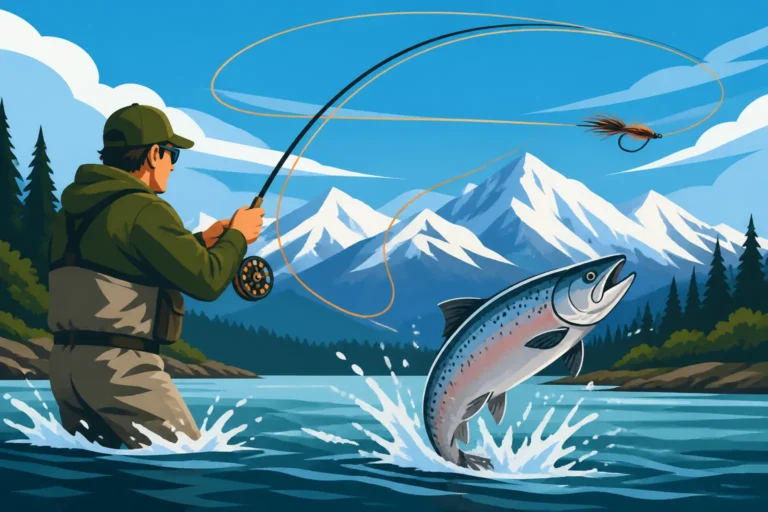
- Small Flies: For aggressive coho, smaller Intruder-style flies or even traditional salmon flies can be deadly when swung under a float. This combines aspects of fly fishing with the precision depth control of float fishing. If you're into fly fishing, exploring How to Fly Fish in Alaska might provide additional insights on fly selection.
Always verify the current emergency orders and local regulations, as bait restrictions or single-hook requirements are common, particularly in sensitive salmon fisheries. Our guide on Alaska Fishing Emergency Orders Explained can help you stay informed.
Mastering the Art of Float Fishing Techniques
Float fishing isn't just about tossing a float in the water; it's a refined technique that requires attention to detail, precision, and a good understanding of river dynamics. The goal is always to present your offering as naturally as possible, making it irresistible to salmon.
Setting Up Your Float Fishing Rig
The correct rig setup is crucial for success. Let's walk through the basic steps for a slip float rig, which is the most versatile for Alaska's varied waters:
- Tie on a Bobber Stop: Start by sliding a bobber stop onto your mainline. This small knot or piece of rubber allows you to adjust your fishing depth. Ensure it's tight enough not to slip but can still be moved along the line.
- Add a Bead: Slide a small plastic bead onto your mainline, directly below the bobber stop. This bead protects the knot of your float from rubbing against the bobber stop.
- Attach the Slip Float: Next, thread your mainline through the top and bottom eyes of your slip float.
- Add Weight: Below the float, you'll add your weights. This could be a series of split shot, or, more commonly, a slinky weight or pencil lead tied to a swivel. The amount of weight should be just enough to make your float stand upright in the water with only the top portion showing, indicating a sensitive strike.
- Tie a Swivel: Secure a small barrel swivel (strength matching your mainline) below your weights. This prevents line twist and provides a good connection point for your leader.
- Attach the Leader: Tie your fluorocarbon leader to the other end of the swivel. The length of your leader will vary but usually ranges from 3 to 8 feet.
- Tie on the Hook/Lure: Finally, tie your chosen hook (often a single, barbless octopus hook) or small jig to the end of your leader. If using a bead, ensure it's pegged about 1.5 to 2 inches above the hook point using a small toothpick or rubber peg.
A properly set up rig will cast smoothly and allow your bait to get down to depth quickly and drift naturally. Don't be afraid to experiment with leader lengths and weight amounts to find the perfect balance for the conditions you're facing.
Reading the Water and Executing the Drift
This is where the art of float fishing truly comes into play. You need to understand where salmon are likely to hold and how the current will carry your float.
- Reading the Water: Look for current seams (where fast water meets slow water), eddies, deeper depressions, and areas with structure (submerged logs, rocks). Salmon often stack up in these areas to rest while migrating upstream. On the Kenai River, for example, identifying these subtle current changes can be the difference between a productive day and a frustrating one. Our guide on How to Read Alaska Fishing Regulations Booklet also covers aspects of identifying fishing zones.
- Casting: Cast your rig upstream and slightly across the current from where you expect the fish to be. The goal is to allow your float and bait to drift naturally downstream, covering the target zone.
- The "Dead Drift": This is the holy grail of float fishing. Your float should move at the exact same speed as the surrounding current, without dragging or being pulled unnaturally. To achieve this, you'll need to "mend" your line – lifting your rod tip and flipping any slack line upstream to reposition it and eliminate drag. This continuous adjustment ensures your bait looks completely natural, like a free-floating meal.
- Depth Control: Adjust your bobber stop to set the depth so your bait is drifting just above the bottom, or at the depth where you're seeing fish on a fish finder or observing other anglers having success. For sockeye, sometimes fishing higher in the water column as they move quickly can be effective.
Paying close attention to your float is critical. Even a slight dip, hesitation, or acceleration can indicate a bite. Sometimes, the float won't go completely under, but simply stop or move sideways – those are often bites!
Hook Set, Fighting, and Landing Salmon
Once you spot that telltale sign of a bite, the next steps are crucial.
- The Hook Set: Resist the urge to yank immediately. Instead, sweep your rod tip upstream and slightly sideways with a firm, continuous motion. This sets the hook cleanly and efficiently. Because braided line has no stretch, you don't need a huge, exaggerated movement. A quick, powerful sweep is usually enough.
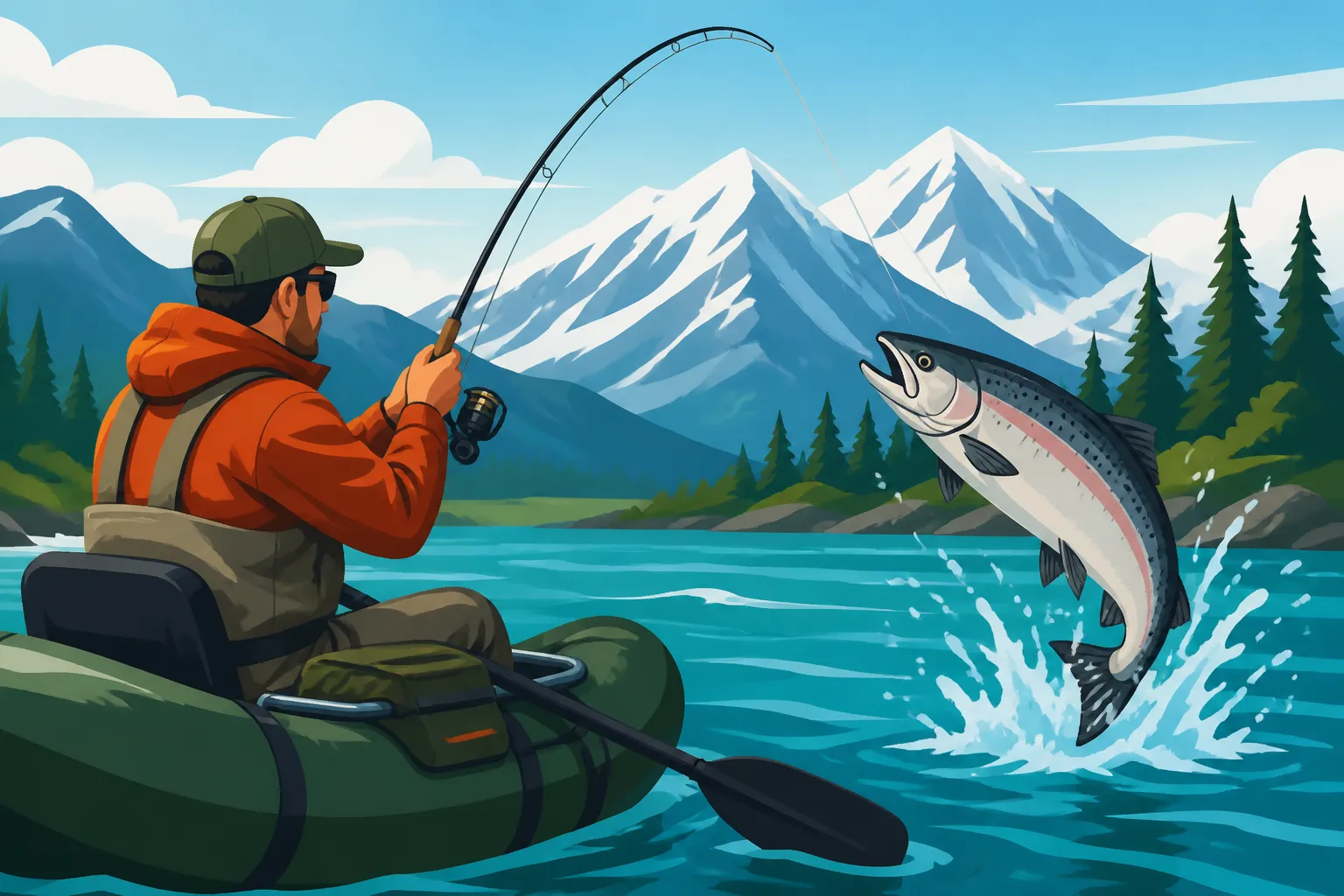
- Fighting the Fish: Alaska salmon are powerful, especially fresh-run kings and silvers. Keep your rod tip up, maintain constant pressure, and let your reel's drag do its job. Don't try to horse the fish in, especially in strong currents. Let it run when it wants to, and gain line when it tires. Be prepared for strong runs and sudden changes in direction. If you're lucky enough to hook a king, you'll appreciate the fight!
- Landing the Fish: Once the fish is tired and close to shore or the boat, use a large, rubberized net to scoop it headfirst. Rubberized nets are kinder to the fish if you're planning on catch and release, and they prevent hooks from getting tangled. Be quick, decisive, and handle the fish gently. If you're unfamiliar with best practices, checking out Alaska Catch-and-Release Best Practices is always a good idea. For species like sockeye, a swift landing is important to minimize stress.
Remember, practice makes perfect. The more you float fish, the more intuitive these steps will become, and the more salmon you'll be able to bring to hand.
Advanced Tips and Troubleshooting
Even the most experienced anglers face challenges on the river. Alaska's dynamic environment means conditions are rarely constant, and being able to adapt is a hallmark of a truly successful float fisherman.
Adjusting to Changing Conditions
Alaska's weather and water conditions can change on a dime, and your float fishing strategy needs to adapt right along with them.
- Water Levels and Clarity: If the water rises and becomes more turbid, fish often move closer to the banks to escape the main current, and they may be less wary. You might need to use brighter, more visible baits or lures, and possibly larger floats to handle the increased current. Conversely, in low, clear water, fish become much more skittish. This is when smaller floats, longer, lighter fluorocarbon leaders, and natural-colored baits or beads become essential. Reducing your weight to achieve an even slower, more subtle drift can also make a huge difference.
- Current Speed: Faster currents will require more weight to get your bait down quickly and keep the float cocked properly. You might also need to use a slightly larger float for better visibility and stability. For slower currents, reduce your weight to prevent your float from dragging and ensure a truly natural presentation. Sometimes, a subtle change in weight can completely alter your drift and turn a slow day into a productive one.
- Fish Behavior: Are fish rising? Are they holding deep? Are they nipping at your bait or taking it aggressively? Observing fish behavior, and that of other successful anglers, is key. If you're getting short strikes, try downsizing your hook or changing your bait. If you're missing bites, ensure your float is properly weighted for maximum sensitivity. Sometimes, simply adjusting the depth by a foot or two is all it takes to find the sweet spot where fish are holding.
These small adjustments, learned through experience and observation, are what elevate a good float fisherman to a great one. Don't be afraid to experiment with your setup throughout the day; what worked an hour ago might not work now.
Common Mistakes and How to Avoid Them
Even experienced anglers fall into common traps. Recognizing these pitfalls can save you a lot of frustration.
- Not Enough Weight: This is probably the most common mistake. If your float isn't sitting correctly (i.e., too much of it is out of the water), you don't have enough weight. This makes it less sensitive to bites and prevents your bait from reaching the desired depth. Add more weight until only the brightly colored tip of your float is visible.
- Too Much Weight: Conversely, too much weight can also be an issue. It can make your float sink too low or pull your bait unnaturally, signaling to wary salmon that something is amiss. It can also cause your rig to snag the bottom more frequently.
- Poor Drift (Drag): If your float is moving faster or slower than the current, or if your line is creating a bow on the water, you have "drag." This unnatural movement instantly spooks fish. Mastering line mending and using a long rod are key to eliminating drag. Practice casting upstream and immediately mending your line to keep it straight and the float drifting freely.
- Wrong Depth: If you're not getting bites, you might be fishing above or below the salmon. Experiment with your bobber stop, adjusting your depth in one-foot increments until you find where the fish are holding. This often means trying depths from just off the bottom to several feet up.
- Not Paying Attention to the Float: Your float is your direct line to understanding what's happening underwater. Distractions can cause you to miss subtle bites. Keep your eyes glued to that float, anticipating every movement. Even a slight twitch or hesitation can be a fish mouthing your bait.
By consciously avoiding these mistakes, you'll improve your float fishing success exponentially.
Safety and Ethics in Alaska Float Fishing
Fishing in Alaska is an incredible experience, but it comes with responsibilities, both for your safety and for the preservation of our amazing fisheries.
- Bear Safety: Many of Alaska's prime salmon rivers are also prime bear country. Always be bear aware. Carry bear spray, know how to use it, and make noise while you're fishing. Store food properly and keep a clean camp. If you're fishing in a group, stay together. Awareness is your best defense.
- Knowing Regulations: Alaska's fishing regulations are complex and can change rapidly via emergency orders. Always check the current regulations for the specific waters you're fishing before you head out. This includes bag limits, size restrictions, gear restrictions (e.g., single barbless hooks, no bait zones), and specific recording requirements like the Alaska Harvest Record Card Explained. Violations can result in hefty fines and loss of fishing privileges.
- Respecting Other Anglers: Alaska rivers, especially during peak salmon runs, can get crowded. Practice good angler etiquette: respect personal space, avoid casting over other people's lines, and keep noise levels down. Many spots, particularly on rivers like the Russian River, become popular combat fishing zones, and knowing the unwritten rules is as important as the written ones.
- Leave No Trace: Pack out everything you pack in. Dispose of fishing line and trash properly. Be mindful of the delicate river ecosystems. Our collective efforts help ensure these fisheries remain vibrant for generations to come.
By embracing these safety and ethical guidelines, you ensure that your Alaska float fishing adventures are not only productive but also responsible and respectful of the environment and fellow anglers.
Float Fishing Rig Components Overview
To help visualize the essential components we've discussed, here's a quick summary. Remember, the specific sizes and strengths will vary based on the species you're targeting and river conditions.
| Component | Primary Function | Common Materials/Types | Key Considerations |
|---|---|---|---|
| Rod | Casting, fighting fish, line mending | Graphite, 8.5-10.5 ft, Med-Heavy/Heavy | Length for casting & line control; power for fighting |
| Reel | Line storage, drag system | Spinning or Baitcasting, size 3000-5000 | Smooth, reliable drag; line capacity |
| Mainline | Connects reel to leader | Braided line (20-40 lb) | No stretch for sensitivity; strength for fighting |
| Bobber Stop | Sets depth for slip float | Thread, rubber, or silicone | Must hold firm, but be adjustable |
| Bead (above float) | Protects float knot, aids movement | Small plastic bead | Smooth passage over float |
| Slip Float | Suspend bait at depth, indicates bites | Plastic, foam; various sizes/shapes | Proper size for weight; high visibility |
| Weights | Sinks bait, cocks float | Slinky, pencil lead, split shot | Sufficient to cock float; minimal snagging |
| Swivel | Prevents line twist, leader connection | Barrel swivel, strength to match line | Smooth rotation; secure connection to mainline/leader |
| Leader | Connects swivel to hook/lure, stealth | Fluorocarbon (15-30 lb) | Near-invisible underwater; abrasion resistance |
| Hook/Lure | Attracts and catches fish | Octopus hook, jig, bead | Size and type for target species; barbless often req. |
Disclaimer
The information provided in this guide is for general informational purposes only. Alaska fishing regulations, emergency orders, and local conditions can change rapidly. Always consult the most current Alaska Department of Fish and Game regulations and emergency orders before engaging in any fishing activity. It is the angler's responsibility to know and follow all applicable rules and regulations.