How to Fly Fish in Alaska
The call of Alaska for a fly angler is something truly special, a siren song of wild rivers, chrome-bright salmon, and trophy trout that haunts your dreams. But let's be honest, stepping onto an Alaskan river for the first time with a fly rod can feel incredibly daunting. It's not like your local trout stream; everything here feels bigger, wilder, and the stakes often feel higher. This guide is here to demystify the art and science of fly fishing in Alaska, breaking down everything from essential gear to proven techniques, so you can approach these legendary waters with confidence and maybe, just maybe, land that fish of a lifetime.
Understanding Alaska's Unique Fly Fishing Landscape
Alaska isn't just one big fishing hole; it's a vast mosaic of diverse ecosystems, each with its own rhythm and challenges. From the salt-laced estuaries where salmon first stage, to the glacial-fed rivers churning with powerful currents, and the clear, spring-fed streams brimming with hungry trout, understanding this varied landscape is the first step to successful fly fishing. You can't just show up with a 5-weight and expect to conquer all of it; a more nuanced approach is needed.
The Diverse Habitats You'll Encounter
When you picture fly fishing, you might think of crystal-clear mountain streams. While Alaska certainly has those, it also boasts immense, silty rivers, vast tidal flats, and pristine lakes, all offering unique opportunities for the fly angler. The Kenai River, for instance, is famous for its incredible runs of King and Sockeye salmon, but its powerful, deep channels demand different techniques and gear than, say, a smaller, clearer tributary on the Copper River system, where Dolly Varden and grayling might be the primary targets.
Imagine standing on the banks of a river like the Kasilof, a wild, glacial system known for its King salmon. The water might be off-color, the current relentless, and you're surrounded by towering spruce and the occasional bear sign. Here, you're often fishing larger, heavier flies, trying to get down to fish holding in deep slots or along current seams. Contrast that with a small, clear stream on the Alaska Peninsula, where you might be sight-fishing for aggressive Rainbow Trout or Dolly Varden, using delicate presentations and smaller patterns. The sheer variety means you need to be adaptable and prepared for anything, a true test of an angler's versatility.
Then there's the saltwater aspect. While many think of Alaska fly fishing as purely a freshwater pursuit, the coastal regions offer exciting opportunities for targeting coho (silver) salmon in estuaries, or even rockfish and lingcod in protected bays. This type of fishing often involves different tackle and a completely different mindset, focusing on tide swings and baitfish patterns. Each habitat presents a distinct puzzle, and solving it is part of the immense satisfaction of fly fishing in Alaska.
Seasonal Changes and Their Impact on Fish Behavior
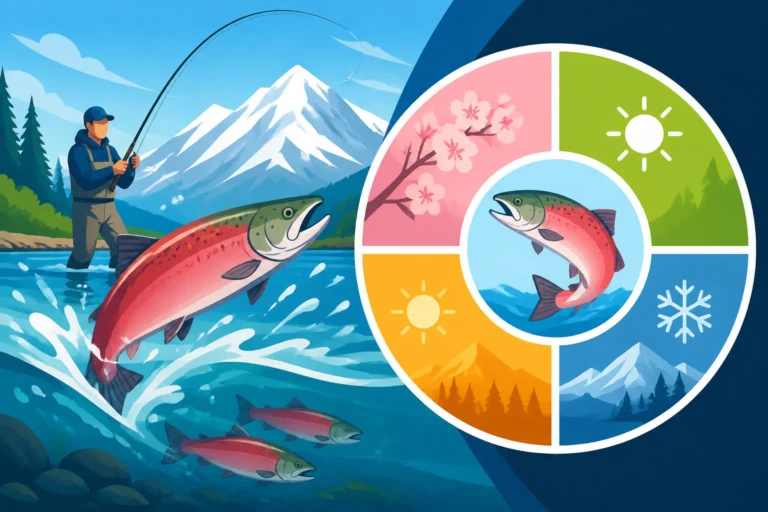
Alaska's fishing seasons are dictated by the monumental salmon runs, which in turn influence nearly every other fish species and the entire ecosystem. The "best time to fish in Alaska" depends entirely on what you're targeting. Spring, from late May to early June, often sees the first trickle of King salmon entering rivers, along with post-spawn resident trout and Dolly Varden eager to feed. As June progresses into July, the Sockeye salmon runs explode, bringing with them a surge of aggressive trout looking to capitalize on the bounty of eggs.
Late summer, August and September, is prime time for Coho salmon, which are known for their aggressive takes and acrobatic fights on the fly. During this period, trout and Dolly Varden are still actively feeding on salmon eggs and flesh, often reaching their peak condition. As fall takes hold in October, the last of the Coho are often still in the system, and resident fish like Rainbow Trout and Arctic Grayling put on a final feeding frenzy before winter sets in. Understanding these cycles is crucial; showing up in April expecting a Sockeye run will lead to disappointment, while arriving in July without a plan for the teeming reds will mean missing out on some incredible action. The changing water temperatures, varying river levels from glacial melt, and the abundance of different food sources throughout these seasons directly influence where fish hold, what they eat, and how aggressively they'll strike a fly.
Key Fish Species for the Fly Angler
Alaska is home to an incredible array of fish that readily take a fly, but a few species stand out as primary targets for fly anglers. At the top of the list are the five species of Pacific Salmon: King (Chinook), Sockeye (Red), Coho (Silver), Pink (Humpy), and Chum (Dog). Each offers a unique challenge and experience. Kings are the undisputed heavyweights, demanding powerful rods and strong lines, while Sockeye, though often less interested in a traditional "eat," provide incredible sport and sheer numbers. Coho are perhaps the quintessential fly rod salmon, aggressive and acrobatic.
Beyond salmon, Alaska's freshwater systems are teeming with magnificent resident fish. Rainbow Trout, particularly the enormous "Leopard Rainbows" of the Bristol Bay region or the robust 'bows of the Kenai River, are a huge draw for fly anglers. They gorge themselves on salmon eggs and flesh, growing to impressive sizes. Dolly Varden and Arctic Char are beautiful, predatory fish found throughout many of the same systems, offering consistent action. And let's not forget the elegant Arctic Grayling, with their distinctive sail-like dorsal fins, which are fantastic on lighter fly gear in clear, cold streams. Knowing your target species will dictate your gear, your fly selection, and your approach, ensuring you're rigged and ready for the specific fight ahead.
Essential Gear for Alaskan Fly Fishing Adventures
Equipping yourself properly for an Alaskan fly fishing trip is not merely about comfort; it's about survival and success. The Alaskan wilderness can be unforgiving, and the fish are powerful. Trying to make do with inadequate gear will lead to frustration, lost fish, and potentially, an uncomfortable or even unsafe experience. This isn't the place to skimp on quality or preparation.
Rods, Reels, and Lines for Salmon and Trout
When it comes to rods, versatility is key, but so is power. For salmon, especially King salmon, you'll want a heavy-duty setup. An 8 to 10-weight fly rod, typically 9 to 10 feet long, is standard. For King salmon, many anglers even prefer 10 or 11-weight rods to handle their immense power and the heavier fly lines required to get flies deep in strong currents. Brands like Sage, G.Loomis, and Orvis offer excellent rods that can withstand the abuse of Alaskan fishing. For Sockeye and Coho, an 8-weight is often perfect, offering a good balance of power and sensitivity. For resident trout and Dolly Varden, a 6 or 7-weight rod, 9 feet long, is usually sufficient. If you're targeting Arctic Grayling in smaller streams, a 4 or 5-weight can be a delightful choice.
Reels for Alaska need a smooth, powerful drag system and a substantial backing capacity. When a King salmon decides to run, it's not going to stop for a whimpy drag or a reel with minimal line. You'll want at least 200-250 yards of 30-pound backing for salmon. Look for fully sealed drag systems, as they'll better handle the wet, gritty conditions often encountered. For fly lines, a floating line is essential for dry flies and indicator nymphing for trout. However, for most salmon fishing and deeper trout presentations, various sinking lines are indispensable. Integrated shooting heads, often in densities from Type III (sinking at 3-4 inches per second) to Type VI (6-7 ips) or even faster, are frequently used to get flies down quickly in swift currents. Many anglers prefer Skagit or Scandi style lines for two-handed rods, particularly when swinging flies for salmon, as they make casting large flies with heavy tips much easier. You can find a great selection of these specialized lines on platforms like Amazon.
Waders, Boots, and Layering for Comfort
If there's one piece of gear you absolutely cannot skimp on for Alaska, it's your wading system. You will be wet, cold, and uncomfortable without proper waders and wading boots. Breathable chest waders made from durable, multi-layer Gore-Tex or similar material are the standard. Look for reinforced knees and seats, as you'll be kneeling, sitting, and potentially slipping on riverbanks. Brands like Simms and Orvis are industry leaders for a reason; their waders hold up to the harsh conditions. Avoid cheap waders; a leak in Alaska can quickly ruin a day, or even a trip.
Underneath your waders, layering is crucial. Start with a moisture-wicking base layer (not cotton!), add a fleece or synthetic mid-layer for insulation, and if it's really cold, another insulating layer. On top, a waterproof and breathable rain jacket is non-negotiable. Even on sunny days, Alaska weather can turn on a dime, bringing sudden downpours. A good rain jacket from a company like Patagonia or Simms will save you from misery. For boots, felt soles are excellent for traction on slick river rocks, but rubber soles with studs are becoming increasingly popular and are often required in certain fisheries to prevent the spread of invasive species. Always check specific regulations. Don't forget warm socks (wool or synthetic), a warm hat, and fingerless gloves or convertible mittens for those chilly mornings.
Flies, Leaders, and Tippets: What to Pack
The sheer variety of fish and conditions in Alaska means you need a well-stocked, but not necessarily overstuffed, fly box. For salmon, classic patterns like the "Flesh Fly" (in various colors like pink, white, and orange), "Egg Sucking Leech," "Intruder" patterns for swinging, and various "Coho Killers" or "Flash Flies" are mainstays. Sizes can range from #2 up to 2/0 for Kings, and #4 to #1/0 for Silvers and Sockeye. For Sockeye, smaller, weighted "Sockeye Flies" in bright colors like red and chartreuse are often used.
For trout and Dolly Varden, a good selection of "Egg Patterns" (like Glo Bugs or Otter's Soft Eggs in peach, orange, and red) is critical during and after the salmon spawn. Streamers like "Woolly Buggers," "Articulated Sculpins," and "Mickey Finns" are effective year-round. Nymphs such as "Prince Nymphs," "Hare's Ear Nymphs," and stonefly imitations can also work well, especially early in the season. Dry flies, while less common for salmon, can be effective for Grayling and sometimes trout, with patterns like "Parachute Adams," "Elk Hair Caddis," and "Stimulators."
Leaders and tippets need to be robust. For salmon, you'll typically use 12-20 lb test leaders, tapering down to 10-15 lb tippet. Many salmon anglers prefer fluorocarbon for its abrasion resistance and invisibility underwater. For trout, 8-12 lb leaders tapering to 4-8 lb tippet is common. Always carry a variety of tippet spools (from 4X to 0X or even heavier for salmon) because conditions and fish temperament can change. Don't forget other essentials like nippers, forceps, a net (often required to be knotless and rubberized for fish health), and a reliable headlamp for early mornings or late evenings under the midnight sun. A good pair of polarized sunglasses is also invaluable for spotting fish and protecting your eyes from errant hooks or UV rays reflecting off the water.
Mastering Alaskan Fly Fishing Techniques
Alaska's diverse fisheries demand a flexible approach to fly fishing. While some techniques might be familiar, the scale and power of Alaskan fish often require adjustments to your casting, presentation, and fighting strategies. Forget delicate dries on small streams for a moment; we're often talking about chucking big flies into powerful currents. This requires both finesse and brute force at times.
Swinging Flies for Salmon and Steelhead
Swinging flies is arguably one of the most elegant and effective techniques for migratory fish like King, Coho, and Chum salmon, as well as Steelhead, in Alaska's larger rivers. The basic idea is to cast your fly across or slightly downstream, let it sink to the appropriate depth, and then allow the current to sweep it in an arc (or "swing") across the river, presenting the fly naturally to holding fish. The key is to maintain a tight line, feeling for that distinctive tug as a fish intercepts your fly. This technique often employs two-handed Spey or Switch rods, which excel at casting heavy sinking lines and large flies with minimal effort, especially useful on wide rivers or when you can't back-cast.
When swinging, paying attention to the retrieve or lack thereof is crucial. Sometimes, a completely dead drift on the swing is best, allowing the fly to tumble and pulse with the current. Other times, a slow, deliberate strip or jigging motion during the swing can impart extra action and trigger a strike. It's often about finding the fish's "lane" and depth. For King salmon, you might need a fast-sinking Skagit head and heavy MOW tips to get your large Intruder patterns or weighted leeches deep enough to entice fish that are often hugging the bottom. For Coho, which tend to hold higher in the water column and are more aggressive, a lighter sinking tip or even an intermediate line might be sufficient. This technique demands patience and a keen understanding of current dynamics, but the reward of a solid pull from a swinging fly is truly exhilarating.
Nymphing and Indicator Fishing for Trout
For Alaska's prolific Rainbow Trout, Dolly Varden, and Arctic Char, nymphing under an indicator is a consistently productive method, especially when salmon are present and spawning. These resident fish spend a good portion of their lives feeding on subsurface insects, but when the salmon arrive, their primary food source becomes salmon eggs. This is where "egg patterns" come into play. A typical setup involves a floating fly line, a leader with a strike indicator (a bobber, essentially) positioned a few feet above your fly, and one or two weighted egg patterns or nymphs.
The goal is to get your fly to drift naturally at the same speed and depth as the current, mimicking a loose egg or drifting insect. The indicator helps you detect subtle takes, as fish often just mouth the fly without a hard strike. Proper weighting, usually with split shot or tungsten putty applied to the leader, is critical to getting your flies into the feeding zone. For instance, on the Russian River, where Sockeye salmon are abundant, anglers often target the concentrated trout and Dolly Varden with small, single egg patterns, watching indicators intently. This method is incredibly effective, allowing you to cover a lot of water and present your flies precisely where the fish are holding and feeding. You'll want to practice your mending techniques to keep your drift as natural as possible, minimizing drag and maximizing your chances of a hook-up.
Stripping Streamers and Topwater Action
While less common than swinging or nymphing for some species, stripping streamers can be an incredibly exciting and effective way to target predatory fish in Alaska. This technique involves casting a baitfish or leech imitation and then actively retrieving it with varying strip lengths and pauses, mimicking a wounded or fleeing prey. Coho salmon are notoriously aggressive and will often chase down and violently strike a stripped streamer. Patterns like "Clouser Minnows," "Decievers," and "Sculpin" imitations in sizes #2 to 2/0 are excellent choices.
For trout, especially larger, opportunistic ones, stripping streamers can elicit brutal strikes. Think about targeting the deeper pools, undercut banks, or the tailouts of salmon spawning beds where big rainbows lie in wait. A retrieve with a quick strip-pause, strip-strip-pause cadence can often trigger a reaction strike when other methods fail. While less frequent, topwater action in Alaska can be absolutely thrilling. For instance, targeting Coho salmon with poppers or Gurglers in estuaries or slower river sections can result in explosive, visual takes. Similarly, Arctic Grayling will readily rise to a well-presented dry fly during insect hatches. Even large Rainbow Trout can be coaxed to the surface with mouse patterns or large terrestrials in specific situations, creating heart-stopping moments. This active style of fishing is not only productive but incredibly engaging.
Reading the Water and Approaching Alaskan Fisheries
Understanding how to read the water is a fundamental skill for any angler, but in Alaska, where rivers can be vast and conditions constantly changing, it becomes even more critical. Knowing where fish are likely to hold, how to safely navigate the terrain, and how specific environmental factors like tides influence fish behavior can make or break your fishing day.
Identifying Holding Lies and Travel Lanes
Fish, especially salmon migrating upstream, tend to follow predictable paths and hold in specific "lies" where they can rest or avoid the main current while conserving energy. Learning to identify these spots is key to putting your fly in the strike zone. Look for seams where faster current meets slower water, often behind boulders, logs, or along the inside bends of a river. These are prime resting areas. Undercut banks provide shelter and cover, often holding larger fish. Deeper pools and troughs offer respite from the current and are excellent spots to target.
For spawning salmon, the gravel beds in shallower, slower-moving water become holding lies. Below these spawning areas, trout and Dolly Varden will often stack up, waiting for errant eggs or flesh. Identifying "travel lanes" is also crucial, especially for Sockeye salmon, which often move in tight schools along specific current lines near the bank. Watching other anglers, observing the river's flow, and looking for subtle changes in water texture can help you piece together these fish highways. For instance, on the Kenai River, local knowledge often points to specific channels and eddies where salmon congregate, making the difference between an empty net and a full stringer. A great resource for understanding where different fish species congregate is the guide on Best Fishing Spots in Alaska.
Navigating Alaskan Rivers and Streams Safely
Alaska's rivers are wild and powerful, and navigating them safely is paramount. Wading can be treacherous due to strong currents, slippery rocks, and sudden drop-offs. Always use a wading staff for stability and to test depth ahead of you. Never wade alone, and always let someone know your float plan if you're venturing into remote areas. Hypothermia is a real danger; even on a warm day, a fall into icy glacial water can be life-threatening. Ensure your waders are in good condition and your layering is appropriate.
When fishing from shore, be aware of your surroundings, especially for wildlife. Bear encounters are a possibility, so always carry bear spray, know how to use it, and make noise as you move through brush. On larger rivers, be mindful of boat traffic, especially jet boats, which can create large wakes and navigate at high speeds. Crossing rivers should only be attempted when you are confident in your abilities and the conditions; if in doubt, find another spot or stick to the bank. Knowledge of basic first aid and survival skills is also a valuable asset in the Alaskan wilderness.
Understanding Tides in Saltwater Fly Fishing
While many focus on freshwater rivers, Alaska's vast coastline and numerous bays offer unique saltwater fly fishing opportunities, and here, understanding the tides is absolutely critical. Tides dictate fish movement, feeding patterns, and even safe access to certain areas. For example, Coho salmon often stage in estuaries and near river mouths during specific tidal phases, waiting for the right moment to push upstream.
Fishing around the incoming or outgoing tide can concentrate baitfish and predatory salmon in accessible areas. Homer, for instance, known for its incredible fishing, sees its tidal flats come alive with fish during certain tide cycles. Similarly, in protected bays where you might target rockfish or other species, understanding how currents and depths change with the tide will inform your casting and retrieval strategies. Strong tidal currents can make casting difficult and necessitate heavier sinking lines. Always consult a tide chart for your specific location and plan your fishing times accordingly. Ignoring the tides in saltwater environments is like ignoring the current in a river – it's a recipe for frustration.
Strategic Fly Selection for Alaska's Fish
Choosing the right fly at the right time is often the difference between a memorable day and a blank. Alaska's fish can be incredibly selective, especially the resident trout, or surprisingly aggressive, like a charging coho. Having a diverse fly box and knowing when and why to tie on a particular pattern is a hallmark of an experienced Alaskan fly angler.
The Best Flies for Alaska Salmon
For each salmon species, there are go-to patterns that have proven their worth time and again.
- King Salmon: When pursuing King salmon on the fly, big and flashy often works. Intruders, often tied on shank systems with trailing hooks, in black, blue, purple, or chartreuse are popular for swinging. Large weighted leech patterns like "Mega Leeches" or "Marabou Leeches" in black, purple, or fuchsia are also highly effective, especially when fished deep. Classic "Egg Sucking Leech" patterns can also entice kings. Size 2 to 2/0 are common.
- Sockeye Salmon: Sockeye can be notoriously challenging on a fly, as they typically don't feed once they enter freshwater. The technique often involves "flossing" or "lining" them, where the fly line or leader momentarily snags the fish's mouth, and the fly hooks them. Smaller, weighted "Sockeye flies" in bright red, pink, or chartreuse, often with some flash, are designed for this. Sometimes, a smaller egg pattern might entice a reactionary strike from a Sockeye actively defending a spawning bed.
- Coho Salmon: Coho are perhaps the most aggressive salmon on the fly. Bright, flashy streamers like "Dolly Llamas," "Stinger Clousers," "Flash Flies," and "Coho Killers" in chartreuse, pink, purple, and orange are deadly. They love a fast-stripped fly, but can also be caught swinging. When they're in the mood, topwater poppers can provide incredible visual strikes.
- Pink Salmon: Known as "Humpies," Pinks are abundant and aggressive, making them great fun on lighter gear. Small, flashy flies in pink and chartreuse are perfect. "Pink Poppers," "Coho Buggers," and small flash flies will all work well. They aren't picky.
- Chum Salmon: Chums are powerful fighters and will readily take a fly. Large, bright flies similar to those for Coho, but often with more purple or chartreuse, are effective. "Boss" patterns, "Starlight Leech," and "Flesh Flies" work well. They also respond to aggressive retrieves.
Remember to consider specific regulations regarding fly styles and hooks, as they can vary by river and species.
Top Flies for Alaska Trout and Dolly Varden
Alaska's resident fish are often intimately tied to the salmon runs, and their diet reflects it.
- Egg Patterns: Without a doubt, egg patterns are king for Rainbow Trout, Dolly Varden, and Arctic Char during and after salmon spawning. "Glo Bugs," "Otter's Soft Eggs," and various bead eggs in sizes #8-#14 in colors like peach, orange, red, and natural roe are essential. These mimic the loose salmon eggs that drift through the system, a critical food source.
- Flesh Flies: After salmon spawn and die, their decaying flesh becomes another major food source. "Flesh flies" in white, pink, or tan, often with a hint of red or orange, are extremely effective. These are tied to imitate chunks of decaying salmon flesh drifting downstream.
- Streamers: For aggressive trout and Dollies, streamers are deadly. "Woolly Buggers" (black, olive, brown), "Articulated Sculpins," "Clouser Minnows," and "Zonkers" can imitate baitfish, leeches, and sculpins, all staples in their diet. Sizes #4-#10 are common, with some larger patterns for trophy trout.
- Nymphs: While less prevalent when eggs and flesh are abundant, classic nymphs like "Prince Nymphs," "Hare's Ear," and stonefly patterns can be effective, especially early in the season or in systems without strong salmon runs.
- Dry Flies: For Arctic Grayling, dry flies are often the preferred method. "Parachute Adams," "Elk Hair Caddis," "Stimulators," and various attractor patterns in sizes #12-#18 will bring them up eagerly. Trout will also rise to dries during specific hatches, though less predictably. Mouse patterns can be extremely effective for large, opportunistic trout in certain situations.
A truly successful angler carries a mix of these patterns, ready to adapt to the current feeding behavior of the fish.
Adjusting Your Fly Box to Emergency Orders and Conditions
Alaska's fishing regulations are dynamic, often changing mid-season through "Emergency Orders" issued by the Alaska Department of Fish and Game. These orders can close specific rivers, change bag limits, alter fishing hours, or impose restrictions on tackle, including fly types and hook requirements. For example, a river might go to "single, unbaited, artificial lure" only, meaning your favorite egg patterns or heavily weighted flies might be illegal. You can always check for Alaska Fishing Emergency Orders Explained before you head out.
Beyond regulations, environmental conditions play a huge role. Water clarity, for instance, dramatically impacts fly choice. In clear water, smaller, more natural-looking flies might be necessary. In murky, glacial water, larger, darker, or brighter, flashier flies that create a stronger silhouette or vibration are often more effective. Water temperature also influences fish aggression; colder water generally means less aggressive fish and slower retrieves. Rising or falling water levels, from rain or glacial melt, can also shift fish locations and feeding habits. It's crucial to stay updated on these factors, as they directly influence which flies will be most effective on any given day. Always be prepared to adapt your fly choice, weight, and presentation based on what the river and the fish are telling you.
Safety, Ethics, and Regulations in Alaskan Fly Fishing
Alaska is a land of incredible beauty and opportunity, but it demands respect. Whether you're fishing a popular roadside river or venturing into the backcountry, understanding the rules, practicing responsible angling, and prioritizing safety are non-negotiable aspects of any Alaskan fly fishing trip. This is not just about compliance; it's about preserving the resource and ensuring your own well-being.
Bear Safety and Wilderness Preparedness
Alaska is bear country, home to both black bears and the larger, more formidable brown/grizzly bears. Encountering a bear while fishing is a real possibility, and being prepared is crucial. Always carry bear spray, know how to access it quickly, and understand how to use it effectively. Store food and scented items in bear-resistant containers or hung from a tree, away from your camp. Make noise while hiking or walking through brush to avoid surprising a bear; most encounters occur when a bear is caught off guard.
If you encounter a bear, remain calm. Identify the species. For black bears, make yourself look big and make noise. For brown/grizzly bears, avoid direct eye contact, speak in a low, calm voice, and slowly back away. Never run. If a bear charges, deploy your bear spray. Beyond bears, general wilderness preparedness is essential. Carry a first-aid kit, know how to use it, and consider taking a wilderness first-aid course. Have a reliable communication device, like a satellite messenger (Garmin InReach, Zoleo), especially if you're in an area without cell service. Weather can change rapidly, so always have extra layers, emergency shelter, and sufficient food and water. Being prepared means you can focus on fishing, not worrying.
Practicing Catch-and-Release Best Practices
While many come to Alaska to harvest fish, particularly salmon, responsible catch-and-release is vital for sustaining healthy fish populations, especially for species like Steelhead, Arctic Char, and many Rainbow Trout. When you do catch a fish you intend to release, minimize its time out of water. Keep the fish in the water as much as possible, using a knotless, rubberized net to handle it. Avoid handling fish by the gills or eyes.
Use barbless hooks, or crimp down the barbs on your hooks, as this makes removal much easier and less damaging to the fish. If a fish is deeply hooked, cut the line as close to the hook as possible rather than trying to rip the hook out. Support the fish gently until it regains its strength and can swim away on its own. For detailed information on proper fish handling, consult our guide on Alaska Catch-and-Release Best Practices. Your actions directly impact the future of this incredible fishery, so always strive to leave it better than you found it.
Navigating Alaska Fishing Regulations Explained
Alaska's fishing regulations can be complex and change frequently, making it intimidating for newcomers. Every angler, resident or non-resident, needs an Alaska Fishing License: Complete Guide, along with any necessary stamps, like the King Salmon Stamp, before heading out. Beyond that, the specific regulations vary drastically by region, river, species, and even time of year.
The Alaska Department of Fish and Game (ADF&G) publishes an annual Sport Fishing Regulations booklet, which is your bible. It outlines statewide regulations, then breaks down specific rules by management region (Southcentral, Southeast, Interior, etc.), and finally by specific waters. You'll find information on bag limits, possession limits, size restrictions, open seasons, gear restrictions (e.g., single hook, barbless hook, bait prohibitions), and specific recording requirements for species like King Salmon. Always check the ADF&G website or call their local offices for the latest Emergency Orders, which can supersede the printed regulations. Ignorance of the law is not an excuse, and violations can lead to hefty fines and loss of fishing privileges. Understanding how to read the Alaska Sport Fishing Regulations Booklet is an essential skill for any angler visiting the state.
Planning Your Ultimate Alaskan Fly Fishing Trip
Dreaming of an Alaskan fly fishing adventure is one thing; making it a reality requires careful planning. From deciding between a guided experience or a DIY excursion to nailing down the best time to visit and handling the logistics, a well-thought-out plan will ensure your trip is smooth, enjoyable, and packed with angling opportunities.
Choosing Between Guided and DIY Adventures
One of the biggest decisions you'll face is whether to hire a guide or embark on a do-it-yourself (DIY) trip. Both have their merits and drawbacks.
Guided Trips:
- Pros: Guides offer invaluable local knowledge, putting you on fish quickly. They provide all the necessary gear, transportation (often including boats or bush planes), and handle fish processing. They navigate regulations and emergency orders. This is often the best choice for first-timers or those with limited time.
- Cons: Cost can be substantial. You're on the guide's schedule and fishing style. Availability can be limited, requiring booking well in advance.
- Considerations: Look for reputable guides with good reviews. Ask about what's included in the price (lunch, gear, fish processing). Consider private vs. shared charters. Our guide on How to Choose an Alaska Fishing Charter can help you make an informed decision.
DIY Trips:
- Pros: More freedom, flexibility, and often more budget-friendly (after initial gear investment). You get to explore at your own pace and truly immerse yourself.
- Cons: Requires extensive research into regulations, fishing spots, and logistics. You'll need to supply all your own gear, transportation, and handle your own fish processing. Risk of being on the wrong water at the wrong time.
- Considerations: Best for experienced anglers who enjoy research and self-sufficiency. Focus on easily accessible road system rivers initially. A sturdy vehicle, map, and satellite communication device are essential.
Many anglers choose a hybrid approach, booking a guide for a few days on specific waters, then doing some independent fishing on other days.
Best Time to Fish in Alaska for Fly Anglers
The "best" time depends entirely on your target species and preferred fishing style. Alaska's fishing seasons stretch from late May through September, with specific peaks for different fish.
| Month | Primary Fly Fishing Targets | Notes |
|---|---|---|
| Late May | King Salmon (early runs), Resident Rainbows, Dolly Varden, Grayling | Early season, lighter crowds, Kings can be challenging but rewarding. |
| June | King Salmon (peak), Sockeye Salmon (early), Rainbows, Dolly Varden | Prime King season, Sockeye runs starting. Rivers can be high from glacial melt. |
| July | Sockeye Salmon (peak), King Salmon (late), Rainbows, Dolly Varden | Intense Sockeye action, trout gorge on eggs. Crowds can be significant on popular rivers. |
| August | Coho Salmon (early/peak), Pink Salmon (peak), Rainbows, Dolly Varden, Char | Excellent Coho action, abundant Pinks, trout still feeding heavily. |
| September | Coho Salmon (peak/late), Rainbows (trophy), Steelhead (early) | Fewer crowds, big trout, aggressive Coho. Weather can be variable, prepare for cold. |
For purely resident trout and grayling, late June through September offers excellent opportunities. For a chance at all five salmon species and trophy trout, late July to mid-August is often considered the sweet spot. Planning around the Alaska Salmon Run Timing Explained is key to maximizing your success.
Logistics: Travel, Accommodation, and Fish Processing
- Travel: Most fly fishing trips start with a flight into Anchorage (ANC), the largest airport. From there, you might rent a car for road system fishing (e.g., Kenai Peninsula), take a connecting flight to smaller towns like Homer, Seward, Dillingham, or King Salmon, or arrange for a bush plane to a remote lodge. Book flights and rental cars well in advance, especially for peak season.
- Accommodation: Options range from rustic cabins and campgrounds to hotels, Airbnb rentals, and luxury fishing lodges. If doing a DIY trip, plan your stays near your target fishing areas. For guided trips, many lodges are all-inclusive.
- Fish Processing: If you plan to keep fish, especially salmon, think about processing. Many guides and lodges offer fish filleting, vacuum sealing, and freezing services. In larger towns like Soldotna or Homer, independent processors are available. Shipping your catch home involves packaging in airline-approved coolers (often insulated fish boxes) and checking them as luggage, or using specialized shipping services. Factor in the cost of processing and shipping, as it can add up quickly. Understanding Alaska Fish Transport and Shipping Rules is essential to avoid issues.
Common Challenges and Troubleshooting on the Water
Even with the best planning and gear, Alaska will inevitably throw curveballs at you. The weather is unpredictable, the fish can be finicky, and gear failures are always a possibility. Knowing how to troubleshoot and adapt is a mark of a seasoned angler. Don't let these challenges spoil your experience; instead, see them as opportunities to learn and refine your skills.
Dealing with Wind, Rain, and Mosquitoes
Alaska's weather is famously fickle. A beautiful, calm morning can quickly turn into a blustery, rainy afternoon.
- Wind: Wind is a fly caster's nemesis. Practice casting into the wind, keeping your loops tight and low. If the wind is consistently from one direction, adjust your position to cast with it, if possible. A heavier line weight (e.g., an 8-weight instead of a 7-weight) can sometimes help punch through the wind. On particularly windy days, seeking out protected coves or leeward banks might be your best bet.
- Rain: "Liquid sunshine" is a common phrase. The key is proper rain gear – a high-quality waterproof and breathable jacket and pants are non-negotiable. Don't let rain stop you; fish often bite well in overcast, rainy conditions. Just ensure your gear keeps you dry and warm.
- Mosquitoes & Bugs: Depending on the time of year and location, Alaska's mosquitoes, gnats, and "no-see-ums" can be relentless. Carry a strong insect repellent with DEET (30% or higher) or Picaridin. Head nets and bug jackets (often available on Amazon) can offer essential protection, especially in calmer, wooded areas. Fishing during windy conditions or in open water can often provide some relief.
Snags, Break-offs, and Knot Failures
These are inevitable parts of fishing, but they can be particularly frustrating when you're targeting powerful fish in remote locations.
- Snags: Learning how to free a snagged fly without losing it is an art. If possible, change your angle to the snag. Sometimes wading closer can help. The "whip" technique, where you point the rod at the snag and pull back sharply, can sometimes dislodge it. If all else fails, pull until the tippet breaks, hoping to save the leader. Always carry extra flies.
- Break-offs: A break-off often means a lost fish and a lost fly. This usually occurs due to a weak knot, abraded leader/tippet, or an underpowered rod/line combination for the fish you're targeting. Regularly check your leader and tippet for nicks and abrasions, especially after catching a fish or hitting structure. Retie knots frequently, especially your leader-to-fly knot. Ensure your drag is set properly – not too tight (leading to break-offs) and not too loose (allowing the fish to spool you).
- Knot Failures: Weak knots are a primary cause of lost fish. Practice your knots until they are second nature: improved clinch, surgeon's knot, blood knot, and a good loop knot for streamers. Always moisten your knots before tightening them fully to ensure they seat correctly and don't "burn" the line. A reliable knot will give you confidence when fighting a trophy.
When the Fish Just Aren't Biting: Adapting Your Strategy
Some days, the fish simply aren't cooperating. Instead of getting frustrated, use it as an opportunity to experiment and learn.
- Change Your Fly: If your current fly isn't working, switch it up. Try a different size, color, or pattern. Sometimes a subtle change is all it takes. For salmon, try changing the amount of flash or the weight. For trout, go from an egg pattern to a streamer, or vice-versa.
- Change Your Depth: Are you fishing too high or too low in the water column? Adjust your split shot, sinking tip, or leader length to get your fly into the right zone. This is often crucial for Sockeye and King salmon, which hug the bottom.
- Change Your Presentation: If you're swinging, try a faster or slower swing, or add some strips. If nymphing, focus on a more perfect, drag-free drift. Experiment with different retrieve speeds for streamers. Sometimes a twitch or pause can trigger a strike.
- Change Your Location: If a spot isn't producing after a reasonable amount of time, move to another. Fish are often concentrated in specific areas. Explore different types of water – deeper pools, riffles, eddies, undercut banks.
- Observe and Learn: Watch the water carefully. Are there any fish jumping or rolling? Are baitfish present? Are there any insect hatches? Talk to other anglers (politely!). Sometimes the fish are there, but their behavior has changed due to conditions, and observation can provide clues. Persistence and adaptability are your best tools on tough days.
Disclaimer
The information provided in this guide is for general informational purposes only and does not constitute professional advice. Fishing regulations, safety protocols, and wilderness conditions in Alaska can change rapidly. Always consult the official Alaska Department of Fish and Game regulations, local authorities, and experienced guides before engaging in any fishing activities. Adherence to all laws and responsible outdoor practices is the sole responsibility of the individual.