How to Identify a Sockeye Salmon
It’s a common scenario in Alaska: you’re standing on the bank of a bustling river, rods are bending, and fish are splashing, but suddenly you realize not every silver bullet in the water is the same species. Distinguishing between the various types of salmon can be surprisingly tricky, especially when they’re zipping past you or changing colors. This guide is here to cut through that confusion, helping you confidently identify sockeye salmon and understand what makes these prized "reds" so unique.
Why Accurate Sockeye Identification is Absolutely Essential
When you're fishing in the Last Frontier, knowing precisely what kind of salmon you've got on the end of your line isn't just about showing off your angling prowess; it's a critical skill that impacts everything from staying legal to truly appreciating the unique challenge each species presents. Sockeye salmon, with their specific seasons and regulations, demand your attention to detail.
Avoiding Regulatory Violations
Alaska's fisheries are incredibly dynamic, managed with a complex web of regulations designed to protect fish stocks and ensure sustainable fishing for everyone. This means that bag limits, size restrictions, and even specific gear requirements can vary significantly from one salmon species to another, and often, from one river system to the next. For instance, the daily limit for sockeye salmon on a river like the Kenai might be dramatically different from king salmon. Misidentifying a fish could lead to you inadvertently exceeding a limit or keeping a species out of season, which can result in hefty fines, confiscation of your gear, or even loss of your fishing license. It's a real bummer to have your trip turn sour over a simple mistake that could have been avoided with a little knowledge. Always check the latest Alaska Fishing Regulations Explained and specific species rules like Alaska Salmon Bag Limits by Species before heading out.
Imagine reeling in a vibrant red fish, excited, only to realize too late it wasn't a sockeye, but a late-run coho that isn't legal to retain that day. The sinking feeling of that mistake is something every angler wants to avoid. Regulations regarding specific waters, like the Alaska Sockeye Salmon Limits on the Kenai, are often adjusted by emergency orders throughout the season, so staying informed is paramount. A good angler knows that part of respecting the resource is respecting the rules, and accurate identification is the first step in that direction.
Enhancing Your Fishing Experience
Beyond avoiding trouble, truly knowing your target fish transforms your entire fishing experience. When you can confidently identify a sockeye, you gain a deeper understanding of their behavior, their preferred habitats, and the most effective techniques to catch them. Sockeye salmon, for example, are known for their strong, determined runs and a particular feeding habit that often requires specific techniques like "flossing" or drift fishing with bare hooks or beads. If you're mistakenly trying to catch them with gear better suited for Kings, you might miss out entirely.
Understanding the nuances of each species also allows you to appreciate the specific challenges and rewards. Sockeye are legendary for their strength and speed, especially for their size. Hooking into a bright, chrome sockeye in the ocean or a powerful, crimson red on its freshwater journey is an unforgettable fight. Knowing you've successfully targeted and landed that specific fish, after putting in the effort to understand its characteristics and habits, elevates the whole experience. It makes you a more skilled, more knowledgeable, and ultimately, a more satisfied angler. You'll be able to tell the story of your catch with genuine confidence, knowing you truly earned that beautiful sockeye.
Key Physical Characteristics of Sockeye Salmon
Sockeye salmon, often affectionately called "reds" by Alaskans, have some truly distinctive features that make them stand out. However, these features change dramatically as the fish transition from their marine environment to their freshwater spawning grounds. Knowing what to look for at each stage is crucial.
Ocean-Phase Sockeye (Bright Silver)
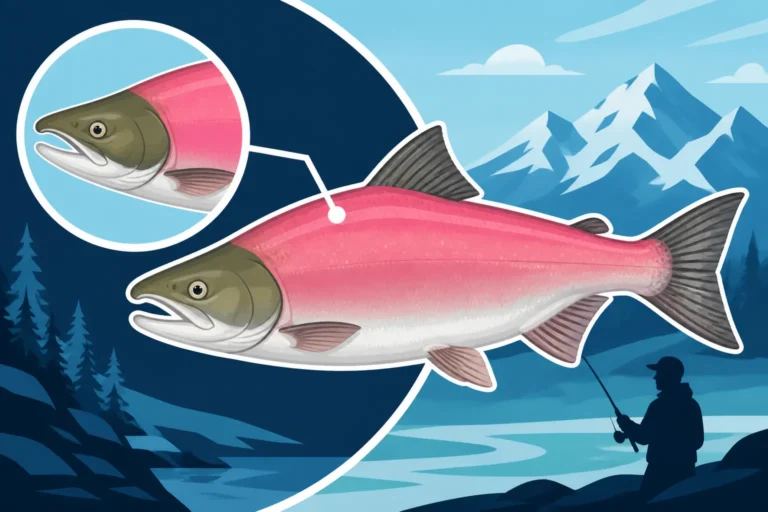
When sockeye salmon are in the ocean, preparing for their monumental migration upstream, they are absolute torpedoes of power and grace. These fish are typically bright silver along their flanks, with a distinctive blue-green back that sometimes shimmers with iridescent hues. They have a sleek, streamlined body shape, perfect for traversing vast oceanic distances. A key identifier during this phase is the absence of prominent spots on their back or tail fin. While other salmon species like King and Coho will have distinct spotting, sockeye generally have none, or at most, very faint, indistinct speckles.
Their eyes are quite large and distinct, often appearing more prominent compared to the size of their head than other salmon species. While they're generally smaller than an average King salmon, ocean-phase sockeye are incredibly muscular and powerful. Their scales, though not a primary identification feature for beginners, are notably smaller and smoother than those of a King salmon. When you land one of these chrome bullets, you'll immediately notice their firm, muscular build and vibrant silver-blue coloration. For more facts and fishing tips, check out our guide on Alaska Sockeye Salmon: Facts and Fishing Tips.
Spawning-Phase Sockeye (Red Salmon)
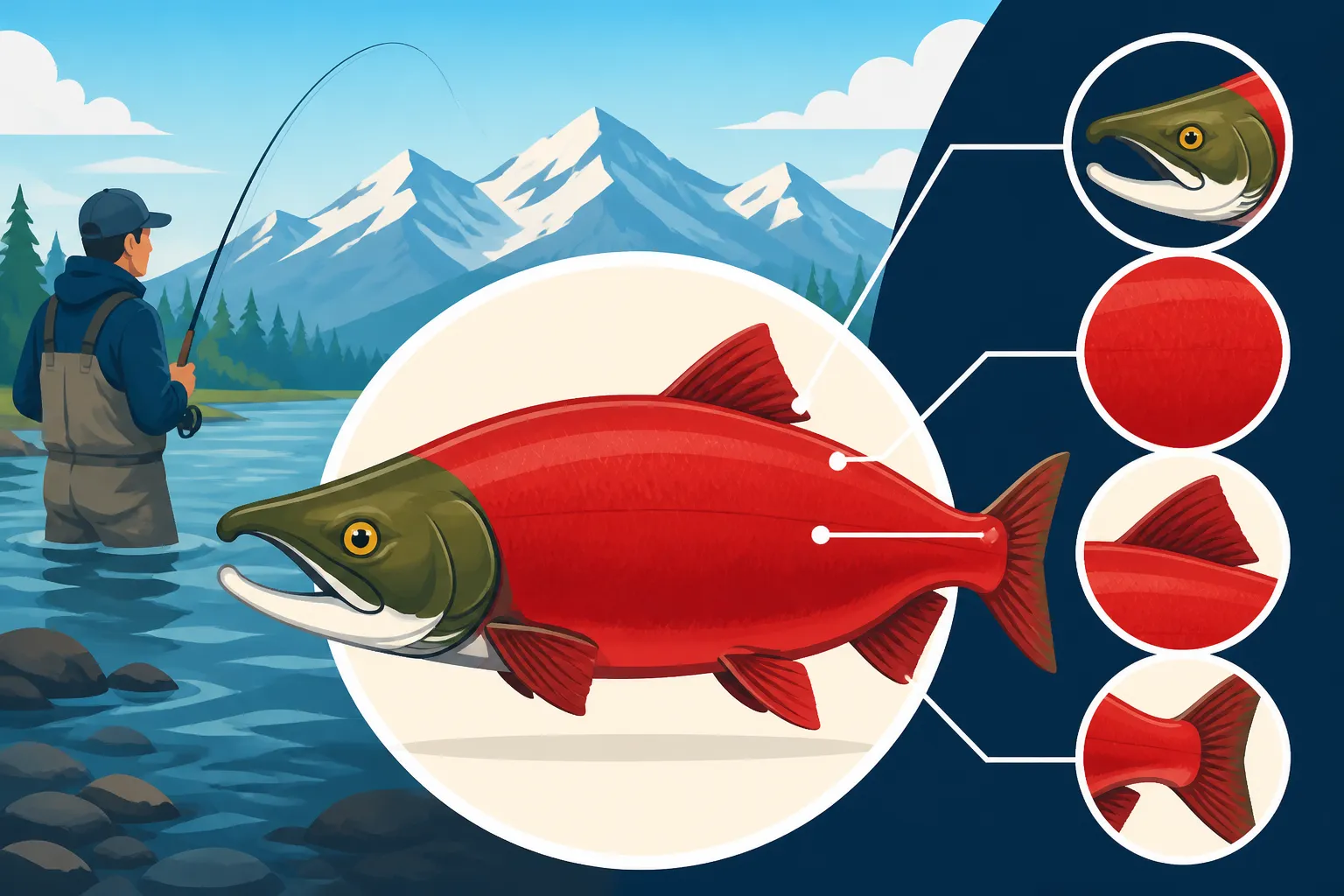
This is where the sockeye truly earns its nickname "red salmon." Once they enter freshwater and begin their upstream migration, a remarkable transformation occurs. Their bodies turn a brilliant, unmistakable crimson red, sometimes almost fiery orange-red, while their heads become a vibrant olive green. This dramatic color change, along with morphological alterations, is part of their spawning ritual. You can read more about this fascinating process in Why Alaska Salmon Change Color.
Males, in particular, will develop a pronounced hump on their back and a significantly hooked jaw, known as a kype, making them appear quite formidable. Females also take on the vivid red and green coloration, though their body shape changes less dramatically, and their kype is less pronounced or entirely absent. At this stage, there's very little chance of confusing a sockeye with any other salmon species in Alaskan rivers due to its iconic "red body, green head" appearance. These fish are solely focused on reproduction and are no longer feeding, which is why unique techniques are often employed to catch them.
Fin and Mouth Features
Looking closely at the fins and mouth of a sockeye salmon offers additional, reliable identification clues.
Sockeye fins are generally clear or very lightly colored, lacking any distinct spots or markings. This is particularly true for their dorsal fin and adipose fin (the small, fleshy fin on their back near the tail). Unlike King salmon, which have spots on both lobes of their tail, sockeye tails are usually unspotted and deeply forked in their ocean phase, becoming more square-shaped as they mature and begin to spawn.
The mouth of a sockeye salmon provides one of the most consistent and easily identifiable characteristics, especially for fish fresh from the ocean. When you open a sockeye's mouth, you'll observe that their gums are white or very light-colored, but they have a distinct, narrow black gumline along the base of their teeth. This is a crucial differentiator from King salmon, which have entirely black mouths and gums, and Coho salmon, which also have a white gumline but with a less distinct, often mottled, or grayish gumline. This "white gums, black gumline" feature is a reliable tell for sockeye, whether they are bright silver or turning red.
Distinguishing Sockeye from Other Pacific Salmon Species
While sockeye salmon have their unique identifiers, it's easy to get them mixed up with other species, especially when they're still silver-bright. Here’s how to tell them apart from their common cousins.
Sockeye vs. King Salmon (Chinook)
King salmon, also known as Chinook, are often the largest of the Pacific salmon, and they have some key features that clearly separate them from sockeye.
The most striking difference is in their mouths. A King salmon will have entirely black gums and mouth lining, whereas a sockeye has white gums with a distinct black gumline. Visually, King salmon also typically have irregular black spots on their backs and on both the upper and lower lobes of their tail fin. Sockeye, as we've discussed, rarely have spots on their backs or tails. In terms of body shape, Kings are generally thicker-bodied and more robust, living up to their "king" moniker, while sockeye tend to be more streamlined and torpedo-shaped. When comparing their size, Kings are almost always significantly larger than sockeye. If you want to dive deeper into identifying these magnificent fish, take a look at How to Identify a King Salmon.
Sockeye vs. Coho Salmon (Silver)
Coho salmon, or Silvers, are another popular target for Alaskan anglers, and they share some superficial similarities with ocean-phase sockeye, but close inspection reveals clear differences.
Like sockeye, Coho salmon also have white gums. However, the critical distinction lies in the gumline: Coho typically have a white gumline that might be slightly mottled or grayish, but it generally lacks the distinct, uniform black strip that sockeye possess. Coho also often have small, sparse black spots on their backs and, crucially, only on the upper lobe of their tail fin. Sockeye, again, are mostly spot-free. Coho generally have a more pointed nose compared to the more rounded snout of a sockeye. Their tails are also typically squared or slightly forked, not as deeply forked as an ocean-phase sockeye. For a more comprehensive guide on distinguishing this species, check out How to Identify a Coho Salmon.
Sockeye vs. Pink Salmon (Humpy)
Pink salmon, or Humpies, are the smallest and most abundant Pacific salmon species, running in massive numbers, especially in even-numbered years in some regions. They are quite distinct from sockeye.
The most obvious identifier for Pink salmon, especially during their spawning phase, is the development of a very pronounced hump on the back of the males, giving them their "humpy" nickname. Pinks also have very large, oval-shaped black spots all over their backs and tail fins, which is a stark contrast to the unspotted sockeye. Their scales are also noticeably smaller than those of other salmon. Their mouths are generally white inside, lacking the distinct black gumline of a sockeye or the all-black mouth of a King. Furthermore, pink salmon are considerably smaller than sockeye, typically weighing only 3-5 pounds. If you’re wading into a river full of these little fighters, check out How to Identify a Pink Salmon for more details.
Sockeye vs. Chum Salmon (Dog Salmon)
Chum salmon, sometimes called Dog salmon due to the males' large canine-like teeth during spawning, are another species that can be confused with sockeye when both are silver.
In their ocean phase, chum salmon have a duller silver coloration compared to the bright, iridescent silver of a sockeye. Crucially, chum salmon completely lack spots on their backs and tails, similar to sockeye. However, their mouth is often a good differentiator; chum salmon typically have white gums with no black gumline. As they transition to spawning colors, chum salmon develop striking vertical bars or "tiger stripes" of green, purple, and red along their sides, a pattern entirely absent in the uniformly red sockeye. Males also develop a kype, but it's typically less pronounced than a King's or spawning sockeye's. For more information on chums, read How to Identify a Chum Salmon.
Here’s a quick reference table to help visualize the key differences:
| Feature | Sockeye Salmon (Red Salmon) | King Salmon (Chinook) | Coho Salmon (Silver Salmon) | Pink Salmon (Humpy) | Chum Salmon (Dog Salmon) |
|---|---|---|---|---|---|
| Ocean Color | Bright silver, blue-green back. | Bright silver, often darker back. | Bright silver, darker blue/green back. | Bright silver. | Dull silver, olive green back. |
| Spawning Color | Brilliant red body, green head. Males develop a kype/hump. | Dark olive to brown, blotchy red. Pronounced kype in males. | Dark red/maroon sides, dark head. | Olive-brown, large dark oval spots. Males develop large hump. | Green/purple vertical bars, dark head. Pronounced kype in males. |
| Spots | Generally unspotted on back & tail. | Irregular black spots on back & both tail lobes. | Small, sparse spots on back & upper tail lobe. | Very large, distinct oval spots on back & entire tail. | No spots on back or tail. |
| Mouth/Gums | White gums, distinct black gumline. | Entirely black mouth & gums. | White gums, often mottled/grayish gumline (no distinct black). | White mouth, no distinct gumline. | White gums, no black gumline. |
| Tail Shape | Deeply forked (ocean), squared (spawning). | Broad, slightly forked or squared. | Squared or slightly forked. | Moderately forked. | Moderately forked. |
| Size | Medium (5-15 lbs). | Largest (20-50+ lbs). | Medium (8-15 lbs). | Smallest (3-6 lbs). | Large (10-20 lbs). |
Behavioral Clues and Habitat for Sockeye Identification
Beyond their physical appearance, understanding where and how sockeye salmon behave can provide strong clues to their identity. These fish have particular preferences that distinguish them from other species.
Preferred Habitat and Run Timing
Sockeye salmon are unique among Pacific salmon because of their strong dependency on freshwater lakes for a significant portion of their life cycle. After hatching in river gravel, sockeye fry typically migrate into lakes to rear for one to two years before heading out to sea. This means that river systems with accessible lakes are prime sockeye habitat. Iconic sockeye rivers like the Kenai River in Southcentral Alaska, or the vast river systems flowing into Bristol Bay, are famous for their massive sockeye runs specifically because they provide these critical lake environments.
When sockeye return from the ocean, they tend to travel upstream in incredibly dense schools, often hugging the riverbanks or holding in slower, deeper pools. During a peak sockeye run, you might see thousands of fish moving together, creating a vibrant, pulsing mass of red and green in the clear waters. This schooling behavior and preference for certain types of river systems, especially those connected to lakes, is a strong indicator you’re in sockeye territory. Understanding Alaska Sockeye Salmon Run Timing for specific regions and rivers like the Kenai River Sockeye Fishing Guide can help you predict when and where to find them.
Fishing Techniques and Gear
The unique feeding habits (or rather, lack thereof, once they enter freshwater) of sockeye salmon lead to very specific fishing techniques. Unlike predatory King or Coho salmon that readily strike lures or bait, sockeye in freshwater are primarily focused on migration and spawning, not eating. This means anglers often employ techniques designed to "floss" or snag them legally in designated areas. This involves using unweighted flies, small beads, or bare hooks on a long leader, allowing them to drift naturally through schools of sockeye, hoping the line snags in the fish's mouth.
If you observe anglers on a river using long rods, heavy monofilament or fluorocarbon leaders, and small, often brightly colored unweighted flies or beads (like those specifically designed for sockeye, which you can easily find on Amazon), it's a strong sign they are targeting sockeye. Techniques like "flossing" for sockeye, detailed in guides like How to Flip for Sockeye Salmon, are quite distinctive. This contrasts sharply with the heavy gear and large plugs or bait used for Kings, or the spinners and flies for Coho. The specialized gear and methods are a direct response to the sockeye's behavior and can act as a behavioral clue to their presence. For suggestions on what to use, check out Best Lures and Bait for Alaska Sockeye Salmon.
Schooling Behavior
One of the most awe-inspiring sights in Alaska fishing is witnessing a massive sockeye run. These fish don't trickle in; they arrive in overwhelming numbers, moving upstream in incredibly tight, dense schools. If you’re at a popular sockeye river during peak season, such as the Russian River or the upper Kenai, you'll literally see thousands upon thousands of fish packed shoulder-to-shoulder, almost creating a living carpet in the water.
This distinctive schooling behavior is a primary characteristic of sockeye. Other salmon species might travel in groups, but rarely with the same density and sustained mass migration you see with sockeye. This tight packing is not only for safety in numbers but also an energy-efficient way to navigate the currents. Observing this kind of sustained, dense movement of fish upstream is a near-certain indicator that you are in the midst of a sockeye salmon run. This makes them a fascinating and often challenging target for anglers who appreciate the sheer spectacle of nature. When the run is on, you'll often see groups of anglers lining the banks, sometimes even needing to purchase extra line or specific hooks from online retailers like Amazon to cope with the sheer volume of fish they might encounter.
Disclaimer
The information provided in this guide is for general informational purposes only and is not intended as legal advice regarding fishing regulations. Fishing rules and regulations in Alaska are subject to frequent change, including emergency orders that can alter seasons, bag limits, and legal fishing methods at short notice. Always consult the most current Alaska Department of Fish and Game (ADF&G) regulations booklet and check for emergency orders before you head out fishing. Your understanding and adherence to these regulations are your sole responsibility.