How Big Do Alaska Halibut Get
There's a special kind of awe that strikes you when you see a truly massive Alaska halibut hauled over the rail of a boat. Anglers dream of it, and those who've experienced it never forget the sheer power of these bottom dwellers. But just how big do Alaska halibut really get? It's a question that sparks lively debate and fuels countless fishing adventures across the Last Frontier. This guide will dive deep into the incredible size potential of the Pacific halibut, separating myth from reality and preparing you for your own encounter with these magnificent giants.
The Astonishing Size of Alaska Halibut
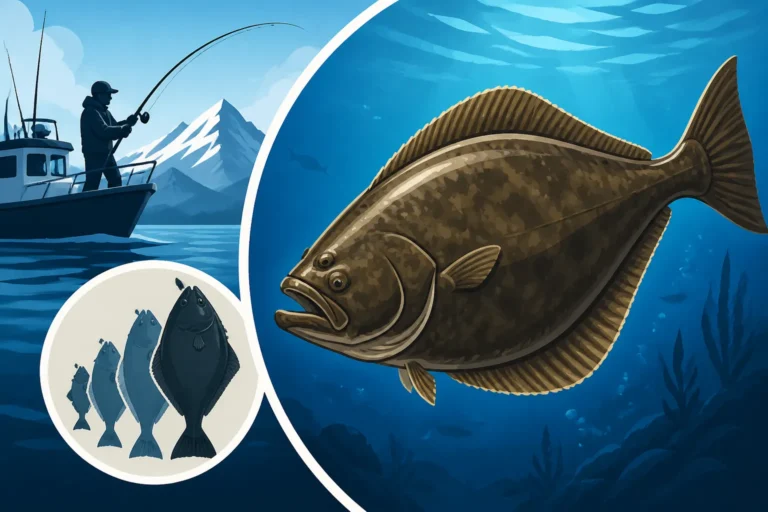
The Pacific halibut (Hippoglossus stenolepis) is not just a fish; it's a legend. Known for its distinct flat body, both eyes on one side, and immense power, it holds a special place in the hearts of Alaskan anglers. While tales of "barn door" halibut might seem like tall tales, the truth is, these fish can grow to truly staggering proportions, far exceeding what many people imagine.
Average Size vs. Trophy Potential
When you're out on the waters off places like Homer or Seward, a "good" halibut day often means bringing in fish in the 20 to 50-pound range. These are often called "chicken halibut" and they're fantastic eating, offering plenty of delicious white meat. They put up a decent fight, especially on lighter tackle, and are what most recreational anglers will encounter. However, the true trophy potential of Alaska halibut stretches far beyond this common catch. We're talking about fish that can weigh hundreds of pounds, requiring significant strength, skill, and sometimes a bit of luck to land. The sheer volume of these larger fish means they are often targeted by more experienced anglers or those specifically seeking a challenge.
The difference between an average catch and a trophy is not just in weight but in the entire experience. While a 30-pound halibut is a satisfying pull, grappling with a 150-pound or even 200-pound beast is an entirely different ball game. It becomes a test of endurance, both for the angler and the gear. Many anglers come to Alaska specifically chasing this trophy potential, knowing that the waters here offer a legitimate chance at a fish of a lifetime. These larger fish, though less common, are a testament to the rich, cold waters of the Gulf of Alaska and the Bering Sea, which provide an ideal environment for halibut to thrive and grow to incredible sizes.
Factors Influencing Halibut Size
Several key factors contribute to the impressive size halibut can attain in Alaskan waters. It's not just a random occurrence; there's a science to why some fish become true giants while others remain more modest in stature. Understanding these elements can even help you target larger fish more effectively.
Firstly, age is paramount. Halibut are long-lived fish, with some specimens reaching ages of 50 years or more. The older they get, the larger they grow. A halibut might start its life measuring just a few inches, but over decades, it can accumulate hundreds of pounds. This slow, steady growth means that the really big ones have been swimming the Alaskan seas for a very long time, navigating predators and challenges to reach their impressive size. These ancient fish are often found in deeper, more stable environments, where they face fewer disturbances.
Secondly, sex plays a huge role. Female halibut grow significantly larger and live longer than males. This is a common biological strategy in many fish species, allowing females to produce a greater number of eggs and contribute more significantly to the population's survival. So, when you hear about a "barn door" halibut, you can almost guarantee it's a mature female. Male halibut typically max out around 50-60 pounds, while females can continue growing well past 200 pounds. This disparity means that if you're targeting a true monster, you're almost certainly targeting a big mama halibut.
Lastly, food availability and habitat are critical. Alaska's nutrient-rich waters provide an abundant food source for halibut, including cod, pollock, crabs, and other bottom-dwelling fish. Areas with a consistent supply of these prey items allow halibut to feed voraciously and grow quickly. The vast, diverse seafloor of Alaska, with its deep canyons, shelves, and diverse ecosystems, offers ideal hunting grounds and shelter for these bottom feeders. Deeper, colder waters also seem to contribute to their growth, providing a stable environment with less metabolic stress. These optimal conditions, combined with minimal fishing pressure in certain remote areas, allow halibut to reach their full genetic potential.
The "Barn Door" Halibut
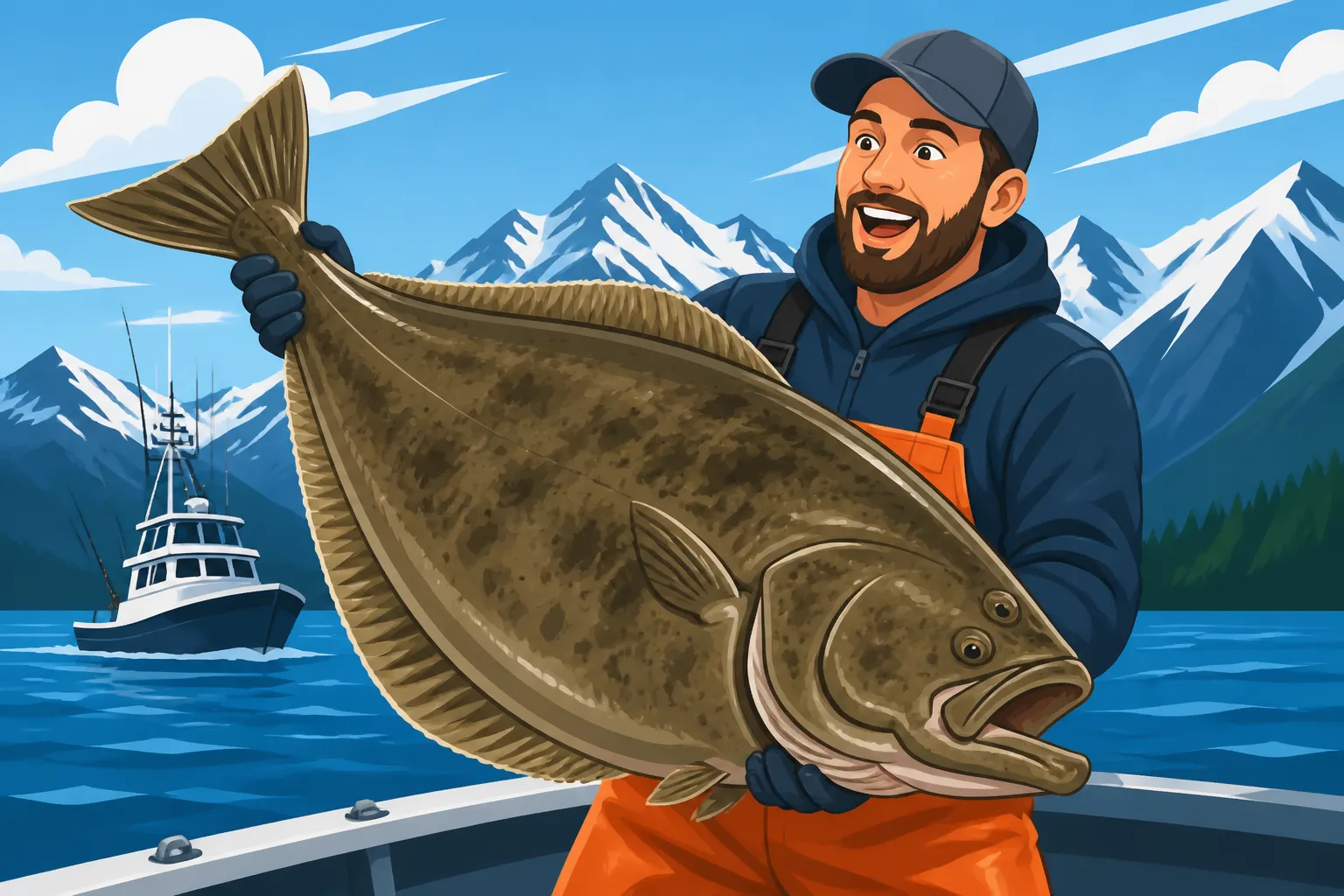
Ah, the "barn door"! This term is practically synonymous with trophy halibut fishing in Alaska. It refers to a halibut that is so large, so wide, and so heavy that it literally resembles a barn door when laid flat. There's no official weight cutoff for a "barn door," but generally, any halibut over 100 pounds easily earns this moniker. Some anglers might even reserve it for fish exceeding 150 or 200 pounds.
Catching a barn door halibut is often a once-in-a-lifetime experience. The fight is legendary—a prolonged, brutal tug-of-war that tests every fiber of your being. These fish have incredible strength and can make powerful, sustained runs, often hugging the bottom, making it feel like you're trying to reel in a submarine. Many a tale has been told of anglers battling for an hour or more, muscles burning, only to lose the fish at the boat, adding to the mystique of these giants. The sheer physical effort required often leaves anglers with sore arms and backs, but with a grin that stretches from ear to ear, regardless of whether they landed it.
The excitement of seeing a barn door halibut surface next to the boat is unmatched. Their massive size becomes apparent, and the challenge shifts from fighting the fish to safely bringing it on board. This often involves specialized gear like a harpoon or a large gaff, and a coordinated effort from everyone on the boat. It's a moment of shared triumph, a true spectacle that solidifies Alaska's reputation as a premier destination for big game fishing. When you're out on the water, the prospect of hooking into one of these magnificent creatures is what keeps the adrenaline pumping, hour after hour.
World Records and Legendary Catches
Alaska is the undisputed home of giant halibut, and its waters have produced some truly colossal specimens. While not every trip will yield a world record, knowing the potential inspires many anglers to keep coming back. The sheer vastness and productivity of the Alaskan marine environment contribute to these incredible catches.
Commercial vs. Sport Fishing Records
It's important to distinguish between records set by commercial fishing operations and those caught by sport anglers. Commercial fisheries, using longlines and large nets in sometimes unfathomably deep waters, occasionally land halibut that dwarf even the biggest sport catches. These fish are often caught incidentally and may not be weighed with the same precision as a sportfishing record, but their existence proves the incredible maximum size these fish can achieve. Some reports from commercial operations have documented halibut well over 500 pounds, even approaching 600 pounds, caught in the deep waters of the Bering Sea.
For sport anglers, the official International Game Fish Association (IGFA) all-tackle world record for Pacific halibut stands at an astonishing 459 pounds. This monster was caught by Jack Tragis in 1996 off Dutch Harbor, Alaska. Think about that for a second: 459 pounds! That's heavier than many grown men. It's a testament to the incredible growth potential of these fish in Alaskan waters and remains a benchmark that many anglers aspire to, even if they know it's a long shot. This record-setting catch wasn't a fluke; it speaks to the genetic potential and the rich, undisturbed habitats that still exist in remote parts of Alaska.
Where the Giants Lurk
If you're dreaming of a truly gargantuan halibut, certain regions of Alaska are renowned for producing bigger fish more consistently. These aren't necessarily "secret spots" but rather areas known for optimal conditions and deep, productive waters.
The waters around Kodiak Island and the Aleutian Islands (like Dutch Harbor, where the world record was caught) are legendary. These areas have vast, deep fishing grounds, strong currents, and a rich ecosystem that supports enormous halibut populations. The extreme depths and often challenging weather conditions also mean these areas can be less pressured than roadside fisheries, allowing fish to grow larger and older. Trips to these remote locations often involve multi-day charters and serious preparation, but the rewards can be monumental.
Closer to the road system, areas in the Gulf of Alaska are still fantastic producers of large halibut. Places like Homer, often called the "Halibut Fishing Capital of the World," and Seward regularly see fish in the 100 to 200-pound range brought to the docks. While perhaps not hitting the 400+ pound mark as frequently as the Aleutians, these towns offer more accessible options for anglers to target significant fish. Many captains in these ports specialize in halibut trips and know the local contours and honey holes where bigger fish tend to congregate. The deep waters of Kachemak Bay and Resurrection Bay provide ample opportunity for these large specimens to thrive.
The Thrill of a Record-Breaking Catch
Imagine the moment. The rod bends, the drag screams, and you realize you've hooked into something truly monumental. The fight is relentless, a pure test of will and strength against an unseen leviathan. Your arms ache, your back protests, but the adrenaline surges as you hold on, knowing this could be the one. Every inch gained on the reel feels like a victory, every powerful run a challenge to overcome.
When the massive silhouette finally emerges from the depths, a colossal, flat shape slowly coming into view, it's a sight that will be seared into your memory forever. The gasp from the crew, the excited shouts, the scramble to get the harpoon or gaff ready—it's pure chaos and pure joy. Lifting such a monumental fish onto the deck is a monumental task in itself, often requiring multiple people and specialized equipment. The feeling of awe as you stand next to a halibut that truly looks like a barn door is incomparable. It's a story you'll tell for the rest of your life, complete with photos that barely do justice to its actual size. It validates every early morning, every long boat ride, and every dollar spent on the trip.
Practical Considerations for Targeting Large Halibut
Targeting trophy halibut isn't just about luck; it's about preparation, knowledge, and having the right tools for the job. You can't just go out with your trout rod and expect to land a "barn door." These fish demand respect and a serious approach.
Gear and Techniques for Big Fish
When it comes to battling a truly massive halibut, your gear needs to be up to the challenge. Standard salmon fishing setups simply won't cut it. You'll need heavy-duty equipment designed for deep-sea monsters.
- Rods: Look for stout, heavy-action conventional rods, typically 6 to 7 feet long. These rods need serious backbone to handle the immense weight and power of a large halibut. Brands like Penn, Shimano, and Daiwa make excellent rods designed for this kind of brutal fishing. A good quality rod will absorb the shock of powerful runs and give you the leverage needed to winch a big fish up from the depths.
- Reels: A high-quality conventional reel with a powerful drag system and a high line capacity is non-negotiable. Lever drag reels are often preferred for their ease of adjustment during a fight. A good rule of thumb is a reel capable of holding at least 400 yards of 80-100 pound braided line. The drag must be smooth and consistent, as a jerky drag can lead to snapped lines or pulled hooks when a halibut makes a powerful dive. For instance, models like the Shimano TLD or Penn Senator are popular choices among serious halibut anglers. You can find a wide selection of these heavy-duty reels and rods on Amazon, allowing you to compare features and prices before your trip.
- Line: Braided line in the 80 to 120-pound test range is standard. Braid offers incredible strength for its diameter, minimal stretch (which means better sensitivity and hook sets), and high abrasion resistance, which is crucial when fishing around rocky bottoms. A heavy monofilament leader (100-200 lb test) is often tied to the braid, providing additional abrasion resistance and shock absorption.
- Terminal Tackle: Heavy-duty swivels, snaps, and hooks are essential. You'll need circle hooks ranging from 16/0 to 24/0, depending on your bait. Large lead weights, often 1 to 3 pounds, are necessary to get your bait down to the bottom in strong currents and deep water. Many anglers swear by a strong spreader bar setup to present their bait effectively. You'll also want to read up on various Alaska Fishing Gear and Tackle Guide to make sure you're fully equipped.
- Bait: Fresh bait is king. Large chunks of herring, salmon heads, cod, or octopus are all excellent choices. Some anglers also use large artificial jigs (8-16 oz) tipped with bait, which can be incredibly effective when jigged aggressively near the bottom. The scent and visual appeal of natural bait are often irresistible to these hungry bottom dwellers.
Finding the Monster Halibut
Finding big halibut isn't about aimlessly drifting; it's about understanding their habitat and behavior. These giants prefer specific conditions.
Firstly, focus on depth. While smaller halibut can be found in shallower waters, the true giants typically reside in deeper haunts, often between 200 and 800 feet, sometimes even deeper. These depths offer colder, more stable temperatures and often less competition from smaller fish. Big halibut are comfortable in these deep, dark environments, where they can ambush prey.
Secondly, look for structure. Halibut, especially the larger ones, love to hang out around underwater structures like rock piles, ledges, drop-offs, pinnacles, and even wrecks. These features provide ambush points for hunting and offer some current breaks where they can rest. Your boat's sonar and GPS are indispensable tools for locating these features. Experienced captains often have a detailed understanding of the seafloor topography in their fishing grounds. The areas around underwater canyons or the edges of submerged banks are particularly productive.
Thirdly, consider tides and currents. Strong tidal currents can concentrate baitfish, which in turn attracts halibut. However, currents that are too strong can make it impossible to hold bottom with your gear. Many anglers find the bite to be best during slack tide or when the current is moderate. Understanding How Tides Affect Alaska Salmon Fishing can give you an insight into how these powerful forces influence all fish behavior, including halibut. It's often a delicate balance between finding enough current to stimulate feeding and not so much that your gear is unmanageable.
The Fight and Landing Process
Hooking a big halibut is just the beginning of a truly epic battle. These fish are masters of their environment and will use every advantage to escape.
When a large halibut hits, it's often a heavy, thudding strike. Immediately, the fish will likely make a powerful, sustained run towards the bottom, trying to bury itself in the mud or wrap your line around structure. This is where your heavy drag and strong line are crucial. Resist the urge to crank down the drag excessively; a smooth, consistent drag will wear the fish out without snapping your line. Pumping the rod, lifting it up, and then reeling down quickly, is the most effective way to gain line. It's a marathon, not a sprint, and patience is key. The fish will make several strong runs, especially as it gets closer to the surface, where it gains renewed energy.
Once you've fought the fish to the surface, the real challenge of landing it begins. A large halibut is incredibly powerful and can cause serious injury if not handled correctly. This is where a skilled deckhand or guide earns their keep. A harpoon or a large, heavy-duty gaff is almost always used for fish over 100 pounds. The fish is typically harpooned in the head or shoulder area, often with a float attached to the harpoon line, allowing the fish to be secured without it escaping. Once harpooned, it might still have some fight left, so caution is paramount. The fish is then carefully brought alongside the boat, often with a tail rope, and then hoisted aboard. Never try to lift a huge halibut by the line alone; it will likely break. The sheer weight means it often needs to be dragged or levered over the side, a task that often requires two strong individuals.
Handling Your Giant Catch
Successfully landing a colossal halibut is a monumental achievement, but the work isn't over. Proper handling, processing, and understanding the regulations are critical to ensure your catch is respected and legally managed.
Safe Handling and Processing
Once your "barn door" halibut is aboard, the first priority is safety and dispatching the fish quickly and humanely. A thrashing, hundreds-of-pounds fish on deck is a dangerous thing. Guides typically carry a club or "billy" to dispatch the fish with a solid blow to the head, often followed by bleeding it out. Bleeding the fish immediately is vital for meat quality. A common method is to make a cut behind the gills, allowing the heart to pump the blood out. This process, known as "iki-jime" or simply bleeding, results in cleaner, better-tasting fillets.
Once dispatched and bled, the next step is often to begin the initial processing on deck, especially for very large fish. This usually involves removing the guts and sometimes even the head and tail to make it more manageable for transport and further processing back on shore. Many charters have dedicated fish holds to keep your catch on ice, preserving its freshness until you reach the dock. The sheer size of a barn door halibut means it often needs to be cut into more manageable sections before it can even fit into a cooler or fish box.
Transporting and Preserving Your Trophy
Getting your massive halibut from the boat to your home is a multi-step process. Unless you're a local with dedicated processing facilities, you'll likely rely on professional fish processors. Towns like Homer, Seward, and Ketchikan have excellent seafood processing companies that specialize in sport fish. These processors will typically fillet, portion, vacuum seal, and flash freeze your catch, ensuring it's in prime condition for its journey. Many also offer shipping services, packing your frozen fish in insulated, airline-approved boxes ready for transport.
It's crucial to plan for this in advance, especially with a large fish. The cost of processing and shipping can add up, but it's a worthwhile investment to protect your prize. A typical processor will expertly remove the meat, often yielding four large fillets from each side of the halibut. Vacuum sealing prevents freezer burn, allowing you to enjoy your Alaskan bounty for months to come. If you're wondering How to Fillet a Halibut yourself, there are plenty of resources, but for a fish this size, professional help is often the best route. You can find shipping supplies and coolers on Amazon if you plan to do some of the work yourself, but for larger quantities, professional fish boxes are the way to go. For detailed information on shipping, check out How to Ship Your Catch Home from Alaska.
Understanding Regulations for Large Halibut
Alaska's fishing regulations are complex and can change frequently, especially for highly sought-after species like halibut. For trophy halibut, specific rules are often in place to protect the breeding stock, as larger halibut are almost always mature females critical for reproduction.
One common regulation for guided halibut trips is the reverse slot limit. This means anglers may be restricted to keeping halibut under a certain length (e.g., under 40 inches) or over a much larger length (e.g., over 80 inches), while fish in the middle range must be released. The specific numbers vary by region and year, so always check the most current Alaska Department of Fish and Game (ADF&G) regulations for the area you plan to fish. This measure aims to protect the most productive breeding females. Sometimes, there's also a "two-fish halibut charter rule" where one fish must be under a certain size and the other can be larger, or vice versa.
Additionally, some charter operations participate in the Guided Angler Fish (GAF) program, which allows them to retain more or larger halibut than standard limits. This often comes at an additional cost to the angler, but it provides an opportunity to keep a larger fish that might otherwise be illegal to retain. Be sure to discuss these options with your charter captain before your trip. Always be aware of the daily and annual bag limits. For non-residents, there may also be an Alaska Halibut Annual Limit in addition to daily limits. The rules can be quite intricate, so consulting the Alaska Halibut Charter Regulations Explained and Alaska Halibut Size Limit Explained is paramount to avoiding violations.
It is absolutely essential to familiarize yourself with the current Alaska Fishing Regulations Explained for your specific fishing date and location. Emergency orders can change regulations mid-season, so always double-check with ADF&G or your charter operator right before you head out. Ignorance of the law is never an excuse, and violations can result in hefty fines and loss of your catch.
Halibut Size and Characteristics Overview
To help put the various sizes into perspective, here's a quick overview of what you might encounter in Alaska.
| Halibut Category | Typical Weight Range | Typical Length Range | Characteristics & Notes |
|---|---|---|---|
| "Chicken Halibut" | 10-40 lbs | 25-45 inches | Most common recreational catch. Excellent eating quality. Good fight on medium-heavy tackle. Often targeted for daily limits. |
| "Medium" Halibut | 40-80 lbs | 45-60 inches | A very desirable catch, offering a significant amount of meat and a substantial fight. Increasingly more powerful. |
| "Barn Door" Halibut | 100-200 lbs | 60-80 inches | True trophy class. Powerful, prolonged fights. Requires heavy-duty gear and coordinated landing efforts. Primarily large, mature females. Often subject to specific slot limits or GAF programs on charters. |
| "Giant" Halibut | 200+ lbs | 80+ inches | Rare and legendary. World record territory. These are the fish of a lifetime. Almost exclusively very old, very large females. Requires extreme tackle and expert handling. |
| World Record (Sport) | 459 lbs | ~95 inches | Caught off Dutch Harbor, Alaska by Jack Tragis in 1996. Represents the absolute pinnacle of sportfishing achievement for Pacific halibut. |
| Commercial Catches | Up to 600 lbs | Potentially 100+ inches | Documented by commercial fisheries in deep, remote waters. Not typically caught by sport anglers but demonstrates the maximum biological potential of the species. |
This table highlights the incredible range of sizes you can expect when fishing for halibut in Alaska. While the chickens are plentiful and delicious, the dream of a "barn door" is what truly captivates the imagination of anglers worldwide.
Disclaimer
Fishing regulations, seasons, and limits can change frequently. Always consult the most current Alaska Department of Fish and Game (ADF&G) regulations and emergency orders for the specific area and dates you plan to fish. This guide is for informational purposes only and should not be considered a substitute for official regulations.