Alaska Fishing Possession Limits Explained
Alaska fishing possession limits determine the maximum number of fish you can legally have on hand, separating daily harvests from cumulative totals.
Fish legal, fish confident.
License types and fees, season dates, bag and size limits, special regulations, and how to stay compliant on local waters.
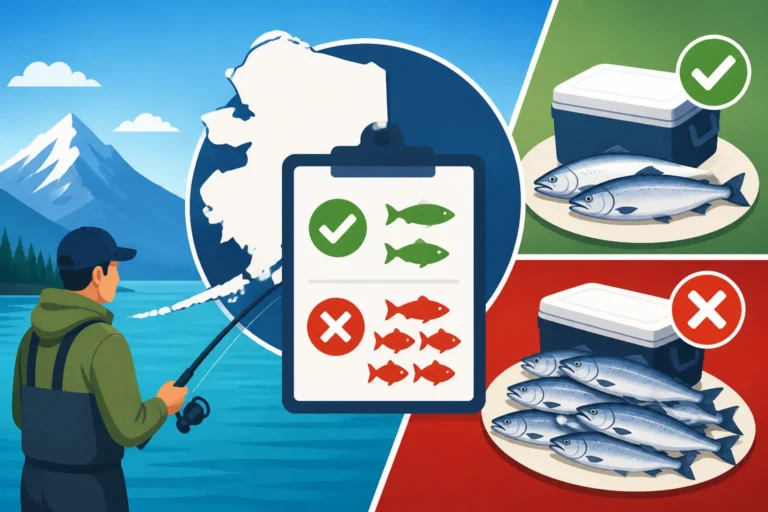
Alaska fishing possession limits determine the maximum number of fish you can legally have on hand, separating daily harvests from cumulative totals.
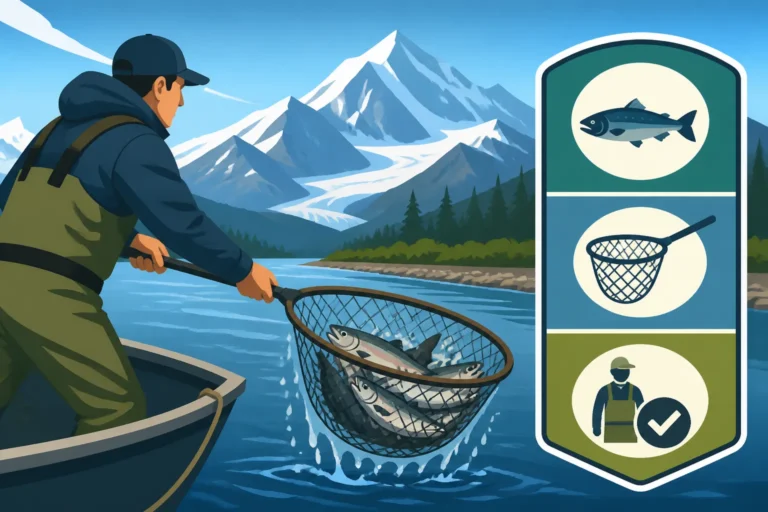
Alaska dip netting regulations detail residency rules, required permits, harvest record procedures, and specific gear limits for personal use fisheries.
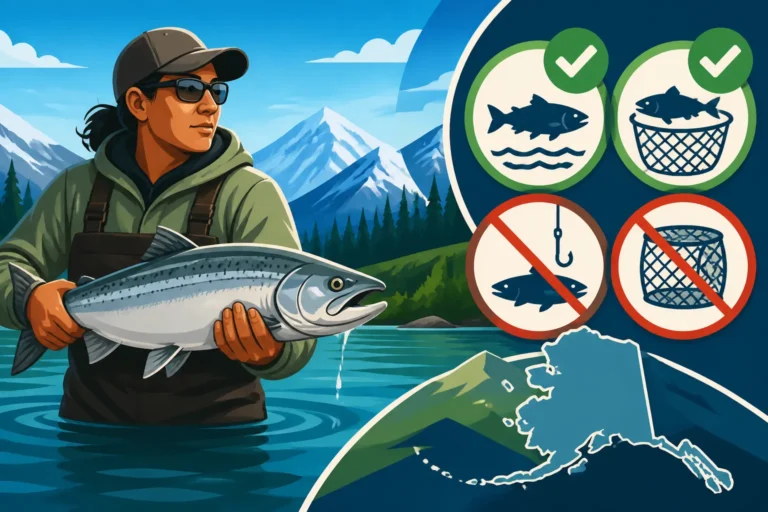
Alaska subsistence fishing rules cover permits, gear limits, and residency requirements across state and federal waters for local residents.

Alaska personal use fishing explains resident permit rules, unique salmon harvesting methods, and prominent locations like the Kenai River.
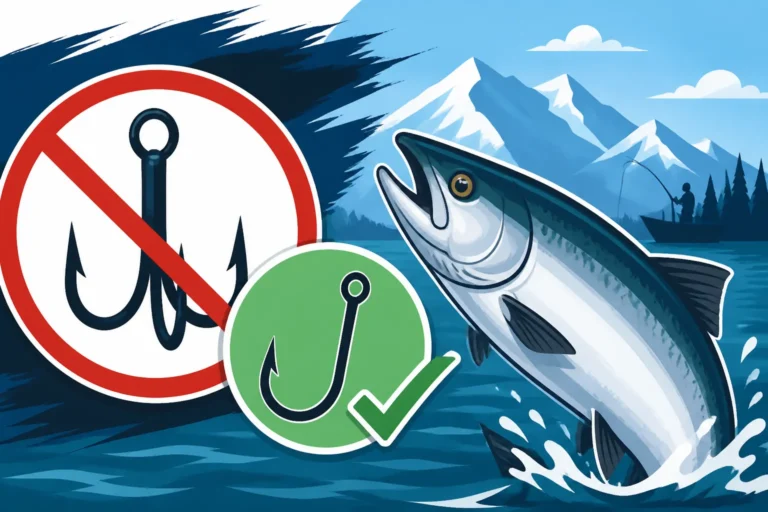
Alaska single-hook rules during King salmon closures require specific gear modifications and explain how anglers can legally target other fish species.
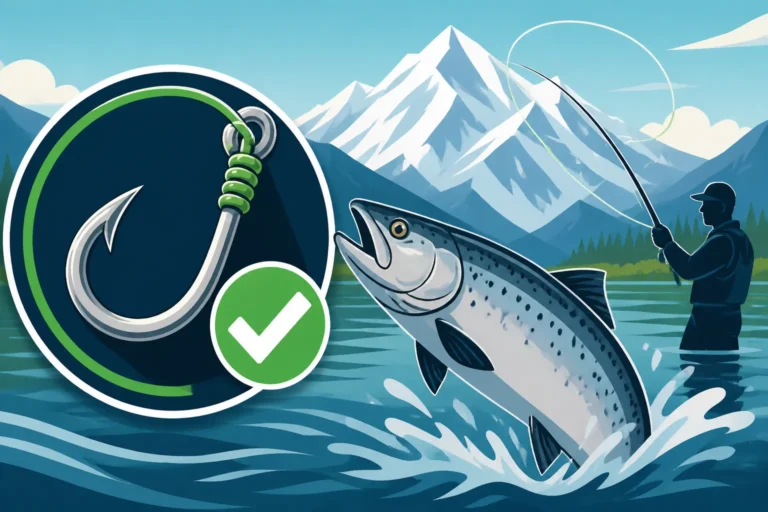
Alaska barbless hook regulations detail conservation rules, specific salmon and trout fisheries, and emergency orders for legal and ethical angling.
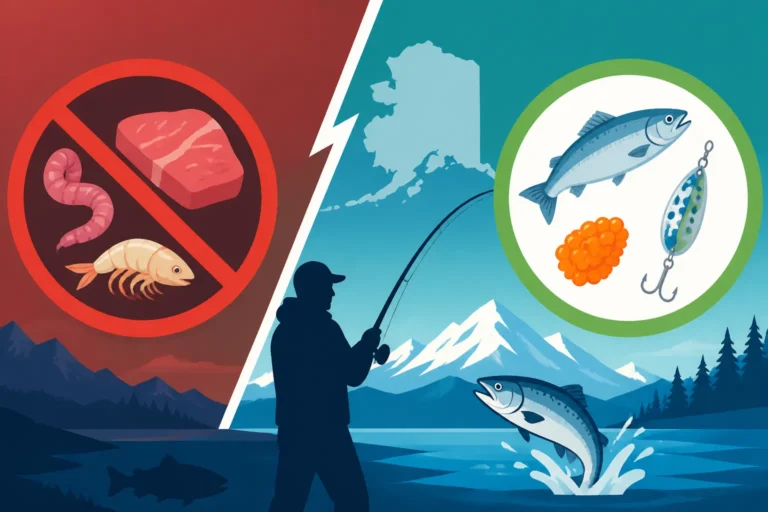
Alaska fishing rules protect wild fish populations, prevent disease transmission, and manage angler impacts across regional freshwater fisheries.
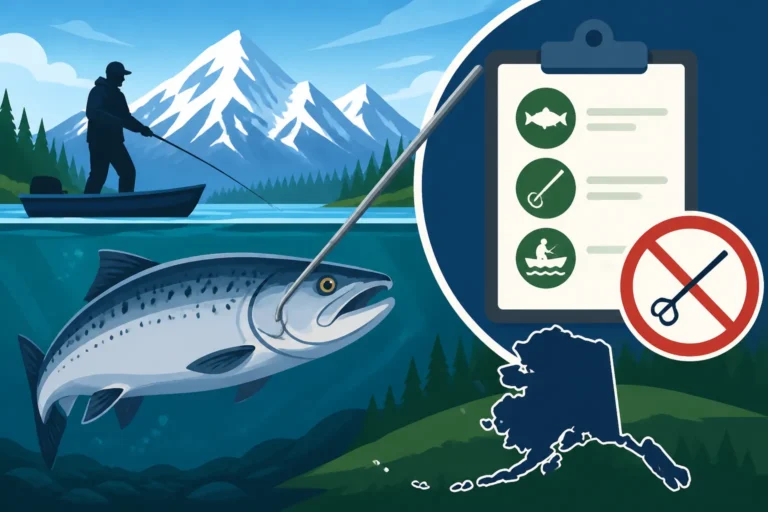
Alaska snagging regulations explain where, when, and why foul hooking fish is sometimes permitted in terminal fisheries across the state.
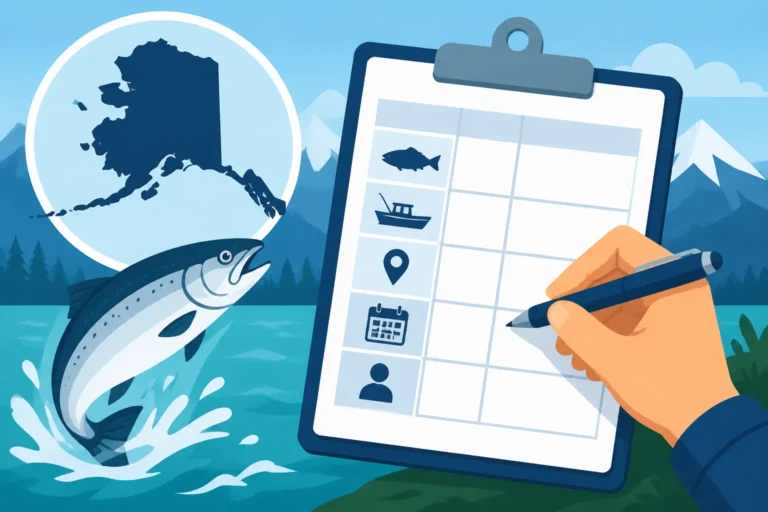
The Alaska Harvest Record Card completion process requires accurate documentation of king salmon and halibut catches to support state conservation efforts.

Alaska youth fishing license rules exempt children under sixteen from needing a sport license, but require adult licenses at sixteen.