Best Lures for Alaska Salmon
One of the biggest head-scratchers for anyone planning an Alaska fishing trip, whether you're a seasoned angler or a first-timer, is figuring out which lures to pack. With so many different salmon species, varying river conditions, and rapidly changing regulations, it's easy to feel overwhelmed standing in the tackle aisle. This comprehensive guide is here to cut through the confusion, helping you understand the best lures for Alaska salmon and how to choose them for a successful and legal catch.
Understanding Alaska Salmon Species and Their Preferences
Before you even think about buying a single lure, it’s crucial to understand the distinct habits and preferences of the different Pacific salmon species you’ll encounter in Alaska. Each one has its own quirks, and what works wonders for a King might be completely ignored by a Sockeye.
King Salmon Chinook Lure Choices
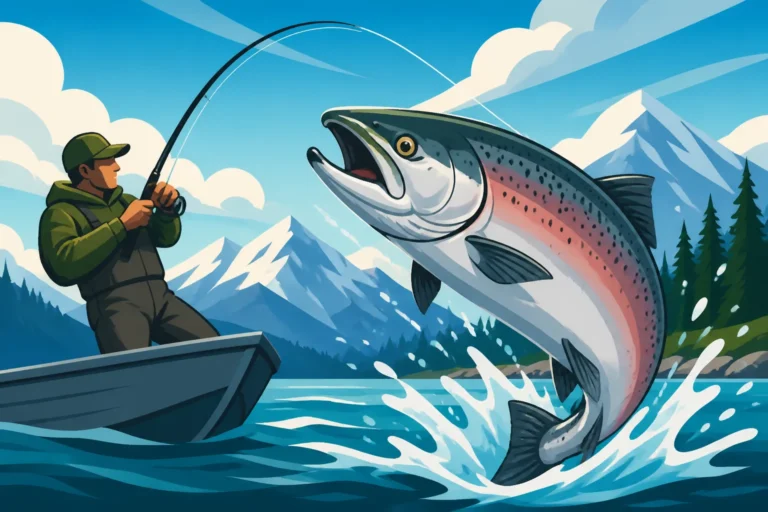
Ah, the mighty King Salmon, also known as Chinook. These magnificent fish are often the dream catch for many anglers visiting Alaska. Kings are apex predators, aggressive and powerful, and they typically respond well to lures that mimic large baitfish or offer significant vibration and flash. They’re often targeted in both freshwater rivers and saltwater estuaries.
When fishing in rivers like the Kenai or Kasilof, large diving plugs are incredibly popular. Brands like Kwikfish, especially the K15 or K16 sizes, are mainstays, often back-trolled or pulled behind a boat. The deep diving and exaggerated wiggle of these plugs are irresistible to a territorial King. Colors can vary, but chartreuse, metallic green, blue, black, and even combinations with red or orange spots, are highly effective. Many anglers will "wrap" their plugs with a small piece of sardine or herring to add a scent trail, making them even more enticing. For bank fishing, heavy spoons like a Pixee Spoon or a large Crocodil in silver, gold, or green often get the job done, especially when cast into deeper runs. The key is to get the lure down to where the fish are holding and give it an action that triggers their predatory instinct.
Sockeye Salmon Red Lure Choices
Now, Sockeye Salmon, or Reds, are a completely different beast altogether. This is where many anglers, especially those used to conventional fishing, can get frustrated. Sockeye salmon are primarily plankton feeders in the ocean and typically stop feeding once they enter freshwater to spawn. This means they aren't interested in chasing down a spinner or plug to eat it. Instead, Sockeye are often "snagged" unintentionally or caught via a technique known as "flossing" or "lining."
Regulations around Sockeye are very specific to prevent actual snagging, which is generally illegal. Legal Sockeye fishing often involves using a bare, unbaited hook (usually a single hook with a gap of 1/2 inch or less, sometimes weighted) or a small, unweighted fly with a yarn indicator. The idea is to drift your line, often with added weight, through dense schools of Sockeye, allowing the line to pass over their back or through their mouth. When you feel a tug, you set the hook, hoping to catch them cleanly in the mouth. It’s a very specific technique that requires practice and patience, and it's heavily regulated. If you plan to target Sockeye, you absolutely must understand the specific rules for the river you're fishing, as they can change rapidly. For example, on the Kenai River, special single-hook, unbaited rules often apply. If you're wondering How to Catch Sockeye Salmon in Alaska, remember it's more about presentation and less about a traditional "lure."
Silver Salmon Coho Lure Choices
Silver Salmon, or Cohos, are a blast to catch! They are incredibly aggressive, known for their acrobatic jumps and fierce fights once hooked. Unlike Sockeye, Silvers are active feeders in freshwater, making them a prime target for traditional lures. They often congregate in pools, eddies, and the slower sections of rivers.
Spinners are arguably the most popular and effective lures for Silver Salmon. Brands like Blue Fox Vibrax or Mepps Aglia in sizes #3 to #5 are perennial favorites. The flash and vibration of a well-presented spinner drive Cohos wild. Colors are critical here; pink, chartreuse, orange, and metallic silver or gold are top producers. Often, spinners with a fluorescent body or blade will outperform plain metallic ones, especially in slightly off-color water. Spoons, such as a Pixee or a Little Cleo in similar colors, also work exceptionally well when cast and retrieved. Sometimes, a faster retrieve works best to trigger their aggressive nature, while at other times, a slow, methodical retrieve in deeper holes is key. Small plugs, especially those with a tight wobble, can also be effective, particularly in larger rivers or tidal areas.
Pink Salmon Humpy and Chum Salmon Dog Lure Choices
Pink Salmon, affectionately known as "Humpies" due to the pronounced hump males develop during their spawning run, are the most abundant salmon species in Alaska. They're often smaller but incredibly numerous, providing constant action, especially in odd-numbered years when their runs are typically stronger. Chum Salmon, or Dogs, are larger and powerful, known for their striking tiger-stripe coloration and formidable teeth.
For Pink Salmon, small, flashy lures are the ticket. Anything in pink is usually a winner, but chartreuse, orange, and even white can be effective. Small spinners (size #2 or #3), like a Blue Fox Vibrax or Rooster Tail, are excellent. Small spoons, such as a Little Cleo or a Pixee Spoon, are also very productive. The key is to keep the lure relatively small and provide plenty of flash and movement. They are typically not shy and will hit aggressively.
Chum Salmon are also aggressive biters once they're in the river. They respond well to larger, brighter lures. Chartreuse, purple, and electric blue are particularly effective colors. Large spinners (size #4 or #5), big spoons, or even lead-head jigs with a large soft plastic tail are good choices. While often overlooked by anglers focused on Kings and Silvers, Chums provide a powerful fight and are excellent for sport, especially on lighter tackle. Many anglers find success by casting and retrieving brightly colored spinners through schools of migrating Chums.
Top Lure Types for Alaska Salmon Fishing
Now that we've covered the species, let's dive deeper into the specific lure types that consistently perform well in Alaska's salmon fisheries. Having a good understanding of these categories will help you stock your tackle box for any situation.
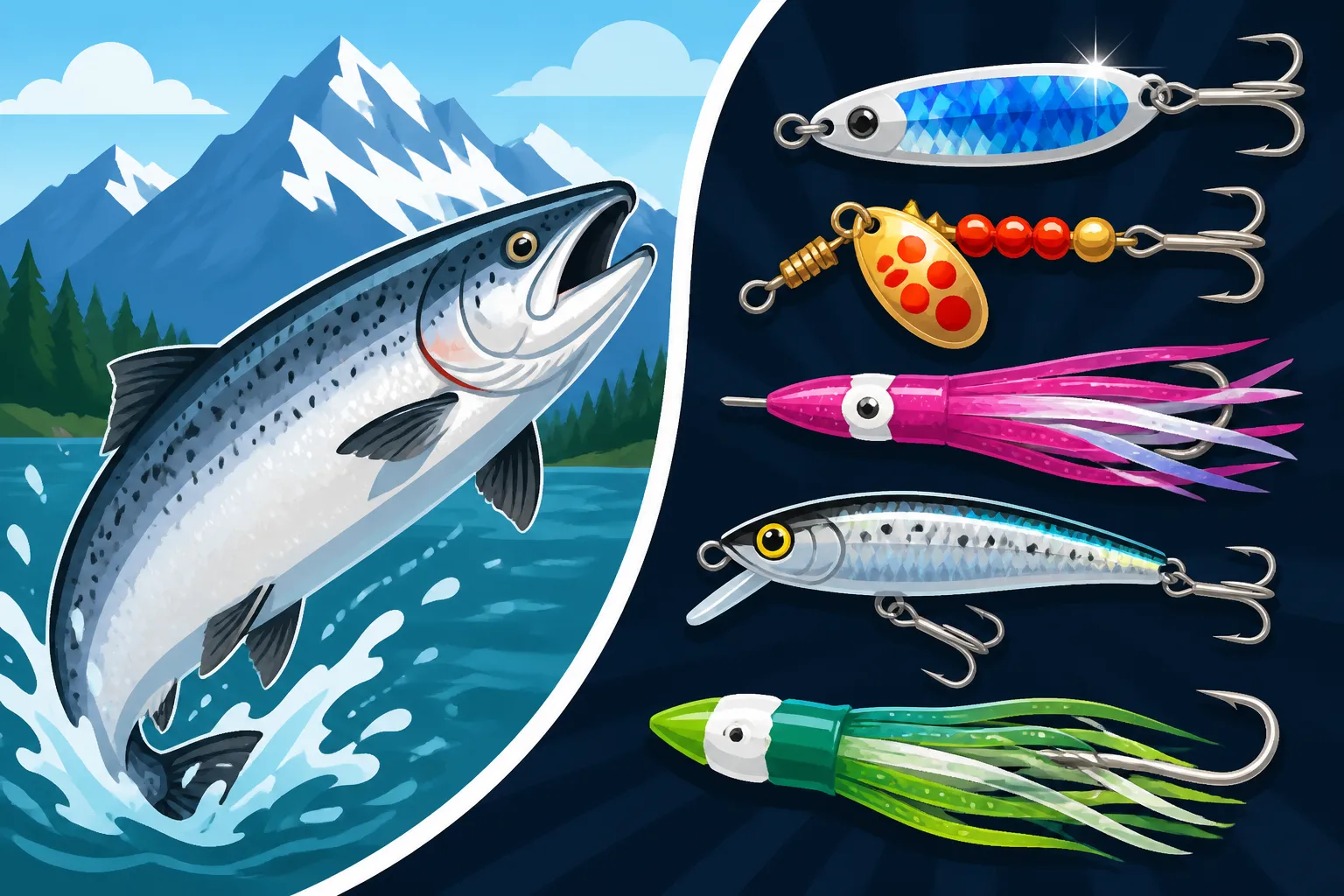
Spinners
Spinners are probably one of the most versatile and consistently effective lures for Alaska salmon, particularly for Silver, Pink, and Chum salmon, and even smaller King Salmon. Their effectiveness comes from a combination of flash and vibration, which mimics wounded baitfish or simply irritates a salmon into striking.
A spinner typically consists of a weighted body, a shaft, and a blade that rotates around the shaft when retrieved. The rotation creates both visual flash and a sonic vibration in the water, which fish can detect from a distance. Popular brands like Blue Fox Vibrax are a staple in almost every Alaska angler's tackle box. The Vibrax comes in various sizes and colors, but the "Hot Pink," "Chartreuse," "Fluorescent Red," and "Silver Blade with Blue Body" are legendary for Silvers. Mepps Aglia and Rooster Tail spinners are also incredibly effective, especially in smaller sizes for Pink Salmon or trout that might be in the same waters. When choosing a spinner, consider the water depth and current. Heavier spinners get down faster in strong current, while lighter ones are great for shallower water or slower retrieves. You can find a huge selection of these trusted brands on Amazon, making it easy to build your collection before your trip.
Spoons
Spoons are another classic lure type that has been catching salmon for generations. Their irregular, wobbling action, which mimics a struggling baitfish, is incredibly enticing to aggressive salmon. Spoons are particularly effective for King, Silver, and Pink salmon in both rivers and saltwater.
The Pixee Spoon is practically iconic in Alaska, especially for King and Silver Salmon. Its distinctive hammered finish and the bright, contrasting insert (often red, orange, or chartreuse) create a powerful visual flash. Sizes vary, but 1/2 oz to 1 oz are common for river fishing. Other popular spoons include the Little Cleo, Crocodil, and the classic Daredevle. Different finishes like silver, gold, copper, or painted colors (orange, green, pink) allow you to match the lure to water clarity and light conditions. For instance, a silver spoon might be fantastic on a bright, sunny day in clear water, while a gold or painted spoon might shine in overcast conditions or murkier water. Spoons can be cast and retrieved, jigged vertically in deeper holes, or trolled behind a boat. Their weight allows for long casts, which is a huge advantage for bank anglers trying to reach prime holding water.
Plugs and Kwikfish
When it comes to targeting large King Salmon, especially in bigger rivers, diving plugs are often the go-to choice. These lures are designed to dive to a specific depth and have a pronounced, often erratic, wobbling action that can trigger a strike from even the most lethargic King.
The Kwikfish, particularly the K15 and K16 models, are king among plugs for Chinook salmon. Their aggressive diving lip and wide, wobbling action are irresistible to Kings. Other effective plugs include the Magnum Wiggle Warts, Flatfish, and Brads KillerFish. These plugs are almost always fished by back-trolling from a boat, where the current helps activate their action. Many anglers enhance their plugs by "wrapping" them with a small fillet of cured sardine or herring. This adds a potent scent trail that can draw in Kings from a greater distance. Colors like "Silver/Chartreuse," "Green Dot," "Black/Silver," and "Flame" are common choices. Understanding How to Back-Trolling for Salmon in Alaska with these plugs can be a game-changer for King Salmon success. Remember, correct rigging and tuning of your plug are essential for optimal action and avoiding tangles.
Jigs and Soft Plastics
Jigs and soft plastics offer another effective presentation for various salmon species, particularly in saltwater or deeper river holes. They allow for a more vertical presentation and can be incredibly versatile depending on how they're rigged and fished.
Lead-head jigs, often tipped with a soft plastic grub tail, curly tail, or a rubber "hoochie" (a squid-like skirt), are fantastic for Silver Salmon, Chum Salmon, and even King Salmon in specific scenarios. In saltwater, vertical jigging with heavy jigs is a common technique for Cohos and Kings. Colors like pink, chartreuse, white, and glow-in-the-dark are highly effective. For river fishing, smaller jigs, often dressed with marabou or rabbit fur, can imitate baitfish or even eggs, making them deadly for aggressive Silvers. The key with jigs is the presentation – a sharp jigging motion followed by a fluttery drop often entices a strike on the fall. Brands like Puget Sound Pro and P-Line offer excellent jig options for salmon. When fishing rocky bottoms, be prepared to lose a few jigs, so it's always good to have a decent supply. You can stock up on these versatile lures easily from online retailers like Amazon.
Factors Influencing Lure Selection
Choosing the right lure isn't just about knowing what's popular; it's about making an informed decision based on the conditions you're facing. Alaska's environment is dynamic, and what worked yesterday might not work today.
Water Conditions and Visibility
The clarity and color of the water are paramount in lure selection. Salmon rely heavily on their sight and lateral line to detect prey and react to stimuli.
- Clear Water: When the water is crystal clear, especially in smaller streams or during dry spells, fish tend to be warier. In these conditions, opt for more natural, subtle lure colors. Silver, chrome, natural baitfish patterns, and subdued greens or blues often perform best. You want your lure to look realistic, not overly aggressive. A smaller lure size might also be more effective, as it doesn't appear as threatening. Slowing down your retrieve can also help prevent spooking fish in clear, shallow water.
- Turbid or Off-Color Water: Conversely, if the water is murky from glacial melt, heavy rain, or sediment, you need lures that create a strong visual presence and vibration. This is where fluorescent colors like chartreuse, hot pink, and bright orange really shine. Lures with a significant amount of flash (like polished brass or silver blades) or glow-in-the-dark features can also cut through the murk. The vibration from a spinner or a heavily wobbling plug becomes crucial, as fish may primarily rely on their lateral line to sense the lure. Heavier lures that can get down quickly in swift, off-color current are also beneficial.
The depth and speed of the current also play a role. In fast, deep runs, you'll need heavier lures to get down to the fish zone, while lighter lures are better suited for slower, shallower sections.
Light Conditions and Time of Day
Alaska's unique light conditions, especially during the summer with its extended daylight hours, can significantly impact how fish perceive your lure.
- Bright Sun: Under bright, direct sunlight, reflective lures like chrome, silver, or highly polished gold often work best. The flash from these lures can be seen from a greater distance and effectively mimics the scales of baitfish. However, sometimes too much flash can be overwhelming, and a more subdued, natural pattern might be better, especially in clear, shallow water.
- Overcast or Low Light: On cloudy days, during dawn or dusk, or in the deep shadows of a river canyon, lures with glow-in-the-dark elements, matte finishes, or darker, contrasting colors (like black, dark blue, or purple) can be highly effective. These colors create a strong silhouette against the lighter sky or water surface, making them easier for fish to see. Fluorescent colors also maintain their visibility well in low light.
- Midnight Sun: In the heart of summer, Alaska experiences the "midnight sun," meaning daylight can last for 18-20+ hours. This can make fish activity patterns different from what you'd expect. Often, prime biting hours can extend well into what would be considered night elsewhere. Experiment with both bright and contrasting lures, as fish activity might not solely depend on the traditional "dawn and dusk" bite windows.
Regulations and Emergency Orders
This is perhaps the most critical factor, often overlooked by eager anglers. Alaska's fishing regulations are complex and can change in-season via emergency orders, sometimes with very little notice. Failing to adhere to these rules can result in hefty fines and the loss of your catch. Before heading out, you absolutely must understand Alaska Fishing Regulations Explained and How to Check Alaska Emergency Orders Before Fishing.
Here are some key regulatory points that impact lure choices:
- Single Hook Rules: Many salmon fisheries, especially those for Sockeye or during sensitive King Salmon runs, will implement single, unbaited hook rules. This means no treble hooks, and you cannot add bait like roe or herring. Your lures must comply.
- Bait Restrictions: Some areas or seasons prohibit the use of bait entirely, regardless of hook type. This is very common for Sockeye fisheries and can be put into effect for King Salmon to reduce incidental mortality of released fish. You need to know Alaska Bait Restrictions Explained for your specific fishing location.
- Barbless Hooks: While not always mandatory, many regulations encourage or require barbless hooks to facilitate catch-and-release, especially for species like Steelhead or when catch limits are met. You can pinch down barbs on most lures with pliers.
- Gear Restrictions: Certain areas might restrict the use of certain gear types, such as snagging (which is generally illegal except in very specific terminal fisheries) or specific weights that could aid in snagging.
- In-Season Changes: Emergency orders can close entire fisheries, change bag limits, or alter gear rules overnight. Always check the Alaska Department of Fish and Game (ADF&G) website or local sporting goods stores for the latest updates. A local tackle shop or guide in places like Soldotna or Seward will always have the most current information. These changes are vital to a successful and legal trip, so make sure you read the How to Read the Alaska Sport Fishing Regulations Booklet before you cast a line.
Essential Lure Techniques and Presentation
Having the right lure is only half the battle; knowing how to present it effectively is the other. Different techniques are suited to different lures, water conditions, and salmon species. Mastering a few key presentations will significantly improve your chances of success.
Casting and Retrieving
This is the most fundamental technique for many lures, especially spinners and spoons, and it's particularly popular for bank anglers targeting salmon in rivers or from shore.
The goal is to cast your lure to a promising spot – a seam where fast and slow water meet, a deep hole, or along a cut bank – and retrieve it in a way that mimics a natural baitfish or triggers an aggressive strike. The speed of your retrieve is critical. Sometimes a fast, erratic retrieve will trigger a chase, especially for an aggressive Silver Salmon. Other times, a slow, steady retrieve, just fast enough to get your spinner blade turning or your spoon wobbling, is what it takes, particularly for more finicky Kings or in colder water. Don't be afraid to experiment with varying your retrieve speed during a single cast; a pause or sudden acceleration can often be the trigger. For example, if you're fishing a Blue Fox Vibrax spinner for Silvers, try a steady retrieve, then give a couple of quick jerks with the rod tip to make the lure dart, then continue your retrieve. Pay attention to where the fish are holding – often, they'll be in current breaks, behind structure, or along the edges of deeper channels, conserving energy while waiting for prey.
Trolling and Back-Trolling
These techniques are predominantly used from a boat and are incredibly effective for covering large areas, especially for King Salmon in both freshwater rivers and saltwater.
- Trolling: In saltwater, trolling involves pulling lures (spoons, plugs, or even bait rigs like herring under a flasher) behind a boat at a constant speed. Downriggers are often used to get lures down to specific depths where salmon are holding. This is a common method in places like Homer or Seward for targeting Kings and Silvers in the open ocean or bays. The consistent speed and depth control make it highly effective for intercepting migrating salmon.
- Back-Trolling: In rivers, back-trolling is a precise boat-fishing technique where the boat is positioned upstream and allowed to drift downstream with the current, usually slower than the current, while lures are deployed directly behind or alongside the boat. This allows plugs, like the Kwikfish or Magnum Wiggle Warts, to dive and wobble in a stationary position relative to the river bottom, making them appear to be resting or struggling in the current – an easy meal for a King Salmon. How to Back-Trolling for Salmon in Alaska details this highly effective method. Often, a cured sardine fillet is wrapped onto the plug to add a scent trail, increasing its attraction. This technique requires skill in boat handling and precise depth control to keep the lure in the "strike zone."
Jigging and Vertical Presentation
Jigging is an excellent technique for reaching salmon holding in deeper water, whether it's a deep pool in a river or offshore in the ocean. It allows you to present a lure directly in front of fish that might not be actively chasing horizontal retrieves.
Vertical jigging involves dropping a weighted jig (like a lead-head jig with a hoochie or a metal spoon) straight down to the desired depth and then imparting an up-and-down motion with the rod. The idea is to make the jig appear like a wounded or dying baitfish. For saltwater salmon, particularly Halibut and Lingcod but also Kings and Silvers, heavy jigs in metallic finishes or glow-in-the-dark colors are very effective. You might "rip" the jig up quickly a few feet, then let it flutter back down on a semi-slack line, or simply make shorter, rhythmic pumps. In rivers, lighter jigs can be cast upstream and allowed to drift and bounce along the bottom, or dropped into deep holes. The key is to feel for that subtle "thump" or pressure change when a fish strikes, which often happens on the drop. Many anglers find the action of a soft plastic on a jig head irresistible to salmon, especially when they're less aggressive.
Building Your Alaska Salmon Lure Kit
Okay, so we've talked a lot about different lures and techniques. Now, how do you put it all together to build a practical and effective salmon lure kit for your Alaska adventure?
Must-Have Lures for Each Species
To simplify things, here’s a breakdown of the essential lures you’ll want to consider for each target species. Remember, variety in color and size is always a good idea.
| Salmon Species | Primary Lure Types | Key Colors | Notes |
|---|---|---|---|
| King Salmon | Diving Plugs (Kwikfish, Wiggle Wart), Heavy Spoons, Large Spinners | Chartreuse, Green, Blue, Black, Silver, Orange, Flame | Add scent wraps to plugs. Sizes K15/K16 for plugs. 1/2-1 oz spoons. |
| Sockeye Salmon | Bare/Weighted Single Hook, Small Flies (unweighted) with yarn | Red, Orange, Green (for flies/yarn) | Regulations critical! Focus on "flossing." No bait. |
| Silver Salmon | Spinners (Vibrax, Mepps), Spoons (Pixee, Little Cleo), Small Plugs, Jigs | Pink, Chartreuse, Orange, Silver, Blue, White | Sizes #3-5 for spinners. Aggressive retrieve often effective. |
| Pink Salmon | Small Spinners, Small Spoons, Small Jigs | Pink, Chartreuse, White, Orange | Sizes #2-3 for spinners. Highly abundant in odd years. |
| Chum Salmon | Large Spinners, Large Spoons, Heavy Jigs | Chartreuse, Purple, Blue, Pink, White | Sizes #4-5 for spinners. Powerful fighters. |
It's a good idea to have at least 3-5 of your top choices for each species you plan to target. Lures can get lost to snags, break-offs, or even eaten by a hungry seal or bear (though that's rare, it's Alaska!).
Brands and Where to Buy
When it comes to specific brands, there are a few that have proven themselves time and again in the rugged Alaskan environment. You'll find these staples in almost every serious angler's tackle box.
For spinners, you can't go wrong with Blue Fox Vibrax. They offer incredible action and durability. Mepps Aglia and Rooster Tail are also excellent, particularly for smaller fish or lighter presentations. For spoons, the Luhr Jensen Pixee Spoon is a must-have, often imitated but rarely matched for its unique flash. Other reliable choices include ACME Little Cleo and Johnson Silver Minnow. When it comes to plugs for King Salmon, Luhr Jensen Kwikfish and Storm Wiggle Wart are industry standards. For jigs, look for quality lead-heads that you can pair with soft plastics like Berkley Gulp! or durable silicone skirts. Brands like Gibbs Delta Tackle also offer solid jig options for saltwater.
Where can you get all this gear? Well, if you're planning ahead, a huge array of these lures can be conveniently purchased online through retailers like Amazon. This is often the best way to get a wide selection of specific colors and sizes before your trip. However, once you're in Alaska, supporting local tackle shops in towns like Soldotna, Cooper Landing, or Homer is highly recommended. Not only do they carry all the popular brands, but they also have hyper-local knowledge of what's currently working, what emergency orders are in effect, and often have specialty lures or custom-tied flies unique to their region. Stores like Fred Meyer or Sportsman's Warehouse also have decent fishing sections. Don't forget to check out our detailed Alaska Fishing Gear and Tackle Guide for a full rundown on all the equipment you might need.
Disclaimer
Fishing in Alaska carries inherent risks, including but not limited to adverse weather conditions, encounters with wildlife, and rapidly changing water levels. Always prioritize safety, adhere to all local, state, and federal regulations, and consider fishing with experienced guides, especially in unfamiliar territory. The information provided in this guide is for informational purposes only and should not be considered a substitute for professional advice or strict adherence to official regulations. Fishing regulations are subject to change; always consult the latest Alaska Department of Fish and Game (ADF&G) resources before fishing.