Are Alaska Fishing Lodges Worth It
The dream of casting a line in Alaska is a powerful one, often conjuring images of pristine wilderness and massive fish. But when it comes to turning that dream into a reality, many anglers find themselves grappling with a big question: are Alaska fishing lodges truly worth the investment? The cost can seem daunting, and figuring out if the benefits outweigh the price tag is a common, frustrating puzzle. This comprehensive guide aims to break down exactly what fishing lodges offer, who they're for, and whether they align with your ultimate Alaskan angling adventure.
Understanding What an Alaska Fishing Lodge Offers
When you think of an Alaska fishing lodge, don't just imagine a fancy hotel by a river. These establishments offer a very specific, often immersive experience designed to maximize your time on the water and your comfort off it. The range of options is vast, from rustic outposts to luxurious retreats, but they all share a common goal: providing a tailored fishing vacation. Many people even start their search on reputable platforms like FishingBooker to see the range of available options and pricing, helping them visualize the different experiences.
The All-Inclusive Package: Beyond Just Fishing
One of the primary draws of an Alaska fishing lodge is the "all-inclusive" nature of most packages. This isn't just a buzzword; it typically means that nearly every aspect of your trip, from the moment you land at a local airport to the time you depart, is meticulously handled. You're paying for convenience, expertise, and a truly worry-free vacation.
Imagine stepping off a small bush plane in a remote part of Alaska, and from that moment on, every detail is taken care of. Your lodging, delicious meals, expert guided fishing, high-quality gear, and even the careful processing of your catch are all part of the package. This eliminates the stress of coordinating logistics in a place known for its challenging travel. The lodging itself can vary dramatically. Some lodges offer quaint, cozy cabins with a rustic charm, perfectly blending into the wilderness. Others provide luxurious accommodations complete with private baths, gourmet dining halls, and amenities that rival a five-star resort. Regardless of the luxury level, the focus is always on providing a comfortable sanctuary after a long day battling fish.
The culinary experience at a quality fishing lodge is often a highlight in itself. Expect hearty, often gourmet meals prepared with fresh, local ingredients. This usually includes a full breakfast to fuel your day, a packed lunch or streamside meal during your fishing excursion, and a delicious multi-course dinner to cap off the evening. Many lodges pride themselves on their chefs and the unique Alaskan dishes they create, ensuring you're well-fed and energized for every adventure.
Of course, the core of the lodge experience is the guided fishing. Professional, seasoned guides are the backbone of these operations. They possess an intimate knowledge of the local waters, fish behavior, and prevailing conditions. They know the secret spots, the right techniques, and how to keep you safe in the Alaskan wilderness. This kind of expertise is invaluable, especially for anglers new to the region. If you're wondering about the benefits of having a professional guide, our article on Guided vs Unguided Fishing in Alaska delves deeper into this comparison. They typically provide all the necessary fishing gear, from top-of-the-line rods and reels to waders and a vast selection of flies or lures. This means you don't have to worry about packing bulky equipment or realizing you have the wrong setup for the conditions.
And then there's the fish. After you've successfully reeled in your catch (within legal limits, of course!), lodges often include professional fish processing services. This involves filleting, vacuum-sealing, flash-freezing, and carefully boxing your prized fillets for safe transport back home. This crucial service ensures your hard-earned catch arrives in perfect condition, a tangible reminder of your Alaskan adventure. For more details on this process, check out our guide on Fish Processing After an Alaska Charter.
Variety of Experiences: From Remote Fly-Ins to Roadside Comforts
One of the biggest misconceptions about Alaska fishing lodges is that they're all the same. Nothing could be further from the truth! Alaska's vastness means there's an incredible diversity of lodge types, each offering a unique flavor of the Alaskan fishing experience.
At one end of the spectrum, you have the truly remote fly-in lodges. These are often situated deep in untouched wilderness, accessible only by floatplane or bush plane. Regions like Bristol Bay are famous for these kinds of lodges, offering unparalleled access to pristine rivers teeming with Sockeye Salmon, King Salmon, or trophy Rainbow Trout. A stay at one of these lodges is an immersion into the Alaskan backcountry, providing a profound sense of solitude and connection with nature. You can learn more about these specific operations in our Alaska Fly-In Fishing Lodges Guide.
Then there are the more accessible drive-in lodges, commonly found along Alaska's road system, particularly on the Kenai Peninsula. These lodges offer convenient access to iconic rivers like the Kenai River and the Kasilof River, famous for their salmon runs. While still offering guided fishing and excellent amenities, they provide a different experience, often allowing for more flexibility to explore other local attractions or combine your lodge stay with some independent sightseeing.
Beyond location and accessibility, lodges also specialize in different types of fishing and target species. Some lodges are strictly fly-fishing operations, catering to purists who want to wade pristine trout streams. Others are geared towards saltwater adventures, taking guests out into the bays and open ocean for giant Halibut, Lingcod, or various species of Rockfish. Many offer multi-species trips, allowing you to chase both salmon in the rivers and halibut in the ocean on the same trip. There's truly a lodge out there to match almost any angling preference, and platforms like FishingBooker can be incredibly helpful for browsing and filtering these diverse options to find exactly what you're looking for.
Weighing the Costs: Breaking Down the Investment
Let's be honest, the sticker price of an Alaska fishing lodge can be a bit of a shocker for many. It's a significant investment, often representing a once-in-a-lifetime trip. However, understanding what you're paying for and comparing it to other options is key to determining its value.
What Drives Lodge Pricing
The cost of an Alaska fishing lodge trip isn't arbitrary; it's a reflection of several key factors that contribute to the unique experience they provide. Prices can range widely, from around $3,000 for a shorter, more modest stay to upwards of $10,000 or even $15,000+ for a week at a luxury fly-in lodge.
One of the biggest cost drivers is remoteness and logistics. Lodges located deep in the wilderness require expensive air transport for guests, staff, and supplies. Everything from fuel to fresh produce has to be flown in, adding substantially to operational costs. The level of luxury also plays a huge role. Lodges offering high-end accommodations, gourmet chefs, private guides, and bespoke services will naturally command a higher price point than more rustic, comfortable options. The duration of your stay is another obvious factor, with most packages typically ranging from 3-day/4-night to 7-day/8-night trips.
The type of fishing and the guide-to-angler ratio can also influence pricing. Some lodges offer highly personalized experiences with a 1:1 or 1:2 guide-to-angler ratio, ensuring constant attention and tailored fishing strategies. Targeting highly sought-after species or having access to exclusive waters can also affect the price. For a more general understanding of charter costs, which can sometimes be part of a lodge's offering, our guide on Alaska Fishing Charter Cost Explained might provide helpful context.
It's also important to factor in additional costs that might not be included in the base package price. This almost always includes airfare to Alaska, your required Alaska fishing license, and potentially a King Salmon stamp if you plan to target those majestic fish. Tipping your guides and lodge staff is customary and expected, and you'll want to budget for that. Alcoholic beverages, souvenirs, and any extra fish processing or shipping beyond what's included in your package can also add up. Make sure you understand all the permit and license requirements by reviewing our Alaska Fishing License: Complete Guide.
Comparing Lodge Costs to DIY Trips
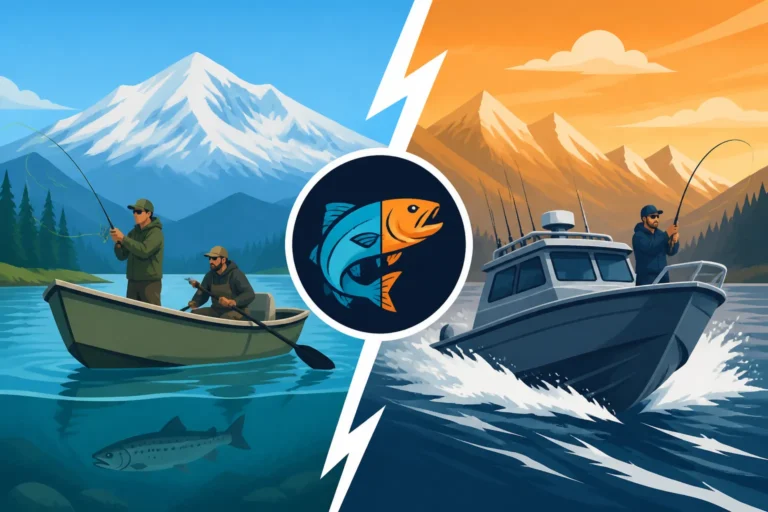
The natural alternative to a lodge trip is a do-it-yourself (DIY) fishing adventure. On the surface, a DIY trip might seem significantly cheaper. And yes, if you're meticulously planning and budgeting every detail, you can certainly reduce your overall outlay. However, it's crucial to consider the "hidden" costs and the value of your time when making this comparison.
For a DIY trip, you'll need to account for expenses like rental cars (which can be pricey in Alaska, especially larger vehicles for gear), separate lodging (hotels, Airbnbs, or camping fees), all your meals (restaurants or groceries, plus cooking supplies), purchasing or renting all your fishing gear, and either paying for fish processing services or doing it yourself. You'll also spend considerable time researching fishing spots, regulations, and managing transportation to and from the water. The planning burden for a successful DIY Alaska trip is immense.
Here's a comparison to help visualize the differences:
| Feature | Alaska Fishing Lodge Trip | DIY Alaska Fishing Trip |
|---|---|---|
| Cost | High (all-inclusive usually) | Potentially lower upfront, but hidden costs and time add up |
| Convenience | Very high (all handled) | Low (significant planning, logistics, and effort required) |
| Fishing Success | High (expert guides, prime access, consistent effort) | Variable (depends on research, skill, luck, weather, access) |
| Lodging | Comfortable, dedicated, often remote, catered | Hotels, Airbnbs, camping (self-catering) |
| Meals | Gourmet, hearty, packed lunches, no cooking | Restaurants, grocery shopping, cooking, cleanup |
| Gear | Provided (high-quality, appropriate for conditions) | Bring your own, rent, or buy (research needed) |
| Fish Processing | Included (vacuum seal, freeze, box) | DIY, or pay separate service (find, transport) |
| Local Knowledge | Extensive (expert guides daily) | Requires significant self-research and trial-and-error |
| Social Aspect | Community with other guests/staff, shared experiences | Primarily with your own group or solitary |
| Overall Stress | Low (relax and fish) | High (constant planning and problem-solving) |
While a DIY trip can offer more flexibility and a sense of rugged adventure, it often means sacrificing fishing time for logistics. If your goal is to catch specific species or maximize your time on the water, the efficiency of a lodge can actually be more cost-effective in terms of "fish per dollar." The expertise a lodge provides in getting you to the right spots with the right techniques can prevent costly trial-and-error, especially when you consider methods like those explored in Best Fishing Techniques for Alaska. For those who want a bit of both worlds, a hybrid approach could work: spend a few days at a lodge, then do some independent exploring or book individual day charters through platforms like FishingBooker for specific experiences.
The Tangible and Intangible Benefits of a Lodge Stay
Beyond the obvious inclusions, Alaska fishing lodges offer a wealth of benefits that often aren't immediately apparent but profoundly enhance the overall experience. These go to the heart of why many seasoned travelers and first-time visitors alike choose this option.
Maximizing Your Fishing Time and Success
One of the most compelling arguments for a fishing lodge is the sheer amount of productive fishing time you gain. In Alaska, where the weather can change on a dime and fish runs are often fleeting, every hour on the water counts.
Lodge guides are locals; they live and breathe the rivers and coastal waters. They know precisely where the fish are, what they're biting on, and the best techniques to use at any given moment. This means less time scouting, less time guessing, and more time with a line in the water. For instance, knowing the intricacies of Alaska Salmon Run Timing Explained can make or break a trip, and guides have this down to a science. They constantly monitor conditions, communicate with other guides, and adjust plans to put you in the best possible position for success.
Think about it: waking up, eating a hearty breakfast, stepping onto a boat or into a raft with all your gear ready, and being taken directly to where the fish are biting. No driving, no packing lunches, no navigating unfamiliar roads or boat launches, no debating where to go. All the logistical burdens are lifted, allowing you to focus solely on the act of fishing. This efficiency is a massive advantage, especially for those who travel long distances to get to Alaska.
Furthermore, many lodges have access to prime fishing waters that might be difficult or impossible for independent anglers to reach. This could be private land access, specific permits for certain sections of a river, or remote areas only accessible by boat or plane. This exclusive access can make a significant difference in the quality and quantity of your catch, turning a good fishing day into an unforgettable one. You also gain an incredible learning opportunity. Even experienced anglers often pick up new tricks, refine their techniques, or discover new approaches by spending time with knowledgeable Alaskan guides.
Comfort, Convenience, and Community
After a long, exhilarating day of fishing, often in varied weather conditions, the thought of returning to a comfortable, welcoming environment is incredibly appealing. This is where lodges truly shine, offering comforts that are hard to replicate on a DIY trip.
Imagine coming back from the river, peeling off your waders, and knowing a hot shower, a delicious meal, and a cozy bed await you. There's no need to worry about cooking, cleaning, or planning the next day's logistics. This level of convenience allows you to fully relax and recharge, preparing you for another day of adventure. It's the difference between a vacation and a self-imposed expedition.
Beyond the physical comforts, many lodges foster a wonderful sense of community. You'll be sharing meals and stories with fellow anglers from around the world, all united by a passion for fishing and the Alaskan wilderness. These shared experiences often lead to lasting friendships and lively conversations, adding an invaluable social dimension to your trip. It's not uncommon to see guests swapping tales of their biggest fish, their funniest guide moments, or sharing tips and tricks learned throughout the day.
Safety is another often-overlooked benefit. Navigating Alaska's powerful rivers, vast lakes, or rugged coastal waters requires considerable experience and local knowledge. Lodge guides are trained in wilderness first aid, navigation, and emergency protocols, providing a crucial layer of safety, especially in remote areas. This peace of mind allows you to fully immerse yourself in the fishing adventure without constant worry.
Finally, a lodge experience often provides a deeper "Alaskan immersion" than a purely fishing-focused trip. Many lodges offer opportunities beyond fishing, such as wildlife viewing, hiking, photography tours, or simply enjoying the stunning scenery. It's a holistic experience that blends the thrill of the catch with the awe of Alaska's natural beauty, making it a truly unforgettable adventure. This comprehensive approach is part of why a lodge experience is often considered the Best Time to Fish in Alaska for many.
When a Fishing Lodge is Absolutely Worth It (and When It Might Not Be)
Deciding if an Alaska fishing lodge is "worth it" is ultimately a personal decision. It depends on your priorities, your budget, your desired level of comfort, and your overall travel philosophy. There are clear scenarios where a lodge is an unparalleled choice, and others where alternative approaches might be a better fit.
Ideal Anglers for Lodge Experiences
For certain types of travelers and anglers, an Alaska fishing lodge is not just worth it, but it's arguably the best way to experience the state's incredible fishing.
First-time visitors to Alaska, especially those who aren't seasoned wilderness travelers, will find immense value in a lodge experience. The logistics of planning an Alaskan trip – from understanding regulations and fishing seasons to navigating remote areas – can be incredibly daunting. A lodge removes all that complexity, providing a seamless, stress-free introduction to the Last Frontier. If you're pondering how to even begin planning, our guide on How to Book an Alaska Fishing Trip can shed some light on the various approaches, with lodges being the most straightforward.
Anglers whose primary goal is to maximize their fishing time and success will also find lodges invaluable. If you're traveling thousands of miles with the sole purpose of catching a trophy King Salmon or a limit of Sockeye, you want every advantage you can get. Lodges provide that with expert guides, prime access, and all logistics handled. You're simply there to fish, eat, and sleep, in that order.
Those who value comfort and convenience above all else will also appreciate the lodge experience. If the idea of roughing it, cooking your own meals, or dealing with rental car issues sounds less like a vacation and more like work, then a lodge is your answer. It's about being pampered and having all your needs met so you can fully enjoy the fishing and the scenery. This is essentially the core of the Alaska All-Inclusive Fishing Lodges appeal.
Furthermore, if you're targeting specific, hard-to-reach species or dream of landing a true trophy fish, a fly-in lodge in a remote region might be your only realistic option. These lodges offer exclusive access to pristine waters that hold some of the largest and most sought-after fish, waters that are simply not accessible via the road system or without specialized permits.
Finally, lodges are an excellent choice for groups, families, or corporate retreats. They can easily accommodate varying group sizes, handle diverse dietary needs, and often offer activities for non-anglers, ensuring everyone has a memorable trip. The cohesive planning makes it easy for everyone to focus on enjoying their time together.
Situations Where Other Options Shine
While lodges offer incredible experiences, they aren't the right fit for everyone. There are definite scenarios where other types of Alaskan fishing adventures might be more appropriate.
Budget-conscious travelers, for instance, might find the cost of a full lodge experience prohibitive. If your funds are extremely tight, there are certainly more affordable ways to fish in Alaska, such as camping, renting a cabin, or focusing on self-guided bank fishing. While these options require significantly more planning and effort, they can make an Alaskan fishing trip accessible. For those on a tighter budget, booking individual guided day trips through platforms like FishingBooker might be a good compromise, giving you the benefit of a guide for specific outings without the full lodge cost.
Independent explorers who thrive on the challenge of planning their own adventures might prefer a DIY approach. If the thrill of figuring out logistics, discovering hidden spots, and truly "earning" your catch is part of the appeal, then a lodge's all-inclusive nature might feel too restrictive. These anglers often enjoy the deep dive into Alaska Fishing Regulations Explained and mapping out their own itinerary.
Local residents or frequent visitors to Alaska often have their own gear, boats, and preferred fishing spots. For them, a lodge might be an unnecessary expense, as they already possess the knowledge and equipment to conduct their own successful fishing trips. They might opt for specific day charters for a change of pace or to access waters they don't typically fish.
Anglers who enjoy a truly rustic, back-to-basics wilderness experience might find a luxurious lodge too polished or commercial. If the appeal of Alaska is its raw, untamed nature, and you prefer sleeping in a tent and cooking over a campfire, then a lodge might detract from that desired experience.
Finally, for very short trips focusing on specific, easily accessible fishing spots, a lodge might be overkill. For example, if you're just looking for a quick weekend trip to fish a popular roadside river near Anchorage, a single day charter or some bank fishing might be all you need. You can find many great options for this type of adventure by exploring guides like Best Fishing Spots in Alaska.
Final Cast: Is an Alaska Fishing Lodge Worth It?
So, are Alaska fishing lodges worth it? The answer, like so many things in life, truly depends on you. If your dream Alaska fishing trip prioritizes convenience, comfort, expert guidance, maximized fishing time, and a worry-free, immersive experience, then absolutely, a fishing lodge is an incredible, often life-changing investment. You're not just paying for fishing; you're paying for an unparalleled, all-encompassing adventure where every detail is meticulously handled.
However, if your priorities lean towards budget-friendliness, extreme independence, or a rugged, self-sufficient wilderness experience, then a DIY trip or a shorter, targeted charter might be more appealing. There's no single "right" way to fish Alaska; there's only the right way for you. Carefully consider your budget, your angling goals, your desired level of comfort, and how much planning you're willing to undertake. Regardless of your choice, Alaska promises an unforgettable fishing adventure, and platforms like FishingBooker can help you find the right day trip or multi-day charter if a full lodge experience isn't your jam.
Disclaimer
Please remember that fishing regulations, seasons, and conditions in Alaska can change frequently due to emergency orders and conservation efforts. Always consult the latest Alaska Department of Fish and Game regulations before planning your trip or heading out on the water. This guide provides general information and should not replace official sources.