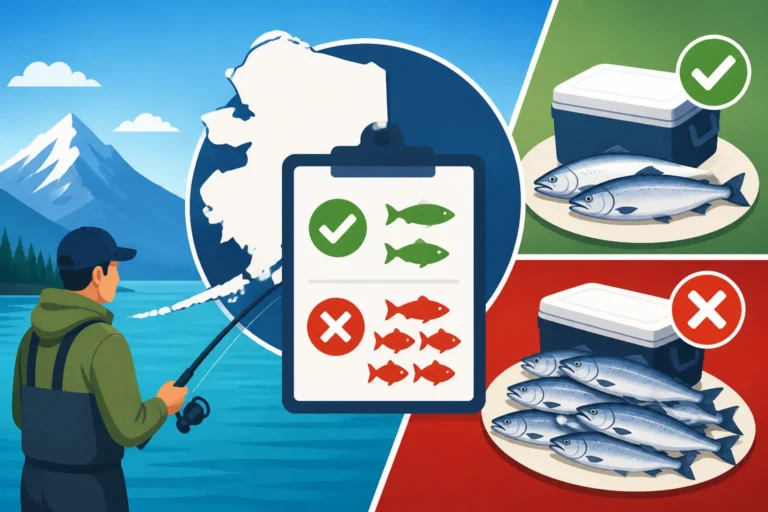
Alaska King Salmon Stamp for Non-Residents
It can be incredibly confusing to navigate all the rules and regulations when you're planning an exciting fishing trip to Alaska, especially when you're coming from out of state. You've got your non-resident fishing license sorted, you're dreaming of landing a massive Chinook, and then you hear whispers of an extra "King Salmon Stamp." This guide is here to clear up that confusion, explaining exactly what the Alaska King Salmon Stamp is for non-residents, why you need it, what it costs, and how you can get one without a hitch.
Understanding the Alaska King Salmon Stamp for Non-Residents
So, you're dreaming of that quintessential Alaska fishing experience, battling a chrome-bright King Salmon as it tears line from your reel. It’s an iconic fish, a true symbol of the Last Frontier. But here’s the thing: because King Salmon, also known as Chinook Salmon, are so highly prized and their populations can fluctuate, the Alaska Department of Fish and Game (ADF&G) has put special measures in place to help manage them. For non-residents, this means purchasing a separate King Salmon Stamp in addition to your regular Alaska fishing license.
This stamp isn't just another fee; it's a vital part of the conservation efforts. The funds generated from these stamps go directly back into King Salmon research, habitat restoration, and management programs, ensuring that future generations can also experience the thrill of catching these magnificent fish. It's a small price to pay to help preserve such an incredible resource. Many anglers might grumble about the extra cost, but when you consider the long-term health of the fishery and the incredible experience you're pursuing, it truly makes sense.
Why Non-Residents Need a King Salmon Stamp
The simplest answer is: if you are not an Alaska resident and you plan to fish for, catch, or retain a King Salmon in Alaska's fresh or salt waters, you must have a King Salmon Stamp. It's not optional if you're targeting them. This applies whether you're on a guided charter trip out of Homer or Seward, or if you’re trying your luck bank fishing on a river system like the Kenai.
Think of it as a specialized permit for a highly sought-after species. While your general Alaska Non-Resident Fishing License Guide covers most other sport fishing, the King Salmon Stamp specifically grants you the privilege to pursue Kings. Without it, even if you accidentally hook one, you would be in violation of regulations, and trust me, you don't want to run into a state trooper on the water without the proper paperwork. The rules are pretty clear-cut, so it’s always better to be prepared. If you're wondering When Do You Need a King Salmon Stamp in Alaska, the answer generally comes down to whether you intend to fish for or possess King Salmon.
When You Might Not Need a King Salmon Stamp
Now, let's say you're a non-resident, but your trip is focused solely on other species, like targeting Sockeye Salmon on the Russian River, or casting for Rainbow Trout in a pristine stream. In these scenarios, if you have absolutely no intention of fishing for King Salmon and don't plan to retain any, then you wouldn't need the stamp.
However, this is where it gets a little tricky and where I always advise caution. If you're fishing in waters where Kings are present and you could accidentally hook one, it's often safer to just get the stamp. Imagine spending a week on the Kenai River trying for Sockeye, and a monstrous King unexpectedly smashes your lure. Without the stamp, you’d have to immediately release it, potentially missing a once-in-a-lifetime catch. For many non-residents, the King Salmon is the crown jewel of their Alaska trip, so adding the stamp to their Alaska Fishing License Cost and Types is a no-brainer to avoid disappointment.
How Much Does the King Salmon Stamp Cost for Non-Residents?
This is often the first question folks ask, and understandably so. Planning an Alaska fishing trip involves a lot of expenses, from travel and lodging to guides and gear. Adding another cost might sting a little, but as we discussed, it's for a good cause and gives you access to one of the most exciting fisheries in the world. The price of your King Salmon Stamp depends on the duration of your fishing trip, similar to your regular fishing license.
The Alaska Department of Fish and Game offers various durations to match your trip length, which is super convenient. You can purchase a stamp for just one day, or extend it for a full two weeks, or even an entire year if you're lucky enough to make multiple trips. The idea is to make it flexible for different kinds of visitors. These costs are subject to change, so always double-check the ADF&G website before your trip to get the most current pricing.
Non-Resident King Salmon Stamp Pricing Breakdown
Let's break down the typical non-resident costs for the King Salmon Stamp. It's important to note that these are usually in addition to your base non-resident fishing license.
| Stamp Duration | Estimated Non-Resident Cost (USD) |
|---|---|
| 1-Day | $15 |
| 3-Day | $30 |
| 7-Day | $50 |
| 14-Day | $75 |
| Annual | $100 |
Note: Prices are estimates and subject to change. Always verify current prices with the Alaska Department of Fish and Game.
As you can see, the annual stamp offers the best value if you plan on fishing for Kings for more than two weeks in a calendar year. For most visitors coming for a typical week-long adventure, the 7-day stamp is usually the sweet spot. When you consider the full picture, your Alaska Fishing License Cost for a Week will include both the general fishing license and this stamp.
Comparing Resident vs. Non-Resident Stamp Costs
It's also worth understanding that residents of Alaska often have different, usually lower, costs for licenses and stamps. For instance, an Alaska resident's annual King Salmon Stamp might be significantly less than a non-resident's, or even be included with certain license types. This differential is common across many states and is a way to acknowledge the contributions of year-round residents to the state's economy and conservation efforts.
So, while a resident might pay less, it doesn’t diminish the value you're getting as a non-resident. You're traveling to a world-class fishery, and these fees help maintain that quality. If you're curious about a full comparison, you can look into Alaska Resident Fishing License: Cost and How to Buy and compare it against the non-resident options.
How to Purchase Your Non-Resident King Salmon Stamp
Alright, you've decided you're going for that King, and you're ready to get your stamp. Good call! The process is fairly straightforward, and you have a couple of convenient options, whether you're a planner who likes to get things done ahead of time or someone who prefers to buy on the fly once you're in Alaska.
The key is to make sure you purchase the correct stamp duration that aligns with your non-resident fishing license. If you bought a 7-day non-resident fishing license, make sure your King Salmon Stamp also covers that 7-day period. This prevents any overlap issues or having your stamp expire before your license does.
Buying Your Stamp Online
This is by far the easiest and most recommended method, especially for non-residents planning their trip from afar. The Alaska Department of Fish and Game (ADF&G) has a robust online licensing system that allows you to purchase both your general fishing license and your King Salmon Stamp in one go.
Here’s a quick rundown of the online process:
- Visit the ADF&G website: Head to the official Alaska Department of Fish and Game licensing portal. Just search for "Alaska Fish and Game Licenses" and you'll find it.
- Select Non-Resident Options: Navigate to the non-resident fishing license section.
- Choose Your License and Stamp Duration: Select the appropriate non-resident fishing license (e.g., Alaska 7-Day Fishing License: Cost and How to Buy) and then add the corresponding King Salmon Stamp for the same duration. The system is pretty good about guiding you through this.
- Provide Information: You'll need to input personal details like your name, date of birth, address, and an identification number (like a driver's license or passport number).
- Review and Pay: Double-check everything in your cart to ensure you have the right license and stamp durations. Then proceed to payment.
- Print or Save: Once purchased, you'll typically receive an email confirmation with a link to print your license and stamp immediately. You can also save a digital copy to your phone. It's always a good idea to have a physical copy, especially if you're heading to remote areas where phone service might be spotty. This is an essential step covered in more detail in the guide on How to Get an Alaska Fishing License Online.
Purchasing online is great because it means one less thing to worry about when you arrive in Alaska, allowing you to focus on the excitement of the trip. You can even browse essential fishing gear on Amazon while you're at it, ensuring you have everything from rain gear to lures ready to go.
Purchasing In-Person in Alaska
If you prefer to buy your stamp when you arrive, or if you simply forgot to do it online, you have plenty of options across Alaska. Most sporting goods stores, tackle shops, general stores in fishing towns, and even some air charter services act as licensed vendors for ADF&G.
Here’s what to expect with an in-person purchase:
- Look for Licensed Vendors: Keep an eye out for signs indicating "Alaska Fishing Licenses Sold Here." You'll find these everywhere from Anchorage to smaller towns like Soldotna or Seward.
- Provide ID: You’ll need a valid form of identification.
- Specify Duration: Clearly state that you are a non-resident and need a King Salmon Stamp for the specific duration (e.g., 3-day, 7-day).
- Immediate Receipt: You'll receive a printed copy of your license and stamp right away.
Buying in-person can sometimes provide an opportunity to chat with local experts who work at these shops, giving you invaluable, up-to-the-minute fishing advice, tips on local hotspots, or even a recommendation on the best lure to use. They might even have gear like specific lines or hooks you need for King Salmon, often also available on Amazon if you prefer shopping there.
Essential Considerations for Non-Resident King Salmon Anglers
Getting your King Salmon Stamp is a crucial first step, but there's more to being a responsible and successful angler in Alaska, especially when pursuing such a prized fish. Understanding these additional considerations will help ensure your trip is not only productive but also compliant with all state regulations.
Alaska's fisheries are dynamic, and regulations can change without much notice, often to protect vulnerable fish stocks. This is particularly true for King Salmon.
Always Check Emergency Orders
This cannot be stressed enough: always check emergency orders before and even during your fishing trip. The ADF&G issues emergency orders to close fisheries, reduce bag limits, or impose other restrictions on short notice, especially for King Salmon, if escapement goals (the number of fish that safely make it to spawning grounds) are not being met. These orders override the printed regulations in the annual booklet.
You can check emergency orders online via the ADF&G website or by calling a local ADF&G office. Many fishing lodges and charter operators will also keep you informed. Imagine planning your dream trip, arriving in Alaska, only to find out the King Salmon fishery you intended to fish has been closed due to an emergency order. Staying informed is key to avoiding disappointment and potential violations. You can learn more about this by reading our guide on Alaska Fishing Emergency Orders Explained.
The Alaska Harvest Record Card
When you purchase any annual or multi-day non-resident fishing license, you will also receive an Alaska Harvest Record Card. This isn't just a piece of paper; it's a mandatory document for recording your catch of certain species, and King Salmon are definitely on that list. Every King Salmon you harvest, regardless of size, must be immediately recorded on this card.
Accurate and immediate recording is vital for ADF&G to manage fish populations effectively. Failing to record a King Salmon, or making an error, can lead to fines and penalties. Think of it as your personal logbook that helps biologists understand harvest rates. Our guide, Alaska Harvest Record Card Explained, offers a detailed look at how to properly fill it out and what species require recording.
Understanding Bag and Annual Limits
Beyond just needing the stamp, non-residents also need to be acutely aware of bag limits (how many fish you can keep per day) and annual limits (how many fish you can keep in a calendar year). For King Salmon, these limits can vary significantly depending on the region, the specific river, and the time of year. For non-residents, these limits are often more restrictive than for residents to ensure equitable distribution of harvest opportunities and to protect fish stocks.
For instance, a non-resident might have a daily bag limit of one King Salmon and an annual limit of only two or three, whereas a resident might have a higher annual limit. It's crucial to know the specific regulations for the area you'll be fishing. A great resource for this is our guide on the Alaska King Salmon Annual Limit for Non-Residents. These limits are in place to sustain healthy fisheries, so knowing them inside and out is crucial for a successful and legal trip.
Penalties for Non-Compliance
Fishing for King Salmon without the proper stamp, failing to record your catch, or exceeding bag limits can lead to serious consequences. Alaska takes its fisheries management very seriously. Penalties can range from hefty fines that easily run into hundreds or even thousands of dollars, to confiscation of your catch, gear, and even your vessel. In some cases, repeat offenses can lead to loss of fishing privileges.
It's simply not worth the risk. Always carry your physical or digital proof of your license and stamp, and make sure you're up-to-date on all regulations, including emergency orders, before you wet a line. Ignorance of the law is not an excuse. This commitment to conservation is what makes Alaska fishing so special, and as a visitor, you play a critical role in upholding it.
Planning Your Non-Resident King Salmon Adventure
With your King Salmon Stamp in hand, you're one step closer to making those Alaskan fishing dreams a reality. The challenge and reward of landing a King Salmon is unparalleled, but strategic planning is key to maximizing your chances.
Knowing when and where to go can make all the difference, as King Salmon runs are seasonal and highly anticipated events across the state.
Timing Your Trip for King Salmon Runs
King Salmon typically run in Alaska's rivers and coastal waters from late May through July, with peaks often occurring in June. However, the exact timing can vary significantly by region and river system. For example, the early run of King Salmon on the Kenai River might be in late May and early June, while other rivers further north might see their runs a bit later.
To plan effectively, you'll want to research the specific river or region you intend to visit. Guides, outfitters, and online resources (like the ADF&G run forecasts) can provide valuable insight into historical run timings and current year predictions. Our guide on the Best Time to Catch King Salmon in Alaska can be an invaluable tool in helping you pinpoint the optimal windows for your trip. Remember that peak season can also mean more crowds, so balancing timing with your preference for solitude might be a consideration.
Choosing Your Fishing Method and Location
King Salmon can be caught using a variety of methods, from trolling in saltwater bays like Cook Inlet to back-bouncing or back-trolling in rivers. Fly fishing for Kings is also popular in certain rivers, offering a unique challenge. Your chosen method might influence where you fish.
Many non-residents opt for guided trips, especially for their first King Salmon experience. A reputable charter or guide will provide all the necessary gear, expertise, and local knowledge, significantly increasing your chances of success. They'll also be intimately familiar with the local regulations and emergency orders. For those preferring a more independent adventure, many roadside systems offer excellent bank fishing opportunities, but thorough research on access points and local rules is paramount. For example, Homer is famous for its saltwater King Salmon charters, while the Susitna River system offers fantastic river fishing.
Packing the Right Gear
Even if you're going with a guide who provides tackle, having the right personal gear is essential for comfort and success. Alaska weather is notoriously unpredictable, so layering is key. Think waterproof and windproof outerwear – a good quality rain suit is non-negotiable. Comfortable, waterproof boots or waders are also essential.
Consider bringing polarized sunglasses to help spot fish in the water, a wide-brimmed hat for sun protection (yes, even in Alaska!), and insect repellent, especially for river trips in mid-summer when mosquitoes can be relentless. Many anglers find durable fishing gloves helpful for handling fish and protecting hands from hooks. Even simple items like a small dry bag for your phone and personal items can be a lifesaver. You can find many of these items, like a reliable rain jacket or a waterproof dry bag, on Amazon to prepare for your trip.
By taking the time to understand the non-resident King Salmon Stamp, its associated costs, how to obtain it, and the broader regulatory landscape, you're setting yourself up for an unforgettable and compliant fishing adventure in the incredible wilds of Alaska. Tight lines!
Disclaimer
The information provided in this guide is for general informational purposes only and does not constitute legal advice. Alaska fishing regulations, including those pertaining to King Salmon stamps, bag limits, and emergency orders, are subject to change by the Alaska Department of Fish and Game (ADF&G). It is the responsibility of every angler to consult the most current ADF&G regulations, emergency orders, and local advisories before engaging in any fishing activity. Non-compliance with regulations may result in fines or other penalties.