Best Lures and Bait for Alaska King Salmon
It’s a feeling every angler chasing King Salmon in Alaska knows all too well: standing on the riverbank or deck of a boat, casting endlessly, wondering if you've got the right offering for these magnificent, notoriously finicky fish. The frustration of not knowing if your lure or bait is even being noticed by a trophy Chinook can be utterly disheartening. This guide is here to cut through the confusion, helping you understand the best lures and bait for Alaska King Salmon, so you can increase your chances of hooking into that fish of a lifetime.
The King Salmon Challenge: Why Lure and Bait Selection Matters So Much
Chasing King Salmon, also known as Chinook, in the vast waters of Alaska is an experience unlike any other. These fish aren't just big; they're smart, powerful, and often incredibly particular about what they'll strike. It's not enough to just throw something shiny in the water; you need to understand their behavior and preferences. That's where the right lure or bait makes all the difference, turning a frustrating day into an unforgettable one.
Understanding King Salmon Preferences
When King Salmon enter freshwater rivers to spawn, their primary feeding drive shifts. They’re no longer actively gorging themselves on baitfish in the ocean. Instead, their strikes are often territorial, reactive, or simply a response to an irresistible scent or vibration. This change in behavior is why a lure that works wonders for ocean-run kings might be ignored by those same fish once they're several miles upstream. They’re looking for something that triggers an instinctual bite, rather than a hunger response.
Many anglers find themselves perplexed by this shift. They might have success with typical feeding presentations in the ocean, only to find them completely ineffective in a river. The key is to think like a salmon that isn't eating for sustenance. What would annoy it? What would seem like a threat? What scent would be so powerful it couldn't be ignored? These are the questions that guide your lure and bait choices in freshwater. Remember, these fish have a journey ahead of them, and while they aren't "hungry" in the traditional sense, they are still responsive to the right triggers.
Factors Influencing What They'll Strike
The perfect lure or bait isn't static; it changes with the conditions. Water clarity, current speed, light levels, water temperature, and even fishing pressure all play a significant role in what will entice a King Salmon to strike. On a bright, sunny day in clear water, subtle presentations and natural colors might be more effective. Conversely, in murky, high-flow conditions, vibrant, high-vibration lures and strong scents become paramount to get noticed.
Think about a river like the Kenai or the Kasilof. If it's running high and silty from a recent rain, a small, natural-colored spinner might disappear completely. You'd need a larger, brighter plug with a strong wobble or a heavily scented bait to cut through the murk and get their attention. The fish are still there, but their ability to see and react to your offering is severely hampered. Seasonality also plays a part; early run fish might be more aggressive than late-run fish who have been in the river for weeks. Paying attention to these subtle cues and being willing to switch up your approach is what separates a good angler from a truly successful one in Alaska's King Salmon fisheries.
Top Lures for Tempting Alaska's Kings
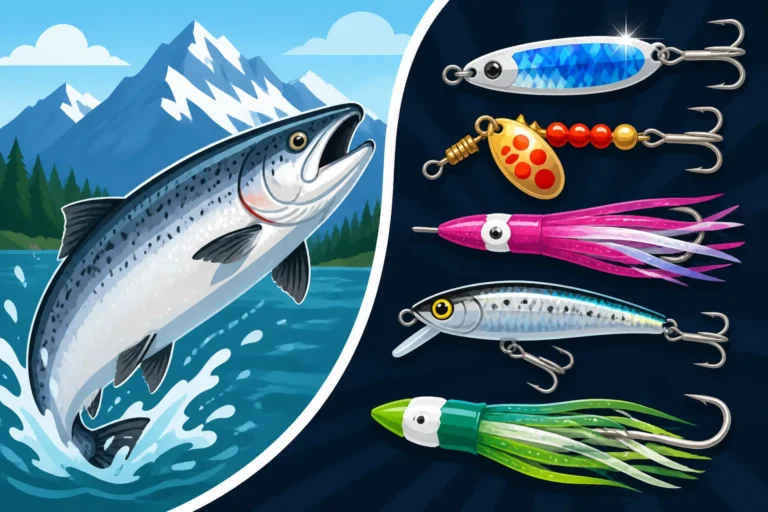
When it comes to artificial lures, King Salmon respond to a combination of visual appeal, vibration, and sometimes, a bit of added scent. Anglers often debate which is "best," but the truth is, a wise fisherman has a selection of these in their tackle box, ready to deploy based on the conditions and the bite.
Plugs and Kwikfish: The Go-To River Movers
Few lures are as iconic for river King Salmon fishing as plugs, and specifically, the Kwikfish brand. These diving, wobbling plugs are designed to imitate an injured baitfish, creating a distinct thumping vibration that Kings can feel through the water, even in low visibility. They come in a wide array of sizes and colors, from natural baitfish patterns to bright, aggressive hues like "fire tiger" or "chartreuse."
The beauty of plugs lies in their versatility. They're excellent for back-trolling from a boat, allowing you to present them slowly and precisely in key holding lies. When back-trolling, the plug dives and wobbles against the current, suspending tantalizingly in front of waiting salmon. You can also fish them effectively from shore or a bank in certain areas by casting upstream and letting them swing through prime water. Many anglers enhance their plugs by adding a piece of cured roe or a scent gel to the treble hooks, providing an extra sensory appeal. Understanding how to back-troll with these lures is crucial for success on many Alaskan rivers, especially for targeting deeper holes where Kings like to hold. For a deeper dive into this technique, check out our guide on How to Back Trolling for Salmon in Alaska.
Spinners: Flash and Vibration for Aggressive Strikes
Spinners are another staple in the Alaska King Salmon angler's arsenal, particularly when fish are fresh and aggressive, or when you're covering water quickly. The rotating blade of a spinner creates both flash and vibration, mimicking a small, fleeing baitfish. They are incredibly effective for casting and retrieving, working well in medium to fast currents where they can really "thump."
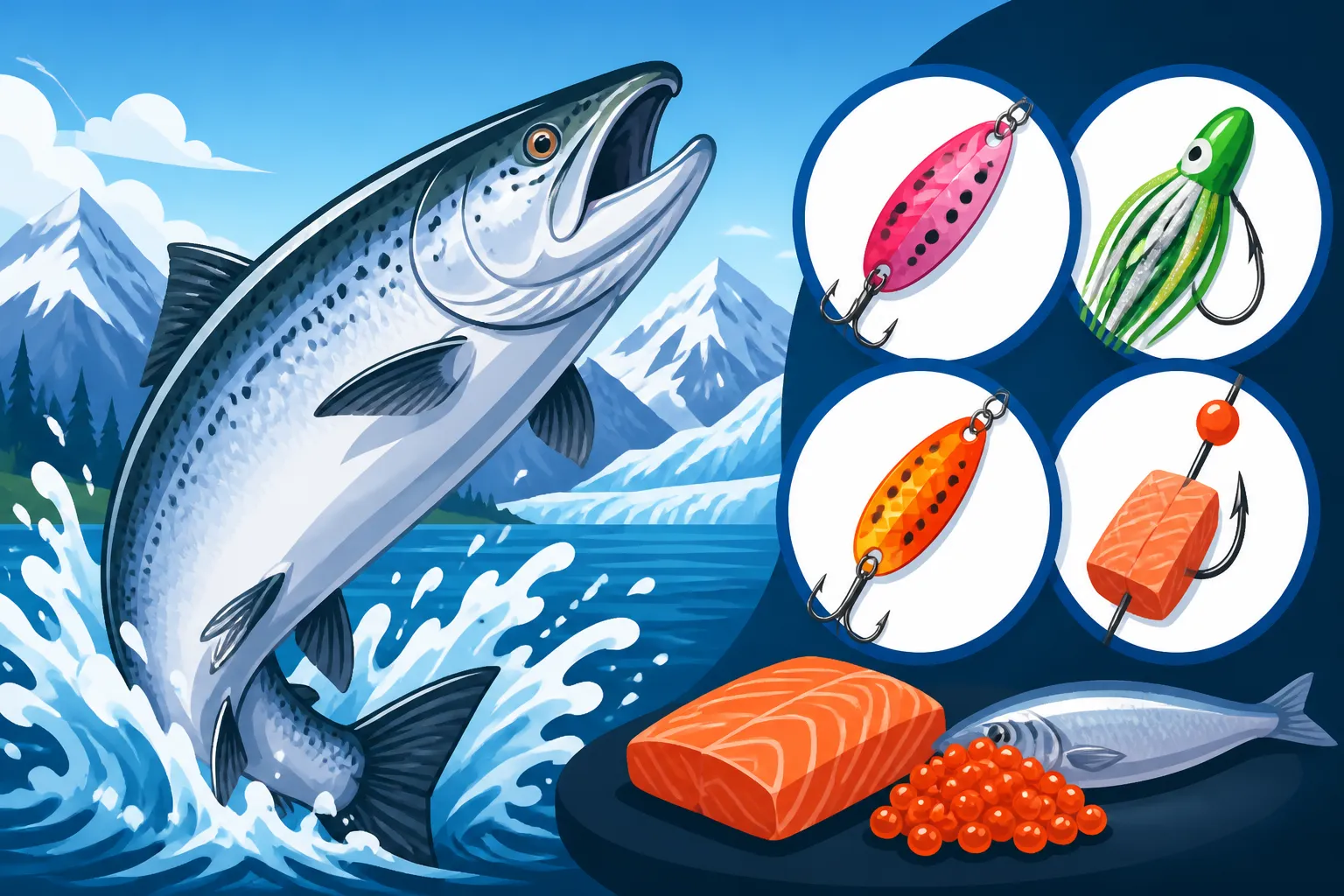
Spinner sizes for Kings typically range from large #5 to #7, sometimes even larger in very high water. Blade styles vary, with Colorado blades offering more vibration and lift, while Willowleaf blades provide less drag and a faster retrieve. Color choice is critical; in clear water, silver, gold, or brass blades with subtle skirts might excel. In stained or murky water, fluorescent colors like chartreuse, orange, or hot pink, often paired with a contrasting blade, can be deadly. Many popular brands, like Blue Fox or Mepps, offer models specifically designed for salmon. You can often find a great selection of these on platforms like Amazon, ensuring you have the right sizes and colors for your trip. For those keen on this active style of fishing, exploring How to Spin Fishing for Salmon in Alaska can provide even more valuable insights.
Spoons: Versatility in Varied Conditions
Spoons might seem old-school, but their simple, wobbling action continues to fool King Salmon in a variety of situations. Their effectiveness comes from their ability to imitate a wounded baitfish with a flash-and-flutter motion. Spoons are incredibly versatile; they can be cast and retrieved, jigged vertically, or trolled behind a boat.
For King Salmon, heavier spoons are often preferred to get down to desired depths in rivers or when trolling in saltwater. Common patterns include classic red-and-white, silver, brass, or painted variations like "cop car" (blue/silver) or "green crinkle." The retrieve can vary from a steady, slow pull to an erratic jigging motion, depending on the fish's mood. In some scenarios, a spoon fished slowly along the bottom can be incredibly effective. Anglers should experiment with different weights and sizes to match the current and depth. These are often great "search" lures to quickly determine if Kings are present and in an aggressive mood before switching to more specialized presentations.
Best Baits to Entice Hungry King Salmon
While lures are fantastic for triggering reactive strikes, natural baits leverage a King Salmon's powerful sense of smell, often proving irresistible even when they're not in a feeding frenzy. The right bait, presented correctly, can turn a slow day into a memorable one.
Cured Roe: The Irresistible Natural Scent
If there's one bait that defines river fishing for King Salmon, it's cured salmon roe. The potent scent of salmon eggs is a natural attractant, tapping into the salmon's primal instincts. Kings can detect the scent of roe from a significant distance, and its soft, natural texture makes it an appealing target. The key, however, is properly curing the eggs. Fresh eggs are good, but cured eggs last longer, hold their scent better, and have a tougher consistency that stays on the hook.
There are countless curing recipes out there, often involving borax, various salts, and even powdered dyes to achieve vibrant colors. Many anglers have their "secret sauce" for curing roe, believing it gives them an edge. The most common presentation methods involve drift fishing the roe under a bobber or "plunking" it with a weight on the bottom in prime holding water. It's often fished in a small mesh "roe bag" to help it stay on the hook and disperse scent effectively. For a detailed guide on preparing this potent bait, make sure to check out How to Cure Salmon Eggs for Bait and How to Use Cured Salmon Eggs in Alaska. The effort put into a good cure truly pays off!
Herring: A Classic Choice for Ocean and River Kings
Herring is a time-tested bait for King Salmon, particularly in saltwater environments and lower river systems where kings are still exhibiting feeding behaviors or are fresh from the ocean. Its oily texture and natural scent are a powerful draw. Herring can be fished whole or as a "cut-plug," where it's cut at an angle to create a natural, rotational spin when trolled.
When trolling for King Salmon in places like Prince William Sound or Kachemak Bay, whole herring rigged behind a flasher or dodger is a go-to setup. The flasher attracts attention, and the spinning herring seals the deal. The depth at which you fish herring is critical and often determined by using downriggers. For river fishing, smaller whole herring or cut-plugs can be back-trolled or even drifted, especially in tidal zones. Proper brining of herring is essential to toughen it up and enhance its scent, preventing it from washing out too quickly. You'll often find a good supply of frozen herring at local tackle shops across Alaska, but it's always wise to call ahead, especially during peak season. You can learn more about this effective bait in our How to Fish Herring for Alaska Salmon guide.
Other Effective Natural Baits
While roe and herring are the superstars, other natural baits can also be effective for King Salmon, especially in specific situations or if local regulations dictate.
- Prawns/Shrimp: In some river systems, especially those with clear water, fresh or brined prawns and sand shrimp can be excellent baits. Their natural scent and subtle presentation can be very enticing. They are typically fished similarly to cured roe, either drift fishing or under a bobber, often in a small bait loop or mesh bag. Some anglers will even combine a small piece of shrimp with a spinner or spoon for added scent attraction.
- Smelt: While less common than herring, small smelt can also be effective, particularly when Kings are keying in on smaller baitfish profiles. They can be trolled or drifted whole, especially in estuarine areas or large river mouths.
- Coon Shrimp: Similar to prawns, coon shrimp are another natural offering that can tempt Kings. They offer a slightly different profile and scent, and like other shrimp, are best fished fresh or properly brined to enhance their durability and effectiveness. Always check local emergency orders and regulations, as specific bait use can change quickly in Alaska's dynamic fisheries.
Table: Popular King Salmon Lures and Baits Overview
| Lure/Bait Type | Best Use Cases | Key Features | Pros | Cons |
|---|---|---|---|---|
| Plugs (Kwikfish) | Back-trolling in rivers, deeper holes | Aggressive wobble, thumping vibration, various colors | High visibility, strong vibration, can add scent | Can be expensive, can snag easily in shallow water |
| Spinners | Casting/retrieving in rivers, aggressive fish | Flash, vibration, active presentation | Great for covering water, triggers reaction bites | Less effective for slow, finicky fish |
| Spoons | Casting, jigging, trolling, varied conditions | Wobbling, fluttering action, versatile | Simple to use, effective for many species | Less scent, requires active retrieve |
| Cured Roe | River fishing, drift fishing, slow presentations | Natural scent, soft texture, highly attractive | Irresistible natural bait, often triggers bite | Requires preparation, can be messy, washes out |
| Herring | Saltwater trolling, lower river systems | Oily, natural scent, resembles natural forage | Excellent for feeding kings, versatile rigging | Requires brining/preparation, can be messy |
Matching Your Presentation to Alaska's Diverse Waters
Alaska's fishing landscape is incredibly varied, from vast saltwater bays to braided glacial rivers. The best lure or bait is always going to be the one that's presented correctly for the specific conditions you're facing. What works in the deep ocean might not work in a shallow river riffle, and vice-versa.
River Fishing Strategies for Kings
River fishing for King Salmon typically focuses on areas where fish will hold and rest during their upstream migration. These include deep pools, seams where fast and slow water meet, current breaks behind obstacles, and the slower inside bends of rivers. The goal is to present your lure or bait naturally, allowing it to drift or wobble into the salmon's strike zone without spooking them.
- Drift Fishing: This technique, often employed with cured roe or a small plug, involves letting your bait or lure drift downstream with the current, mimicking natural debris or an injured baitfish. The idea is to keep your offering near the bottom without excessive drag, allowing it to bounce along naturally. This is a primary method on many rivers, including the Susitna and its tributaries.
- Back-Trolling: As mentioned earlier, back-trolling plugs like the Kwikfish is immensely popular and effective. The boat is slowly backed upstream against the current, allowing the plugs to dive and wobble in key holding water for extended periods. This gives weary salmon plenty of time to react. Mastering this is key for How to Catch King Salmon in Alaska in many road-system rivers.
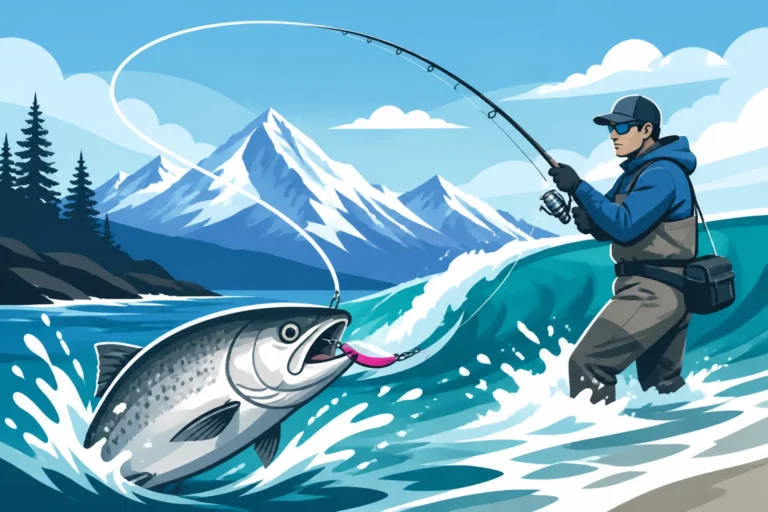
- Casting and Retrieving: Spinners and spoons are ideal for this. You cast across or slightly upstream and retrieve, letting the current work the lure. The retrieve should be slow enough to allow the lure to get down but fast enough to maintain its action. This works well for targeting specific seams or pockets. Always be mindful of local regulations, such as Alaska King Salmon Fishing Regulations and Limits before you head out, as rules can vary greatly by river and season.
Saltwater Approaches for Trophy Chinooks
Saltwater King Salmon fishing is often a different beast altogether, with vast open water and fish that are actively feeding. Here, boat-based trolling is the dominant strategy, covering large areas to find schools of baitfish and the kings that follow them.
- Trolling with Downriggers: This allows you to precisely control the depth of your lure or bait. Herring, often rigged as a cut-plug, or large spoons and artificial hoochies (squid imitations) are common offerings. Pairing them with flashers or dodgers is essential to create visual attraction and vibration in the expansive ocean environment.
- Mooching: This technique, popular in Southeast Alaska, involves slow-trolling or drifting with cut-plug herring, often without the use of a flasher. The bait is allowed to sink, then reeled up slowly, creating a tantalizing rise-and-fall action that mimics an injured baitfish. The natural movement and scent of the herring are the primary attractants. Anglers frequently use light tackle to enhance the fight and sensitivity. This is particularly effective for those seeking Best Time to Catch King Salmon in Alaska during peak runs in coastal areas.
Adapting to Water Clarity and Flow
The conditions of the water itself are paramount in determining your lure and bait choices. A clear river on a bright day demands a different approach than a silty, high-water flow.
- Clear Water, Bright Days: In these conditions, Kings can be very spooky. Smaller, more natural-colored lures and baits often perform best. Think subtle silver or natural baitfish patterns for plugs and spinners, and minimally dyed roe. Light line and a stealthy approach are also key. Sometimes, the less "flashy" your presentation, the better. Consider fishing during low-light periods like dawn or dusk, or even midnight sun if you're further north, as Kings might be more active then. Knowing When Do King Salmon Run in Alaska in different regions can help you anticipate these conditions.
- Turbid Water, Overcast Days: When the water is murky or stained, visibility is low, and salmon rely more on vibration and scent. This is where bright, fluorescent colors truly shine. Chartreuse, hot pink, orange, and "fire tiger" patterns on plugs and spinners will stand out. For bait, strong, heavily cured roe with vibrant dyes and potent scent enhancers become critical. Larger blades on spinners or plugs with a wider wobble will also create more vibration to attract attention. Don't be afraid to go big and bold in these conditions; you need to make your presence known.
Remember, the goal is always to present your offering in a way that is both visible and enticing to the King Salmon, regardless of what the environment throws at you. Having a diverse selection of Best Lures for Alaska Salmon and Best Bait for Alaska Salmon in your tackle box will give you the flexibility to adapt and increase your odds of success. When that King finally hits, knowing how to handle it properly, especially How to Land a Big King Salmon in a River, is the final step to a successful day on the water.
Disclaimer
Please remember that fishing regulations in Alaska can change frequently due to emergency orders. Always consult the most current Alaska Department of Fish and Game regulations booklet and any in-season emergency orders for the specific area you plan to fish before heading out. This guide provides general information and should not be used as a substitute for official regulations.