How to Catch Rockfish in Alaska
Trying to figure out how to specifically target rockfish in Alaska can feel like navigating a complex maze. Many anglers come to the Last Frontier dreaming of giant salmon or barn-door halibut, only to be pleasantly surprised by the tenacious fight and delicious meat of rockfish. But knowing where to find them, what gear to use, and how to fish responsibly can be a challenge if you're not familiar with their unique habits. This comprehensive guide will dive deep into everything you need to know to successfully catch rockfish in Alaska, from identifying the various species to mastering the most effective techniques.
Understanding Alaska Rockfish Species and Behavior
Alaska's waters are teeming with various rockfish species, each with its own quirks and preferred haunts. It's not just "rockfish"; there's a whole family of them, and understanding their differences can significantly improve your chances of success. These fish are true bottom dwellers, often found hugging rocky structures, reefs, and pinnacles, making them a fascinating challenge for any angler.
Common Rockfish Species in Alaskan Waters
When you're out on the water, you'll likely encounter several different types of rockfish. While they share common characteristics, like their spiny fins and camouflaged bodies, their colors, sizes, and specific habitats can vary. Knowing which species you're targeting can help you fine-tune your approach. For instance, some prefer deeper waters, while others might be found closer to the surface or in kelp beds.
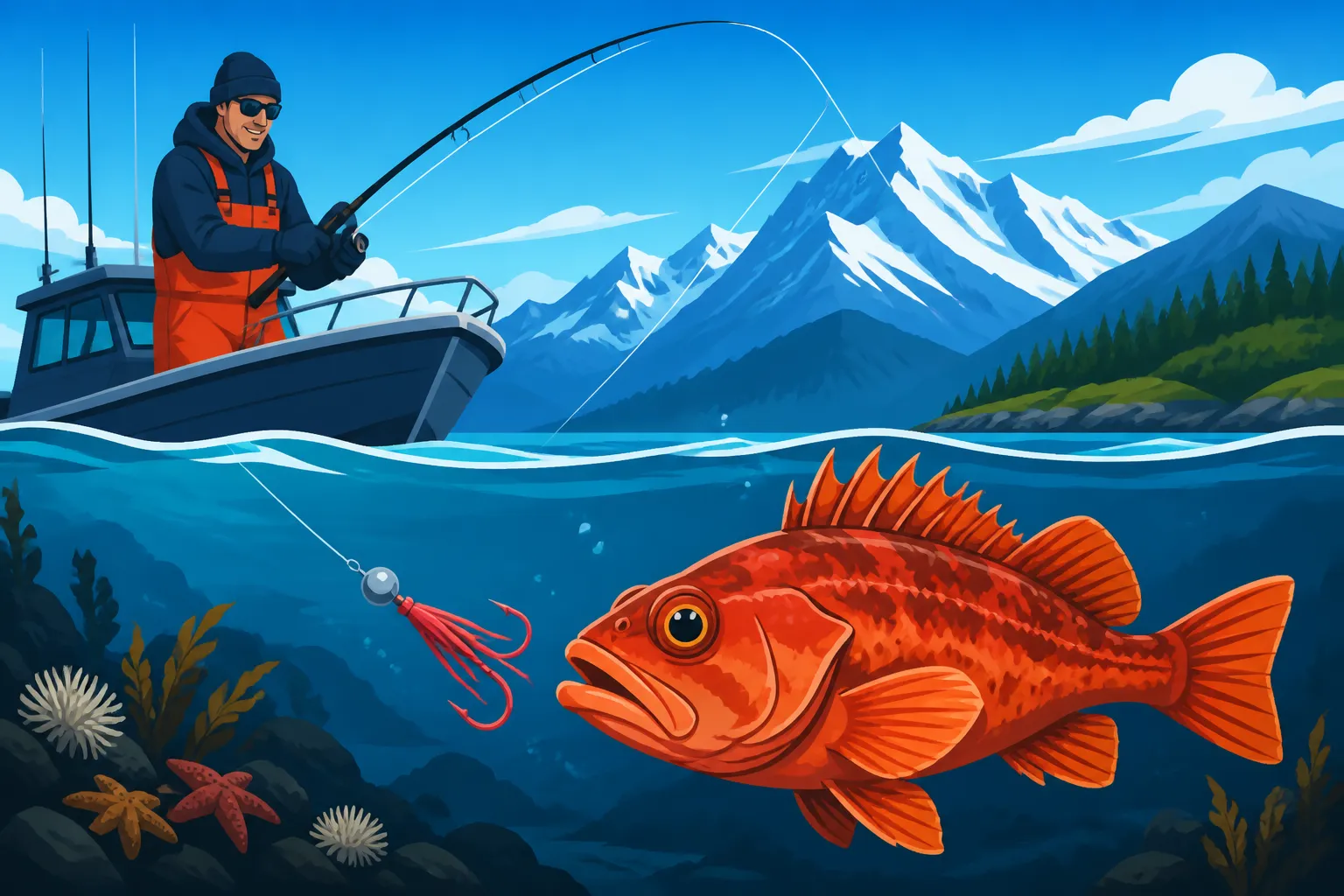
The most sought-after rockfish in Alaska are often the Yelloweye Rockfish, sometimes called "red snapper," due to their vibrant orange-red color and impressive size. These are trophy fish, known for their strong pull and delicious white meat. However, they are also long-lived and particularly susceptible to barotrauma, which means understanding Alaska Rockfish Retention and Release Rules is crucial if you plan on releasing them. Then you have the Black Rockfish, often found in shallower, more accessible waters, particularly around kelp beds and rocky shorelines. They are abundant and put up a great fight on lighter tackle, making them a popular target for many. Other common species include the Quillback Rockfish with their distinctive high dorsal fin, the vibrant China Rockfish often sporting yellow blotches, and the more subtly colored Copper Rockfish. Each offers a unique angling experience, but they all share that characteristic rockfish feistiness.
Rockfish Habitat and Preferred Depths
Rockfish, as their name suggests, are intrinsically linked to rocky environments. They thrive in areas with complex underwater structures like reefs, submerged pinnacles, rock piles, and deep ledp-offs. These structures provide them with protection from predators, ambush points for feeding, and plenty of crevices to hide in. You won't typically find rockfish cruising over sandy flats in open water; they are habitat specialists.
Their preferred depths can vary significantly by species and location. Black Rockfish often hang out in shallower waters, sometimes as shallow as 20-50 feet, especially where kelp forests provide cover. This makes them accessible for shore anglers or those in smaller boats. Yelloweye Rockfish, on the other hand, tend to prefer deeper, cooler waters, often found anywhere from 100 to 600 feet, making specialized deep-dropping gear a necessity. Understanding these depth preferences is paramount. If you're fishing in 300 feet of water with a rig meant for shallow blacks, you might not feel a bite, and vice-versa. Always consult local charts and current fishing reports to get an idea of the typical depths for the species you're targeting in a specific area.
Best Seasons and Times for Rockfish Fishing
Timing is everything in Alaskan fishing, and rockfish are no exception. While some species might be available year-round in certain areas, there are definite peak seasons and even specific times of day or tide cycles that can make a huge difference in your success rate. Alaska's marine environment is dynamic, and knowing when the bite is typically on will give you a significant advantage.
Peak Seasons for Rockfish in Alaska
Generally, the prime season for catching rockfish in Alaska aligns with the warmer months, typically from late spring through early fall. This window, roughly May through September, sees more consistent weather, calmer seas, and increased activity from various marine species, including rockfish. During these months, rockfish are actively feeding, making them more receptive to your offerings. You'll find many charter operations, especially those focusing on Alaska Halibut Fishing Regulations Explained, also targeting rockfish as a valuable bycatch or a dedicated part of a combo trip.
For specific areas like Prince William Sound or Southeast Alaska, the summer months of June, July, and August are often considered the sweet spot. This is when the baitfish are plentiful, and rockfish are in their full feeding frenzy. While you might still catch them outside this window, the numbers and sizes tend to drop off as the water cools and bait disperses. It's always a good idea to check the Alaska Fishing Seasons: Month-by-Month Guide for the specific region you plan to fish, as localized conditions and regulations can influence the best times.
Daily Timing and Tidal Influences
Beyond the seasonal peaks, the daily timing and tidal movements can greatly impact rockfish activity. Unlike some pelagic species, rockfish, being bottom dwellers, are often influenced by currents and the availability of food pushed along by the tides. Many experienced anglers find that slack tide, or the hour or so on either side of the high or low tide, can be particularly productive. During these periods, the currents slow down, making it easier for rockfish to feed without expending too much energy fighting a strong surge. It also allows your gear to present more naturally near the bottom.
However, a moderate current can also be beneficial, as it can concentrate baitfish and make rockfish more active. Extremely strong currents, especially in areas with deep channels or narrows, can make fishing very difficult, as it's hard to get your gear down to the desired depth without excessive weight. Early mornings and late evenings, often referred to as "prime time" for many fish, can also be excellent for rockfish, especially for species like Black Rockfish that might move into shallower water to feed during lower light conditions. Paying attention to your tide charts and observing how the fish react to different current strengths throughout the day will help you refine your daily fishing strategy.
Essential Gear and Tackle for Rockfish
Having the right gear is non-negotiable when targeting rockfish in Alaska. These are strong, spiny fish that live in unforgiving, snag-prone environments. Going unprepared can lead to lost fish, broken tackle, and a frustrating day on the water. You need robust equipment that can handle deep depths, strong currents, and the powerful runs of a big yelloweye.
Rod, Reel, and Line Selection
For rockfish fishing, you're going to want heavy-duty gear that can withstand a beating. A medium-heavy to heavy conventional rod, typically 6 to 7.5 feet in length, with a fast action tip and a strong backbone, is ideal. This setup allows for sensitive bite detection while providing the power needed to lift heavy lead and strong fish from the deep. Look for rods rated for 50-100 lb test line and capable of handling lure weights up to 16-32 oz, especially when targeting deeper yelloweye.
Pair that rod with a robust conventional reel, often a lever-drag or star-drag model, that can hold a significant amount of line. Think reels like the Penn Squall or Daiwa Saltist series, known for their strong drag systems and line capacity. For line, braided line is the absolute best choice. It has virtually no stretch, which is crucial for feeling subtle bites in deep water and for efficiently setting the hook. Spool up with 60-80 lb test braided line. While a bit pricey, a good quality braid will last and perform. You'll then attach a monofilament or fluorocarbon leader, typically 50-80 lb test, to your main line. This leader provides some abrasion resistance against rocky structures and makes your presentation less visible to the fish. A good quality leader, like Seaguar InvizX, is worth the investment.
Lures, Jigs, and Bait Choices
Rockfish are opportunistic feeders, so a variety of lures, jigs, and natural baits can be effective. The key is to get your presentation down to where the fish are holding, right on the bottom or just above it. Metal jigs are incredibly popular and effective. Heavy jigging spoons, like those from P-Line or Point Wilson Dart, in weights from 8 oz up to 24 oz or even more for extreme depths, are excellent. Colors like chrome, glow-in-the-dark, pink, or chartreuse often work well. The erratic, darting action of a jig can trigger aggressive strikes.
Soft plastic swimbaits, especially those with paddle tails, rigged on heavy leadhead jigs (6-16 oz), are also fantastic. Popular options include Berkley Gulp! or Zoom Super Fluke baits in white, chartreuse, or dark colors that imitate baitfish. These offer a more subtle, lifelike presentation. When it comes to natural bait, herring, squid, octopus, or chunks of salmon (if legal) are all proven rockfish attractors. You can fish these on a simple dropper loop rig or a standard bottom fishing setup with a heavy sinker. Often, a combination of bait and a flashy lure on the same rig can be deadly. You might find a good selection of these on Amazon, ready for your next trip.
Accessory Gear for Rockfish Anglers
Beyond the main rod and reel setup, several accessory items are absolutely essential for a successful and responsible rockfish trip. First and foremost, a proper deepwater release device is critical, especially if you plan to release any rockfish. As we mentioned, rockfish suffer from barotrauma when brought up from deep water, causing their swim bladders to expand. A descending device, like a weighted clip or cage, allows you to re-pressurize the fish by sending it back down to depth, significantly increasing its survival chances. Alaska Rockfish Deepwater Release Device Rules mandate their use in certain situations, so always have one on hand and know how to use it.
Heavy-duty gloves are also highly recommended. Rockfish have sharp spines on their dorsal, anal, and pelvic fins, which can deliver a painful poke. Pliers or a dehooker are crucial for safely removing hooks from their mouths, especially if they're deeply hooked. A sturdy net or a gaff is also necessary for landing larger rockfish safely, particularly when dealing with bigger yelloweye that can easily weigh 15-20 pounds or more. Finally, a cooler with plenty of ice is a must to keep your catch fresh for the journey home, ensuring the excellent eating quality of rockfish is preserved.
| Species | Common Depth Range (Feet) | Typical Size (Lbs) | Best Baits/Lures | Key Identification |
|---|---|---|---|---|
| Yelloweye | 100-600 | 10-25 | Jigs, Large Baits | Bright orange/red, rough scales, large eyes |
| Black Rockfish | 20-200 | 2-10 | Jigs, Swimbaits, Herring | Dark gray/black, mottled sides, lighter belly |
| Quillback | 50-300 | 3-12 | Jigs, Small Baits | Brown/orange, high spiny dorsal fin |
| China Rockfish | 30-200 | 2-8 | Small Jigs, Cut Bait | Dark body with distinct yellow blotches |
| Copper Rockfish | 50-300 | 3-12 | Jigs, Herring | Copper/brown, often with lighter patches |
Effective Techniques for Catching Rockfish
Successfully catching rockfish isn't just about having the right gear; it's also about knowing how to use it. Rockfish fishing primarily revolves around getting your offering directly into their strike zone on or near the bottom. This often involves specific techniques like vertical jigging, careful bottom fishing, and strategic drift fishing, each with its nuances and best applications.
Vertical Jigging Strategies
Vertical jigging is an incredibly effective and dynamic method for catching rockfish, especially when they are schooled up or concentrated around specific structures. The idea is to drop a heavy metal jig or a leadhead jig with a soft plastic tail directly down to the bottom and then work it with an enticing up-and-down motion. The key is to actively "jig" the rod, creating erratic movements that mimic a wounded baitfish or squid.
Once your jig hits the bottom, retrieve a few feet of line to avoid immediate snags, and then start your jigging motion. This can involve sharp upward snaps followed by a controlled fall, or more subtle lifts and drops. Experiment with the cadence until you find what triggers a strike. Sometimes a rapid, aggressive jig is best; other times, a slower, more methodical lift-and-drop will entice a bite. It's often helpful to let the jig hit bottom again every few moments to ensure you're still in the strike zone, especially if your boat is drifting. Many anglers find success by adding a piece of bait, like a herring strip, to the assist hook of a metal jig, adding both scent and a visual attractor. Mastering How to Jig for Halibut in Alaska can provide a good foundation, as many of the principles for deepwater jigging translate well to rockfish.
Bottom Fishing Tactics
For a more relaxed approach or when fishing with natural baits, traditional bottom fishing can be incredibly productive for rockfish. This technique usually involves an anchored boat or a very slow drift, allowing you to present your bait directly on or very near the seafloor. The most common setup is a dropper loop rig or a similar paternoster rig, which keeps your bait suspended just above the sinker, preventing it from getting lost in the rocks.
Use heavy pyramid or cannonball sinkers, typically 8-24 ounces or more, depending on the depth and current, to ensure your bait stays on the bottom. Hook sizes can range from 5/0 to 9/0, with octopus or circle hooks being popular choices for their effectiveness and reduced deep-hooking. Once your rig is on the bottom, simply wait for the distinct tug-tug of a rockfish bite. Don't be afraid to leave your bait down for a few minutes, as rockfish can take some time to locate and commit to it. Periodically lift your rod tip a few feet and drop it back down to stir up the bottom and attract attention. This tactic is particularly effective in known rockfish hotspots like submerged reefs in Kachemak Bay or around the rocky islands of Southeast Alaska.
Drift Fishing for Scattered Rockfish
While anchoring is great for concentrated schools, drift fishing is an excellent strategy when rockfish are more scattered over a larger area of productive structure. This involves allowing your boat to drift naturally with the current or wind, slowly covering ground and presenting your bait or jig to a wider range of potential holding spots. The key to successful drift fishing is boat control. You might use a drift sock or sea anchor to slow your drift, allowing your gear enough time to sink to the bottom and giving fish a chance to bite.
When drift fishing, constantly monitor your fish finder to identify promising structures like pinnacles, rock piles, or sudden depth changes. As you drift over these features, pay close attention to your rod. You'll need to adjust your lead weight as the depth changes to ensure your presentation remains near the bottom. If you feel your sinker dragging too much, let out more line; if it's lifting off the bottom too often, retrieve a bit. This active adjustment is crucial for maintaining contact with the strike zone. Drift fishing is particularly effective for covering expansive underwater terrain in areas like the outer coast of Kodiak Island, where rockfish might be spread out along extensive reefs.
Locating Rockfish Hotspots and Structures
Finding rockfish isn't always about luck; it's about understanding their habitat and using technology to your advantage. These fish are masters of camouflage and hiding, so knowing what to look for on your electronics and physical maps can turn a slow day into a banner one. Alaska's rugged underwater landscape provides endless opportunities if you know where to search.
Identifying Prime Underwater Structure
Rockfish are intimately tied to structure. They seek out complex underwater topography that provides shelter, ambush points, and food sources. The "prime" structure for rockfish often includes hard bottom, rocky pinnacles, ledges, steep drop-offs, and even dense kelp beds. When studying marine charts, look for areas where contour lines are tightly packed, indicating steep changes in depth, or where "rocky bottom" is marked. Underwater maps available on fishing apps or specialized GPS units can highlight these features with incredible detail.
Consider areas where currents sweep over these structures, as this often brings a steady supply of nutrients and baitfish to the rockfish. Submerged islands, the edges of deep canyons, and offshore reefs are classic examples of rockfish magnets. For shallower species like Black Rockfish, investigate coastal areas with visible rocky outcrops that extend underwater, especially if there's kelp present. You can often find detailed information on local hotspots by chatting with charter captains or bait shop owners in towns like Seward or Sitka, who have years of experience targeting these fish. Remember, if it looks like a good place for a fish to hide and ambush prey, it's probably a good place for rockfish.
Using Marine Electronics to Find Fish
In today's age, marine electronics are your best friend for pinpointing rockfish. A quality fish finder or sonar unit is invaluable for identifying both the structure and the fish themselves. Start by looking for hard returns on your sonar screen that indicate rocky bottom, ledges, or pinnacles. These will appear as thick, often colored lines on the bottom display, contrasting with softer, flatter bottom readings.
Once you've identified promising structure, start looking for fish marks. Rockfish often show up as dense schools or individual "arches" clinging tightly to the bottom or suspended just above it. Don't be surprised if they're right in the rocks – that's their preferred hiding spot. Side imaging or down imaging sonar can give you an even more detailed picture, allowing you to "see" the underwater terrain and fish off to the sides of your boat, not just directly beneath it. Pay attention to sudden bait balls as well; where there's bait, there are often predators like rockfish. Mark these productive spots on your GPS so you can return to them on future trips. Regularly scanning your electronics and understanding what you're seeing can dramatically increase your rockfish catch rate.
Responsible Fishing and Regulations
Fishing in Alaska isn't just about catching fish; it's also about being a good steward of the resource. Rockfish, particularly the longer-lived species like yelloweye, are vulnerable to overfishing and suffer from barotrauma. Understanding and adhering to regulations, as well as practicing responsible fishing techniques, ensures healthy fish populations for future generations of anglers.
Key Rockfish Regulations in Alaska
Alaska's fishing regulations are designed to sustain its incredible fisheries, and rockfish are no exception. The Alaska Department of Fish and Game (ADF&G) sets specific bag limits, size limits, and sometimes even seasonal or depth restrictions for various rockfish species. These regulations can vary significantly by region, and they can also change rapidly through emergency orders based on biological data and stock assessments. For instance, the limits for Black Rockfish might be quite different from those for Yelloweye Rockfish, and you'll often see specific rules about how many of each you can retain.
A common regulation for Yelloweye Rockfish in some areas is a very conservative bag limit, sometimes as low as one fish per day, with specific annual limits for non-residents. Other species might have more generous limits. It is absolutely critical to always consult the current Alaska Fishing Regulations Explained booklet for the specific region you are fishing before you head out. These booklets are available online and at most tackle shops. Failing to adhere to these rules can result in significant fines and penalties, not to mention harming the sustainability of the fishery. Always know what you can keep and what you must release, and if there's any doubt, release the fish.
Importance of Deepwater Release
As mentioned earlier, deepwater release is not just a good practice for rockfish; for certain species and in specific situations, it's often legally mandated. Rockfish have a swim bladder that expands dramatically when they are brought up quickly from deep water, especially from depths greater than 60 feet. This expansion can push their stomach out of their mouth or damage internal organs, making it impossible for them to swim back down on their own. This condition is known as barotrauma.
The solution is a descending device, which allows you to send the fish back down to its original depth, re-pressurizing its swim bladder and giving it a much higher chance of survival. Simply tossing a floating fish back into the water is rarely effective, as it will likely become prey or starve. Alaska Rockfish Deepwater Release Device Rules specify that these devices must be on board and used when fishing for rockfish in federal waters, and it's a strongly recommended practice in all waters where rockfish are found. Take the time to learn how to properly use a descending device, and make it a standard part of your rockfish fishing routine. It's a small effort that makes a huge difference in conservation.
Disclaimer
The information provided in this guide is for general informational purposes only and is subject to change. Fishing regulations in Alaska are complex and can be updated frequently by the Alaska Department of Fish and Game (ADF&G) through emergency orders. Always consult the most current official ADF&G regulations for the specific area and species you intend to fish before heading out. The author and publisher are not responsible for any actions taken based on the information presented herein.