Where to Catch Five Species of Salmon in Alaska
Dreaming of an Alaskan fishing adventure where you can reel in all five species of Pacific salmon? It's a challenging but incredibly rewarding goal, often called the "Salmon Grand Slam," demanding careful planning, precise timing, and local insights. Many anglers feel overwhelmed by the sheer size of Alaska and the varying run timings, but this comprehensive guide will walk you through the prime locations, peak seasons, and essential strategies to help you achieve the ultimate multi-species salmon experience in the Last Frontier.
The Quest for the Alaska Salmon Grand Slam
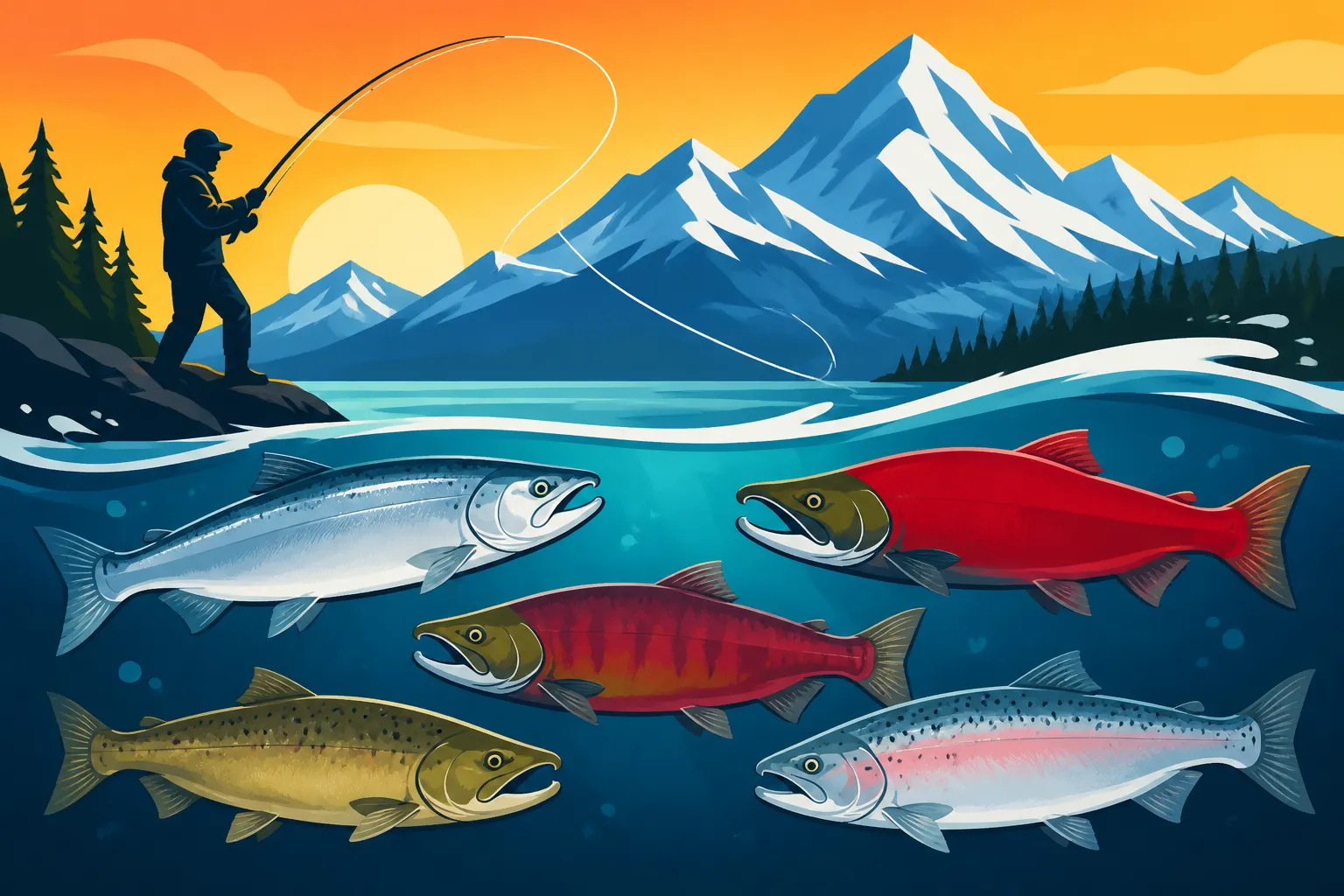
The idea of catching a King, Sockeye, Coho, Pink, and Chum salmon all in one trip is a powerful draw for many anglers. It speaks to the incredible diversity of Alaska's fisheries and the sheer abundance of these magnificent fish. However, these different species have distinct life cycles, preferred habitats, and run timings, which makes achieving this feat a genuine challenge. It's not just about being in Alaska; it's about being in the right place at the right time for each species.
Understanding Each Salmon Species' Habits
To successfully pursue the Alaska salmon Grand Slam, you first need a solid grasp of what makes each species unique. Their individual characteristics dictate where and when you'll find them, and what kind of fight they'll put up.
King Salmon, also known as Chinook, are the largest and most coveted of the Pacific salmon, famous for their incredible power and stamina. They typically arrive earliest in the season, with runs starting in late May and peaking through June and early July, though some systems have later runs. These magnificent fish prefer deeper, cooler water and can often be found in large river systems like the Kenai River or Kasilof River, as well as in saltwater near river mouths before they begin their upstream migration. Hooking a King Salmon is a battle of wills, often involving long, drag-screaming runs that will test your tackle and your resolve.
Sockeye Salmon, or Reds, are perhaps the most iconic Alaskan salmon due to their vibrant red spawning colors and incredible abundance, particularly in rivers like the Kenai and Russian. They are known for their incredibly strong, focused fight and acrobatic jumps once hooked. Sockeye runs typically peak from late June through July, often forming dense schools that make for exciting, fast-paced fishing. Unlike Kings, Sockeye are primarily plankton feeders in the ocean, making them notoriously difficult to entice with traditional lures or bait in freshwater. Instead, specialized techniques like "flossing" are often employed in their river habitats.
Coho Salmon, or Silvers, are late-season superstars, arriving in late July and peaking through August and September, extending into October in some areas. These aggressive biters are celebrated for their incredible aerial displays and hard fights, often leaping clear out of the water multiple times after being hooked. Cohos are widely distributed, found in both fresh and saltwater environments across Alaska, and readily strike a variety of lures, flies, and bait, making them a favorite for many anglers. Their energetic nature provides some of the most thrilling battles in the salmon family.
Pink Salmon, affectionately called "Humpies" by Alaskans due to the pronounced hump that males develop during spawning, are the smallest and most numerous of the Pacific salmon. They have a distinct two-year life cycle, meaning their runs are typically much stronger in even-numbered years than odd-numbered years. Pink Salmon usually arrive from late July through August and are incredibly aggressive, hitting almost anything thrown their way. While not as large or powerful as Kings or Cohos, their sheer numbers and willingness to bite make them excellent targets for beginners, kids, or anyone looking for constant action. They are particularly abundant in coastal streams and saltwater estuaries.
Chum Salmon, often called "Dog Salmon" because of their prominent canine-like teeth when spawning, are perhaps the most underrated of the Pacific salmon. They run from late June through August and are incredibly powerful fighters, often putting up a bulldog-like fight with strong, deep runs. Chums are typically found in many of the same river systems as Sockeye and Kings, and while often overlooked in favor of their more famous cousins, they provide an exhilarating battle on the end of a line. They are often targeted with bright, flashy lures or flies that mimic salmon eggs, and their firm, orange flesh is excellent for smoking or canning.
The Challenge of Timing Multiple Runs
The biggest hurdle to achieving your five-salmon Grand Slam is the staggered timing of each species' return to freshwater. While there's some overlap, their peak availability often falls at different points in the summer. For instance, you might be right in the middle of a fantastic King Salmon run in June, but the Sockeye are just starting to trickle in, and the Coho won't show up in significant numbers for another month or more.
This means you can't just pick any week in summer and expect to find all five species at their prime. A trip focused on maximizing your chances for all five will require very specific timing, often targeting a window where the tail end of one run overlaps with the beginning of another. It also typically involves being flexible and potentially moving between different fishing locations or focusing on areas known for diverse fisheries. Many experienced guides and lodges tailor specific "Grand Slam" trips during these unique windows. For a detailed breakdown of when each species is typically running, you might want to consult a guide on Alaska Salmon Run Timing Explained or a broader Alaska Fishing Seasons: Month-by-Month Guide to help plan your window of opportunity.
Prime Locations to Target All Five Salmon Species
While Alaska is teeming with salmon, certain regions and river systems offer a higher probability of encountering multiple species within a reasonable timeframe. These areas often benefit from a mix of freshwater river systems and accessible saltwater fisheries, providing diverse opportunities.
Southcentral Alaska: The Kenai Peninsula and Nearby Waters
The Kenai Peninsula, often referred to as "Alaska's Playground," is arguably one of the best bets for anglers hoping to catch all five species of Pacific salmon. Its accessibility from Anchorage, coupled with its incredible network of rivers and proximity to rich saltwater grounds, creates a unique scenario.
The Kenai River is world-renowned for its colossal King Salmon and massive Sockeye Salmon runs. You can target trophy Kings in late May and June, followed by the incredibly dense Sockeye runs in July. As the summer progresses, Coho Salmon start pushing into the Kenai and its tributaries from August through September, offering spectacular light-tackle action. While Pink Salmon runs on the Kenai are primarily in even-numbered years, they can be incredibly abundant in late July and August. Chum Salmon are present in the lower river and its tributaries, often targeted by those specifically seeking them out. This makes the Kenai a hub for potentially four or even five species if timed perfectly. For an in-depth look, check out our Kenai River Fishing: Complete Guide.
Just south of the Kenai is the Kasilof River, which offers a similar, though often earlier, King Salmon run. Its unique glacial blue waters are also home to strong Sockeye and Coho runs, mirroring many of the opportunities found on its larger neighbor. You can find out more about this productive river in our Kasilof River Fishing: What to Know Before You Go article. Moving slightly north, the vast Cook Inlet system, which the Kenai and Kasilof feed into, also provides saltwater opportunities for feeder Kings and Silvers before they enter the rivers.
For an even broader Southcentral experience, the Prince William Sound area, accessible from towns like Valdez and Whittier, is another strong contender. While primarily a saltwater fishery, many rivers and streams feed into the Sound. Here, you'll find excellent King and Coho Salmon fishing in the ocean throughout the summer, often trolling with downriggers. Pink Salmon are incredibly abundant in this region, particularly in even years, running up countless small streams and found in huge schools in the Sound. Chum Salmon are also plentiful in many Prince William Sound rivers, making it relatively easy to tick off four species from a boat-based operation. Sockeye runs are present in specific drainages, like Coghill Lake near Whittier or Main Bay near Valdez, although they require more specific targeting. Exploring this area could involve charters out of Valdez or Whittier. Our Prince William Sound Fishing: What to Know Before You Go guide offers more insights.
Southeast Alaska: A Coastal Salmon Paradise
Southeast Alaska, with its labyrinthine coastline, countless islands, and rich marine environment, is another exceptional region for salmon diversity. Cities like Sitka, Ketchikan, and Juneau serve as excellent bases for multi-species trips, heavily relying on saltwater charters.
In these coastal communities, Sitka stands out for its exceptional King and Coho Salmon fishing. Anglers consistently land large Kings from spring through summer, often while trolling in the nutrient-rich waters surrounding the islands. Coho fishing picks up significantly in late summer and early fall, offering fast-paced action. Pink Salmon are ubiquitous throughout the sounds and inlets during their runs, and Chum Salmon are also present in significant numbers, often caught incidentally or targeted specifically with trolling gear. For Sockeye, anglers often need to venture into specific river systems, such as Starrigavan Creek just outside of Sitka, during their runs. These urban centers offer numerous charter options for ocean-going trips. Delve deeper into the area with our Sitka Fishing Guide or explore Ketchikan Fishing Guide and Juneau Fishing Guide for other fantastic Southeast options.
The beauty of Southeast Alaska is the abundance of both migratory salmon in the ocean and those staging to enter rivers. A typical trip might involve a day or two of trolling for Kings and Cohos in the saltwater, then shifting to a smaller boat or even shore fishing for Pinks and Chums in a nearby estuary, with a dedicated trip to a sockeye river if timing allows. Many charter operators in these areas are well-versed in helping anglers achieve their multi-species goals. When planning, consider using resources like FishingBooker to compare charters and their offerings across different Southeast Alaskan towns.
Remote Wilderness: Bristol Bay and Western Alaska
For the truly adventurous angler seeking pristine wilderness and unparalleled fish runs, the remote regions of Bristol Bay and Western Alaska offer an incredible opportunity to encounter all five salmon species in a breathtaking setting. This is typically a fly-in lodge experience, providing access to untouched rivers.
Bristol Bay is globally famous for hosting the largest Sockeye Salmon runs on Earth, with millions of fish returning annually to rivers like the Naknek, Nushagak, and Alagnak. While Sockeye are the undeniable stars, these same river systems also boast healthy populations of King Salmon in their early runs, followed by strong Coho runs later in the summer. Pink and Chum Salmon are also abundant in many of these rivers, often caught as bycatch while targeting other species or specifically pursued for their powerful fights. The sheer number of fish in these systems means that if you hit the right timing window, often late July to mid-August, you can experience incredible multi-species action. Our Bristol Bay Fishing Guide is a great resource for planning a trip to this region.
A multi-day stay at an Alaska Fly-In Fishing Lodges Guide is often the best way to tackle a Grand Slam in these remote regions. Lodges in areas like Katmai National Park or the Togiak National Wildlife Refuge have unparalleled access to diverse river systems via floatplane, allowing guides to move guests to where different salmon species are peaking. The guides at these lodges are experts at navigating the staggered runs and will maximize your chances. While a higher investment, the convenience, expertise, and immersive wilderness experience are unmatched.
Planning Your Ultimate Five-Salmon Expedition
Achieving the Alaska salmon Grand Slam isn't something you leave to chance. It requires meticulous planning, understanding the seasons, and sometimes, choosing the right support.
Timing Your Trip for Overlapping Runs
As we've discussed, timing is everything. While it's rare to find all five species at their absolute peak simultaneously, there are windows when the runs significantly overlap, making a Grand Slam a realistic goal. Generally, late July through mid-August often provides the best opportunity for maximum overlap. During this period:
- King Salmon runs might be tapering off, but the last strong pushes are often still available in some systems.
- Sockeye Salmon runs are typically at or just past their peak in many rivers, but still incredibly abundant.
- Coho Salmon are beginning to arrive in earnest, with early runs already providing good action.
- Pink Salmon (in even years) are pouring into coastal rivers and estuaries.
- Chum Salmon are usually present in strong numbers throughout this period.
Of course, fishing is a dance with nature, and actual run timings can shift based on water levels, temperatures, and conservation efforts. It's crucial to consult the Alaska Department of Fish and Game (ADF&G) regulations and current fishing reports before and during your trip. These resources will provide real-time updates on run strengths and any emergency orders that might affect fishing. You can gain further insights by checking out our guide on the Best Time to Fish in Alaska.
Here's a generalized table to help visualize typical peak seasons for each salmon species in Alaska:
| Salmon Species | Primary Peak Season | Characteristics & Best Fishing Methods |
|---|---|---|
| King (Chinook) | Late May – Mid-July | Largest, most powerful. Trolling in saltwater, back-trolling/drifting bait in rivers. |
| Sockeye (Red) | Late June – Late July | Abundant, strong fighters. Flossing/drift fishing in rivers. |
| Coho (Silver) | Mid-July – Sept/Oct | Aggressive, acrobatic. Trolling, casting lures/flies, bait in rivers/saltwater. |
| Pink (Humpy) | Late July – August | Most numerous, smaller. Casting spinners/flies, jigging in coastal areas/rivers. |
| Chum (Dog) | Late June – August | Powerful, aggressive. Casting bright lures/flies, drifting bait in rivers/estuaries. |
Choosing Between Guided and DIY Adventures
When planning a multi-species salmon trip, you essentially have two paths: going it alone (DIY) or hiring a professional guide or booking a lodge. Each has its pros and cons, especially when aiming for a Grand Slam.
A guided trip or fishing lodge package significantly increases your chances of success, particularly for a Grand Slam. Guides possess invaluable local knowledge about where specific species are running, the most effective techniques, and how to navigate changing conditions or regulations. They have the right boats, gear, and licenses, and can often move you between different locations to capitalize on various runs. Many lodges and charters, particularly in regions like Bristol Bay or on the Kenai Peninsula, specifically offer "Grand Slam" packages designed to put you on all five species. This option, while more expensive, removes much of the logistical headache and maximizes your fishing time. Websites like FishingBooker are excellent resources for finding reputable guides and comparing their offerings and availability, allowing you to filter by species and location. You can learn more by reading our article on Guided vs Unguided Fishing in Alaska. If you're considering a charter, you might also want to consult our How to Choose an Alaska Fishing Charter guide.
A Do-It-Yourself (DIY) adventure offers more independence and can be more budget-friendly, but it demands significantly more research, planning, and self-reliance. You'll be responsible for all your gear, transportation (often needing a rental car and potentially a boat), and understanding the complex regulations. For a Grand Slam, this means doing extensive homework on specific river systems, current run reports, and adapting your plans on the fly. While highly rewarding for experienced anglers, trying to target all five species DIY in one trip can be incredibly challenging without prior Alaskan fishing experience. If you go this route, consider focusing your efforts in a well-documented area like the Kenai Peninsula, where road system access provides more flexibility.
Essential Gear and Regulations Considerations
Regardless of whether you choose a guided or DIY trip, having the right gear and a solid understanding of Alaska's fishing regulations are paramount. For a multi-species quest, versatility in your tackle is key.
You'll likely need a range of rods and reels to handle the diverse sizes and fighting styles of the salmon. A medium-heavy conventional or spinning setup for Kings and Chums, capable of handling 20-30lb line, is essential. For Sockeye and Coho, a medium-action rod with 10-15lb line is usually sufficient, offering a more sporting fight. If you plan to target Pink Salmon, a lighter spinning or fly rod will provide excellent action. Many guides will provide all necessary gear, but if you're going DIY, ensure your tackle is up to the task.
Regulations in Alaska are complex and can change rapidly, sometimes daily, via emergency orders issued by the Alaska Department of Fish and Game (ADF&G). It is your responsibility to know and follow all rules. You absolutely need an Alaska Fishing License: Complete Guide before you cast a line, and often a King Salmon stamp if you plan to fish for them. Pay close attention to bag and possession limits, which vary by species, location, and even time of season. For instance, King Salmon limits for non-residents can be very restrictive, and Sockeye limits can be generous. Always carry your license and a copy of the current regulations booklet. Additionally, you will need to understand the Alaska Harvest Record Card Explained and how to correctly record your catch, especially for King Salmon and Halibut. Failing to adhere to these rules can result in significant fines and forfeiture of your catch, turning your dream trip into a nightmare. Always check the latest emergency orders before heading out, especially during volatile salmon seasons.
Disclaimer
Please remember that fishing success can never be guaranteed. Fish populations, weather conditions, and regulatory changes can significantly impact your experience. Always consult the most current Alaska Department of Fish and Game regulations and local advisories before planning and embarking on any fishing trip in Alaska. Stay safe and respectful of the environment and wildlife.