Talkeetna Fishing Guide
Planning a fishing trip to a place like Talkeetna, nestled at the confluence of mighty Alaskan rivers, can feel overwhelming. You've heard whispers of incredible salmon runs and stunning scenery, but pinning down exactly where to go, what to fish for, and when can turn into a real head-scratcher. This guide is here to untangle all those questions, offering practical, realistic advice so you can make the most of your angling adventure in this truly unique Alaskan town.
Why Talkeetna is a Unique Fishing Destination
Talkeetna isn't just a quirky, historic village; it's a gateway to some incredible fishing, sitting strategically where the Talkeetna River meets the much larger Susitna River. This confluence creates a dynamic ecosystem, drawing in various fish species and offering diverse angling opportunities. It's a place where you can experience both the rustic charm of a small town and the wild, untamed beauty of interior Alaska.
The Allure of the Susitna and Talkeetna Rivers
The Susitna River is one of Alaska's largest and most significant rivers, acting as a major highway for migrating salmon. When the Talkeetna River, a substantial tributary in its own right, joins the Susitna, it creates a rich environment with varied current speeds, depths, and gravel beds that are ideal for fish. Anglers are often drawn to the accessible banks around Talkeetna itself, but a short boat ride can open up miles of pristine river, offering a sense of wilderness even close to town. Imagine casting your line with Denali, North America's tallest peak, looming majestically in the distance – it's an experience that truly sets Talkeetna apart. These rivers are not only scenic but also highly productive, hosting strong runs of all five species of Pacific salmon at different times of the summer. The sheer size and power of the Susitna mean you'll need to be prepared with the right gear and techniques, but the rewards can be monumental.
Beyond Salmon: Trout, Grayling, and Pike Opportunities
While salmon often steal the spotlight, Talkeetna's waters offer a fantastic variety of other sportfish. The clear tributaries and sloughs often hold healthy populations of resident species. For instance, the Talkeetna River and its smaller feeder creeks are excellent for targeting feisty rainbow trout and speckled Dolly Varden. These fish provide consistent action throughout the open water season, often feeding on salmon eggs and fry, especially after the salmon have spawned. Further upriver or in nearby lakes, you might even find Arctic grayling, easily identifiable by their distinctive, sail-like dorsal fin. For those looking for a different kind of fight, some of the sloughs and slower backwaters connected to the Susitna can hold northern pike, a toothy predator that offers explosive strikes. This diversity means that even if the salmon bite is slow, there’s always something else to pursue, making Talkeetna a well-rounded fishing destination.
Roadside Accessibility and Wilderness Feel
One of the great advantages of Talkeetna is its accessibility. Unlike many remote Alaskan fishing destinations that require expensive bush plane flights, Talkeetna is easily reached by car via the scenic George Parks Highway. This roadside access means you can drive directly to various fishing spots, launch your own boat, or meet up with a local guide. Yet, despite being accessible, Talkeetna still manages to retain a profound wilderness feel. Just a short distance from town, the vast Alaskan interior stretches out, and the rivers flow through truly wild landscapes. You can be fishing a productive bank just minutes from a cozy cafe, or you can venture out on a guided trip that takes you deep into areas where the only sounds are the river and the calls of eagles. This unique blend of convenience and wildness is a huge draw for many anglers who want an authentic Alaskan experience without the extreme logistics. This balance is what makes it one of the Best Fishing Spots on the Road System in Alaska.
Key Fish Species and When to Target Them in Talkeetna
Understanding the timing of fish runs is absolutely critical for a successful trip to Talkeetna. Alaska's seasons are short and intense, and being there at the right time for your target species can make all the difference.
Salmon Runs in the Talkeetna Area
Talkeetna is renowned for its strong salmon runs, with different species making their way upriver throughout the summer. Each species has its own peak season, preferred habitat, and effective fishing methods.
-
King Salmon (Chinook): The biggest and most sought-after salmon, kings typically start arriving in the Talkeetna area in late May, with the run peaking in June and often extending into early July. These powerful fish offer an incredible fight, and anglers often use heavy gear for them. Popular methods include back-trolling with Kwikfish or Wiggle Warts, drift fishing with cured salmon roe, or casting large spinners. However, King Salmon runs can be highly variable year-to-year, and emergency orders often impact fishing opportunities, so it's vital to stay updated on Alaska King Salmon Fishing Regulations and Limits before you go. Local guides often have the most up-to-date information on where the kings are holding. Want to learn How to Catch King Salmon in Alaska? This article is a must-read.
-
Sockeye Salmon (Red): Sockeye typically follow the kings, arriving in good numbers by late June and peaking through July. While they are known for being challenging to catch on traditional lures due to their primarily plankton-based diet, sockeye are a favorite among Alaskans for their delicious red meat. The most effective method for sockeye in rivers like the Talkeetna and Susitna is often "flossing" or drift fishing with unweighted flies or small, brightly colored beads that mimic salmon eggs. Success often comes down to knowing the exact holding water and presenting your gear correctly. Be sure to understand Alaska Sockeye Salmon Fishing Regulations and Limits to ensure you're compliant. For a deep dive into How to Catch Sockeye Salmon in Alaska, we have a full guide.
-
Coho Salmon (Silver): Silver salmon offer some of the most acrobatic fights and usually arrive in mid-July, peaking in August and often running strong well into September. They are aggressive biters and respond well to a variety of techniques. Spinners like the Pixee Spoon, Vibrax, and Blue Fox are very effective, as are twitching jigs and drifting cured eggs. Fly anglers find great success swinging large, bright flies for coho. Their late-season arrival makes them a fantastic target for those visiting Talkeetna after the summer crowds have thinned. Familiarize yourself with Alaska Coho Salmon Fishing Regulations and Limits to ensure a legal and enjoyable trip.
-
Pink Salmon (Humpy) & Chum Salmon (Dog): While not typically targeted as heavily as kings, sockeye, or coho in Talkeetna, pink and chum salmon can be abundant, especially during even-numbered years for pinks (typically July-August). They offer continuous action and are fun to catch, particularly for beginners or kids. Pinks readily strike small, flashy lures and flies, while chums will often hit larger, brightly colored spoons and jigs.
Resident Freshwater Species
Beyond the migrating salmon, Talkeetna's rivers and nearby waters host thriving populations of resident freshwater fish that offer excellent year-round (where accessible) fishing.
-
Rainbow Trout: Found throughout the Talkeetna and Susitna River systems, rainbows are particularly active in the clear tributaries and sloughs. They eagerly feed on salmon eggs during the spawning season (fall and winter) and on insects and smolt during the summer. Fly fishing with egg patterns, bead rigs, streamers, and dry flies can be incredibly productive. Spin anglers do well with small spinners, spoons, and bait imitations. The fight of an Alaskan rainbow is legendary!
-
Dolly Varden: Often mistaken for Arctic char, Dolly Varden are native char species that share similar habitats with rainbow trout. They are opportunistic feeders and can be caught using similar methods to trout, often found in the same waters. They are beautiful fish with distinctive spots and a powerful fight. They're a great fallback species when salmon are scarce.
-
Arctic Grayling: Known for their large, sail-like dorsal fin and striking coloration, Arctic grayling prefer cold, clear water. While not as common directly in the main stem Susitna near Talkeetna, they can be found in shallower, clearer creeks flowing into the system, or in some of the smaller, higher-elevation lakes accessible via floatplane. They are aggressive dry fly eaters, making them a favorite for fly anglers.
Talkeetna Fishing Calendar Overview
This table provides a general guideline for when you can expect to target different species in the Talkeetna area. Remember, exact timing can vary year-to-year based on weather, water levels, and fish migration patterns.
| Species | May | June | July | August | September |
|---|---|---|---|---|---|
| King Salmon | Early/Mid | Peak | Late | ||
| Sockeye Salmon | Mid/Late | Peak | Late | ||
| Coho Salmon | Mid/Late | Peak | Strong | ||
| Pink Salmon | Mid/Late | Peak | Early/Mid | ||
| Chum Salmon | Mid/Late | Peak | Early/Mid | ||
| Rainbow Trout | Good | Good | Good | Excellent | Excellent |
| Dolly Varden | Good | Good | Good | Excellent | Excellent |
| Arctic Grayling | Fair | Good | Good | Good | Good |
| Northern Pike | Good | Good | Good | Good | Fair |
(Note: "Peak" indicates the best time for run strength/catch rates, "Good" for consistent opportunities, "Fair" for present but less targeted periods, "Early/Mid/Late" refers to the respective part of the month.)
For a broader perspective on the angling year, consult our guide on the Best Time to Fish in Alaska.
Essential Fishing Techniques and Gear for Talkeetna
Fishing in Talkeetna, particularly in the larger rivers, requires a specific approach and the right equipment. The sheer power of these rivers and the size of the fish demand robust gear and adaptable techniques.
River Fishing Strategies
Whether you're fishing from the bank or a boat, having a few key strategies in your arsenal will significantly improve your chances.
-
Back-Trolling: This is a highly effective technique for targeting King Salmon from a boat, particularly in deeper channels or along current seams. Using a powerful outboard motor, the boat is slowly backed upstream, allowing plugs like Kwikfish or Wiggle Warts to dive and wobble in the current, mimicking an injured baitfish. The key is to maintain just enough speed to keep the lures working properly while covering prime holding water. This method allows you to present your lure to fish that might be hugging the bottom or resting in specific lanes.
-
Drift Fishing: A versatile method, drift fishing involves allowing your bait or lure to tumble naturally along the river bottom, imitating dislodged food items. This is exceptionally popular for both salmon (especially sockeye with beads or flies) and resident trout and Dolly Varden. Anglers use a small amount of weight (pencil lead, slinky weights, or split shot) to get their offering down, keeping it just ticking the bottom. From the bank, you cast slightly upstream and let the current carry your rig downstream. From a boat, you can drift downriver, casting ahead of the boat and retrieving as you go. Mastering the feel for the bottom without constantly snagging is crucial.
-
Fly Fishing: Talkeetna offers fantastic fly-fishing opportunities, especially for sockeye salmon, rainbow trout, and Dolly Varden. For sockeye, specialized techniques like "flossing" or using weighted beads are common. For trout and dollies, traditional nymphing with egg patterns, streamers, and even dry flies can be very productive, particularly in the clearer side channels and tributaries of the Talkeetna River. Knowing How to Fly Fish in Alaska can open up many exciting avenues. Proper line control and understanding river currents are paramount for success with a fly rod.
-
Spin Fishing: The most common and accessible method, spin fishing works for all species. Casting spinners (Blue Fox Vibrax, Mepps), spoons (Pixee Spoon, Little Cleo), or jigs for salmon, and smaller versions for trout and grayling, can be very effective. It's often the go-to for bank anglers due to its simplicity and range. Ensure your retrieves match the current and the fish's mood.
Recommended Tackle and Lures
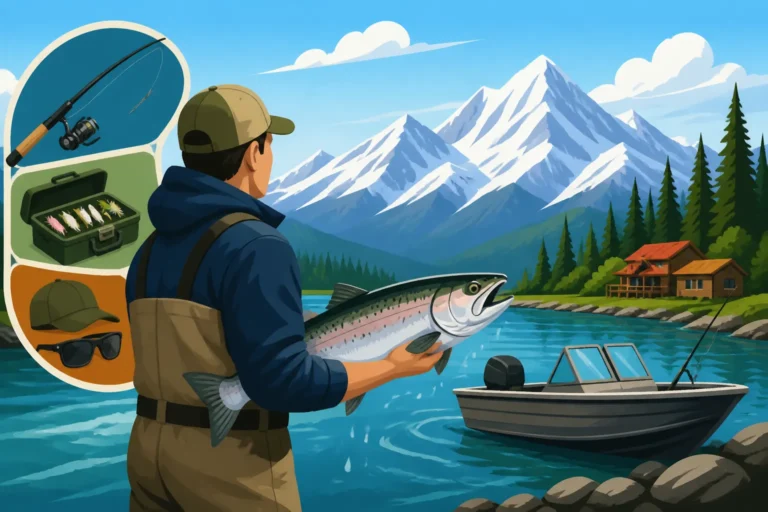
Having the right gear makes a huge difference, especially when battling a strong salmon in a powerful river. Our comprehensive Alaska Fishing Gear and Tackle Guide offers excellent advice.
-
Rods and Reels: For King Salmon, you'll want a heavy-action rod (9-10 feet) paired with a sturdy baitcasting reel spooled with 30-50 lb braided line and a fluorocarbon leader. For sockeye and coho, a medium-heavy spinning or casting rod (8.5-9.5 feet) with 15-30 lb braided line is generally sufficient. For trout and grayling, lighter spinning gear (6-7.5 feet, 6-12 lb line) or a 5-7 weight fly rod will be perfect.
-
Line: Braided line is highly recommended for its strength and sensitivity, especially when fishing in strong currents. Always use a fluorocarbon or monofilament leader appropriate for the species and conditions, as fish can be line-shy.
-
Lures and Bait:
- King Salmon: Large plugs (Kwikfish, Wiggle Warts), Spin-N-Glos with cured salmon roe, large spoons, heavy jigs.
- Sockeye Salmon: Unweighted or lightly weighted sockeye flies (like the Russian River Fly), small plastic beads (8-10mm) in egg colors, small Coho flies.
- Coho Salmon: Medium-sized spinners (Blue Fox Vibrax #4-6), spoons (Pixee Spoon 3/4-1 oz), twitching jigs, cured salmon roe.
- Trout/Dolly Varden: Egg patterns, bead rigs, small streamers, nymphs, small spinners (Panther Martin, Mepps), spoons.
- Arctic Grayling: Small dry flies (elk hair caddis, parachute Adams), nymphs, small spinners.
- Northern Pike: Large spoons (Daredevil, Five of Diamonds), large spinnerbaits, topwater frogs.
-
Terminal Tackle: Essential items include swivels, snap swivels, various weights (pencil lead, slinky weights, split shot), hooks (single barbless often required for salmon, especially in the Talkeetna River management area), and a good pair of pliers or forceps for hook removal.
Dealing with Alaska's Weather
Alaska's weather is famously unpredictable, and Talkeetna is no exception. A sunny morning can quickly turn into a rainy, chilly afternoon. Being prepared is key to staying comfortable and extending your fishing time.
- Layer Up: The golden rule of Alaskan attire. Start with a moisture-wicking base layer, add insulating fleece or wool layers, and top it off with waterproof and windproof outerwear. Even in summer, temperatures can dip, especially on the water or in the early mornings and evenings.
- Waterproofs are Non-Negotiable: A high-quality rain jacket and pants are essential. Don't skimp here; being wet and cold will quickly ruin your day. Rubber boots or waterproof wading boots are also a must for bank fishing.
- Waders: For serious river anglers, chest waders are often necessary to access prime casting positions or for getting in and out of boats in shallow water. Neoprene waders offer more warmth in colder conditions, while breathable waders are better for active fishing in warmer weather.
- Sun Protection: Even on cloudy days, UV rays can be strong, especially with reflection off the water. Bring sunglasses, a hat, and sunscreen.
- Insect Repellent: Mosquitoes and other biting insects can be formidable opponents, particularly in July and August. Pack plenty of strong repellent (DEET-based is often most effective).
Navigating Regulations and Local Considerations
Fishing in Alaska means being acutely aware of the rules. Regulations can change quickly, and local practices often differ from what you might be used to elsewhere.
Understanding Alaska Fishing Regulations
Alaska has some of the most complex yet crucial fishing regulations in the world, designed to protect its precious fisheries.
- Fishing License: Every angler aged 16 or older needs an Alaska Fishing License: Complete Guide. Non-residents have several options, including 1-day, 3-day, 7-day, 14-day, and annual licenses. You can purchase these online or from local vendors in Talkeetna.
- King Salmon Stamp: If you plan to target or retain King Salmon, a King Salmon Stamp is required in addition to your regular license. This applies to both residents and non-residents.
- Harvest Record Card: This card is essential for recording your catch of certain species, primarily King Salmon and sometimes specific runs of sockeye (like on the Kenai River, though less relevant for Talkeetna unless an emergency order specifies it). Ensure you understand how to fill out this card accurately.
- Emergency Orders: The Alaska Department of Fish and Game (ADF&G) frequently issues emergency orders that can close fisheries, change bag limits, or alter legal gear types, sometimes with very little notice. This is especially common for King Salmon runs. Always How to Check Alaska Emergency Orders Before Fishing via the ADF&G website or local offices/charters. Ignoring these can lead to hefty fines or worse. Our guide to Alaska Fishing Regulations Explained breaks down the complexities.
Guided vs. Unguided Fishing
Deciding whether to hire a guide can significantly impact your Talkeetna fishing experience.
-
Guided Fishing: For many visitors, especially those new to Alaska or fishing the powerful rivers, a guided trip is highly recommended. Local guides possess invaluable knowledge of the rivers, fish movements, and effective techniques. They provide all the necessary gear, safe transportation, and help with fish processing. A good guide can put you on fish when you might otherwise struggle, maximizing your limited time. You can easily find and book reputable local guides through platforms like FishingBooker, which provides reviews and pricing to help you choose. Booking in advance is highly advisable, especially for peak salmon seasons. When looking for guided fishing, options like those found on FishingBooker can streamline your planning process, letting you compare various operators directly out of Talkeetna and its surrounding areas. Many guides operating in the Talkeetna/Susitna region specialize in specific species or techniques, so you can tailor your experience. Checking FishingBooker for guides means you can see exactly what they offer, from half-day trips targeting trout to full-day excursions for salmon.
-
Unguided Fishing: If you have your own boat, gear, and experience with river fishing, unguided fishing offers more flexibility and can be more cost-effective. However, navigating the Susitna and Talkeetna Rivers can be challenging due to shifting sandbars, strong currents, and braided channels. It requires a good understanding of boat handling and local knowledge. Bank fishing opportunities exist around Talkeetna, but prime spots can get crowded, especially during peak sockeye runs. If you choose the unguided route, always prioritize safety and let someone know your float plan.
Respecting the Environment and Wildlife
Alaska's wild beauty is fragile, and it's our responsibility as anglers to protect it.
- Leave No Trace: Pack out everything you pack in. Dispose of fish waste properly (never on the bank near public access points). Minimize your impact on the delicate riverbanks.
- Bear Safety: Talkeetna is bear country. Both black and brown bears frequent river corridors, drawn by salmon. Carry bear spray, know how to use it, and make noise while walking to avoid surprising a bear. Store food and fish securely, preferably in bear-resistant containers or hung from trees. Never approach or feed wildlife.
- Catch-and-Release Best Practices: For species you're not keeping (or if bag limits are met), practice ethical catch-and-release. Minimize handling time, keep fish in the water as much as possible, and use barbless hooks for easier removal. Release fish gently into the current.
Disclaimer
The information provided in this guide is for general informational purposes only and is subject to change. Fishing regulations in Alaska are complex and can be updated frequently by the Alaska Department of Fish and Game (ADF&G) through emergency orders. Always consult the official ADF&G regulations booklet and check for current emergency orders before engaging in any fishing activities. This guide does not constitute legal advice regarding fishing regulations.