Alaska Drift Boat vs Power Boat Charters
Deciding on the perfect Alaska fishing charter can feel like navigating a maze, especially when you're faced with options like drift boats and power boats. Many anglers arrive in the Last Frontier with a dream of catching a trophy salmon or a monster halibut, only to realize they don't know which vessel best suits their vision, leading to uncertainty and potential disappointment. This comprehensive guide is designed to cut through that confusion, giving you a clear understanding of the unique experiences each boat type offers so you can confidently choose the right charter for your unforgettable Alaska adventure.
Understanding Drift Boat Charters in Alaska
Drift boat charters offer a timeless, intimate way to experience Alaska's pristine rivers. These specialized boats are designed to float silently downstream, guided by an experienced oarsman, providing anglers with a unique connection to the water and the wilderness around them. It's an experience that harkens back to traditional river fishing, prioritizing stealth, precision, and an unhurried pace.
The Drift Boat Experience: Serenity and Stealth
Imagine gliding almost silently over crystal-clear waters, the only sounds being the gentle dip of oars, the rush of the river, and the occasional call of a bald eagle overhead. That's the hallmark of a drift boat experience. These boats are typically open, allowing for unobstructed views and a feeling of immersion in nature. Because they don't rely on noisy motors for movement during fishing, they minimize disturbance to the fish, often allowing anglers to get remarkably close to prime fishing lies without spooking their quarry. It’s less about covering vast distances quickly and more about meticulously working a section of river, focusing on quality over sheer quantity of water covered.
For many, the appeal of a drift boat lies in this tranquil ambiance. It's a chance to slow down, absorb the breathtaking scenery, and truly concentrate on the nuances of river fishing. You might find yourself drifting past towering spruce trees, seeing salmon finning in shallow gravel beds, or spotting moose grazing along the riverbanks. This serene environment is not just pleasant; it's a crucial advantage, particularly when targeting wary fish like salmon or trout in clear, slow-moving sections of a river.
Ideal Fishing Scenarios for Drift Boats
Drift boats truly shine in specific river environments and for particular fishing styles. They are the workhorses of many of Alaska's most renowned salmon and trout streams, particularly those with moderate flows and accessible banks. The Kenai River, especially sections upriver from Soldotna, and the Kasilof River are classic examples where drift boats are a common sight, expertly navigating the currents. They excel in situations where stealth and precise lure or fly presentation are paramount.
Fly anglers, in particular, often gravitate towards drift boats. The boat’s slow, controlled drift allows for perfect casting opportunities to specific seams, eddies, and riffles where fish are holding. It’s also fantastic for back-bouncing or drift fishing with conventional gear, presenting bait or lures naturally along the river bottom. When targeting a specific run of sockeye salmon or trying to entice a wary rainbow trout, the ability to quietly approach and methodically fish a stretch of water is invaluable. Furthermore, if you're looking to fish smaller, more intimate rivers or stretches that are inaccessible to larger, motorized vessels, a drift boat is often the only way to go, offering an exclusive feel to your fishing excursion.
Advantages and Limitations of Drift Boat Fishing
Like any specialized tool, drift boats come with a distinct set of advantages and limitations that are important to consider. On the upside, their quiet operation is perhaps the biggest draw, allowing for unparalleled stealth and a peaceful fishing environment. This quiet approach often leads to more natural presentations and less pressured fish, potentially increasing your hook-up rates, especially in popular areas. Drift boats can also access shallower waters and tighter channels that power boats might struggle with, opening up more untouched fishing spots. They offer a very stable fishing platform for casting, whether you're fly fishing or spin fishing, and the guide's control with the oars means you're almost always in the perfect position to make your next cast.
However, drift boats aren't without their drawbacks. Their range is inherently limited by the river's flow and access points. You're typically fishing one stretch of river, drifting from an upstream put-in to a downstream take-out. This means you can't quickly relocate if the fishing is slow in a particular area, unlike a power boat that can zip to another spot. Weather can also be a more significant factor; cold, windy, or rainy days can feel more exposed in an open drift boat, although proper rain gear and layering can mitigate this. Finally, capacity is generally smaller, usually accommodating two to three anglers plus the guide, making them less suitable for larger groups or families wanting to fish together in one boat. Understanding these trade-offs is key to setting realistic expectations for your Alaska fishing trip.
Exploring Power Boat Charters in Alaska
Power boat charters, on the other hand, offer a different flavor of Alaska fishing adventure, prioritizing speed, range, and versatility. These vessels, equipped with powerful outboard or jet motors, allow anglers to cover significant distances, fight strong currents, and explore a wider array of fishing grounds, from vast river systems to expansive saltwater bays.
The Power Boat Experience: Speed and Versatility
Stepping onto an Alaska fishing charter power boat means embracing a dynamic and efficient fishing experience. These boats can range from rugged jet boats designed for navigating shallow, braided rivers to larger V-hull ocean vessels built to tackle the swells of the Gulf of Alaska. The defining characteristic is their ability to move quickly and decisively across the water, maximizing your time with lines in the water. This speed isn't just about getting to the fishing grounds faster; it also means your guide can react to real-time fishing reports, relocate to hotter spots, or adapt to changing conditions much more readily.
The versatility of power boats is also a huge draw. A single charter might involve a thrilling ride upstream to a remote fishing hole, followed by trolling productive channels, and then anchoring in an eddy to cast. They are designed to handle larger water bodies and more challenging conditions than drift boats, offering a more robust platform. While the hum of a motor is certainly present, modern outboards are quieter than ever, and for many anglers, the trade-off for increased access and opportunity is well worth it. These charters often feel like a full-service expedition, where the boat itself is a key part of the adventure, ferrying you to diverse and productive waters.
Prime Fishing Opportunities with Power Boats
Power boats truly come into their own when the goal is to cover expansive territories, fish larger rivers with strong currents, or venture into the saltwater for species like halibut and lingcod. On big rivers like the lower Kenai River or the Susitna River, power boats, especially jet boats, are essential for navigating miles of braids and powerful flows, allowing access to productive salmon runs that would be unreachable by drift boat. They excel at trolling techniques, where covering a lot of water with lures or bait is key to intercepting migratory fish. This is particularly effective for targeting king salmon, silver salmon, or even large rainbow trout in larger systems.
For those dreaming of ocean fishing, a power boat is your only option. From Homer's Kachemak Bay to the rich waters off Seward and Sitka, these larger vessels transport anglers to prime halibut fishing grounds, rockfish reefs, and offshore salmon runs. They provide a stable platform for bottom fishing with heavy jigs or bait, and can swiftly move between spots, such as a deep rock pile for lingcod and then a shallower bank for rockfish. Whether you're chasing the legendary "barn door" halibut in the deep fjords or trying to fill your cooler with coho salmon on the open ocean, a power boat is the indispensable tool for these thrilling saltwater expeditions. You can learn more about specific regulations for these kinds of trips by reading our guide on Alaska Halibut Charter Regulations Explained.
Benefits and Drawbacks of Power Boat Fishing
Power boat charters offer a host of benefits that make them appealing to many anglers. The most obvious is the ability to cover significant distances rapidly, maximizing your fishing time by getting you to the best spots faster and allowing for quick moves if a particular area isn't producing. This increased range often means accessing more diverse fishing environments, from river sections to saltwater, and a wider variety of target species. Power boats typically have a larger capacity than drift boats, making them a great choice for bigger groups, families, or those who prefer more space and amenities on board. They often provide more protection from the elements with enclosed or partially enclosed cabins, offering a refuge from wind, rain, or sun, which can be a real blessing on a long day in Alaska.
However, there are also some inherent drawbacks. The noise of a motor, even a quiet one, can be disruptive to the serene wilderness experience that some anglers seek. While highly effective, the speed and power can sometimes feel less "traditional" than a silent drift. In certain very shallow or sensitive river sections, power boats might be restricted or less effective due to prop wash or noise, and they might not offer the same level of stealth as a drift boat for extremely wary fish. The cost can also sometimes be higher due to fuel consumption and larger boat maintenance. Ultimately, the choice depends on what kind of fishing adventure you prioritize – the quiet intimacy of a drift or the efficient reach of a power boat.
Key Differences: Drift Boat vs. Power Boat Experiences
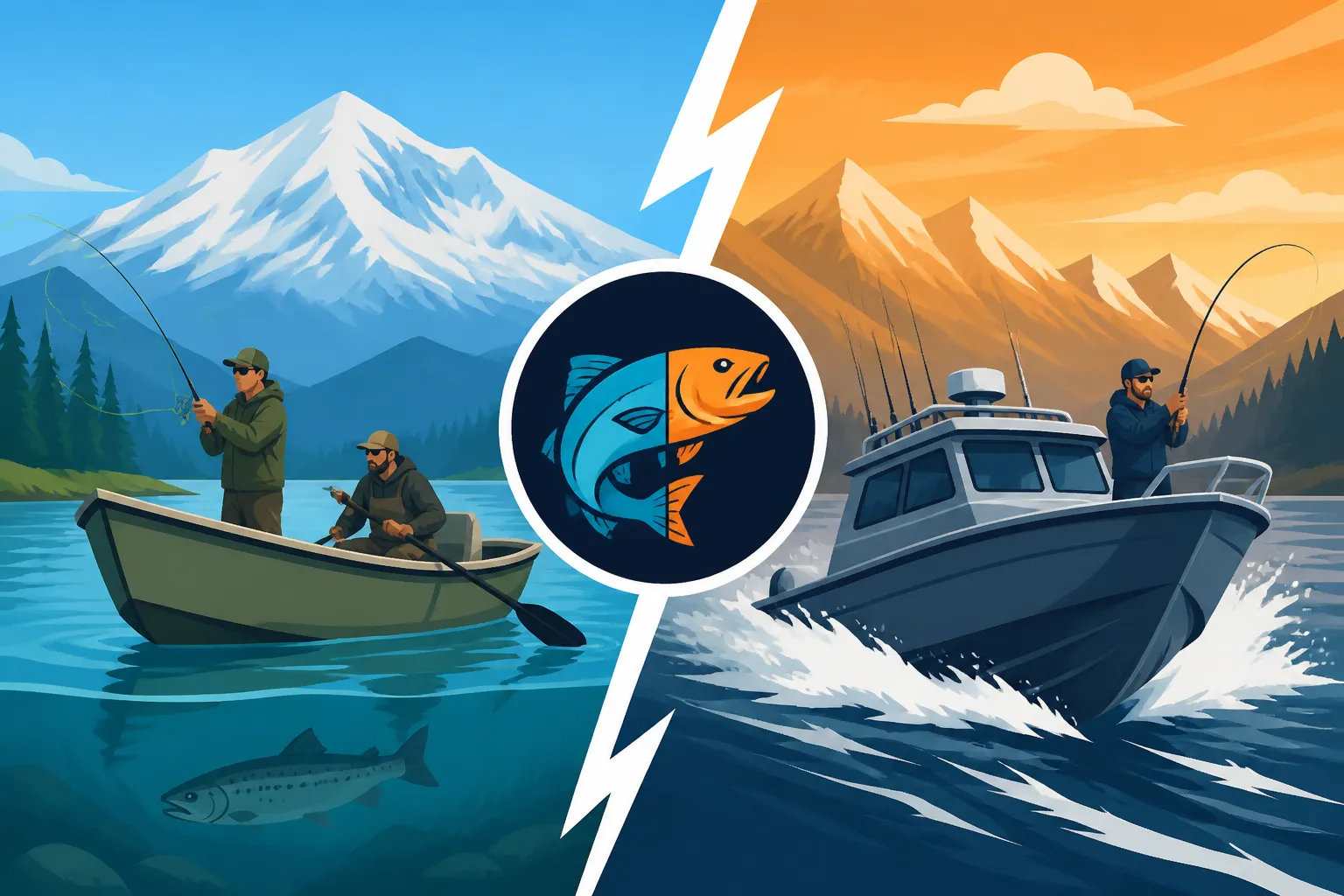
When trying to decide between a drift boat and a power boat, it really comes down to understanding the fundamental differences in the fishing experience they offer. It’s not just about the motor; it’s about how that distinction impacts everything from the atmosphere of your trip to the methods you’ll employ to catch fish. Thinking through these core contrasts will help you align your expectations with the reality of your chosen charter.
Noise, Speed, and Reach
The contrast in noise, speed, and overall reach is arguably the most significant differentiator. A drift boat offers an almost silent journey downriver. This quietness is not just for peace of mind; it's a strategic advantage, allowing for a stealthy approach to fish without alerting them to your presence. The pace is slow and deliberate, dictated by the river's current and the guide's expert rowing, making it ideal for meticulously working every promising spot. However, this also means limited range; you'll typically fish one stretch of river from a launch point to a takeout, usually covering a few miles.
Power boats, conversely, bring speed and the ability to cover vast distances. While the motor produces sound, modern engines are far quieter than those of yesteryear, and many anglers quickly get used to it. The key benefit is the power to quickly move between multiple fishing spots, run upstream against strong currents, or navigate large bodies of water. This expanded reach allows guides to chase active fish, respond to real-time bite reports, and explore a much larger territory. If the fish aren't biting in one spot, a power boat can get you to another productive area in minutes, something a drift boat simply cannot do. This efficiency can be a game-changer when you have limited time on the water.
Fishing Techniques and Target Species
The type of boat often dictates the most effective fishing techniques and, by extension, the species you're likely to target. Drift boats excel in presenting lures, bait, or flies in a natural, unimpeded drift. This makes them superb for back-bouncing, drift fishing with floats, or traditional fly casting, especially when targeting individual fish or small pods in specific river features. Many fly anglers consider drift boats the ultimate platform for chasing rainbow trout, Dolly Varden, or even sockeye and coho salmon in clear river systems where finesse is key. The guide can expertly position the boat for the perfect cast and drift, often allowing for longer, more natural presentations.
Power boats, due to their speed and ability to hold position against currents, open up a wider array of techniques. Trolling, where lines are dragged behind the boat at a controlled speed, becomes highly effective for covering vast stretches of water and intercepting migratory salmon like kings and silvers. They are also ideal for bottom fishing, whether jigging or bait fishing, for species such as halibut, rockfish, and lingcod in deep saltwater environments. On large rivers, power boats are used for back-trolling large plugs or bait presentations, effectively working specific holding lies for king salmon. If you're looking for an active day covering a range of methods and potentially multiple species, a power boat offers that versatility. Our Best Fishing Techniques for Alaska guide delves deeper into these methods.
Comfort, Group Size, and Accessibility
Consideration for comfort, the size of your fishing party, and accessibility is vital for a successful trip. Drift boats are typically smaller, open vessels with bench seating, offering a more rustic and intimate experience. They usually accommodate two to three anglers comfortably, plus the guide. While stable for fishing, getting in and out might require a bit more agility, especially at riverbanks. For solo anglers, couples, or small groups seeking a personal, quiet experience, a drift boat is often perfect.
Power boats, especially larger river sleds or offshore cruisers, generally offer more space and amenities. They can often accommodate four to six anglers, sometimes more, depending on the boat size and type. Many power boats feature cushioned seating, storage compartments, and even enclosed cabins that provide shelter from the elements, which can be a huge bonus on a long day, particularly for those sensitive to cold or sun. Accessibility can also be easier, with stable boarding platforms and more room to move around. For families with children, larger groups, or anglers with mobility concerns, the added space and comfort of a power boat can make a significant difference in their overall enjoyment. If you're bringing a diverse group, considering an Alaska Fishing Charter for Families or Alaska Charter Fishing for Groups might mean leaning towards a power boat.
Choosing the Right Boat for Your Alaska Fishing Goals
Deciding between a drift boat and a power boat isn't about one being inherently "better" than the other; it's about finding the best fit for your personal fishing style, group dynamics, and overall trip aspirations. Alaska offers such diverse angling opportunities that understanding your own preferences is the key to an incredibly rewarding experience.
Matching Boat Type to Your Angling Style
Your preferred angling style is perhaps the most critical factor in this decision. If you're a passionate fly fisher, someone who savors the delicate art of casting a dry fly or drifting an egg pattern, a drift boat is almost certainly your best bet. The quiet approach, the controlled drift, and the guide's ability to position you perfectly for a cast are tailor-made for fly fishing. It’s also fantastic for light tackle spin fishing where precise presentations are valued over power. This immersive, focused approach means you're often targeting individual fish or small groups of fish with finesse. If you appreciate the subtle nuances of river fishing and the meditative flow of a quiet drift, the drift boat experience will resonate deeply.
However, if your style is more about covering water, chasing big fish with powerful gear, or enjoying a variety of techniques throughout the day, a power boat might be more aligned with your preferences. If you love the thrill of trolling for aggressive king salmon or battling a massive halibut from the depths, the power boat provides the platform. It's also excellent for those who prefer bait fishing, jigging, or heavy spin casting across broad sections of river or ocean. If you're more results-oriented and want to maximize your chances of encountering different species or a high volume of fish by rapidly changing locations, the efficiency and versatility of a power boat will likely be a better match for your angling ambition. Our How to Catch King Salmon in Alaska and How to Catch Halibut in Alaska guides offer insights into techniques often associated with each boat type.
Considering Your Group and Trip Expectations
The composition of your fishing party and what everyone expects from the trip should heavily influence your choice. For a romantic getaway, a father-son bonding trip, or a small group of experienced anglers seeking a quiet, focused experience, a drift boat can create unforgettable memories. The intimacy of a drift boat allows for easy conversation and a shared appreciation of the wilderness, making it perfect for those who value the journey as much as the catch.
On the other hand, if you're planning a family vacation with young children, a multi-generational trip, or a larger group of friends, a power boat often offers greater comfort and flexibility. The extra space, potential for sheltered seating, and ease of access can make the experience much more enjoyable for a diverse group. Furthermore, if some members of your party aren't hardcore anglers but want to enjoy the scenery and catch a few fish without intense physical effort, a power boat's ability to troll or anchor in productive spots with less active casting can be a big plus. Think about the overall vibe you want for your trip – serene and focused, or dynamic and diverse – and let that guide your decision.
Location, Time of Year, and Target Fish Species
Alaska's vast geography and distinct seasons mean that location, timing, and your target species play a huge role in determining the ideal boat type. Certain rivers, like the upper Kenai or the Gulkana, are perfectly suited for drift boats, especially during peak sockeye or rainbow trout seasons. These rivers often have regulations that favor drift-only sections or specific gear restrictions that naturally align with drift boat fishing. If you're dreaming of an authentic, non-motorized river experience, these locations paired with a drift boat are the way to go.
Conversely, if your sights are set on the immense king salmon of the lower Kenai River, the vastness of Cook Inlet, or the deep ocean waters for colossal halibut, a power boat is almost always the appropriate, and often necessary, choice. The sheer scale of these fishing grounds demands the speed and capability of a motorized vessel. The time of year also matters; during early or late season when weather can be more unpredictable, the shelter offered by some power boats might be a welcome comfort. Always consult the specific regulations for the area and species you plan to target, as they can sometimes dictate boat or gear types. Our Alaska Fishing Seasons: Month-by-Month Guide can help you pinpoint the best time for your target species and preferred location.
Practical Considerations and Booking Your Charter
Once you've narrowed down your ideal boat type, there are still a few practical considerations to iron out before you can officially book your dream Alaska fishing charter. From understanding the costs involved to asking the right questions, being prepared will ensure a smooth and successful trip.
Cost Implications and Value
The cost of an Alaska fishing charter can vary significantly based on the type of boat, duration of the trip (half-day vs. full-day), number of anglers, and the species you're targeting. Generally, drift boat charters might seem slightly less expensive per person than power boat charters on a river, as they have lower fuel costs and less complex maintenance. However, this isn't always a hard and fast rule, as the expertise of the guide and the exclusivity of the experience can also factor into the price. Power boat charters, especially those venturing into saltwater for halibut or those on large rivers with high fuel consumption, tend to be on the higher end due to operational expenses, larger equipment, and the ability to cover more ground.
When evaluating cost, always look beyond the sticker price. What's included? Most reputable charters will provide all the necessary fishing gear, bait, and tackle. Some might even offer snacks and non-alcoholic beverages. Consider the value you place on factors like comfort, the number of fish you hope to catch, and the overall experience. A slightly more expensive charter that perfectly matches your fishing goals and offers a superior experience can be much better value than a cheaper one that leaves you wanting more. Many anglers find comparing options on platforms like FishingBooker incredibly helpful for understanding average costs and what’s included with different charter types.
What to Ask Your Charter Operator
Before you commit to a booking, having a list of questions ready for your potential charter operator is a smart move. Don't be shy; a good guide will appreciate your thoroughness. Here are some key questions to ask, regardless of whether you're leaning towards a drift or power boat:
- What type of boat do you primarily operate for this trip? (Confirm it aligns with your preference).
- What species will we be targeting, and what techniques will we be using? (Ensure it matches your angling style).
- How many anglers will be on the boat? (Important for comfort and individual attention).
- What is your experience guiding in this specific area/river? (Look for local expertise).
- What gear do you provide, and what should I bring? (Confirm tackle, rain gear, snacks are covered or needed).
- Are fishing licenses and king salmon stamps included or do I need to purchase them separately? (These are often extra, see Do You Need a King Salmon Stamp in Alaska).
- What is your cancellation policy, especially for weather? (Crucial for Alaska's unpredictable conditions).
- How will our catch be handled after the trip? (Processing, packaging, and shipping options are important).
These questions will give you a clear picture of what to expect and help prevent any surprises. Platforms like FishingBooker often have detailed listings and review sections that can answer many of these questions before you even pick up the phone, making the comparison process much easier.
Booking Tips and Brand Integration
Booking your Alaska fishing charter isn't something you want to leave until the last minute, especially if you're planning to visit during peak season (June through August). Reputable charters, particularly those with specialized boats like drift boats, book up months, sometimes a year, in advance. As soon as you have your travel dates solidified, start researching and making your reservations.
When you're ready to book, leverage reliable resources. Online platforms like FishingBooker are excellent for browsing a wide selection of charters, reading reviews from past clients, and comparing boat types, prices, and availability all in one place. You can filter by location (e.g., Homer, Seward, Kenai River), species, and even boat type to find exactly what you're looking for. Always confirm your reservation in writing, and understand the deposit and payment schedule. Remember to account for tips for your guide, as this is standard practice in the industry. By doing your homework and booking early, you’ll secure the best guides and the perfect boat for the Alaska fishing adventure you've been dreaming of. Our guide on How to Book an Alaska Fishing Trip offers more in-depth advice.
| Feature | Drift Boat Charter | Power Boat Charter |
|---|---|---|
| Primary Movement | Oars, propelled by current | Motor (outboard, jet), propelled by engine |
| Noise Level | Very quiet, stealthy | Engine noise present, but modern engines are quieter |
| Speed/Range | Slow, limited to downstream drift (few miles) | Fast, covers large distances, moves upstream |
| Ideal Locations | Moderate-flow rivers (e.g., upper Kenai, Kasilof) | Large rivers, saltwater bays (e.g., lower Kenai, Cook Inlet) |
| Target Species | Salmon (Sockeye, Coho), Rainbow Trout, Dolly Varden | Salmon (King, Coho), Halibut, Rockfish, Lingcod |
| Fishing Styles | Fly fishing, drift fishing, back-bouncing | Trolling, bottom fishing, jigging, back-trolling |
| Group Size | Small (2-3 anglers + guide) | Larger (4-6+ anglers + guide) |
| Comfort/Shelter | Open boat, exposed to elements | Often offers more space, potential for sheltered cabin |
| Experience | Intimate, traditional, tranquil, immersive | Dynamic, efficient, versatile, expansive |
Disclaimer
Please note that fishing regulations in Alaska can change frequently due to emergency orders and conservation efforts. Always verify the latest rules and regulations with the Alaska Department of Fish and Game (ADF&G) or your charter operator before heading out on your trip. This guide provides general information and should not be considered a substitute for official regulations or professional advice.