How to Legally Snag in Alaska Terminal Fisheries
It's incredibly frustrating when you hear whispers about "snagging" in Alaska fishing, often accompanied by stern warnings that it's illegal, yet you see people doing it openly. This confusion can leave you feeling lost and unsure, especially when you're just trying to understand the rules of the incredibly diverse Alaskan fisheries. This guide is here to cut through the noise, explaining exactly when and where snagging is a completely legal and permissible fishing technique in Alaska's designated terminal fisheries.
Understanding What "Snagging" Truly Means in Alaska
Let's clear the air right off the bat because the term "snagging" carries a lot of baggage. In general, "snagging" refers to intentionally hooking a fish anywhere other than inside its mouth. For most of Alaska's sport fisheries, this is absolutely illegal and will lead to hefty fines and a ruined trip. However, Alaska's fishing regulations are nuanced, and there are very specific, designated areas and times where snagging is not only allowed but often encouraged as a harvest method. These are typically called "terminal fisheries."
The confusion often stems from the difference between accidental foul-hooking and intentional snagging. If you're fishing with legal gear and a fish accidentally gets hooked outside the mouth, that's usually considered a foul-hooked fish. Depending on the species and regulation, you might be required to release it immediately. Intentional snagging, on the other hand, is the deliberate act of trying to impale a fish anywhere on its body with a hook. This distinction is critical, and it's the intention and location that determine its legality.
It's also important to distinguish snagging from "flossing," a technique often used for sockeye salmon. Flossing involves casting a weighted line with a bare hook (or a small fly) upstream, letting it drift down until the line passes through the fish's open mouth, and then setting the hook as it exits. While the hook might end up outside the mouth, the intent is for the line to pass through the mouth. This is a highly effective and legal method in many rivers during sockeye runs, though it can look similar to snagging to an untrained eye. The key takeaway here is that "snagging" has a very specific legal definition in Alaska, and when we talk about legal snagging, we mean situations where the Alaska Department of Fish and Game (ADF&G) has explicitly authorized it.
Where and When Snagging is Permitted in Alaska
The vast majority of legal snagging opportunities in Alaska occur in what are known as "terminal fisheries." These are specific areas, usually close to a hatchery release site or in the lower reaches of a river system where fish are nearing the end of their migratory journey and are no longer actively feeding. The fish in these areas are often highly concentrated, have a limited lifespan left, and are typically destined for harvest or spawning. Allowing snagging in these controlled environments helps manage populations, particularly hatchery-produced fish, and provides harvest opportunities that wouldn't otherwise exist if traditional mouth-hooking were the only legal method.
One of the most well-known spots for legal snagging is Ship Creek in Anchorage, especially for king salmon and silver salmon during their runs. Here, you'll see anglers shoulder-to-shoulder, employing snagging techniques to land their catch. The regulations for Ship Creek are often adjusted via Alaska Fishing Emergency Orders Explained, so it’s vital to check the latest updates before heading out. Similarly, in other localized areas, particularly those associated with enhanced stock or late-season runs, ADF&G may open specific sections of rivers to snagging for species like coho (silver) salmon. These decisions are made based on projected escapement goals, hatchery returns, and overall fish abundance.
Examples of Terminal Fisheries and Snagging Opportunities
To give you a clearer picture, here are some hypothetical but common scenarios where snagging might be explicitly allowed:
- Ship Creek, Anchorage: During designated king salmon and coho salmon seasons, typically in late spring and late summer/early fall, portions of Ship Creek are often opened to snagging. This is a classic example of a "combat fishing" scenario where the fish are thick, and the method allows for efficient harvest. You’ll see anglers using heavy gear to haul in fish destined for the plate. You can find detailed rules by searching for Alaska Ship Creek Snagging Rules.
- Copper River Personal Use Dipnetting Areas (Chitina): While primarily known for dipnetting, which is a different personal use fishery, the spirit of harvesting large numbers of non-feeding, returning salmon in specific terminal areas is similar. Though not "snagging" in the traditional rod and reel sense, these fisheries exemplify mass harvest in terminal zones.
- Specific Lake Outlets or Tidal Areas: Less common but still possible, some regulations might allow snagging in very localized spots, such as certain lake outlets or tidal areas where salmon are stacked up, waiting to enter a freshwater system, and are no longer actively feeding. These are almost always governed by very specific Alaska Fishing Regulations by Region and specific dates.
It's absolutely imperative to understand that these opportunities are the exception, not the rule. If a regulation booklet or emergency order doesn't explicitly state that snagging is allowed in a particular area for a specific species during a certain time, then it is illegal. Never assume. Always check the current year's sport fishing regulations booklet and any active emergency orders before you cast a line. This will save you from potential Alaska Fishing Violations and Fines.
Checking Regulations for Snagging
The ADF&G website is your best friend here. They publish annual sport fishing regulation booklets for different regions, and equally important are the daily or weekly emergency orders. These orders can change regulations on a dime, closing or opening fisheries, modifying bag limits, or, yes, even allowing snagging in new areas or at new times.
Here's a simple table outlining typical scenarios for legal snagging in Alaska:
| Location Example | Target Species | Typical Season | Specific Conditions for Snagging |
|---|---|---|---|
| Ship Creek, Anchorage | King Salmon, Coho | May-June (King), Aug-Sept (Coho) | Explicitly opened by ADF&G Emergency Order; Check current regulations. |
| Valdez Terminal Areas | Coho Salmon | Late August – September | Specific areas and dates defined by emergency order. |
| Other Hatchery Release Zones | Various Salmon | Dependent on run timing | Highly localized, always requires specific ADF&G authorization. |
Remember, this table is illustrative. Always consult the official ADF&G resources for the most current and accurate information. The phrase "check current regulations" cannot be overstressed when it comes to snagging.
The Gear and Technique for Legal Snagging
When snagging is legal, it’s a method designed for efficiency and brute force, not finesse. You’re not trying to entice a bite; you’re trying to physically hook a large, powerful fish anywhere on its body. This means your gear needs to be robust, and your technique assertive.
Essential Gear for Snagging
You'll want to gear up specifically for this type of fishing. Forget your ultralight trout rod; this is heavy-duty work.
- Rod: A heavy to extra-heavy action spinning or baitcasting rod, typically 8 to 10 feet in length, is ideal. You need the backbone to cast heavy tackle and to muscle in large, often dead-weight, fish. Brands like Ugly Stik or Penn often make affordable, durable rods that stand up to this kind of abuse. You can find a good selection of these heavy-duty rods on Amazon.
- Reel: A large, sturdy spinning reel (size 6000-8000) or a robust baitcasting reel capable of holding a significant amount of heavy line. It needs a good drag system, though often with snagging, you're not playing the fish as much as simply pulling it in.
- Line: Opt for strong braided line, at least 30 to 50 lb test, or even heavier for king salmon. Braided line has minimal stretch, providing excellent sensitivity to feel a fish, and the strength needed to haul it in. Monofilament or fluorocarbon in similar breaking strengths can also work, but braid is generally preferred. Brands like PowerPro or Spiderwire are popular choices and are readily available on Amazon.
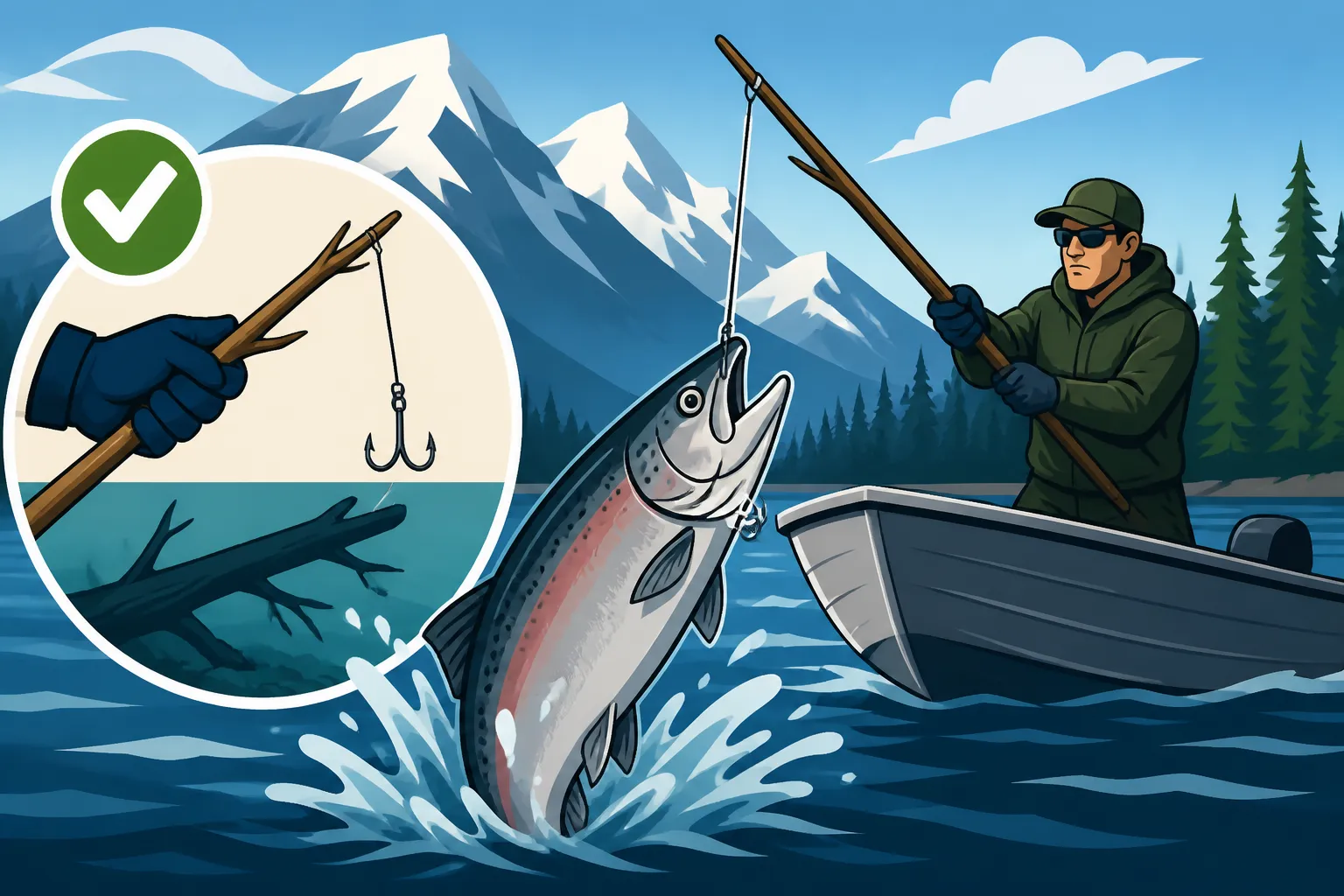
- Hooks: This is where it gets interesting. While typically single-point hooks are mandatory or preferred in many Alaskan fisheries, snagging regulations often permit large treble hooks. Sizes 2/0 to 5/0 are common. Some regulations might even allow weighted treble hooks, or you might add a separate weight above a large, unweighted single or treble hook to get it down to the fish. Always verify hook type and size restrictions in the specific emergency order.
- Weights: Depending on the current and depth, you might need heavy lead weights (often 1-4 ounces) to get your hook down to where the fish are concentrated. Slinky weights or pyramid sinkers are common.
- Accessories: A sturdy net or a gaff is absolutely essential for landing fish quickly and safely, especially large kings or coho that are thrashing. Heavy-duty gloves can protect your hands. And, of course, a proper cooler or fish bag to store your catch once harvested. All these items, from nets to gloves to coolers, are easily found on Amazon.
The Technique of Snagging
The actual technique involves a distinct "sweep and jerk" motion, designed to cover a wide area and increase your chances of hooking a fish.
- Cast Upstream: Make a long cast directly upstream or slightly up-current from where you believe the fish are congregated.
- Let it Sink: Allow your weight and hook setup to sink to the appropriate depth, often near the bottom where salmon tend to hold.
- The Sweep: Once the line is tight and the tackle is at depth, perform a strong, sweeping motion with your rod, pulling the hook horizontally through the water column. Think of it like a giant retrieve that covers a wide arc.
- The Jerk/Set: At the end of the sweep, quickly drop your rod tip slightly and then jerk it upwards or sideways to "set" the hook. This sharp motion is intended to impale any fish in the hook's path.
- Repeat: Reel in the slack and repeat the sweep and jerk motion as your tackle drifts downstream.
When you feel a sudden heavy resistance, it's likely you've snagged a fish. Be prepared for a powerful fight, even from a fish that isn't actively feeding, as their sheer size and instinct to escape can make for a formidable struggle. It’s a physical battle, and you'll want to quickly bring the fish to shore or to a landing net to minimize stress on the fish and expedite the harvest. Landing a large, thrashing fish in a crowded terminal fishery can be quite an experience!
Ethical Considerations and Responsible Snagging
Even when snagging is explicitly legal, it's a technique that often draws criticism due to its perceived lack of sportiness. However, within the context of specific terminal fisheries, it serves a valid purpose in resource management and harvest. As responsible anglers, even when snagging, we have a duty to adhere to ethical practices.
First and foremost, adhere strictly to bag limits and possession limits. Just because snagging is allowed doesn't mean it's a free-for-all. Alaska Fishing Limits and Bag Limits Explained still apply, and in many terminal fisheries, these limits are quite generous, leading to quick fulfillment. Once you've reached your limit, stop fishing for that species in that area. Overharvesting or wasting fish is not only illegal but deeply unethical.
Secondly, handle your catch respectfully. Fish that are snagged are often near the end of their life cycle, but they still deserve quick and humane dispatch. Bleed your fish immediately to ensure the best meat quality. If you accidentally snag a fish that is not within the legal parameters (e.g., wrong species, undersized, or a species not permitted for snagging at that time), release it with as little harm as possible. This is where a sharp, single hook can sometimes be less damaging than a large treble, even if trebles are allowed.
Finally, be mindful of other anglers and the environment. Terminal fisheries can be incredibly crowded, often leading to what's affectionately (or derisively) called "combat fishing." Maintain a respectful distance where possible, avoid casting over other lines, and be patient. Littering is unacceptable. Pack out everything you pack in, and perhaps even a little extra. Respect the fish, the river, and your fellow anglers. These are fundamental tenets of fishing in Alaska, whether you're fly-fishing for trout or legally snagging salmon.
Disclaimer
Please be aware that fishing regulations in Alaska, particularly those related to specific techniques like snagging, can change frequently due to emergency orders from the Alaska Department of Fish and Game (ADF&G). It is your sole responsibility to check the most current regulations and emergency orders before engaging in any fishing activity. This article provides general information and should not be considered a substitute for official ADF&G regulations.