Alaska Halibut Size Limit Explained
Alaska halibut size limits and reverse slot rules differ between guided charter trips and unguided angling across various regions.
Fish legal, fish confident.
License types and fees, season dates, bag and size limits, special regulations, and how to stay compliant on local waters.
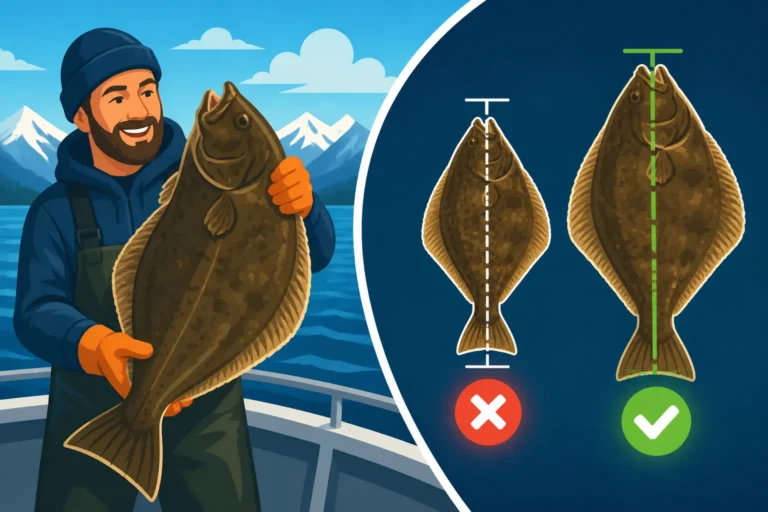
Alaska halibut size limits and reverse slot rules differ between guided charter trips and unguided angling across various regions.

Independent Alaska halibut rules outline specific daily bag limits, size restrictions, and non-resident annual limits for unguided anglers.

Alaska halibut daily limits for charter anglers explain reverse slot sizes, Thursday closures, and current regional bag restrictions for your trip.
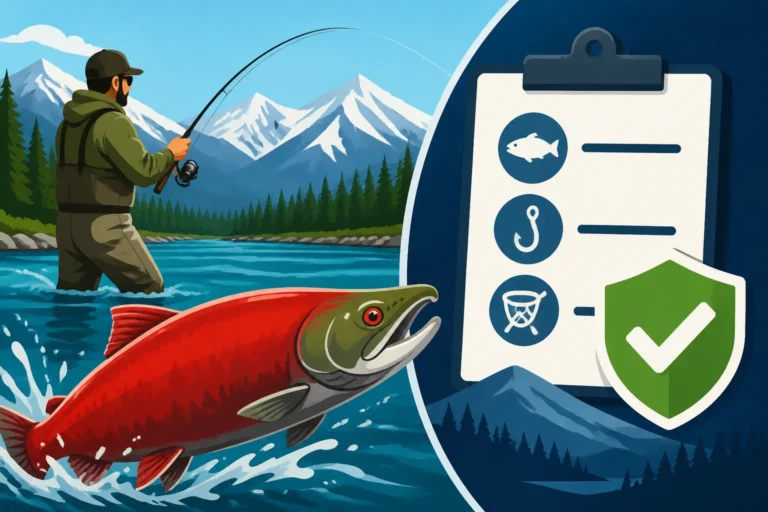
Alaska Kenai River sockeye recording rules explain how anglers must legally document harvested salmon on their physical harvest record card.

Harvest record documentation for King Salmon in Alaska explains legal reporting requirements, exact dates, precise locations, and retained fish limits.
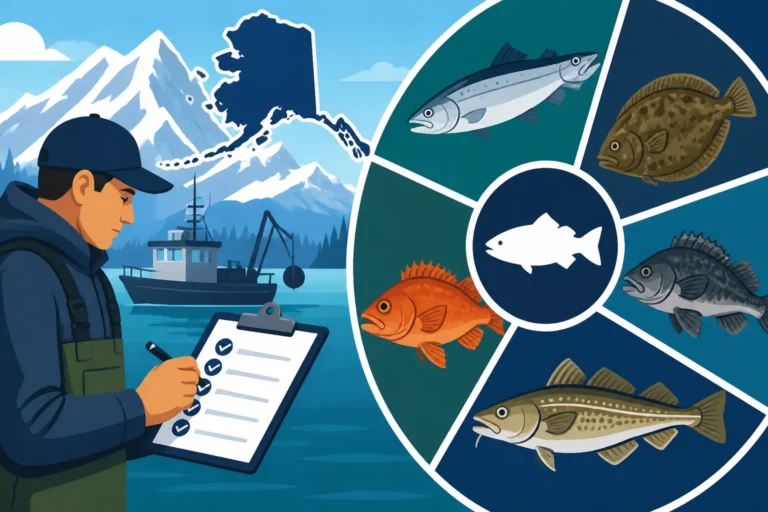
Alaska fishing regulations require anglers to record King Salmon, Steelhead, and Halibut on their Alaska Harvest Record Card immediately after retention.
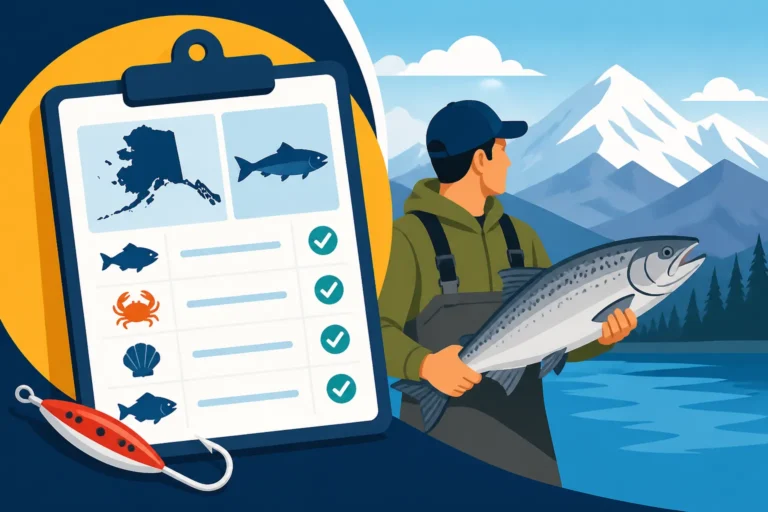
The Alaska Harvest Record Card tracks the capture of sensitive species like King Salmon and Steelhead to maintain sustainable fisheries.

Non-resident anglers in Alaska must purchase a King Salmon Stamp to legally fish for Chinook salmon, with fees ranging from fifteen to one hundred dollars.

Alaska king salmon stamp requirements apply when fishing for or retaining chinook salmon, unless you are under sixteen years old.

The Alaska King Salmon Stamp costs ten dollars for residents, while non-resident fees range from fifteen to seventy-five dollars depending on duration.