How to Tell a Dolly Varden from an Arctic Char
Arctic Char and Dolly Varden identification techniques, body shapes, spot patterns, and habitats help anglers distinguish these similar fish.
Know what’s on the line.
Gamefish and panfish profiles — identification, behavior, feeding habits, and species-specific strategies for every catch.
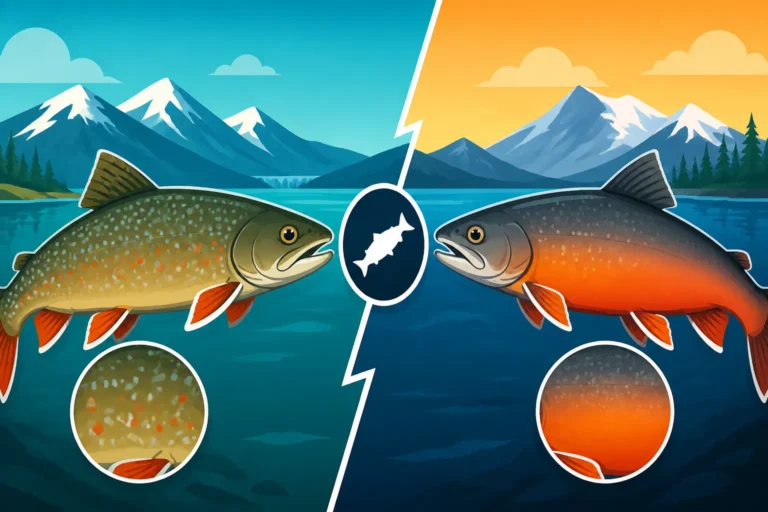
Arctic Char and Dolly Varden identification techniques, body shapes, spot patterns, and habitats help anglers distinguish these similar fish.
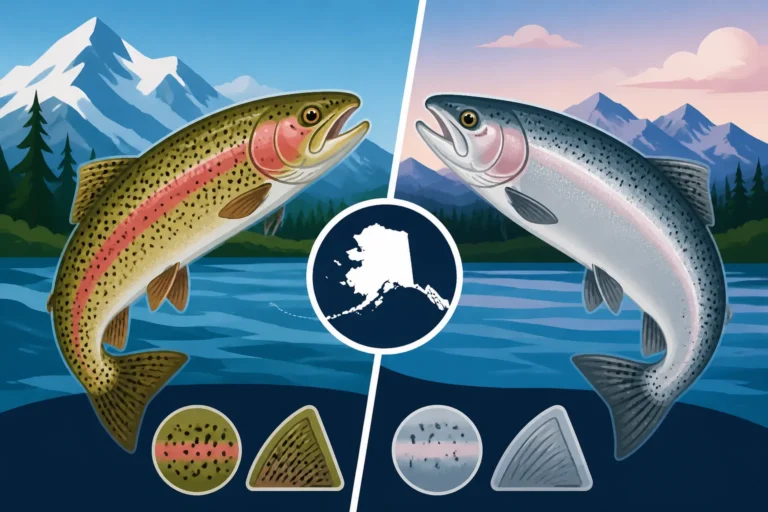
Rainbow trout and steelhead identification markers, physical differences, and behavioral insights help anglers tell the two similar fish apart.
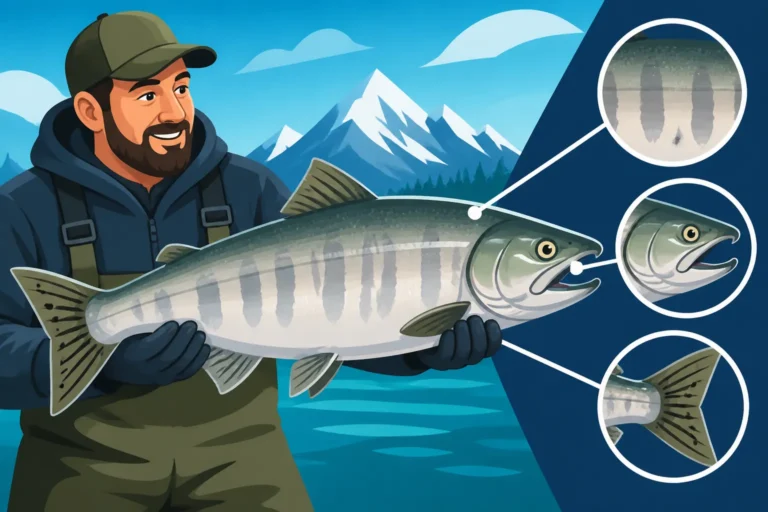
Chum salmon identification involves examining specific physical traits like canine-like teeth, tiger stripe spawning patterns, and broad tails.
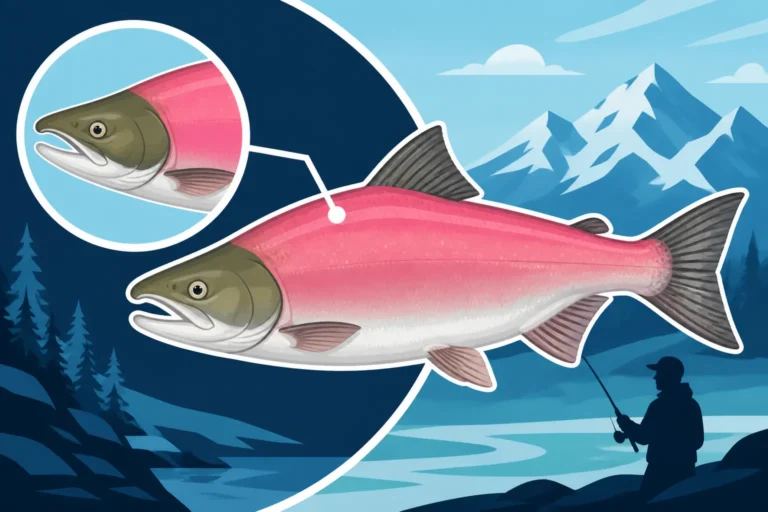
Pink salmon physical characteristics, including size, body shape, and tail spotting, help anglers correctly identify catches in Alaska waters.
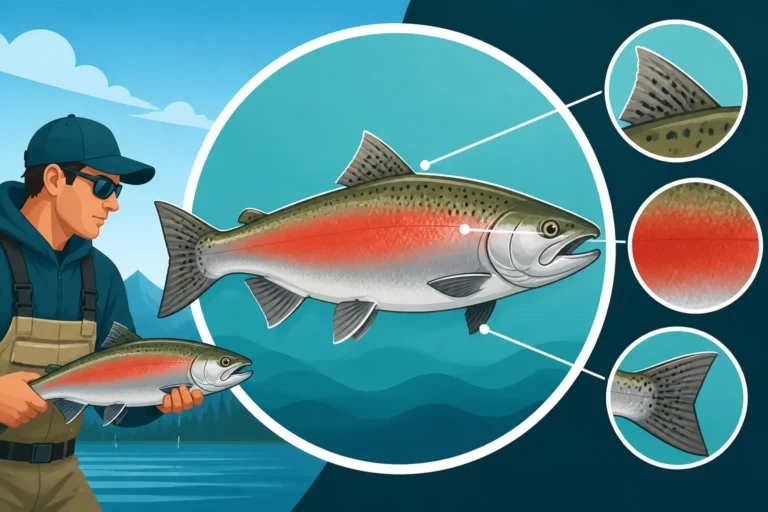
Coho salmon identification details, including white gum lines and tail spotting patterns, compared with other Alaska salmon species.
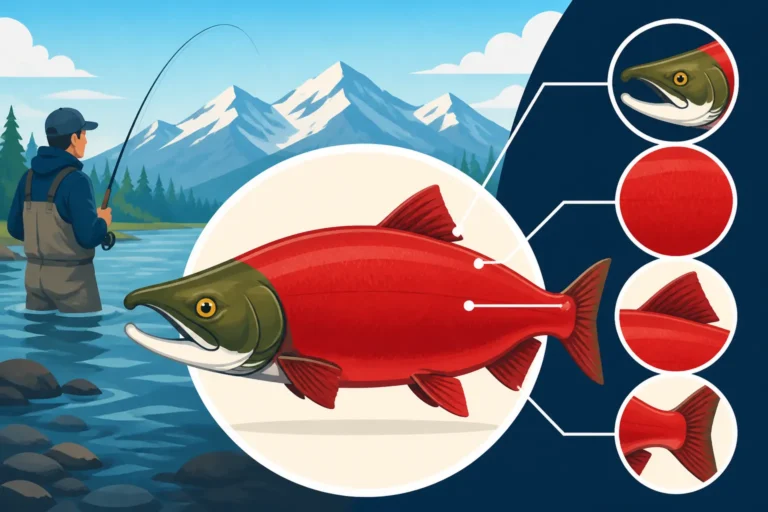
Accurate sockeye salmon identification explains physical characteristics, mouth features, and differences from king, coho, pink, and chum salmon in Alaska.
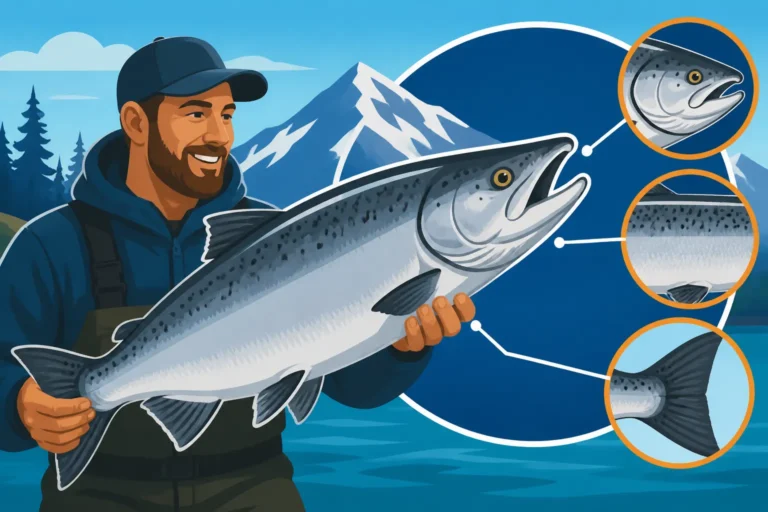
Distinct physical traits, tail spots, and dark gums help anglers identify King salmon, ensuring compliance with fishing regulations.

Alaska salmon spawning timelines explain the specific seasonal windows for King, Sockeye, Coho, Pink, and Chum salmon across freshwater regions.
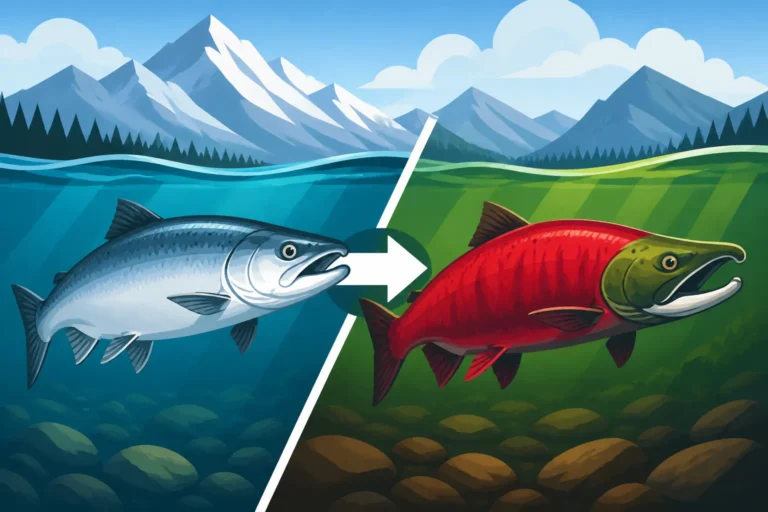
Alaska salmon biological color changes and physical transformations occur as they transition from ocean life to freshwater spawning grounds.
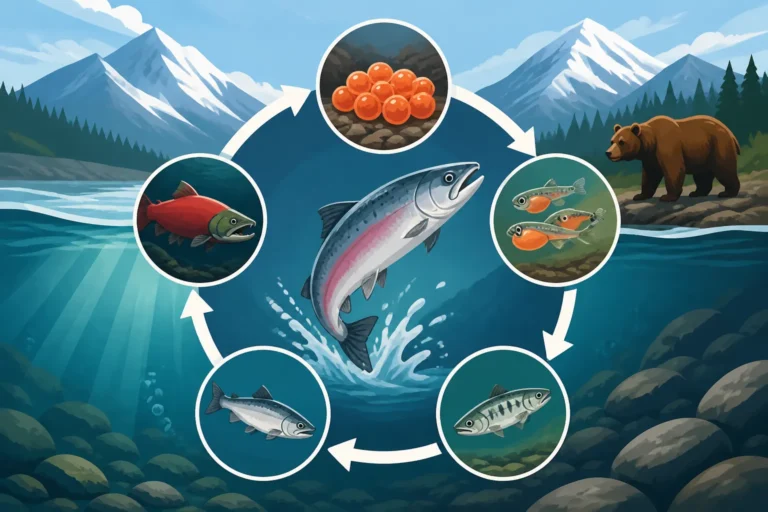
The Alaska salmon life cycle details each developmental stage, from tiny eggs in river gravel to majestic adult ocean wanderers.