Alaska Fishing Regulations for Kids Under 16
There's nothing quite like the excitement of introducing a child to the magic of fishing, especially in a place as incredible as Alaska. But for many parents and guardians, the regulations can feel like a tangled mess, leaving you wondering: Do I need a fishing license for my child in Alaska? It's a valid concern, and navigating the nuances can be intimidating. This guide is here to untangle those lines for you, explaining the specific Alaska fishing regulations for kids under 16, so you can focus on making unforgettable memories on the water without worrying about breaking any rules.
The Basics: Do Kids Really Need a Fishing License in Alaska?
Let's cut right to the chase because this is often the biggest question on every parent's mind when planning an Alaska fishing adventure. You're trying to calculate costs, plan logistics, and wonder if you need to jump through bureaucratic hoops for your little ones. The good news is, Alaska makes it incredibly simple for young anglers, which is a huge relief for families.
The Golden Rule: Age-Based Exemption
Here's the official word, and it’s music to many ears: in Alaska, residents and non-residents under the age of 16 are not required to purchase or possess a sport fishing license. That's right! If your child is 15 years old or younger, they can cast their line into Alaska's abundant waters without needing to buy a license. This policy is designed to encourage youth participation in outdoor activities and make family fishing trips more accessible, a sentiment many other states could learn from.
Imagine you're planning a trip to the Kenai Peninsula, maybe near Soldotna, hoping to dip your lines in the mighty Kenai River for some sockeye salmon. If your 12-year-old daughter, Emily, is with you, she simply doesn't need a license. She can fish alongside you, reel in her own catch, and experience the thrill just like any adult angler. However, once Emily turns 16, even if it's mid-season, she'll need to purchase an appropriate Alaska fishing license before her next outing. This age cut-off is firm, so if your child is celebrating their sixteenth birthday during your trip, make sure you know At What Age Do You Need a Fishing License in Alaska and grab that license for them immediately afterward.
Why the Age Limit Matters
This straightforward age-based exemption isn't just a random rule; it reflects a thoughtful approach by the Alaska Department of Fish and Game (ADF&G). Their goal is to foster a love for fishing and conservation in the next generation. Think about it: fewer barriers mean more kids on the water. When you don't have to worry about adding another license cost to your already growing travel budget, it suddenly makes that family trip feel a lot more feasible.
This policy contrasts sharply with some other states where even very young children might need a free "junior" license, or the age exemption is much lower. Alaska’s approach truly minimizes the administrative burden on families, allowing them to focus on the experience itself. It's a small but significant detail that can greatly enhance a family's decision to embark on an Alaskan fishing adventure. It means more time teaching casting techniques, identifying fish species, and simply enjoying the pristine wilderness together, rather than filling out paperwork. It's a win-win for both the anglers and the state's efforts to cultivate future stewards of its natural resources.
Beyond the License: Other Important Rules for Young Anglers
While the license exemption for kids under 16 is fantastic, it's absolutely crucial to understand that all other fishing regulations still apply to them. This isn't a free-for-all; it's an exemption from a specific piece of paperwork, not from responsible angling. Failing to adhere to these other rules, even unknowingly, can lead to fines and potentially jeopardize your family's fishing trip. This is where an adult’s vigilance becomes paramount.
Understanding Bag and Possession Limits
Here’s a common misconception: some folks think that since their child doesn’t need a license, their catch doesn't count towards the daily or annual limits. This is incorrect. Every fish kept by any angler, regardless of age or license status, counts towards the established bag and possession limits for that specific area and species. For example, if the daily bag limit for sockeye salmon on the Russian River is three fish, and your 10-year-old catches and keeps one, that counts as one fish towards your household's or group's total catch if you're fishing together. It's essential to understand that all members of your fishing party contribute to these limits.
This means you, as the supervising adult, need to be fully aware of the daily and annual limits for the species you're targeting. These limits can vary significantly by region, by river, and even change mid-season due to emergency orders. It's not uncommon for King Salmon limits to be one per day or even catch-and-release only in certain areas. For a deeper dive into these specifics, make sure to read up on Alaska Fishing Limits and Bag Limits Explained. Always double-check the current regulations booklet and any emergency orders before you head out.
The All-Important Harvest Record Card
This is another critical piece of regulation where children's catches factor in. While children under 16 don't need a license, their kept King Salmon, Halibut, and Steelhead must be recorded on the supervising adult's harvest record card. The harvest record card is typically printed on the back of your physical sport fishing license. If you're a non-resident with a digital license, you'll have access to a digital harvest record. It’s essentially a logbook for specific high-value species.
Let's say your 14-year-old son, Alex, reels in his very first King Salmon while fishing near the Deshka River. Congratulations! That’s an amazing moment. But before you celebrate too much, you, as the licensed adult, must immediately record that King Salmon on your harvest record card. You'll need to note the date, location, and species. This is crucial for accurate fisheries management and enforcement. Misreporting or failing to record these fish is a serious violation. For more detailed instructions on how to properly fill out this essential document, check out Alaska Harvest Record Card Explained and How to Fill Out an Alaska Harvest Record Card.
King Salmon Stamp Requirements
This particular regulation often causes a lot of confusion, even for experienced anglers, so let's clarify it for kids. An Alaska King Salmon Stamp is generally required for anyone fishing for King Salmon, unless they are exempt from license requirements or fishing in an area where an annual limit isn't imposed.
So, if your child is under 16 and doesn't need a fishing license, they also do not need a King Salmon stamp. This is a huge relief! While an adult angler would need a stamp to legally target and keep King Salmon, your unlicensed child can fish for kings without this additional stamp. However, remember the previous point: if your child catches and keeps a King Salmon, it still counts towards the daily and annual limits for the supervising adult's household, and it must be recorded on the adult's harvest record card. The adult, if they are keeping King Salmon themselves, would still need their stamp. For comprehensive details on this, refer to Do You Need a King Salmon Stamp in Alaska and Alaska King Salmon Stamp Requirements.
Gear Restrictions and Bait Rules
Alaska is renowned for its conservation efforts, and many of its fishing regulations are designed to protect fragile fish populations. These gear restrictions and bait rules apply universally to all anglers, regardless of age or license status. There are no exemptions for kids here.
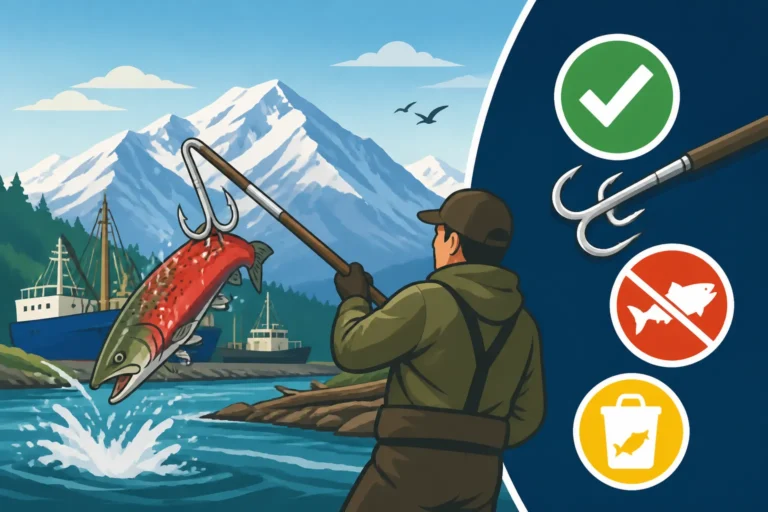
For instance, many rivers and streams throughout Alaska, especially during certain salmon runs, have strict barbless hook requirements. This means the barb on your hook must be pinched down completely to allow for easier, less damaging release of fish, especially if you're catch-and-release fishing or if limits are tight. Areas like the Kenai River are famous for these rules, as are some parts of the Mat-Su Valley and Southeast Alaska. Similarly, specific rivers often have bait restrictions, sometimes prohibiting the use of bait entirely, particularly for certain species like rainbow trout or during specific salmon runs. On the Kenai River, for example, bait is often prohibited when targeting King Salmon, or only single-hook, artificial lures might be allowed.
Ensuring your child's tackle box is compliant is part of the adult's responsibility. Before hitting your chosen fishing spot, consult the current Alaska Fishing Regulations Explained for that specific region. If you're planning on ordering some new gear, remember that retailers like Amazon carry a wide selection of barbless hooks and appropriate artificial lures that adhere to Alaska's rules. Ignorance of these rules, unfortunately, isn't an excuse, and violating them can lead to significant fines. You can find more specific information on these topics in guides like Alaska Bait Restrictions Explained and Alaska Barbless Hook Requirements.
Practical Tips for Fishing with Kids in Alaska
Taking kids fishing in Alaska is an unforgettable experience, one filled with anticipation, stunning scenery, and hopefully, lots of fish stories! To make sure it's enjoyable for everyone, and stays within the bounds of the rules, a little extra planning goes a long way.
Keeping it Fun and Compliant
The key to a successful family fishing trip, especially with younger children, is to keep it fun and manageable. Don't aim for world records right off the bat. Focus on accessible spots and teach them the basics of fishing and conservation.
- Choose Kid-Friendly Locations: Look for fishing spots that are easily accessible, have calmer waters, and offer a good chance of catching something, even if it's smaller fish like Dolly Varden, Arctic Grayling, or smaller salmon. Ponds stocked by ADF&G or roadside streams often fit the bill perfectly. Spots like Ship Creek in Anchorage, or some of the lakes on the road system, are fantastic options. You can find excellent recommendations in our guide on the Best Places to Fish in Alaska for Beginners or Best Fishing Spots for Families in Alaska. These places often have amenities like restrooms, picnic areas, and paved access, which are huge bonuses when fishing with kids.
- Appropriate Gear: Kids don't need expensive, high-end gear. A simple spincasting rod and reel combo, often brightly colored and available for a good price on Amazon or at local sporting goods stores like Sportsman's Warehouse, is perfect. Make sure the line is fresh and the hooks are the right size for the target species. Teach them how to cast safely and how to reel in a fish.
- Adult Supervision is Key: As the supervising adult, you are responsible for ensuring your child understands and follows the regulations. This includes knowing the bag limits, using legal gear, and properly handling any fish caught. It's a great opportunity to teach them about ethical angling practices and the importance of respecting wildlife and the environment.
Preparing for Your Trip
Alaska's environment can be dynamic, and being prepared makes all the difference, especially with little ones.
- Check Emergency Orders Religiously: Alaska’s fishing regulations are not static. They can change with little notice via emergency orders, often in response to fish run strengths or environmental conditions. A river that was open for retention yesterday might be catch-and-release only today. Always, always check the latest emergency orders from the ADF&G website before you leave for your fishing spot, and even while you’re there if you have cellular service. It’s literally a matter of avoiding a violation. Our article How to Check Alaska Emergency Orders Before Fishing offers detailed advice on how to stay informed.
- Dress in Layers and Bring Rain Gear: The weather in Alaska can change in an instant, even on a sunny day. Dress kids in multiple layers so you can add or remove clothing as needed. Waterproof rain gear (jacket and pants) is non-negotiable. Even a light drizzle can quickly become a cold, uncomfortable experience for a child, dampening their enthusiasm faster than you can say "fish on!" You can find reliable kids' rain suits and warm layers on Amazon that will hold up to Alaska's weather.
- Pack Smart: Beyond fishing gear, bring plenty of snacks, drinks, and sunscreen. A small first-aid kit is always a good idea. Consider a comfortable, lightweight chair for them to rest in, and maybe even a small toy or book for downtime if the fishing is slow. Keep them comfortable and engaged, and the experience will be positive regardless of the catch.
What to Carry for Young Anglers
Beyond the basic fishing rod and reel, equipping your young angler with a few personal items can enhance their experience and sense of ownership.
- Their Own Tackle Box: A small, child-friendly tackle box filled with a few bright bobbers, some safe practice weights, and maybe some large, dull hooks can make them feel like a serious angler. Even if they're mostly watching you rig the lines, having their own equipment can boost their enthusiasm.
- Personal Water Bottle and Snacks: Staying hydrated and energized is crucial. Let them pick out their own fun water bottle and a favorite snack to pack. This small detail can make them feel more involved in the preparation.
- A "Rules Helper" Card: For older kids who are starting to grasp regulations, you might create a simple, laminated card with key rules like "Barbless Hooks Only" or "Daily Limit: 3 Fish." This reinforces the learning and helps them understand the importance of compliance.
By focusing on these practical tips, you’re not just planning a fishing trip; you're creating a memorable and educational adventure that your kids will cherish for years to come.
Here's a quick summary table of regulations for kids under 16:
| Regulation Area | Requirement for Kids Under 16 | Adult's Responsibility |
|---|---|---|
| Sport Fishing License | NOT REQUIRED | Ensure child is truly under 16; obtain license for self. |
| King Salmon Stamp | NOT REQUIRED (if exempt from license) | Obtain stamp for self if keeping King Salmon; record child's King Salmon on own harvest card. |
| Bag & Possession Limits | APPLY (their catch counts towards household/group limit) | Know and adhere to all daily/annual limits for all species. |
| Harvest Record Card | Their kept King Salmon, Halibut, Steelhead MUST BE RECORDED | Record child's qualifying catch on your personal harvest card immediately. |
| Gear Restrictions | APPLY (e.g., barbless hooks, single hooks) | Ensure all gear used by child is compliant with local rules. |
| Bait Restrictions | APPLY | Ensure all bait used by child is compliant with local rules. |
| Emergency Orders | APPLY (can change rules daily for everyone) | Always check current emergency orders before and during fishing. |
Disclaimer
The information provided in this guide is intended for general informational purposes only and does not constitute legal advice. Fishing regulations in Alaska are complex and subject to change by the Alaska Department of Fish and Game (ADF&G) through emergency orders and annual updates. It is the sole responsibility of each angler to review and understand the most current official Alaska Sport Fishing Regulations Summary for the specific region and species they intend to fish. Always consult the official ADF&G website or obtain a current physical regulations booklet before heading out on any fishing trip.