How Alaska Bag Limits Change In-Season
Planning an incredible fishing trip to Alaska, only to find the rules have changed overnight, can be incredibly frustrating. You’ve booked flights, secured lodging, and maybe even invested in specific gear, all based on regulations that suddenly aren’t current. It feels like hitting a moving target! This guide will walk you through why and how Alaska’s fishing bag limits can change in-season, and crucially, how you can stay on top of these dynamic regulations to ensure a successful and compliant trip.
Understanding the Dynamic Nature of Alaska's Fishery Management
Alaska isn't just a place to fish; it's a living, breathing ecosystem with incredibly valuable wild resources. Because of this, the state takes a proactive, real-time approach to managing its fisheries, which means regulations, especially bag limits, are often in flux. It’s not about making things difficult for anglers; it's about protecting these precious fish populations for generations to come.
Why Bag Limits Aren't Static
The Alaska Department of Fish and Game (ADF&G) operates on a principle of sustained yield, which means managing fisheries to ensure there are always enough fish returning to spawn (escapement) while also allowing for sport, commercial, and subsistence harvests. This is a delicate balance, and it requires constant vigilance.
Think about it: salmon runs, for example, are influenced by countless variables each year—ocean conditions, water temperatures, predation, and even historical spawning success. One year, a particular run might be incredibly strong, allowing for more liberal limits. The next, the same run might be struggling, necessitating tighter restrictions or even closures to meet escapement goals. ADF&G scientists are constantly monitoring these biological factors. If preliminary indicators suggest a run is weaker than forecasted, or stronger, they have to be ready to adjust. It's a complex dance with nature, and the rules need to adapt to keep step. This proactive approach is fundamental to understanding Alaska Fishing Regulations Explained.
The Role of Emergency Orders
When you hear about bag limits changing in-season, it's almost always due to an "Emergency Order" issued by ADF&G. These aren't just minor tweaks; they are legal directives that immediately supersede the existing published regulations (like those you find in the annual sport fishing regulation booklet). Emergency Orders can be issued for a variety of reasons, but they typically boil down to protecting fish when a run isn't performing as expected, or, occasionally, to allow for more harvest if a run is exceptionally strong.
For instance, if early season returns of King Salmon to a river system like the Kenai are alarmingly low, ADF&G might issue an Emergency Order closing the King Salmon fishery entirely, or perhaps restricting fishing to catch-and-release only, or even mandating Alaska Barbless Hook Requirements or Alaska Bait Restrictions Explained to minimize mortality. These orders can dictate anything from changes in daily or annual bag limits, to specific gear restrictions, to time-of-day closures, or even full fishery closures. They are designed to be nimble, allowing managers to respond rapidly to evolving conditions on the water, often with just a day or two's notice. Understanding Alaska Fishing Emergency Orders Explained is crucial for any angler.
How ADF&G Monitors Fish Runs and Makes Decisions
The process behind these in-season changes is surprisingly sophisticated and relies heavily on real-time data collection and expert analysis. It's not just a hunch; it's a science-backed decision.
Key Monitoring Tools and Data Points
ADF&G employs a variety of methods to track fish populations throughout the season. These monitoring tools are critical for understanding the health and strength of returning runs.
- Weirs: These are fence-like structures placed across rivers, often in upstream sections, to count fish as they pass through an opening. They provide an accurate tally of fish entering spawning grounds. For example, weirs are used on rivers like the Russian River to count sockeye.
- Sonar Counters: Commonly used on larger, murkier rivers where visual counting is impossible, like the Kenai River. Sonar technology sends sound waves through the water, detecting and counting fish as they swim past. Biologists can often differentiate between species based on size and swimming patterns. This data is updated daily and is publicly accessible, offering a fascinating glimpse into the real-time strength of a run.
- Test Fisheries: These involve commercial fishing boats operating under specific permits in key marine areas (like Cook Inlet or near river mouths). They provide biologists with samples of fish, allowing them to estimate the size, age, and species composition of the returning runs before they even hit the rivers.
- Aerial Surveys: For some species and locations, especially in remote areas, biologists conduct aerial surveys by plane or helicopter to visually estimate the number of spawning fish in clear-water streams. This is less precise for daily counts but provides vital data for overall run strength.
- Harvest Reports: Data from sport fishing guides and commercial fishing operations also contributes to the overall picture. These reports, combined with all other data, paint a comprehensive picture for ADF&G biologists.
By combining these data points, often updated multiple times a week, ADF&G can project the total number of fish expected to return. If those projections fall below the critical escapement goal (the minimum number of fish needed to spawn successfully), emergency action is necessary.
The Process of Changing Regulations
The decision to change regulations in-season isn't made lightly. It typically involves Area Management Biologists who are intimately familiar with their specific region's fisheries. These dedicated individuals analyze the incoming data daily, consult with other biologists and stakeholders, and then make a recommendation to the Division Director or other authorized personnel.
Once a decision is made, an Emergency Order is drafted. This order details the specific changes—what species, what location, what dates, and what new regulations are in effect. It's then officially issued, often posted online, and disseminated through various channels. The speed with which these decisions are made and implemented is critical. A delay of even a few days can mean the difference between meeting an escapement goal and a depleted fishery. This rapid response system is a hallmark of Alaska's commitment to conservation, even if it sometimes means last-minute adjustments for anglers.
Practical Steps for Anglers to Stay Informed In-Season
Navigating Alaska's dynamic regulations requires a proactive approach from anglers. You can't just read the regulation booklet once and assume it's set in stone for the entire season. Think of it as a daily check-in, especially if you're targeting popular species like salmon or halibut during peak season.
Essential Resources for Real-Time Updates
Knowing where to look for the most current information is paramount. ADF&G makes a significant effort to disseminate these changes as widely and quickly as possible.
- ADF&G Website: This is your primary, official source. Specifically, look for the "Emergency Orders" section on the Alaska Department of Fish and Game website. These pages are updated immediately as orders are issued. You can often filter by region or species, making it easier to find relevant information for your specific trip. Many anglers bookmark these pages on their phones.
- ADF&G Hotlines: Many regions have recorded hotlines that provide summaries of current emergency orders. These are invaluable, especially if you're in an area with spotty internet service. A quick phone call can often give you the latest updates.
- Social Media and Email Alerts: ADF&G often posts emergency order announcements on their social media channels (like Facebook) and offers email subscription services. Signing up for these can push critical updates directly to you.
- Local Tackle Shops and Guides: Never underestimate the power of local knowledge! Tackle shops in towns like Soldotna, Cooper Landing, or Homer are often the first to hear about changes and can offer invaluable advice on how to adapt your fishing plans. Similarly, reputable fishing guides are constantly monitoring regulations, as it directly impacts their business. Don't be shy about striking up a conversation.
- News Media: Local news outlets, especially in popular fishing destinations, will often report on significant emergency orders. While not always the most immediate source, they can confirm widespread changes.
I always recommend downloading the official ADF&G app if available for your device. It's often the quickest way to get updates. And remember, stocking up on essentials like quality rain gear or extra terminal tackle from Amazon before your trip can save you a headache if local shops are out of stock.
Planning Your Trip with Flexibility
The best way to deal with in-season regulation changes is to build flexibility into your trip plan. It sounds simple, but many anglers arrive with a rigid itinerary, only to be disappointed when their target fishery is closed or restricted.
- Check Regulations Frequently: This cannot be stressed enough. Check the regulations for your target area daily, or at the very least, every other day leading up to your trip, and especially once you've arrived in Alaska. A good waterproof case for your phone, easily found on Amazon, will allow you to do this even on the boat.
- Have Backup Plans: Don't put all your eggs in one basket. If you're coming for King Salmon, research alternative species like Sockeye or Coho that might be available in the same area or a nearby one. If a river fishery closes, consider a saltwater charter for halibut or rockfish if that's an option. Alaska has an incredible diversity of fishing opportunities; having a Plan B, C, and D will prevent disappointment. For instance, if the Kenai River King Salmon Closure Explained impacts your trip, consider targeting Sockeye or even some of the great trout fishing in the area.
- Versatile Gear: While specialized gear is great, having a versatile setup can be a lifesaver. A good general-purpose spinning rod and reel combo, often available on Amazon, can cover many bases if you suddenly need to switch from heavy salmon gear to something lighter for trout, or vice-versa.
- Consider a Guide: While more expensive, a guided trip means you don't have to worry about staying current with regulations. Professional guides handle all that, ensuring you're compliant and putting you on fish that are legally available. This is particularly true for complex regulations like Alaska Halibut Charter Regulations Explained.
Common Scenarios of In-Season Bag Limit Changes
To give you a clearer picture, let's look at some specific scenarios where bag limits frequently change during the fishing season. These are not exhaustive, but they represent common occurrences that anglers should be prepared for.
Salmon Fishery Closures and Reductions
Salmon are the lifeblood of Alaska's fisheries, and as such, they are often subject to the most dynamic regulation changes. The primary goal is always to meet escapement goals, ensuring enough fish make it to the spawning grounds to perpetuate the run.
- King Salmon Closures: This is perhaps the most common and impactful in-season change, especially in popular road-system rivers. If the King Salmon run is projected to fall short of its escapement goal, ADF&G will often issue Emergency Orders closing the fishery entirely, or severely restricting it. This might mean catch-and-release only, prohibiting bait, or even a full closure to all King Salmon fishing. This can include specific daily limits or even impact your Alaska Nonresident King Salmon Annual Limit Explained. The Kenai River is a prime example where King Salmon regulations are frequently adjusted mid-season due to run strength, as detailed in the Alaska Kenai River King Salmon Closure Explained article.
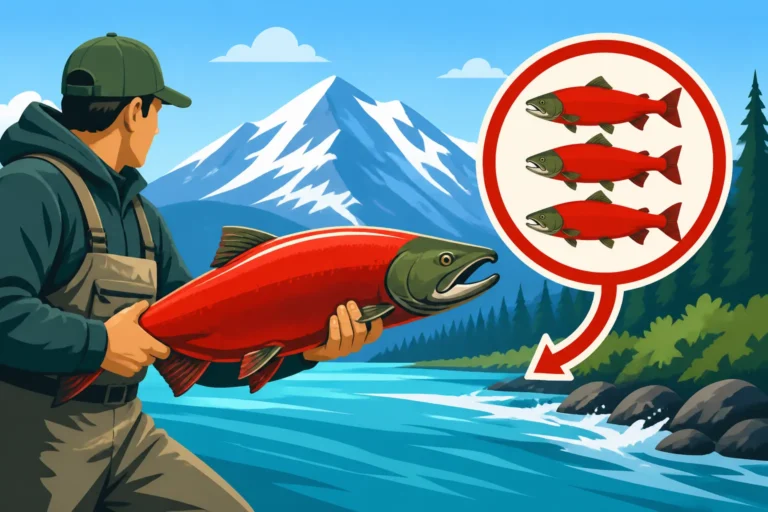
- Sockeye Salmon Reductions: While Sockeye runs are often massive, they can also be subject to in-season adjustments. If a run is stronger than expected, ADF&G might actually increase the daily bag limit to allow for more harvest. Conversely, a weaker-than-expected run might see daily limits reduced from, say, six per day to three per day. These changes are less common for Sockeye than Kings but do occur, particularly if early-season indicators are poor.
- Gear Restrictions: Sometimes, instead of a full closure, an Emergency Order might impose specific gear restrictions. This often includes requiring a single hook, mandating barbless hooks, or prohibiting the use of bait. These measures are designed to reduce mortality rates for fish that are caught and released, giving them a better chance to spawn.
Halibut and Rockfish Adjustments
Saltwater fisheries, especially for halibut and rockfish, also experience in-season changes, though often with a slightly different focus, especially concerning charter operations.
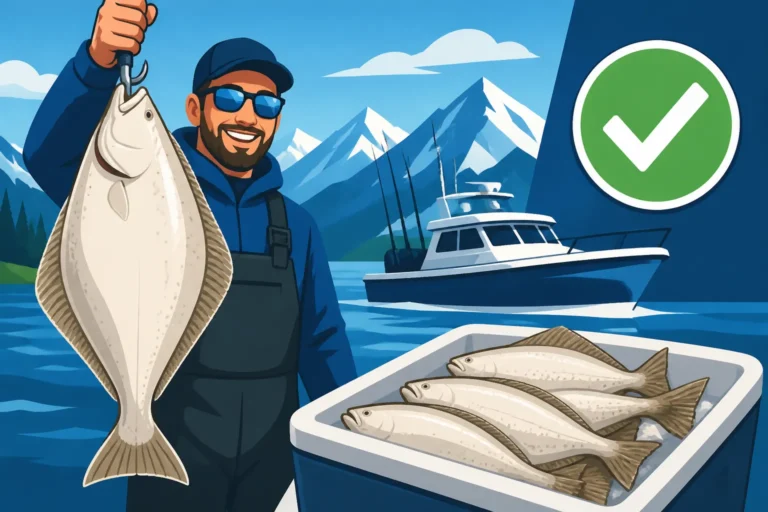
- Halibut Charter Regulations: The International Pacific Halibut Commission (IPHC) and NOAA Fisheries set quotas for halibut, and these are often managed at a very granular level, particularly for charter boats. Emergency Orders can alter daily bag limits (e.g., from two fish to one fish per day), impose specific size restrictions (like the "reverse slot limit" where only fish under a certain size and over another size can be kept), or even mandate specific weekly closures (e.g., "no halibut retention on Thursdays"). These rules can be quite complex, making a guided trip beneficial. For a deeper dive, check out Alaska Halibut Charter Regulations Explained.
- Rockfish Restrictions: Certain species of rockfish, particularly long-lived ones like Yelloweye Rockfish, are highly susceptible to overfishing. Emergency Orders might impose very conservative bag limits (e.g., one or two per day, with specific maximum sizes), or even mandate the use of a deepwater release device. This device allows anglers to return rockfish to depth quickly, increasing their survival rate after being caught from deep water. This is an important conservation measure, and you can learn more in Alaska Rockfish Deepwater Release Device Rules.
To illustrate these points, here’s a simplified table demonstrating how regulations might change for common species:
| Species | Regulation Type | Typical Bag Limit | Potential Emergency Adjustment | Reasoning |
|---|---|---|---|---|
| King Salmon | Daily Limit | 1 per day | 0 (catch & release only or closure) | Low escapement numbers; conservation |
| King Salmon | Gear Restriction | Bait allowed | No bait, single barbless hook | Reduce mortality on released fish |
| Sockeye Salmon | Daily Limit | 3-6 per day (depending on river) | 1-2 per day or increased to 9-12 per day | Low or high escapement numbers |
| Halibut | Charter Daily Limit | 2 per day, one of any size | 1 per day, often with a reverse slot limit | Quota management, conservation of larger spawners |
| Rockfish | Yelloweye Daily Limit | 1 per day, 30-inch maximum | 0 per day (closure) or mandatory release device | Conservation of long-lived species, minimize mortality |
The Impact of Changing Regulations on Your Fishing Experience
It's completely normal to feel a pang of disappointment, or even outright frustration, when a planned fishery changes or closes. You've invested time, money, and dreams into this trip. But understanding the bigger picture and how to react can transform a potential setback into a memorable adventure.
Managing Expectations and Embracing Adaptability
One of the most important lessons you'll learn fishing in Alaska is the need for flexibility. Alaska fishing is truly wild, and that means it's unpredictable. The fish don't always show up exactly when and where they're expected, and sometimes the runs just aren't strong enough to support generous harvests. ADF&G's job is to prioritize the long-term health of the resource over any single angler's immediate desire for a full cooler.
Embracing adaptability means preparing mentally for the possibility that your primary target might not be available or might have reduced limits. It means viewing a shift to a different species or fishing technique not as a failure, but as an opportunity to experience another facet of Alaska's incredible fishing diversity. Maybe you planned for King Salmon, but an emergency order shifts your focus to Sockeye, leading you to discover the exciting world of flossing on the Kenai River. Or perhaps a river closure sends you on an unexpected but thrilling halibut charter out of Seward. The more open you are to these changes, the richer your overall experience will be.
The silver lining in all of this is knowing that these management decisions are made for a good reason: to ensure that the fish populations remain healthy and sustainable for years to come. Your grandchildren, or even your great-grandchildren, will have the opportunity to fish for salmon and halibut in Alaska because of the tough decisions made today. This long-term view is what makes Alaska fishing truly special.
What to Do if Rules Change Mid-Trip
Imagine you're halfway through your dream week of fishing, and you hear whispers that the rules have changed. Panic can set in, but it doesn't have to. Here's a quick action plan:
- Verify Immediately: Don't rely on hearsay. Use those essential resources we discussed—the ADF&G website, hotlines, or local tackle shops—to verify the new Emergency Order. Don't wait until you're already on the water. A quick check each morning is good practice.
- Understand the Specifics: Read the Emergency Order carefully. What species does it affect? What specific body of water? What are the new dates and times? Are there new gear restrictions (like barbless hooks or no bait)? Make sure you grasp every detail. Not understanding can lead to accidental Alaska Fishing Violations and Fines.
- Adjust Your Plan: If the change impacts your current fishing activity, stop and re-evaluate. If you're on a guided trip, your guide will handle this, but if you're unguided, you'll need to make the call. Can you switch to a different legal species? Can you move to a different, unaffected section of the river or a different body of water?
- Consult Local Experts: If you're unsure how to adapt, talk to staff at a local tackle shop or other anglers. They often have real-time advice on what's still open and where fish might be biting under the new regulations.
Alaska's fishing regulations can change quickly, but with a little preparation and a flexible mindset, you can navigate these shifts and still have an incredible, rewarding experience in the Last Frontier. Always prioritize staying informed and respecting the rules—it's how we ensure these world-class fisheries thrive.
Disclaimer
Please note that fishing regulations in Alaska are subject to change without notice. While we strive to provide the most current and accurate information, it is ultimately the angler's responsibility to verify all regulations with the Alaska Department of Fish and Game (ADF&G) before heading out. Always consult the official ADF&G website, emergency order hotlines, or local offices for the most up-to-date rules and information specific to your fishing location and target species.