Alaska Single-Hook Rules During King Closures
Trying to navigate Alaska's fishing regulations can feel like deciphering ancient hieroglyphs, especially when it comes to the highly nuanced rules surrounding King salmon. One of the most frequently misunderstood and frustrating aspects for anglers is the sudden shift to single-hook rules, often enacted without much warning during King salmon closures. This comprehensive guide aims to demystify these regulations, explain their crucial importance, and provide practical advice so you can stay compliant and enjoy your fishing, even when the rules seem to change on a dime.
Understanding the 'Why' Behind Single-Hook Rules for King Salmon
When you're out on a prime fishing river like the Kenai or Kasilof and suddenly hear that King salmon retention is closed, but you can still fish for other species using single hooks, it's easy to get frustrated. It feels like the rug is pulled out from under your feet, especially if you came all this way for the thrill of a King. However, these regulations aren't arbitrary; they are deeply rooted in the state's commitment to conserving its most iconic salmon species. It's about protecting the future of the fishery for everyone.
The Conservation Imperative for King Salmon
King salmon, also known as Chinook salmon, are truly magnificent creatures, but their populations in many Alaskan rivers have faced significant challenges over the past few decades. Factors like ocean conditions, habitat changes, and fishing pressure all contribute to the health of the run. When runs come in weaker than anticipated, the Alaska Department of Fish and Game (ADF&G) has a monumental task: ensuring enough Kings make it to their spawning grounds to reproduce, what they call "escapement goals." This is crucial for sustaining the species for future generations.
The decision to implement single-hook rules is a direct response to these conservation concerns. The goal is to minimize accidental harm to King salmon while still allowing anglers to target other species, such as sockeye or coho, which might be running strong. It's a delicate balancing act to maintain fishing opportunities while safeguarding vulnerable populations. These measures are often temporary, designed to offer protection during critical periods when King salmon are abundant in the rivers but need to be allowed to pass upstream unharmed.
Protecting Spawning Stocks and Escapement Goals
Alaska sets specific escapement goals for each major King salmon river. These are not just arbitrary numbers; they are scientifically determined targets based on historical data and biological models to ensure a sustainable population. When in-season indicators show that a run is tracking below these goals, ADF&G takes action. Closing King salmon retention is the most direct way to allow more fish to reach the spawning grounds.
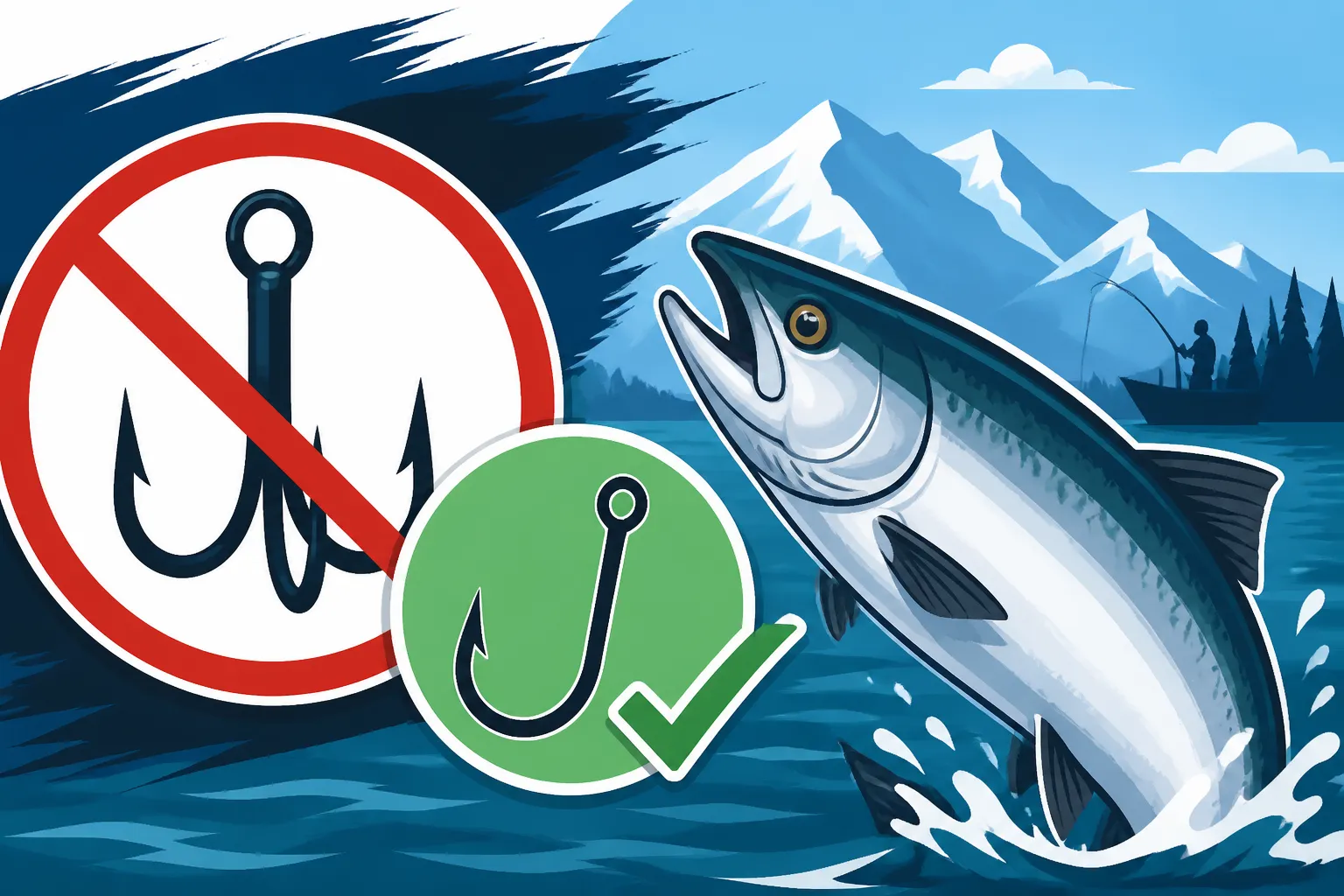
The single-hook rule, particularly the requirement for unbaited, single-point hooks, is a critical component of this strategy. It's designed to reduce "incidental mortality" – the number of King salmon that are caught and released but die shortly after due to stress or injury. A single hook, especially when barbless (though not always required with single hooks unless specified by an emergency order), generally causes less damage to a fish's mouth and internal organs than a treble hook, increasing its chances of survival after release. This might feel like a minor detail when you're on the river, but cumulatively, it makes a significant difference for the overall health of the King salmon run.
The Role of Emergency Orders in Fishery Management
If you've spent any time fishing in Alaska, you've likely encountered the term "emergency order." These aren't just bureaucratic hurdles; they are the ADF&G's rapid-response tool to manage fisheries dynamically. Alaska's fish runs are wild, unpredictable, and constantly changing due to a myriad of environmental factors. An emergency order can instantly close a fishery, change bag limits, alter legal gear, or implement single-hook rules to react to real-time run strength.
The frustration is understandable because these orders can sometimes be issued with very short notice, even mid-season. Anglers planning trips months in advance, especially non-residents traveling from afar, often find themselves scrambling to adjust. It's why staying informed by regularly checking official ADF&G channels is paramount. You can find detailed explanations about these changes by looking at the official publications, and understanding the reasoning helps demystify seemingly abrupt rule changes. For a deeper dive into how these rules are managed, you might want to read our guide on Alaska Fishing Emergency Orders Explained.
Deciphering Single-Hook Regulations in Specific Regions During Closures
The challenge with single-hook rules isn't just knowing that they exist, but understanding where and when they apply. Alaska is a vast state, and regulations can vary wildly from one river system to another, even for the same species. What's allowed on the Kenai might be illegal on the Kasilof, or vice-versa, depending on current emergency orders. This regional variation adds another layer of complexity for anglers.
Kenai River's Unique Single-Hook Requirements
The Kenai River, famous for its trophy King salmon and incredible sockeye runs, often finds itself under intense scrutiny and strict regulations. Because of its popularity and the pressure on its King salmon, it's one of the first places to see single-hook restrictions during Chinook closures. Typically, when King salmon retention is closed on the Kenai, anglers targeting other species must use a single, unbaited, artificial lure with a single-point hook.
This means no treble hooks, no multiple hooks, and absolutely no bait like cured roe or herring. For many anglers, this is a significant shift. If you're used to drift fishing with bait for King salmon, you'll need to completely change your approach. These rules are particularly relevant during the sockeye runs in June and July when Kings are also present. The intention is to allow sockeye fishing to continue while minimizing any chance of snagging or fatally injuring a King salmon. Familiarizing yourself with the Kenai River King Salmon Closure Explained can help prepare you for these eventualities.
Let's look at an example: during a typical King salmon closure on the Kenai, if you're targeting sockeye, you'd be using a weighted fly or a bare hook, often fished in a "flossing" technique. This single-hook, unbaited requirement is critical. ADF&G defines "artificial lure" strictly; it cannot include any organic material, scented attractants, or anything that resembles natural bait.
Kasilof River and Other Southcentral River Rules
The Kasilof River, just south of the Kenai, is another popular King salmon destination, especially for its hatchery-supported King runs. While often experiencing similar conservation measures as the Kenai, its regulations can have subtle differences. For instance, sometimes emergency orders on the Kasilof might allow unbaited single-point hooks when the Kenai has stricter interpretations. Or, they might explicitly define what "single-point hook" means, sometimes requiring barbless hooks, although a barbless hook is generally a good practice for catch-and-release regardless.
Other Southcentral rivers, like the Deshka River or parts of the Susitna River drainage, also have their own King salmon dynamics and associated single-hook rules during closures. It's never safe to assume that regulations from one river apply to another, even if they're geographically close. Always check the current Alaska Fishing Regulations by Region and any active emergency orders specific to the body of water you intend to fish. These details are paramount to avoiding an inadvertent violation.
For example, on the Kasilof, when Kings are closed but other species are open, you might be allowed to use an unbaited lure, but the specific hook size or whether it needs to be barbless could differ. It's not just about the number of points; it's about the entire setup adhering to the letter of the law.
Varying Rules Across Southeast and Interior Alaska
Beyond Southcentral, the rules continue to evolve. In Southeast Alaska, home to prolific King salmon fisheries in areas like Sitka, Juneau, and Ketchikan, ocean fishing regulations might differ significantly from river rules. While single-hook rules are less common in vast marine environments, specific rivers in Southeast that host King salmon runs could see similar restrictions during periods of low escapement. Anglers targeting Kings in saltwater often use treble-hooked trolling gear, so if a localized river closure affects tributary fishing, these single-hook rules become immediately relevant.
Interior Alaska rivers, such as the Tanana or Yukon River tributaries, also have their own King salmon populations and management strategies. These areas might experience closures or gear restrictions tailored to their specific, often more remote, fisheries. The key takeaway here is simple: never rely on hearsay or what was true last year. Always consult the official ADF&G regulations booklet and recent emergency orders for the specific region and river system you plan to visit. It's a proactive step that will save you a lot of headache and potential fines.
Practical Guide to Rigging with Single Hooks for King Salmon
When King salmon retention is closed, but you still want to fish for other species in the river, you'll need to adapt your tackle. This isn't just about swapping out a hook; it's about understanding how to rig legally and effectively within the constraints of single-hook, often unbaited, requirements. Many anglers find this challenging, especially if they're used to more traditional King salmon setups.
Converting Treble Hooks to Single Hooks
Many popular salmon lures, like Kwikfish, FlatFish, or spinners, come pre-rigged with treble hooks. When single-hook rules are in effect, these must be replaced. It's not optional. The process is usually straightforward but requires the right tools and a bit of patience.
Here’s how you generally do it:
- Gather Tools: You'll need split-ring pliers (essential for opening split rings without damage), needle-nose pliers, and a supply of appropriately sized single hooks. For King salmon, or if you anticipate catching other large salmon species like sockeye or coho, you'll typically want strong, sharp single hooks in sizes ranging from 2/0 to 5/0, depending on the lure size and target species. Brands like Owner, Gamakatsu, or Mustad offer excellent options.
- Remove Treble Hook: Use your split-ring pliers to open the split ring connecting the treble hook to the lure. Carefully remove the treble hook.
- Attach Single Hook: Take your new single hook and use the split-ring pliers to attach it to the same split ring, or to a new, fresh split ring if the old one is corroded or weak. Ensure the hook eye is fully closed on the split ring.
- Orientation: For plugs like Kwikfish, some anglers prefer to orient the single hook so the point faces forward (towards the lure) or backward, believing one offers better hook-up ratios or fewer snags. Experimentation can help you find what works best for your specific lure and fishing style. However, the most critical part is that it is a single, unbaited hook. You can find robust split-ring pliers and a variety of single hooks readily available on platforms like Amazon if you need to stock up before your trip.
It's a good habit to pre-rig some of your favorite lures before you even hit the water, especially if you anticipate a King salmon closure. That way, you're not fumbling with pliers on the riverbank when the bite is hot.
Best Practices for Attaching Single Hooks
Beyond simply replacing the hook, there are a few best practices to ensure your single-hook setup is both effective and legal.
- Hook Strength: Kings are powerful fish. Even if you're not targeting them, an incidental catch could happen. Make sure your single hooks are strong enough to handle a hard-fighting salmon without bending or breaking. Look for "heavy wire" or "extra strong" hooks.
- Hook Size: The hook size should be appropriate for the lure and the species you are targeting. A hook that's too small might not get a good bite, while one that's too large could foul the lure's action or become more prone to snagging.
- Barbless Option: While not always explicitly required by single-hook rules, using barbless hooks is a fantastic practice for catch-and-release fishing. It minimizes damage to the fish and makes unhooking much quicker and easier. You can buy barbless hooks or simply crimp down the barb on a standard hook with pliers. Some emergency orders for certain rivers, especially during sensitive periods, do explicitly require barbless hooks, so always be prepared. Our article on Alaska Barbless Hook Requirements delves into this further.
- Secure Attachment: Double-check that all connections – the hook to the split ring, and the split ring to the lure – are secure. A lost fish due to faulty rigging is a heartbreaking experience, especially with strict regulations.
Remember, the emphasis with single-hook rules during King closures is often on "unbaited artificial lures." This means no scent attractants, no cured eggs, no chunks of herring – just the lure itself.
Legal Bait and Lure Considerations with Single Hooks
This is where many anglers trip up. The term "single hook" doesn't automatically mean "anything goes as long as it's a single hook." During King closures, particularly on popular rivers, the regulations often specify "single-point, unbaited, artificial lures." This narrow definition is crucial.
- Artificial Lures Only: This typically means spinners, spoons, plugs, flies, or jig heads without any added organic material. The lure must be made of synthetic materials.
- Unbaited: This is non-negotiable. Even a small piece of shrimp, a salmon egg, or a scented soft plastic might be considered "bait" and lead to a violation. The intent is to remove any olfactory attractants that might draw in King salmon, and to prevent accidental deep hooking that bait can cause.
- No Scented Attractants: Some soft plastic lures come pre-scented, or anglers add their own scent gels or sprays. If an emergency order specifies "unbaited artificial lures," these scented options can sometimes fall into a gray area or be explicitly prohibited. When in doubt, err on the side of caution and use unscented lures. For specific prohibitions, check out Alaska Bait Restrictions Explained.
Table: Common Lures and Single-Hook Adaptations
| Lure Type | Standard Hook Setup | Single-Hook Adaptation (King Closure) | Notes |
|---|---|---|---|
| Spinners | Treble hook | Replace with a single-point, barbless hook (e.g., Owner, Gamakatsu) | Ensure hook size matches spinner body; no bait/scent added. |
| Plugs (Kwikfish, FlatFish) | Treble hooks (often 2) | Replace both trebles with single-point hooks. | May require split-ring pliers; ensure no bait/scent added. |
| Spoons | Treble hook | Replace with a single-point hook. | Good for casting and retrieving; often effective without bait. |
| Jigs | Single jig hook (often with soft plastic) | Use as is, ensure soft plastic is unscented. | Verify if soft plastic is considered "artificial" in current regs. |
| Flies | Single hook | Use as is, ensure unweighted or weighted appropriately. | Flies are typically single-hook, artificial, and unbaited by nature. |
By understanding these distinctions and adapting your gear accordingly, you can continue to enjoy fishing within the legal framework during King salmon closures.
Essential Gear and Tackle for Single-Hook Fishing During Closures
Even when King salmon are closed, the opportunity to fish for other magnificent species in Alaska remains, but your gear needs to be dialed in for single-hook requirements. It’s not just about compliance; it’s about maximizing your success and ensuring ethical catch-and-release practices when dealing with sensitive King salmon populations. Having the right tools makes all the difference, transforming a potentially frustrating situation into a rewarding one.
Recommended Rods, Reels, and Line
While the focus might be on the hook, your overall setup needs to be balanced. For King salmon closures, you’re often still fishing rivers with strong currents and potentially large, powerful fish (even if you're not targeting Kings, a big Sockeye or Coho can give a tremendous fight!).
- Rods: A medium-heavy to heavy action spinning or casting rod, typically 8.5 to 10 feet in length, is ideal. This length provides good casting distance, line control for drift fishing, and enough backbone to fight strong salmon without overplaying them, which is crucial for catch-and-release survival. For specific applications like flossing for sockeye on the Kenai, some anglers prefer even longer rods, up to 12 feet, for better line mending.
- Reels: A high-quality spinning reel (size 4000-6000) or a sturdy baitcasting reel capable of holding 200+ yards of line is recommended. Smooth drag systems are paramount for fighting fish efficiently and preventing break-offs. Brands like Shimano, Daiwa, or Penn offer reliable options across various price points.
- Line: Braided line, typically 30-50 lb test, is a popular choice for its strength, sensitivity, and lack of stretch, which helps detect subtle bites and set hooks effectively. You'll want to add a fluorocarbon leader (20-40 lb test) for abrasion resistance and reduced visibility in clear water. The length of your leader will vary depending on water clarity and depth, but a 3-6 foot leader is a common starting point.
Remember, the goal is still to land fish efficiently, even if you’re releasing Kings. A balanced, robust setup minimizes fight time, reducing stress on the fish.
Selecting the Right Single Hooks and Lures
This is where precision matters most for compliance. Don't just grab any single hook; choose ones specifically designed for strong fish and ensure they meet the regulatory requirements of "single-point, unbaited, artificial lure."
- Single Hooks: As mentioned before, opt for strong, sharp, high-quality hooks from reputable brands like Gamakatsu, Owner, VMC, or Mustad. Sizes 2/0 to 5/0 are generally suitable for salmon. A crucial consideration is whether barbless hooks are required by emergency order. Even if not mandated, using barbless hooks significantly improves the survival rate of released fish. You can find excellent quality single hooks for your tackle box, often in bulk packs, on online retailers like Amazon.
- Artificial Lures:
- Spinners: Popular choices like the Blue Fox Vibrax or Mepps Aglia come with treble hooks that you'll need to swap. Spinners are effective for aggressive salmon species like Coho and sometimes even Sockeye in certain conditions.
- Spoons: Classic spoons like the Pixee Spoon or Little Cleo are versatile and can be fished in various currents. Again, replace the treble hook with a single.
- Plugs: Kwikfish and FlatFish are King salmon staples, but with their trebles removed and replaced by single hooks, they can still entice aggressive Coho or even a rogue King. Ensure they are run strictly without bait.
- Jigs: Lead-head jigs tipped with unscented soft plastic grub tails or paddle tails can be very effective. Jigging can elicit strikes from a variety of salmon and even trout.
- Flies: For fly anglers, single hooks are standard. Weighted flies, streamers, or egg patterns (artificial, of course) can be highly effective, particularly for sockeye flossing or targeting rainbow trout.
It’s always a good idea to have a variety of colors and sizes in your tackle box. Fish can be finicky, and conditions can change rapidly.
Accessories for an Ethical and Compliant Setup
Beyond the main tackle, a few essential accessories will help you stay compliant, fish ethically, and increase your chances of success during single-hook restrictions.
- Split-Ring Pliers: Absolutely indispensable for converting your lures to single hooks. Don't leave home without them.
- Forceps or Pliers: For quickly and safely removing hooks, especially from fish you intend to release. Long-nosed forceps are excellent for delicate hook removal.
- Fish Grips/Net: A rubber-coated or knotless mesh net will minimize damage to a fish's slime coat and fins during landing, which is vital for catch-and-release survival. Fish grips can also help you handle fish without touching their sensitive bodies.
- Hook File/Sharpener: A sharp hook penetrates easily, leading to quicker, more secure hooksets and less trauma to the fish.
- Current Regulation Booklet/App: Always have access to the most up-to-date regulations, either a physical copy of the Alaska Fishing Regulations Explained booklet or the ADF&G mobile app. Emergency orders can change daily, and being informed is your best defense against violations. You can also monitor How to Check Alaska Emergency Orders Before Fishing before you head out.
By carefully selecting and preparing your gear, you’ll be well-equipped to navigate the complexities of single-hook rules and have a productive, compliant fishing experience in Alaska.
Common Misconceptions and How to Avoid Violations
The shift to single-hook rules during King salmon closures is one of the most common sources of confusion and accidental violations for anglers. It's easy to misunderstand the nuances, especially if you're unfamiliar with Alaska's dynamic regulatory environment. Clearing up these misconceptions is critical not only for enjoying your trip but for avoiding hefty fines and potential loss of fishing privileges.
The Fine Line Between Single Hook and Snagging
One of the biggest misconceptions is that as long as you have a single hook, you're fine, even if you're "flossing" for sockeye or fishing in dense schools. However, there's a critical distinction between a legal hook-up and illegal snagging, even with a single hook. Snagging (or "foul-hooking") is defined as hooking a fish anywhere other than inside the mouth, and it is strictly illegal in sport fisheries throughout Alaska, unless explicitly allowed in specific "personal use" or "terminal harvest" areas (like certain dipnetting or snagging fisheries).
When King salmon closures coincide with peak sockeye runs, rivers like the Kenai become incredibly crowded. Anglers targeting sockeye often employ techniques that involve weighted flies or bare hooks designed to drift into a salmon's mouth as it swims upstream. If successful, the hook catches cleanly in the jaw. However, if the hook catches outside the mouth—on the side of the head, pectoral fin, or flank—that's a snag, and it's illegal. Even if you immediately release a snagged fish, if a game warden observes the act, it can still result in a violation. The onus is on the angler to avoid snagging, even when fishing in combat-like conditions. Our article on Alaska Snagging Regulations Explained offers more insights on this specific topic.
Double-Checking Emergency Orders Regularly
Many anglers make the mistake of checking regulations once before their trip, or relying on outdated information from a previous year. Alaska's fisheries are managed in real-time. What was open yesterday might be closed today; what required a treble hook last week might now demand a single, unbaited one. This is especially true for King salmon fisheries.
Emergency orders are the primary mechanism for these rapid changes. They are issued by ADF&G and are legally binding. You must check for current emergency orders for the specific river and region you plan to fish, every day, before you head out. There are several ways to do this:
- ADF&G Website: The official source for all current emergency orders.
- ADF&G News Releases: Subscribe to email alerts for immediate notifications.
- Hotlines: Many regions have recorded hotlines with updated information.
- Local Tackle Shops: These shops are usually excellent sources of real-time information.
- Guides: If you're on a charter, your guide will know the rules, but it’s still good to be aware yourself.
Neglecting to check these updates is not an excuse for a violation. Ignorance of the law is not a defense, and game wardens are diligent. Being caught with a treble hook when only single hooks are allowed, or using bait when it's prohibited, will lead to fines.
Understanding Enforcement and Penalties
Alaska takes its fishing regulations very seriously, and for good reason—the state's economy and culture are deeply tied to healthy fish populations. Game wardens with the Alaska Wildlife Troopers are highly visible on popular fishing rivers and are very adept at spotting violations. They are there to protect the resource, and they enforce the rules rigorously.
Penalties for fishing violations can range from significant fines to the forfeiture of gear (rods, reels, even boats) and the loss of fishing privileges, including having your fishing license revoked. For serious or repeat offenses, jail time is also a possibility. Fines for using illegal gear, like a treble hook during a single-hook closure, can easily run into hundreds of dollars, plus court fees. Imagine traveling thousands of miles for a fishing trip only to have your vacation ruined by a preventable fine. It's a costly mistake that no one wants to make.
Furthermore, any fish you catch using illegal gear can be confiscated. This is particularly painful if you've landed a prized sockeye or coho that you intended to keep. The best way to avoid these severe consequences is to educate yourself thoroughly on Alaska Fishing Violations and Fines and strictly adhere to all regulations, including the specifics of single-hook rules. When in doubt, always ask an ADF&G official or a local tackle shop owner before you cast your line.
Adapting Your Strategy for Successful Single-Hook King Fishing
While single-hook rules during King closures are primarily about conservation, they don't mean you can't have a successful and enjoyable day on the water. In fact, for many anglers, these restrictions force a more technical and refined approach to fishing, which can be incredibly rewarding. It’s all about adapting your mindset and your methods to the prevailing conditions and regulations.
Adjusting Techniques for Effective Hookups
When using single, unbaited hooks, your fishing techniques will naturally need some adjustments compared to bait fishing with trebles. The key is to present your lure in a way that entices a fish to strike intentionally, rather than relying on scent or accidental contact.
- Active Presentation: Instead of letting bait sit passively, focus on actively working your lure. This could mean twitching a jig, imparting action to a plug, or varying the retrieve speed of a spinner. The goal is to make the lure look irresistible and natural.
- Drift Fishing Precision: For river fishing, particularly for sockeye during King closures, mastering drift fishing with a single-hook fly or bare hook is essential. This often involves specific weighting (often pencil lead or Slinky weights) to get your offering down to the fish's level and drift naturally with the current. This technique, sometimes called "flossing" on the Kenai River, requires precise casting and line mending to guide the line and hook through schools of fish in a way that increases the likelihood of a legal mouth hook-up.
- Identifying Holding Water: With unbaited lures, knowing where fish are likely to be holding is even more crucial. Look for current breaks, deeper runs, seams where fast water meets slow water, and eddies. Salmon often hold in these areas to rest before continuing their upstream journey.
- Stealth and Approach: Fish in clear, unbaited waters can be wary. Minimize bankside commotion, wear subdued clothing, and make smooth, deliberate casts. Sometimes, a quiet approach makes all the difference.
Adapting your technique might feel like a steep learning curve, but it also allows you to hone your skills as an angler.
Prioritizing Fish Health and Release Practices
Since the primary reason for single-hook rules during King closures is to protect King salmon, prioritizing fish health and practicing responsible catch-and-release techniques is paramount. Every angler plays a role in conservation.
- Quick Landing: Fight the fish efficiently to minimize stress and exhaustion. Prolonged fights can deplete a fish's energy reserves, making it more vulnerable to predators or disease after release.
- Minimize Air Exposure: Keep the fish in the water as much as possible, especially if you plan to release it. Even a few seconds of air exposure can damage gills and internal organs. Use a knotless net or fish grips to control the fish while keeping it submerged.
- Careful Handling: Avoid squeezing the fish, especially around the belly or gills. Wet your hands before touching the fish to protect its protective slime coat. If taking a photo, do it quickly with the fish partially submerged.
- Efficient Hook Removal: Use forceps or pliers to quickly remove the single hook. If the fish is deeply hooked (which is less common with single hooks), cut the line as close to the hook as possible rather than tearing out the hook, as this often causes more damage.
- Revive the Fish: Before releasing, hold the fish gently in the current, facing upstream, until it regains its strength and can swim away on its own. This might take a minute or two, especially for a large or heavily fought fish.
These practices, often termed Alaska Catch-and-Release Best Practices, are not just suggestions; they are vital for ensuring the survival of the fish you release, directly supporting the conservation goals behind the single-hook regulations.
Embracing the Challenge and Rewarding Experience
It's easy to view King salmon closures and single-hook rules as limitations, but a seasoned Alaska angler knows they are also opportunities. They push you to become a better, more versatile fisherman. The satisfaction of legally landing a beautiful sockeye or coho, or even an accidental King, under these stringent conditions, is immense.
Think of it as a tactical puzzle. You're presented with a challenge (conserving Kings, adapting gear) and you get to solve it through skill, patience, and adherence to the rules. It forces you to understand fish behavior more deeply, to refine your casting, and to perfect your presentation.
Moreover, adhering to these rules contributes directly to the health of Alaska's most precious resource. You become part of the conservation effort, ensuring that these incredible fisheries remain vibrant for generations to come. So, while it might require a bit more effort to stay informed and adapt your gear, the overall experience of fishing in Alaska, knowing you're doing it right, is truly unparalleled. And who knows, you might even discover a new favorite lure or technique in the process, perhaps a robust spinner you picked up from Amazon that you never thought to try before!
Disclaimer
The information provided in this guide is for general informational purposes only and is not intended as legal advice. Fishing regulations in Alaska are complex and subject to change without notice via emergency orders. It is the angler's sole responsibility to consult the most current official Alaska Department of Fish and Game (ADF&G) regulations booklet and all active emergency orders for the specific waters and dates they intend to fish. Failure to do so may result in fines or other penalties.