Alaska Halibut Male vs Female Size
One of the most exciting parts of fishing in Alaska is the sheer anticipation of what might be at the end of your line, especially when you're targeting those colossal Pacific halibut. But if you've ever found yourself wondering why some halibut are absolute barn doors while others are more modest "chickens," you're not alone. It turns out that the size difference you see in halibut, particularly the really big ones, often comes down to a fundamental biological reality: the gender of the fish. This guide will dive deep into why male and female halibut differ in size, what that means for your fishing strategy, and how to spot these differences.
Understanding Halibut Growth and Gender
When you're out on the vast Alaskan waters, chasing the mighty halibut, it's easy to think of them all as the same, just varying in age. However, these fascinating flatfish have distinct biological characteristics that lead to significant size disparities between males and females. Knowing these nuances can really change how you approach your halibut fishing adventures.
The Basics of Halibut Life Cycles
Pacific halibut embark on a truly epic journey throughout their lives. They start as tiny larvae drifting in the currents, often in the deep waters of the Gulf of Alaska and the Bering Sea. As they mature, they undergo a remarkable transformation, with one eye migrating to the top side of their head, allowing them to lie flat on the seabed. For their first few years, both male and female halibut grow at a relatively similar pace, feeding on small crustaceans and fish. They are still relatively small at this stage, perhaps only a few pounds, and can be found in shallower, inshore waters.
As they get older, typically around four to eight years, halibut reach sexual maturity. This is a critical turning point where their growth trajectories begin to diverge dramatically. They become more aggressive predators, consuming a wider range of prey, from cod and pollock to various shellfish and even smaller halibut. The cooler, nutrient-rich waters of Alaska provide an ideal environment for them to pack on the pounds, but not all halibut do so equally.
How Halibut Gender is Determined and Identified
Before you even get a fish on the boat, understanding how halibut gender is determined is purely biological and happens at conception, just like most other species. There are no external sex organs visible to the naked eye while the fish is alive and swimming, which means you can't tell if that massive shadow under your boat is a male or female until you've actually reeled it in and have it on deck. This is a common point of curiosity for many anglers, especially those keen on understanding the population dynamics and reproductive health of the halibut they encounter.
Once a halibut is caught and brought aboard, especially larger specimens, it's possible to discern its gender. The most definitive way is to examine the internal reproductive organs. Females will have ovaries, which can be quite large and filled with eggs during the spawning season, while males will have testes. This isn't something most recreational anglers will do immediately, of course. For most, the physical characteristics of the fish itself, particularly its overall size and body shape, become the primary, albeit indirect, indicators of gender, as we’ll explore further.
Key Differences in Male vs. Female Halibut Size
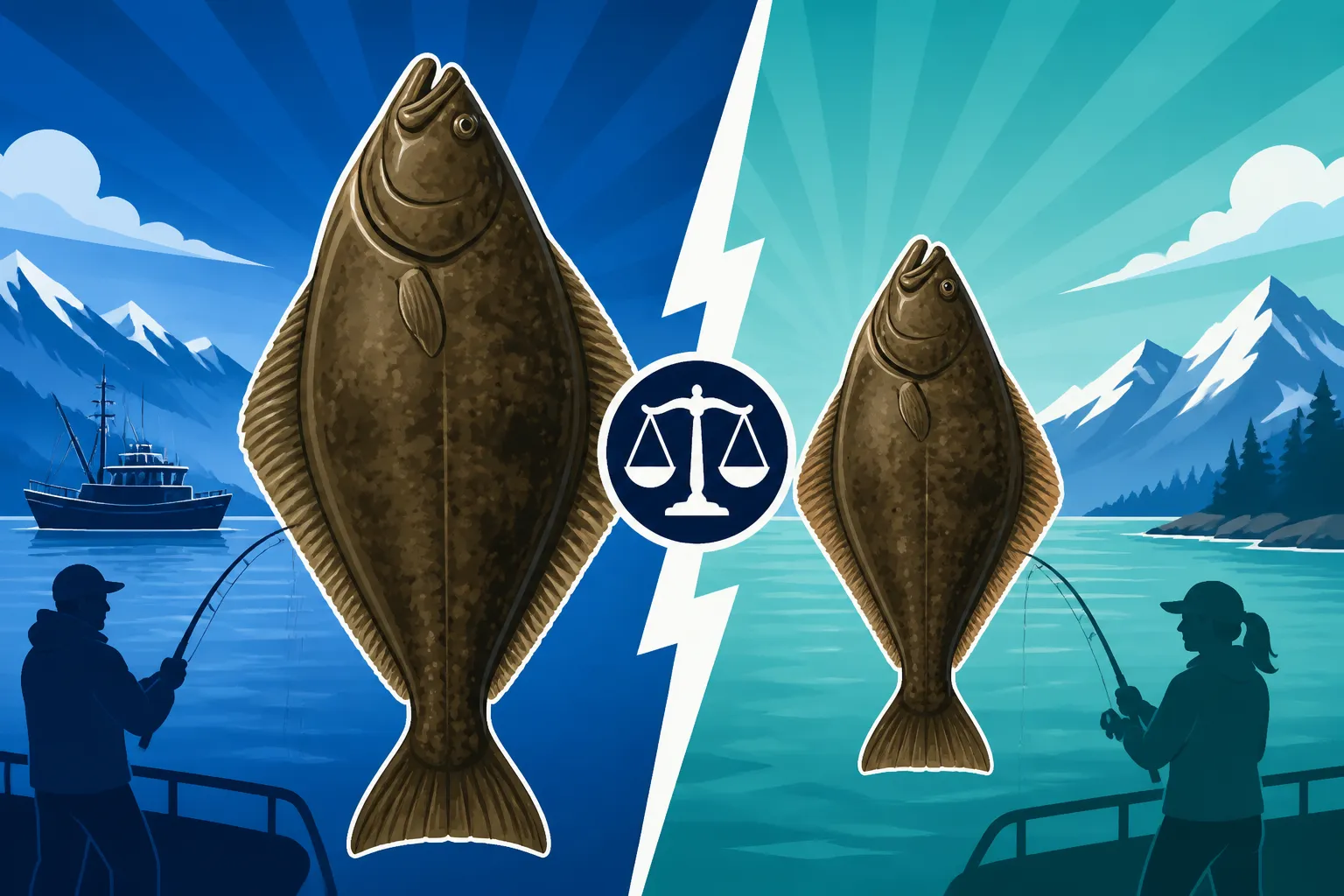
This is where the rubber meets the road for anglers! The most striking and well-known difference between male and female Pacific halibut is their ultimate size. If you've ever heard tales of "barn door" halibut, chances are those magnificent creatures were female. This isn't just an anecdotal observation; it's a scientifically validated fact that deeply impacts fishing strategies and understanding of the species.
Average Size and Weight Disparities
The vast majority of Pacific halibut caught in recreational fisheries in Alaska that weigh over 100 pounds are female. Male halibut rarely exceed 50-60 pounds, and a 100-pound male is almost unheard of. Conversely, females can grow to absolutely immense sizes, with records pushing well over 400 pounds. The current sport fishing record for a Pacific halibut caught in Alaska stands at 459 pounds, landed out of Unalaska Bay in 1996 by Jack Tragis – an undeniable female.
Consider a typical day of halibut fishing out of Seward or Homer. You might catch several "chicken" halibut, ranging from 15 to 40 pounds. These could be either males or younger females. However, if you hook into a true monster, a fish that makes your back ache and your arms burn, the odds are overwhelmingly in favor of it being a mature female. This size disparity isn't just about weight; it also translates to length and thickness. A 150-pound female halibut will be significantly longer and much thicker across its body than a 50-pound male.
To illustrate, here's a general comparison:
| Characteristic | Male Pacific Halibut | Female Pacific Halibut |
|---|---|---|
| Typical Weight | 10-60 lbs (rarely exceeds 60 lbs) | 20-400+ lbs (commonly 50-200 lbs) |
| Maximum Weight | ~100 lbs (extremely rare) | 450+ lbs (record: 459 lbs) |
| Typical Length | 30-55 inches | 40-90+ inches |
| Growth Rate | Slower after sexual maturity | Significantly faster and continues for longer |
| Life Span | Up to ~20-25 years | Up to ~40 years |
| Common Names | "Chicken halibut" (if smaller) | "Barn door," "sow," "breeder" (if large) |
Why Female Halibut Grow So Much Larger
The biological reason behind this dramatic size difference is primarily tied to reproduction. Female halibut require a tremendous amount of energy to produce and carry millions of eggs each spawning season. To sustain this energy-intensive process over many years, they evolve to grow larger and live longer than males. A larger body size allows them to store more energy reserves, produce more eggs, and therefore contribute more significantly to the future generations of halibut. This biological imperative drives them to continue growing throughout their extended lifespans.
Think of it like this: a male halibut's role in reproduction is relatively less energy-demanding compared to a female's. Males mature earlier and dedicate their energy to finding mates, but they don't have the same biological pressure to accumulate vast energy reserves for egg production. Consequently, their growth slows down considerably once they reach sexual maturity. Meanwhile, the female's body is a factory for future halibut, constantly needing more resources, which translates directly into continued, often rapid, growth. This is a critical factor when considering why big halibut are almost always female.
Implications for Anglers: Targeting and Regulations
Understanding the size differences between male and female halibut isn't just an interesting biological fact; it has real, practical implications for how you fish and what you can expect to catch. From the gear you choose to the areas you target, knowing these distinctions can give you an edge and help you better appreciate the complex fisheries management in Alaska.
Strategies for Targeting Bigger Halibut
If your dream is to land one of those legendary "barn door" halibut, you'll inherently be targeting mature females. This often means fishing in deeper waters where these older, larger fish tend to congregate. While smaller halibut, both male and young female "chickens," can be found in shallower coastal areas, the truly gargantuan specimens typically inhabit depths from 200 feet down to several hundred feet. Many of the Best Halibut Fishing in Alaska spots, like those off Homer or Seward, involve deep-dropping techniques specifically to reach these larger fish.
To target these bigger, likely female halibut, you'll need robust gear. Heavy-duty conventional rods, reels spooled with strong braided line (like 80-100 lb test), and large lead weights (often 1-3 pounds or more) are essential for reaching the bottom and staying there in strong currents. Bait choice also matters; while smaller halibut will hit a variety of baits, large chunks of herring, salmon heads, or even whole octopus are often preferred by the biggest fish. Techniques like bottom fishing and jigging with substantial jigs are key. You can find many of these specialized items, like heavy-duty reels and lines, on platforms like Amazon if you're gearing up for a serious trip. Learning how to set up a halibut rig for Alaska and how to effectively How to Jig for Halibut in Alaska are skills that greatly increase your chances of hooking into a true trophy.
How Regulations Account for Gender Differences
Alaska's fishing regulations are meticulously crafted to ensure the sustainability of the halibut population, and they indirectly account for the growth patterns of male and female fish. The most notable example is the "reverse slot limit" often employed in the charter fishery. For instance, the Alaska Halibut Charter Reverse Slot Limit might dictate that anglers can keep one halibut under a certain size (e.g., 40 inches) and one halibut over a larger size (e.g., 80 inches), with all fish in between required to be released. Or, more commonly, a charter angler might be allowed to retain one fish of any size and a second fish that is no more than a specified length (e.g., 28 inches).
The intention behind these types of regulations is to protect the highly productive mature female halibut, which fall into those middle-to-larger size ranges. By releasing those mid-sized females, managers aim to ensure these valuable breeders can continue to spawn and replenish the stock. The largest "trophy" halibut, while often female, are so old that their reproductive output might be declining, and their numbers are comparatively few, so allowing their retention for sport doesn't have as significant an impact on the overall population health as protecting the younger, actively spawning females. Understanding the Alaska Halibut Fishing Regulations and Limits is paramount for any angler, as they frequently change based on stock assessments and conservation goals.
Practical Tips for Identifying Halibut Gender (After Catch)
So, you've landed a beautiful halibut, and now you're curious about its gender. While a definitive internal inspection is the scientific method, there are some visual cues that can give you a strong indication, especially with larger fish. This informal identification can add another layer of appreciation to your catch and help you understand the dynamics of the halibut fishery.
Visual Cues and Physical Characteristics
For small to medium-sized halibut (say, under 50 pounds), distinguishing male from female visually is extremely difficult, if not impossible. Their body shapes are generally similar, and there are no external secondary sexual characteristics that reliably indicate gender at this stage. You might even catch several "chicken halibut" throughout the day, having no real idea whether they're male or female.
However, once you start getting into the larger categories, particularly those fish over 80 pounds, the probability of it being a female skyrockets, and certain characteristics might become more pronounced:
- Overall Size: As discussed, this is the biggest indicator. If it's a genuine "barn door," pushing triple digits in weight, it's almost certainly a female.
- Body Thickness: Large females often have a noticeably thicker body across their width compared to a male of similar length (though males rarely reach that length). Their abdominal cavity, especially if full of roe, can also appear more distended, contributing to a heavier, rounder appearance.
- Head Size vs. Body: Some anecdotal evidence suggests that very large females might have a slightly smaller head proportionally to their massive body than an equivalently large (though rare) male, or compared to smaller fish. This isn't a hard and fast rule, but it can be a subtle indicator in conjunction with other factors.
It's important to stress that these are generalizations and not foolproof diagnostic tools. The only absolute way to confirm gender is through biological examination of the reproductive organs. Nevertheless, for the purpose of general curiosity and understanding, the sheer size of the fish is your strongest clue. When you look at pictures of the Biggest Halibut Ever Caught in Alaska, you're almost certainly looking at a massive female.
The Importance of Knowing for Catch Management
While you won't be sexing every halibut you catch, understanding that the largest fish are predominantly female highlights the importance of responsible angling and adherence to regulations. Fisheries managers focus on maintaining a healthy spawning stock, and since females are the egg producers, their conservation is paramount. The specific rules, such as the Alaska Halibut Daily Limit for Charter Anglers or the Alaska Halibut Limit for Unguided Anglers, are designed with these biological factors in mind.
By understanding the "Why Are Big Halibut Always Female" phenomenon, anglers can develop a deeper respect for the species and the intricate balance of the ecosystem. It also helps explain terms like "Chicken vs Barn Door Halibut" and why certain size limits or reverse slot limits are implemented. Every fish you release, especially those healthy, mid-sized females, contributes to the long-term health of the fishery. Catch-and-release best practices, particularly for large, older fish, help ensure they can continue their vital role in the ocean. This awareness is part of being a truly responsible and knowledgeable angler in the waters of Alaska.
Disclaimer
The information provided in this guide is for general informational purposes only and is subject to change. Alaska fishing regulations are complex and can be updated frequently, often through emergency orders. Always consult the most current Alaska Department of Fish and Game regulations booklet and emergency order announcements before engaging in any fishing activity.