Biggest Halibut Ever Caught in Alaska
For any angler dreaming of a true trophy, the thought of wrestling with a "barn door" halibut in the vast, wild waters of Alaska is a powerful one. We've all seen the pictures—anglers practically dwarfed by their massive catch—and it ignites a spark of pure, unadulterated fishing ambition. But what's the real story behind these behemoths, especially the biggest halibut ever caught in Alaska? This comprehensive guide will pull back the curtain on the legendary giants of the deep, exploring the records, the science, and the sheer thrill of chasing these magnificent flatfish.
The Legendary Giants: Understanding Alaska's Record Halibut
There's something incredibly captivating about a record-breaking catch. It speaks to persistence, skill, a bit of luck, and the sheer abundance of nature. In Alaska, where the waters are teeming with Pacific halibut, the records aren't just numbers; they're stories etched into fishing lore.
The All-Tackle World Record
When we talk about the absolute biggest halibut ever, we're usually referring to the International Game Fish Association (IGFA) All-Tackle World Record. This isn't just an Alaska thing, but Alaska's cold, nutrient-rich waters are certainly where the biggest contenders are found. The current IGFA All-Tackle World Record Pacific Halibut stands at an astounding 459 pounds, caught by Jack Tragis back in 1996 in Dutch Harbor, Alaska. Imagine the fight, the strain on the line, the sheer effort it would take to bring a fish that massive to the boat! It’s a testament to the immense size these flatfish can achieve in the bountiful Aleutian waters, far from the more heavily fished areas of the Gulf of Alaska.
This world record isn't just a number; it represents the pinnacle of halibut fishing achievement and the incredible potential lurking in Alaska's deep, pristine oceans. While Dutch Harbor might not be a common sportfishing destination for the average tourist, this record certainly fuels the dreams of anglers everywhere who venture to more accessible spots like Homer or Seward hoping to hook into their own personal best. It's a constant reminder of what's possible.
Alaska State Records: Sport vs. Commercial
Alaska also maintains its own state records, and it's important to distinguish between sportfishing and commercial catches. The IGFA record mentioned above is a sportfishing record, adhering to strict rules about tackle and fair chase. The Alaska Department of Fish and Game (ADF&G) tracks state records for sport-caught fish, and while the 459-pounder holds the world title, many other impressive halibut have been brought to gaff within Alaska's waters.
For instance, the state record for a sport-caught Pacific halibut often refers to a particular location or circumstance, though the Dutch Harbor behemoth essentially serves as the overarching state record for sport anglers. Commercial catches, however, often involve different gear and methods, and while they routinely pull in fish weighing well over 300 pounds, these are not considered sportfishing records. Commercial vessels using longlines can bring in truly gargantuan halibut, sometimes even exceeding the sport record, but they operate under different regulations and goals. The daily limits and overall management strategies for commercial fisheries are distinct from those guiding recreational anglers, as detailed in the Alaska Halibut Charter Regulations Explained.
Unofficial Giants and Local Legends
Beyond the official record books, there are countless stories of unofficial giants, the "one that got away," or the monster fish landed on a private boat that never made it to an official weigh station. These local legends add to the mystique of Alaska halibut fishing. Charter captains in places like Homer or Sitka often have tales of fish pushing the 300-pound mark that were either released, cut up on deck, or simply didn't go through the formal weigh-in process required for a record.
Sometimes, a fish might be landed, but the angler or captain might not be aware of the exact protocols for submitting a record. Other times, the focus is simply on the incredible experience of catching such a powerful creature. These whispered accounts and photographic evidence of truly massive fish, even if unofficial, fuel the excitement for anglers planning their trips to the Best Halibut Fishing in Alaska. The pursuit of these colossal fish is often about the adventure and the challenge, not just the official title.
What Makes an Alaska Halibut a "Barn Door"
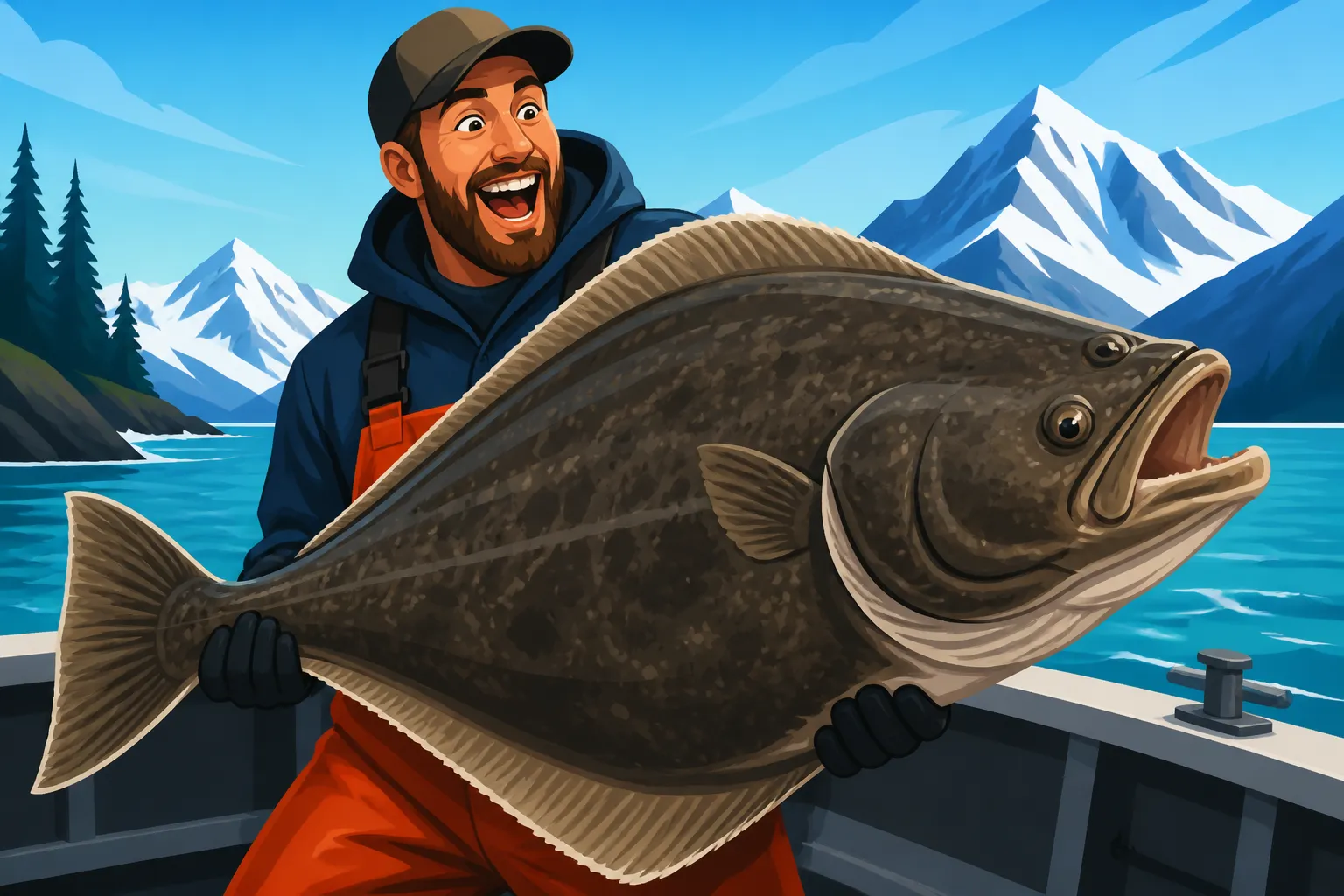
The term "barn door" is often used to describe those truly massive halibut that look like, well, a barn door. They are incredibly wide, thick, and intimidatingly large. But what factors contribute to a halibut growing to such monumental proportions? It's a fascinating combination of biology, environment, and sheer luck.
Growth, Age, and Habitat
Pacific halibut are known for their impressive size and longevity. They are a long-lived species, with some individuals reaching ages of 50 years or more. Like many fish, their growth rates are influenced by water temperature, food availability, and genetics. In the cold, nutrient-rich waters of Alaska, particularly in the Bering Sea and Gulf of Alaska, halibut have access to an abundant food supply, including pollock, cod, herring, and other bottom-dwelling creatures. This rich diet, combined with a long lifespan, allows them to grow steadily over decades.
The deeper, colder waters they inhabit also contribute to their slower metabolism and extended growth period. As they age, they continue to put on weight and size, becoming the true giants of the deep. It's a delicate balance; while fast growth can lead to larger fish quickly, the longevity in these cold waters is what really allows them to become the enormous "barn doors" that anglers dream of. The Alaska Halibut: Complete Guide provides more insights into the life cycle of these incredible fish.
The Difference Between Males and Females
Interestingly, there's a significant size disparity between male and female Pacific halibut, particularly in the larger size classes. Female halibut tend to grow much larger and live longer than males. While a male halibut might top out around 100-150 pounds, a female can easily exceed 200, 300, or even over 400 pounds. This biological difference is a key reason why nearly all the "barn door" halibut you see pictures of, especially the record-breakers, are female.
The females need to reach these substantial sizes to produce the millions of eggs required for successful spawning. Their larger bodies allow them to carry more roe, ensuring the continuation of the species. This makes the hunt for a true trophy halibut largely a hunt for a mature, large female. Understanding this biological distinction can even influence where and when anglers target the biggest fish, focusing on areas known for older, larger populations.
The "Chicken" vs. "Barn Door" Scale
Anglers and guides often use descriptive terms to categorize halibut based on their size. The most common distinction is between "chickens" and "barn doors."
A "chicken halibut" typically refers to a smaller, more manageable fish, usually in the 10-30 pound range, although some might extend this up to 50 pounds. These are excellent eating fish, easy to handle, and provide a fun fight. They're what most anglers hope to catch for dinner.
"Barn door halibut," on the other hand, are the monsters. While there's no official weight, generally a halibut pushing 100 pounds or more starts to earn this moniker. A true barn door is often over 200 pounds, requiring multiple people to handle and a serious commitment to bringing it aboard. These fish are not just bigger; they're exponentially more powerful and provide an unforgettable angling experience. It's the quest for these formidable barn doors that truly drives many anglers to Alaska's waters.
The Thrill of the Hunt: Pursuing Trophy Halibut
Chasing a monster halibut is not for the faint of heart. It requires patience, strength, and the right strategy. The payoff, however, is an unparalleled battle against one of the ocean's most powerful bottom dwellers.
Where to Find the Giants
While halibut are widespread throughout Alaska's coastal waters, certain areas are renowned for producing larger fish. The deep, offshore waters of the Gulf of Alaska, particularly around Kodiak Island, Seward, and Homer, are prime locations. Charter operations in these regions frequently target productive ledges, underwater pinnacles, and deep channels where large halibut congregate. These specific structures provide ambush points and access to deeper, cooler water where older, larger fish prefer to reside.
Further west, the Bering Sea and Aleutian Islands, near where the world record was caught, hold immense populations of truly massive halibut due to their remote nature and rich feeding grounds. However, these areas are generally only accessible via multi-day expeditions or specialized fly-out trips, making them less common for the casual angler. For most, focusing on established charter destinations like Sitka, Juneau, or Valdez, and communicating with experienced captains about targeting larger fish, is the best approach. Guides who specialize in deep-water drops often have a better understanding of where these giants lie.
Best Times and Conditions for Big Halibut
Timing is crucial when you're after a trophy halibut. While halibut can be caught year-round in some areas, the prime season for larger fish generally aligns with the warmer months when halibut are more active and feeding heavily. From May through September, with July and August often being peak, the giants are more likely to be on the move and willing to strike. These months also correspond with the major salmon runs, providing an even richer food source.
Weather and tidal conditions also play a significant role. Fishing on slack tides, or just before or after, can be productive as the current is less strong, making it easier to hold bottom and for fish to feed. Overcast days with light chop can sometimes be ideal, as it reduces light penetration, making halibut less wary. However, the most important "condition" is often simply being out there with a persistent guide who knows the specific honey holes for large fish. It's often said the "best time to fish for halibut is whenever you can go!" More specific details on seasonal patterns can be found in our guide on Best Depth for Alaska Halibut Fishing.
The Fight of a Lifetime
Hooking into a truly big halibut is an experience unlike any other. It starts with a heavy thud, often feeling like you've snagged the bottom, before the "bottom" starts pulling back. These fish are incredibly strong, using their broad, flat bodies to create immense drag in the water. They often make powerful, deep runs, testing your tackle and your stamina to the absolute limit. It's not uncommon for a battle with a 150-pound halibut to last 20-30 minutes, sometimes even longer for the real monsters.
The fight is a combination of brute force and tactical reeling. You'll need to pump the rod, gaining a few inches of line at a time, only for the halibut to peel it back off again. It's a test of wills, and when you finally see that massive, mottled brown shape emerge from the depths, the sense of accomplishment is profound. The sheer weight and power of these fish are something you truly have to experience to believe. Our article How to Fight a Barn Door Halibut offers more detailed strategies for landing these monsters.
Gear Up for Giants: Tackling Monster Halibut
You wouldn't bring a butter knife to a sword fight, and you certainly shouldn't go after a "barn door" halibut with flimsy tackle. These fish demand heavy-duty gear capable of withstanding immense pressure.
Rods, Reels, and Line for Heavy Duty Halibut
When targeting trophy halibut, your equipment needs to be robust. For rods, think heavy-action conventional rods, typically 6 to 7 feet long, designed for deep-sea bottom fishing. Brands like Ugly Stik, Shimano, and Penn offer excellent options that can handle the stress. These rods have a strong backbone to lift heavy weights and muscle powerful fish, yet enough tip flexibility to absorb lunges.
For reels, a high-quality conventional reel with a strong drag system and ample line capacity is essential. Penn Squall, Shimano Talica, or Daiwa Saltiga are popular choices among serious halibut anglers. Look for reels that can hold at least 300-400 yards of 80-100 pound braided line. Braided line is preferred over monofilament for its minimal stretch, allowing for better bite detection in deep water, and its incredible strength-to-diameter ratio. This setup ensures you have the power and endurance to outlast a big fish. Finding quality gear like this is easy with a quick search on Amazon for "heavy duty halibut fishing gear."
Essential Rigs and Baits
When it comes to rigs, simplicity and strength are key. A basic spreader bar rig or a sliding sinker rig with a stout 100-200 lb leader is standard. The spreader bar helps keep your bait separate from your sinker, reducing tangles, while the sliding sinker rig allows the fish to take the bait without immediately feeling the weight of the lead. Circle hooks, typically in sizes 16/0 to 20/0, are crucial for proper hook-sets in the corner of the fish's mouth, minimizing harm if released and providing a secure hold during the fight.
As for bait, halibut are opportunistic feeders, but they absolutely love oily, smelly offerings. Chunks of salmon, herring, cod, or even octopus are highly effective. Many anglers also incorporate scent gels or sprays to further entice bites. Some guides prefer large lead jigs tipped with bait, which allows for active jigging to attract attention. Understanding Best Bait for Alaska Halibut can greatly increase your chances of hooking into a trophy.
Safety and Landing Equipment
Landing a "barn door" halibut is a team effort and requires specialized equipment for both safety and efficiency. A heavy-duty gaff with a long handle is indispensable for securing the fish once it's alongside the boat. For truly massive halibut, some charters will use a flying gaff or a harpoon to ensure the fish is quickly subdued, especially if it's destined for harvest. Once gaffed, a tail rope is often applied to help lift the immense weight into the boat, preventing damage to the fish or injury to anglers.
Beyond the landing tools, safety is paramount. The deck can become slippery, and a thrashing halibut poses a real risk. Always wear appropriate footwear, and ensure you have clear communication with your captain and deckhands. Keeping a stout club, often called a "priest," nearby is also common practice to dispatch the fish quickly and humanely once on board, minimizing stress to the fish and chaos on deck. You can find robust gaffs and other landing equipment on Amazon to ensure you're prepared for whatever lurks beneath the waves.
Beyond the Records: Conservation and Sustainable Practices
While the allure of catching the biggest halibut is undeniable, it's vital to balance this ambition with responsible fishing practices. Sustainable management ensures that future generations of anglers can also experience the thrill of chasing these magnificent fish.
Regulations and Size Limits
Alaska's halibut fishery is carefully managed by the International Pacific Halibut Commission (IPHC) and the National Marine Fisheries Service (NMFS), with state-specific regulations by the ADF&G. These regulations include daily bag limits, annual limits, and often size restrictions or reverse slot limits. For instance, in some areas, there might be a "one fish under X inches or one fish over Y inches" rule, or even specific "no retention" days for certain sizes to protect spawning females. These measures are designed to protect the breeding stock and maintain a healthy population.
It's crucial to understand the specific regulations for the area you're fishing, as they can vary by region and even change in-season through emergency orders. A good charter captain will always be up-to-date, but it's the angler's responsibility to be aware. Our guide to Alaska Halibut Daily Limit for Charter Anglers and Alaska Halibut Size Limit Explained offers more detailed information on these critical rules. Adhering to these regulations is not just about legality; it's about being a responsible steward of this incredible resource.
Deepwater Release Devices and Best Practices
When a "barn door" halibut is brought to the surface from deep water, it often suffers from barotrauma—the expansion of gases in its swim bladder due to the rapid change in pressure. This makes it difficult or impossible for the fish to swim back down on its own. For large fish that are either over the limit, outside a slot limit, or simply being released by choice, using a deepwater release device is not just a good idea, it's often legally mandated.
These devices, easily found on Amazon or at local tackle shops, gently return the fish to the depth from which it was caught, allowing it to recompress and swim away unharmed. Proper catch-and-release techniques, minimizing time out of water, and handling the fish carefully are all part of best practices. Releasing a massive, healthy breeder is a noble act that contributes directly to the long-term health of the halibut population, ensuring those "biggest ever" stories continue for years to come.
The Future of Trophy Halibut Fishing
The pursuit of trophy halibut in Alaska is an enduring tradition, but it faces ongoing challenges. Climate change, fluctuating ocean conditions, and varying fish stocks mean that regulations are constantly being adjusted to ensure sustainability. The future of catching truly enormous halibut hinges on continued scientific research, effective management strategies, and the commitment of anglers and commercial fishermen alike to conservation.
As an angler, your choices matter. Choosing reputable charters that prioritize sustainable practices, adhering to all regulations, and practicing responsible catch-and-release when appropriate all contribute to a healthier fishery. The dream of catching a 400-pound halibut is still very much alive, but it's a dream that we all need to protect.
Alaska Halibut Records and Sizes at a Glance
For those keen on understanding the different scales of halibut, here’s a quick overview of typical sizes and the record-breaking catches we've discussed.
| Category | Typical Size Range (lbs) | Notable Records / Description |
|---|---|---|
| Chicken Halibut | 10 – 50 | Excellent eating fish, common sport catch. |
| Medium Halibut | 50 – 100 | Good fight, solid meat yield. |
| Large Halibut | 100 – 200 | Often referred to as "trophy size," powerful fight. |
| Barn Door Halibut | 200+ | Massive, often female, requires heavy tackle and skill to land. |
| IGFA World Record | 459 | Caught by Jack Tragis in Dutch Harbor, AK (1996). |
| Alaska State Record (Sport) | 459 (overlaps with IGFA) | The largest officially recorded sport-caught fish in Alaska. |
| Commercial Catches | Can exceed 459, typically processed at sea | Not considered sport records; often caught with longlines. |
This table illustrates the broad spectrum of halibut sizes you might encounter in Alaska, from your dinner-plate "chicken" to the legendary "barn door" giants.
Disclaimer
Please be aware that fishing regulations in Alaska can change frequently due to emergency orders and in-season adjustments by the Alaska Department of Fish and Game (ADF&G) and other regulatory bodies. Always consult the most current Alaska Sport Fishing Regulations booklet or the ADF&G website before heading out on your fishing trip to ensure compliance. This guide is for informational purposes only and should not be considered a substitute for official regulations.