Alaska Halibut: Complete Guide
Few fishing experiences in Alaska are as universally sought after and utterly rewarding as chasing Pacific halibut. Yet, for many folks dreaming of pulling up one of these flat, formidable giants from the deep, the sheer scale of the Alaskan wilderness and the seemingly complex regulations can feel pretty overwhelming. It's a common frustration: you want to experience that legendary fight, taste that incredible white meat, but figuring out where to go, when to go, what to use, and what rules to follow can stop a trip dead in its tracks. This comprehensive guide is here to untangle all those knots, offering a realistic, in-depth look at everything you need to know to successfully plan and execute your Alaska halibut fishing adventure, whether you're a seasoned angler or a first-timer.
Understanding Alaska's Gentle Giants: The Pacific Halibut
The Pacific halibut (scientific name: Hippoglossus stenolepis) isn't just a fish; it's an icon of Alaska's rich marine ecosystem and a true bucket-list catch for anglers worldwide. There's something truly mesmerizing about these flatfish, with their unique biology and incredible size potential. Many people envision them as bottom-dwelling sluggish creatures, but that couldn't be further from the truth when you hook into a "barn door" that decides it doesn't want to come to the surface.
Biology and Characteristics of Pacific Halibut
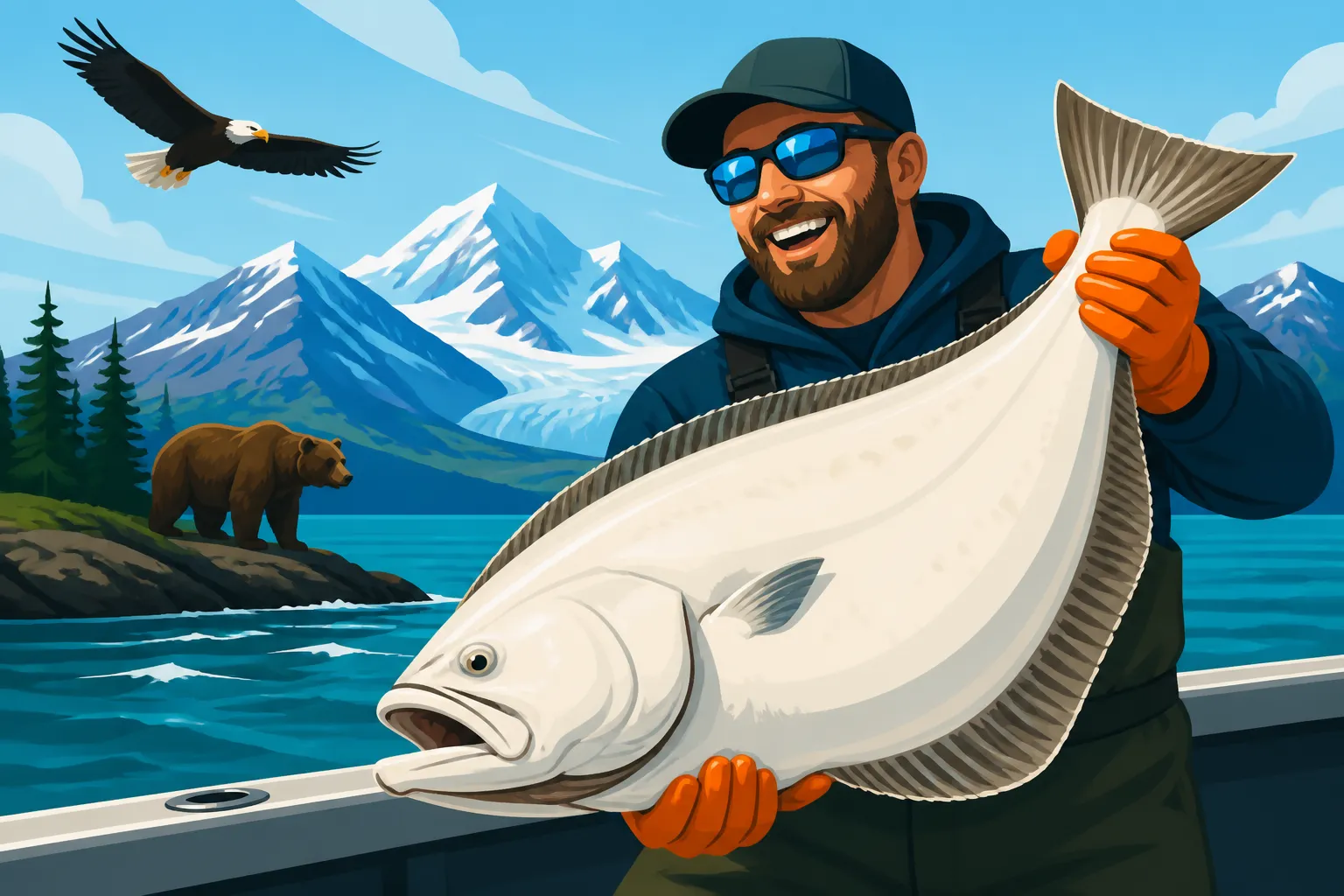
Pacific halibut are fascinating creatures, perfectly adapted to life on the ocean floor, though they're certainly not confined to it. They start life as normal-looking fish, but as they grow, one eye migrates to the other side of their head, allowing them to lie flat on the seabed with both eyes facing upwards. This unique adaptation gives them an incredible advantage as ambush predators, blending in with their surroundings. Their top side is typically dark, mottled brown or greenish, perfectly camouflaging them against the seafloor, while their underside is stark white. This natural camouflage makes them incredibly hard to spot even in clear water, letting them wait for unsuspecting prey like cod, pollock, herring, crab, and even smaller halibut.
Beyond their looks, their sheer size is what often captivates anglers. These aren't your average panfish; Pacific halibut are the largest flatfish in the world. They can grow to enormous proportions, with record-breaking individuals weighing hundreds of pounds and measuring over eight feet long. While most recreational anglers will typically encounter halibut ranging from 20 to 100 pounds, those "barn door" halibut — often exceeding 150 or even 200 pounds — are the stuff of legends and a testament to the powerful, pristine waters they inhabit. Their firm, flaky white flesh is also highly prized for its mild flavor and versatility in cooking, making it one of the most sought-after seafood items.
Their Role in the Alaskan Ecosystem
Halibut play a significant role in the marine food web, both as predators and, particularly when young, as prey. As apex predators on the seabed, they help maintain balance in fish populations, feeding on a wide variety of organisms. They are long-lived fish, sometimes reaching ages of 50 years or more, which means they've seen a lot of changes in the ocean. This longevity also makes them a species that requires careful management to ensure sustainable populations for future generations of both fish and fishermen.
The health of the halibut population is a strong indicator of the overall well-being of Alaska's coastal waters. Factors like ocean temperatures, food availability, and fishing pressure all impact their numbers and distribution. The robust management efforts by organizations like the International Pacific Halibut Commission (IPHC) and the Alaska Department of Fish and Game (ADF&G) are crucial for balancing conservation with the demands of commercial, sport, and subsistence fisheries. Understanding their place in the ecosystem gives you a greater appreciation for these magnificent fish when you're out on the water, reminding you that your fishing experience is part of a much larger, intricate natural system.
Where to Find Halibut in Alaska: Top Spots and Habitat
Alaska is a vast state, and while halibut can be found along much of its coastline, certain areas are renowned for consistent catches and the potential for truly massive fish. Knowing where to focus your efforts, and understanding the kind of environment these fish prefer, will dramatically increase your chances of success.
Coastal Hotspots for Halibut
When people talk about the best halibut fishing in Alaska, a few names consistently rise to the top. Each location offers a slightly different experience, but all hold the promise of a memorable halibut encounter.
-
Homer: Often dubbed the "Halibut Fishing Capital of the World," Homer, located on the Kenai Peninsula, is arguably the most famous halibut destination. Its proximity to rich fishing grounds in Kachemak Bay and Cook Inlet means shorter boat rides to productive areas. The town itself is geared towards fishing, with numerous charters, processors, and lodging options. Many anglers travel to Homer specifically for the chance to catch a "barn door" halibut. The deep waters and strong currents here create ideal feeding grounds. If you're looking for a vibrant fishing community with easy access to big fish, Homer is a fantastic choice. You can find many reputable Homer Halibut Fishing Guides operating out of the famous Homer Spit.
-
Seward: Located on Resurrection Bay, Seward is another premier destination, particularly for those looking for a mix of halibut and salmon or rockfish. The waters offshore from Seward in the Gulf of Alaska are incredibly fertile. While the boat rides can sometimes be a bit longer than from Homer, the scenery is absolutely stunning, with glaciers and rugged mountains providing a dramatic backdrop. Seward is a gateway to diverse fishing opportunities, and many charters offer combo trips, allowing you to target multiple species in a single day. The deep fjords and open ocean here are home to a healthy population of halibut.
-
Kodiak Island: For a true wilderness experience and access to some of the most remote and productive halibut grounds, Kodiak Island is hard to beat. The waters around Kodiak are legendary for both size and abundance. This is less of a "road system" destination and more of an "adventure" trip, often involving fly-in lodges or extended boat charters. The currents and food sources around the archipelago make for prime halibut habitat. If you're an experienced angler seeking a more rugged, less crowded experience with the potential for truly enormous fish, Kodiak should be on your radar.
-
Southeast Alaska (Sitka, Juneau, Ketchikan): Don't overlook Southeast Alaska! While perhaps not as famous for halibut alone as Homer or Seward, cities like Sitka, Juneau, and Ketchikan offer phenomenal combination fishing trips where halibut are a major target alongside five species of salmon, lingcod, and various rockfish. The intricate network of islands, fjords, and open ocean provide a diverse habitat. Charters here often run out to the outer coastlines and offshore banks where halibut congregate. Sitka, in particular, has gained a reputation for both trophy king salmon and large halibut. For anglers who want to experience the full spectrum of Alaska's marine sportfishing, Southeast provides incredible opportunities.
Understanding Halibut Habitat Preferences
To successfully target halibut, it's essential to think like one. These fish are primarily bottom dwellers, but they're not just found anywhere on the bottom. They have specific preferences that dictate where they’ll congregate.
Halibut prefer relatively flat or gently sloping bottoms composed of sand, gravel, or mud. While they can be found on rocky reefs, they generally avoid extremely rugged, jagged terrain where they can't effectively camouflage themselves. Their ideal depth can vary significantly, from as shallow as 50 feet to over 1,000 feet, but most recreational fishing occurs between 100 and 400 feet. The sweet spot often depends on the specific feeding patterns and the time of year.
Current is another critical factor. Halibut are ambush predators, and they use currents to their advantage. They will orient themselves facing into the current, waiting for baitfish, squid, or other prey items to be swept past them. Areas where currents accelerate or create eddies — such as around underwater pinnacles, ledges, or the edges of channels — are prime hunting grounds. These "structure" points concentrate food and provide perfect ambush opportunities. A good skipper will often motor around, watching their sonar for changes in bottom contour, bait balls, and "halibut marks" – often appearing as distinct, elongated signals right on the bottom. Strong currents also mean that you'll need heavier weights to keep your bait or jig on the bottom, a crucial consideration for your gear setup.
When to Target Halibut: Best Seasons and Times
Timing is everything when it comes to fishing in Alaska, and halibut are no exception. Understanding their seasonal movements and even daily habits will help you plan your trip for maximum success.
Prime Halibut Fishing Seasons
The halibut fishing season in Alaska generally runs from late spring through early fall, with specific peaks depending on the region and what you're hoping to catch.
-
May: The early season in May can be excellent, especially for anglers looking to avoid the peak summer crowds. As water temperatures begin to rise, halibut become more active and start feeding aggressively after the colder winter months. Larger, older fish are often among the first to move into shallower feeding grounds. The weather can be a bit more unpredictable in May, but the fishing can be fantastic, and charter availability is usually better. It’s an ideal time for dedicated halibut anglers who prioritize fish over perfect weather. Many charters in Homer and Seward start their seasons strong in May.
-
June, July, August: This is the absolute peak of the Alaska halibut season explained. These months offer the most consistent fishing, warmest weather, and longest daylight hours, thanks to the midnight sun. Halibut are actively feeding, and charter operations are in full swing. June often sees a strong bite, and by July and August, the populations are well established in their summer feeding areas. If you're looking for the best chance at both quantity and quality, and you don't mind sharing the water with more boats, these are the months to aim for. However, booking well in advance is absolutely critical during this timeframe, as prime dates fill up a year or more out. These months also coincide with peak salmon runs, allowing for excellent combo trips.
-
September: As summer fades into fall, September can still offer outstanding halibut fishing, often with fewer crowds and cooler temperatures. The halibut are still feeding heavily, preparing for winter. While some of the migratory salmon species are finishing their runs, the deep-sea fishing can remain strong. The weather can become more blustery, but a calm September day can be one of the most productive and pleasant times to be on the water. It's a great shoulder-season option for those who prefer a quieter experience and don't mind bundling up a bit more.
Daily and Tidal Considerations
Beyond the time of year, paying attention to the daily tides and time of day can significantly impact your halibut success.
-
Slack Tide: Many experienced halibut anglers swear by fishing around slack tide. This is the period when the tidal current slows down and changes direction, typically lasting for about an hour around both high and low tide. During slack tide, your bait or jig stays on the bottom more easily without being swept away, making it simpler for halibut to locate and strike. The fish themselves might also be more active as the reduced current makes it easier for them to move and feed. However, fishing during strong current can also be productive if you can keep your gear down, as it concentrates baitfish. It's often a balance: strong currents can attract fish, but slack tides make it easier to fish effectively.
-
Time of Day: While halibut are not strictly nocturnal or diurnal, their feeding patterns can be influenced by light and prey availability. Generally, they feed throughout the day. Many charters depart early in the morning to take advantage of calmer seas and the first bite of the day. The long daylight hours of Alaskan summer mean you have plenty of time on the water regardless of your departure time. However, paying attention to tide charts in relation to your chosen fishing grounds is usually more critical than the exact time the sun rises or sets. Your charter captain will always have the most up-to-date local knowledge on tides and the best fishing windows.
Gear Up for Success: Essential Halibut Tackle
Catching a halibut, especially a large one, is a serious endeavor that requires serious tackle. You can’t show up with your trout rod and expect to land a "barn door." The right gear makes all the difference, not just in catching the fish, but in comfortably battling it.
Rods and Reels for the Fight
The sheer power of a large halibut means your rod and reel setup needs to be robust and reliable. This isn't just about hauling in a big fish; it's about enduring a prolonged, intense fight that can test both angler and equipment.
-
Rods: Look for heavy-duty, fast-action boat rods designed for bottom fishing. A rod in the 6-foot to 7.5-foot range with a strong backbone is ideal. Fiberglass or composite rods are popular for their durability and ability to absorb the shock of a powerful strike and prolonged fight. The action should be strong enough to handle heavy weights (often 1-3 pounds or more) and provide the leverage needed to lift a big fish from the depths, but with enough tip sensitivity to detect subtle bites. Brands like Penn, Shimano, and Ugly Stik offer excellent options that can withstand the rigors of Alaskan halibut fishing. You can often find a good selection of appropriate rods on Amazon, reviewing angler feedback to ensure they meet the demands of halibut fishing.
-
Reels: This is where you absolutely cannot skimp. You need a conventional (levelwind or star drag) reel, not a spinning reel. The reel needs to hold a large capacity of heavy-test line and have a powerful, smooth drag system. Large conventional reels like the Penn Squall, Shimano TLD, or Daiwa Saltist models are popular choices. Look for reels with a gear ratio that allows for both power cranking and efficient line retrieval. A reliable reel with a strong, consistent drag is paramount, as a malfunctioning drag can quickly lead to a lost fish. Your reel should be spooled with at least 80-100 pound test braided line, which offers incredible strength-to-diameter ratio and minimal stretch, allowing for better bite detection.
Here's a quick comparison of common halibut tackle components:
| Component | Key Features | Ideal for | Considerations |
|---|---|---|---|
| Rod | 6-7.5 ft, Heavy Action, Strong Backbone | Deep-water bottom fishing, large fish | Fiberglass/composite for durability |
| Reel | Conventional, High Line Capacity, Smooth Drag | Handling large fish, heavy weights | 80-100 lb braid, reputable brands (Penn, Shimano) |
| Line | 80-100 lb Braided Line, Fluorocarbon Leader | Strength, sensitivity, abrasion resistance | Minimal stretch for bite detection |
| Weights | 1-3+ lbs Lead or Cannonball | Holding bottom in strong currents | Quick-release clips for easy changes |
| Hooks | 12/0 – 16/0 Circle Hooks | Secure hooksets, reduced gut hooking | Sharpness is crucial, barbless often required |
| Bait | Herring, Squid, Salmon Head, Octopus, Scented Baits | Attracting scent, visual appeal | Freshness matters, secure rigging |
Terminal Tackle and Baits That Work
Once you have your rod and reel, the rest of your setup needs to be equally tough and effective.
-
Line: As mentioned, 80-100 lb braided mainline is the standard for its strength and lack of stretch. This is often followed by a heavy monofilament or fluorocarbon leader, typically 100-200 lb test, to provide abrasion resistance against the halibut's rough mouth and the occasional rub against the bottom. The leader should be long enough to protect your mainline but not so long it becomes unwieldy, often 3-6 feet.
-
Weights: Halibut fishing means getting your bait to the bottom, often in strong currents and deep water. This requires substantial weight. Pyramids, cannonball sinkers, or even custom lead weights ranging from 1 pound to 3 pounds, and sometimes even more depending on current and depth, are common. Having a selection of weights is crucial, as conditions can change rapidly. Using a snap swivel or a quick-release clip for your weight allows for fast adjustments.
-
Hooks: Large, sharp circle hooks are the preferred choice for halibut. Sizes 12/0 to 16/0 are typical. Circle hooks significantly increase the chances of a solid hookset in the corner of the fish's mouth, reducing the risk of gut-hooking and making for easier release if you catch an undersized fish or a slot-limit fish. Ensure your hooks are incredibly sharp; dull hooks will lead to missed bites. In many areas, barbless hooks are required or strongly recommended, so check current Alaska fishing regulations.
-
Baits: Halibut are opportunistic feeders, and a variety of baits can be effective.
- Herring: This is a classic choice. Large whole or cut herring are incredibly effective, mimicking a natural prey item.
- Squid: Tough and appealing, squid stays on the hook well and is a consistent producer.
- Salmon heads or pieces: The oily, bloody nature of salmon scraps is a powerful attractant, especially for larger halibut. You can often get these from fish processors.
- Octopus: A very durable bait that halibut seem to love, though it can be harder to source.
- Artificial Scented Baits: While not a substitute for fresh bait, products like Berkley Gulp! or Pro-Cure scents can be added to your natural bait or jigs to enhance their appeal. These can be particularly useful on slow days or to tip a jig.
Regardless of your bait choice, presentation is key. Rig your bait securely so it doesn't spin in the current and stays on the hook through aggressive bites. Many anglers use "halibut rigs" which consist of a large circle hook snelled to a heavy leader, often with a large hoochie (squid skirt) or a large buoyant bead above the hook to add visual attraction and keep the bait slightly off the bottom.
Mastering Halibut Fishing Techniques
There’s more to halibut fishing than simply dropping a line and waiting. While patience is certainly a virtue, understanding the most effective techniques will significantly improve your catch rate and overall enjoyment.
Classic Bottom Fishing Strategies
This is the bread and butter of halibut fishing, and for good reason: it’s effective. The core principle is simple: get your bait down to where the halibut are, on the bottom, and keep it there.
-
Anchoring Up: Many experienced charter captains and private boaters prefer to anchor up over known halibut honey holes or promising structure. Once anchored, multiple lines can be deployed, often using spreader bars or heavy conventional rigs. The advantage of anchoring is that it allows the scent of your bait to concentrate in one area, creating a "chum line" that can attract halibut from a wider vicinity. It also allows you to precisely target a specific piece of structure or a proven depth. When anchored, anglers typically let their line out until they feel the weight hit the bottom, then reel up a foot or two to keep the bait just off the seabed, preventing it from snagging on bottom debris and ensuring it's visible. Periodically lifting and dropping the rod tip can create movement that simulates a struggling baitfish, drawing attention. If you’re anchoring, ensure you have an appropriate anchor system for deep water and strong currents, and know how to safely deploy and retrieve it.
-
Drift Fishing: When anchoring isn't feasible due to extremely strong currents, widespread halibut schools, or a desire to cover more ground, drift fishing becomes the go-to strategy. In this technique, the boat is allowed to drift with the wind or current (or a combination of both), dragging your baited rig along the bottom. The key here is to use enough weight to ensure your bait stays in contact with the bottom but not so much that it just digs in and snags. It’s a delicate balance. As the boat drifts, your bait covers a larger area, increasing the chances of encountering a halibut. This method requires constant attention to your line; you need to feel the weight bumping along the bottom and be ready to reel up or let out line to maintain contact. Drift fishing is particularly effective when you're scouting new areas or when halibut are scattered over a wider flat. On a charter, the captain will control the boat's drift, often using a "sea anchor" or "drift sock" to slow the boat down to the optimal speed.
Active Jigging and Drifting for Halibut
While passive bait fishing is highly effective, active techniques like jigging and incorporating specific drifts can sometimes outproduce traditional methods, especially when halibut are particularly aggressive or when targeting fish in certain areas.
-
Heavy Jigging: Jigging for halibut is an exhilarating way to fish. Instead of waiting for a bite, you are actively working a large metal jig or a leadhead jig with a soft plastic tail along the bottom. Jigs typically range from 8 ounces to 2 pounds or more, depending on depth and current. The technique involves dropping the jig to the bottom, then quickly lifting the rod tip sharply ("jigging") and letting it fall back down on a semi-slack line. This erratic up-and-down motion mimics a wounded baitfish or a squid, often provoking an aggressive strike. The strikes while jigging can be incredibly powerful, sometimes nearly ripping the rod out of your hands. Many anglers will tip their jigs with a piece of herring or squid to add scent and appeal. This technique is more physically demanding but can be incredibly rewarding, as it engages the angler much more actively in the fishing process. Learning how to jig for halibut in Alaska can be a game-changer.
-
Power Drifting and Spot Locking: Modern boat technology has opened up new possibilities for active halibut fishing. Many charter boats are equipped with powerful electric motors with GPS "spot-lock" capabilities (like those from Minn Kota or Rhodan). This allows the captain to precisely hold the boat over a specific piece of structure or a known halibut hot spot without deploying an anchor. This is fantastic for targeting small, productive areas where anchoring might be impractical or when you want to make repeated passes over a productive zone. For anglers, this means you can focus entirely on fishing your bait or jig on the bottom without worrying about the boat drifting off course. It combines the precision of anchoring with some of the versatility of drifting, allowing for controlled, repeated presentations.
When fishing, regardless of the technique, pay close attention to your rod tip. Halibut bites can range from a subtle tap, tap, tap to a violent pull that nearly takes the rod from your hands. When you feel a bite, don't immediately yank; let the fish take the bait, then slowly and steadily lift the rod to set the circle hook firmly. Then, get ready for a fight!
Alaska Halibut Regulations: What You Need to Know
Alaska's fishing regulations are designed to ensure sustainable fisheries for all species, and halibut are no exception. They can seem a bit complex at first, with different rules for residents, non-residents, charter clients, and unguided anglers, but understanding them is crucial for a legal and enjoyable trip. Ignoring them can lead to significant fines and penalties.
Navigating Licensing and Stamps
Before you even think about dropping a line, you need the proper paperwork.
-
Alaska Fishing License: Every angler aged 18 and older, whether resident or non-resident, needs an Alaska fishing license: complete guide. Residents typically have options for annual licenses at a lower cost, while non-residents will choose between 1-day, 3-day, 7-day, 14-day, or annual licenses. Children under 16 do not need a license to sport fish in Alaska. You can easily purchase your license online through the Alaska Department of Fish and Game (ADF&G) website, or from licensed vendors throughout the state, including many fishing shops and sporting goods stores like those found in Soldotna or Homer. Make sure to buy it before you head out, as some remote locations may not have purchasing options.
-
King Salmon Stamp: While not directly related to halibut, if you plan to target King Salmon (Chinook) in conjunction with your halibut trip, non-resident anglers are required to purchase a King Salmon Stamp. Residents are not required to have one for sport fishing King Salmon. Even if you're primarily after halibut, many combo trips will offer salmon fishing, so it's wise to consider this stamp if there's any chance you might encounter a King.
It's absolutely essential to carry your physical license or a valid digital copy with you at all times while fishing. Enforcement officers routinely check licenses, and you don't want your dream trip to turn into a legal nightmare.
Understanding Daily and Annual Bag Limits
This is where halibut regulations get particularly detailed, as they often change seasonally and can vary based on whether you're fishing with a charter or unguided. The International Pacific Halibut Commission (IPHC) and NOAA Fisheries manage halibut, and ADF&G implements the sport fishing regulations.
-
Daily Bag Limits: The daily bag limit dictates how many halibut you can keep per day. These limits are frequently adjusted based on stock assessments and can change even mid-season via emergency orders. For instance, in recent years, the Alaska Halibut Daily Limit for Charter Anglers in the popular Southcentral (Area 2C and 3A) regions has often been one halibut per person, with a specific size restriction, sometimes employing a "reverse slot limit" where fish under a certain size or over a certain size can be kept, but not those in the middle. Unguided anglers often have a more generous daily limit, sometimes two fish of any size. It is critical to check the most current ADF&G regulations booklet or emergency orders just before you fish for the specific area you plan to be in.
-
Annual Bag Limits: Non-resident anglers also typically have an annual limit on the number of halibut they can retain, usually one or two fish per year in specific areas. This is to help distribute the harvest and prevent overfishing by highly mobile anglers. These annual limits are strictly enforced, and you must record your catch on your license.
-
Size Limits: Size limits are a common conservation tool. For charter anglers, there has often been a "reverse slot limit" where, for example, you might be allowed to keep one halibut that is either under 40 inches OR over 80 inches, but not in between. This is designed to protect sexually mature, mid-sized breeding fish. Unguided anglers often have less restrictive or no size limits, but still must adhere to daily and annual limits. Always measure your fish carefully from the tip of the lower jaw to the end of the tail, making sure the tail is compressed.
Charter vs. Unguided Angler Rules
The distinction between fishing on a guided charter and fishing unguided (private boat or from shore) is perhaps the most significant difference in Alaska halibut regulations. This is where many people get confused, and it's absolutely crucial to understand.
-
Charter Regulations: Charters operate under stricter rules primarily due to the concentrated fishing pressure they exert. These regulations often include:
- Reduced Daily Bag Limits: Typically one halibut per angler per day, with specific size restrictions (like the reverse slot limit).
- Specific Fishing Days: In some years and areas, charter boats might be restricted from fishing halibut on certain days of the week (e.g., "Thursday Closures" in Area 3A). This is intended to reduce overall harvest.
- Annual Limits for Non-Residents: Still apply to charter clients.
- Mandatory Logbooks: Charter captains are required to maintain detailed logbooks of all halibut caught and retained.
These regulations are detailed in the Alaska Halibut Charter Regulations Explained.
-
Unguided Regulations: Anglers fishing from their own boats or from shore, without a licensed charter guide, generally face more liberal regulations. This often means:
- Higher Daily Bag Limits: Sometimes two halibut per person per day.
- Less Restrictive Size Limits: Often allowing retention of halibut of any size within the bag limit.
- No Closed Days of the Week: Unguided anglers can typically fish any day the season is open.
However, annual limits for non-residents still apply, and all anglers must accurately record their catch on their license and harvest card.
The rationale behind these differing rules is to manage the total harvest of halibut across different user groups to ensure long-term sustainability. Charters, due to their efficiency and number of clients, account for a significant portion of the sport harvest, hence the tighter restrictions. Always, always consult the current year's Alaska Sport Fishing Regulations booklet and any Emergency Orders from ADF&G or the IPHC before you head out. These resources are your absolute best friends for staying legal.
From Catch to Table: Handling and Processing Your Halibut
Landing a big halibut is only half the battle. Properly handling, bleeding, filleting, and preserving your catch ensures that the incredible flavor and texture of the meat are maintained all the way to your dinner plate. This is often where a lot of the value of your trip truly comes to fruition.
Care for Your Catch Onboard
The moment you land that halibut, the clock starts ticking on quality. How you handle it in the first few minutes can make a world of difference.
-
Dispatching Humanely: For large halibut, especially those destined for the dinner table, a swift and humane dispatch is important for both ethical reasons and meat quality. A heavy club (often called a "priest") to the head is the most common method. Aim for the soft spot directly behind the eyes. This immediately stuns the fish. Many experienced anglers also recommend brain spiking (ikijime) to further minimize stress and preserve meat quality, particularly for larger fish. This involves inserting a spike into the fish's brain to quickly kill it.
-
Bleeding the Fish: This is perhaps the single most crucial step for preserving meat quality. Bleeding a fish immediately after dispatching removes the blood from the flesh, which can otherwise cause the meat to spoil faster and have a stronger, more "fishy" flavor. To bleed a halibut, make a deep cut with a sharp knife into the gills or sever the tail entirely. If you're on a charter, the crew will often do this for you right away. Allow the fish to bleed out completely, usually by hanging it upside down or placing it in a bleeding tube, until no more blood flows. This typically takes 10-15 minutes. The difference in taste and shelf life between a properly bled halibut and one that wasn't bled is enormous.
-
Cooling and Storage: Once bled, the halibut should be immediately placed in an ice-slurry or a cooler packed generously with ice. Rapid cooling prevents bacterial growth and maintains the firmness of the flesh. Never leave a fish baking in the sun on the deck. On a charter, there will almost always be large fish holds filled with ice to keep your catch perfectly chilled. If you're on a private boat, bring plenty of ice – more than you think you'll need! Keeping the fish whole and on ice until you get back to shore for filleting is the best practice.
Filleting and Preservation Tips
Once back on shore, it's time to turn that impressive catch into delectable fillets.
-
Professional Processors: For many visitors, especially those on a charter trip, utilizing a professional fish processor is the easiest and best option. Towns like Homer, Seward, and Sitka have excellent processing facilities that will fillet, skin, cut into portions, vacuum seal, and flash freeze your catch. Many also offer shipping services directly to your home. This ensures your fish is handled expertly and meets all airline and shipping requirements. While there's a cost involved, the peace of mind and quality of the finished product are usually well worth it. Companies like Captain Jack's in Homer or J-Dock Seafood Company in Seward are well-regarded options.
-
DIY Filleting: If you're a seasoned angler or have access to proper facilities, filleting your own halibut can be a rewarding experience. Halibut yield four large fillets – two from the top side and two from the bottom. You'll need a very sharp, long fillet knife. There are numerous online tutorials on how to fillet a halibut effectively. The key is to make clean cuts along the backbone and ribs to maximize meat yield. Once filleted, remove any remaining skin (unless you prefer to cook it with the skin on) and trim off any bloodline or fatty areas that might impart a stronger flavor.
-
Vacuum Sealing and Freezing: For long-term storage, vacuum sealing is highly recommended. It removes air, which is the enemy of frozen fish, preventing freezer burn and extending shelf life significantly. Use a high-quality vacuum sealer and thick, freezer-safe bags. After vacuum sealing, flash-freeze the individual portions. This helps maintain the texture. Properly vacuum-sealed and frozen halibut can last up to a year or more in a good freezer without significant loss of quality. When packing your fish for travel, whether by air or ground, ensure it's in sturdy, leak-proof coolers or insulated boxes.
Safety First: Enjoying Your Halibut Adventure Responsibly
Alaska's beauty is undeniable, but its wild nature demands respect. Marine environments can be unpredictable, and ensuring your safety and preparedness is paramount for any fishing trip, especially when targeting halibut in potentially deep, open waters.
Navigating Alaska's Marine Environment
The sheer scale and remoteness of Alaska's coastal waters mean that you need to be aware of the unique challenges and conditions you might encounter.
-
Weather Changes: Alaska's weather is famously fickle. A calm, sunny morning can quickly turn into a windy, rainy, and rough afternoon. Always check marine forecasts before heading out, and be prepared for sudden shifts. Look for signs of changing weather, such as darkening skies, increasing winds, or shifting cloud patterns. On a charter, your captain will be constantly monitoring conditions and making decisions based on safety. If you're in a private boat, learn to read the weather and be ready to cut your trip short if conditions deteriorate. Many unexpected situations can arise, and a sudden squall can put you in a very dangerous position if you’re not prepared.
-
Sea Conditions: The open waters of the Gulf of Alaska, Cook Inlet, and other prime halibut grounds can get rough. Large swells and choppy seas are not uncommon. If you're prone to seasickness, plan ahead with medication like Dramamine or Bonine, and start taking it the night before your trip. Staying hydrated and eating light, non-greasy foods can also help. Listen to your body and communicate any discomfort to your captain or fellow anglers. Trying to "tough it out" can make for a miserable, and potentially unsafe, experience for everyone.
-
Marine Hazards: While less common on a typical halibut trip, always be aware of potential hazards like floating debris (especially after heavy rains), commercial fishing gear (pots, nets), and other boat traffic. In certain areas, large marine mammals like whales can also be a factor, though they are generally more curious than dangerous. Your captain will navigate these waters expertly, but a good angler always keeps an eye out. Understanding how to read Alaska fishing regulations, especially for emergency orders, can also help you avoid unexpected closures or dangers.
Essential Safety Gear and Practices
Preparedness is your best defense against unexpected incidents on the water.
-
Personal Flotation Devices (PFDs): This is non-negotiable. Every person on board must have an easily accessible, properly fitting PFD (life vest). For children, they must wear one at all times. Even strong swimmers can quickly become incapacitated in cold Alaskan waters. Many charters provide PFDs, but if you're on a private boat, ensure yours are Coast Guard approved and in good condition.
-
Communication Equipment: Relying solely on cell phones in remote Alaskan waters is a mistake. Always have multiple forms of communication, including a VHF radio (with knowledge of how to use it for distress calls), and ideally, a satellite phone or a satellite messenger device (like an inReach or Spot device) for truly remote areas. These devices can literally be lifesavers if you encounter an emergency outside of cell service range.
-
Emergency Supplies: A well-stocked ditch bag is crucial. This should include:
- Flares or other visual distress signals
- First-aid kit (waterproof and comprehensive)
- Emergency blankets
- Water and non-perishable food
- A knife
- Whistle
- Spare clothing in a dry bag
- A bright flashlight or headlamp
- Any personal medications
-
Dressing for Success: Dress in layers, using moisture-wicking materials against your skin, insulating layers (fleece or wool), and a waterproof/windproof outer shell. Even on sunny days, the air can be chilly, and sea spray is inevitable. Waterproof boots are highly recommended. Good quality rain gear is not just for comfort; it's a safety item to prevent hypothermia. Think about what you would wear on an Alaska Halibut Charter. Gloves, a warm hat, and sunglasses are also essential.
-
Familiarize Yourself with the Boat: If you're on a charter, take a moment at the beginning of the trip to note where safety equipment is stored – PFDs, first aid, fire extinguishers, emergency exits. Knowing this information can save critical time in an emergency. Never hesitate to ask the crew questions if you're unsure about anything. Your safety is their top priority.
Fishing for halibut in Alaska is an unforgettable adventure, combining the thrill of the catch with the breathtaking beauty of the Last Frontier. By understanding the fish, knowing where and when to find them, using appropriate gear, mastering proven techniques, adhering to regulations, and always prioritizing safety, you're setting yourself up for an incredible experience and memories that will last a lifetime. Happy fishing!
Disclaimer
The information provided in this guide is for general informational purposes only and is subject to change. Alaska fishing regulations, seasons, and bag limits are dynamic and frequently updated by the Alaska Department of Fish and Game (ADF&G) and the International Pacific Halibut Commission (IPHC). It is the angler's sole responsibility to consult the most current official Alaska Sport Fishing Regulations booklet and any applicable Emergency Orders or announcements from the ADF&G and IPHC before engaging in any fishing activity. Reliance on any information in this guide is strictly at your own risk.