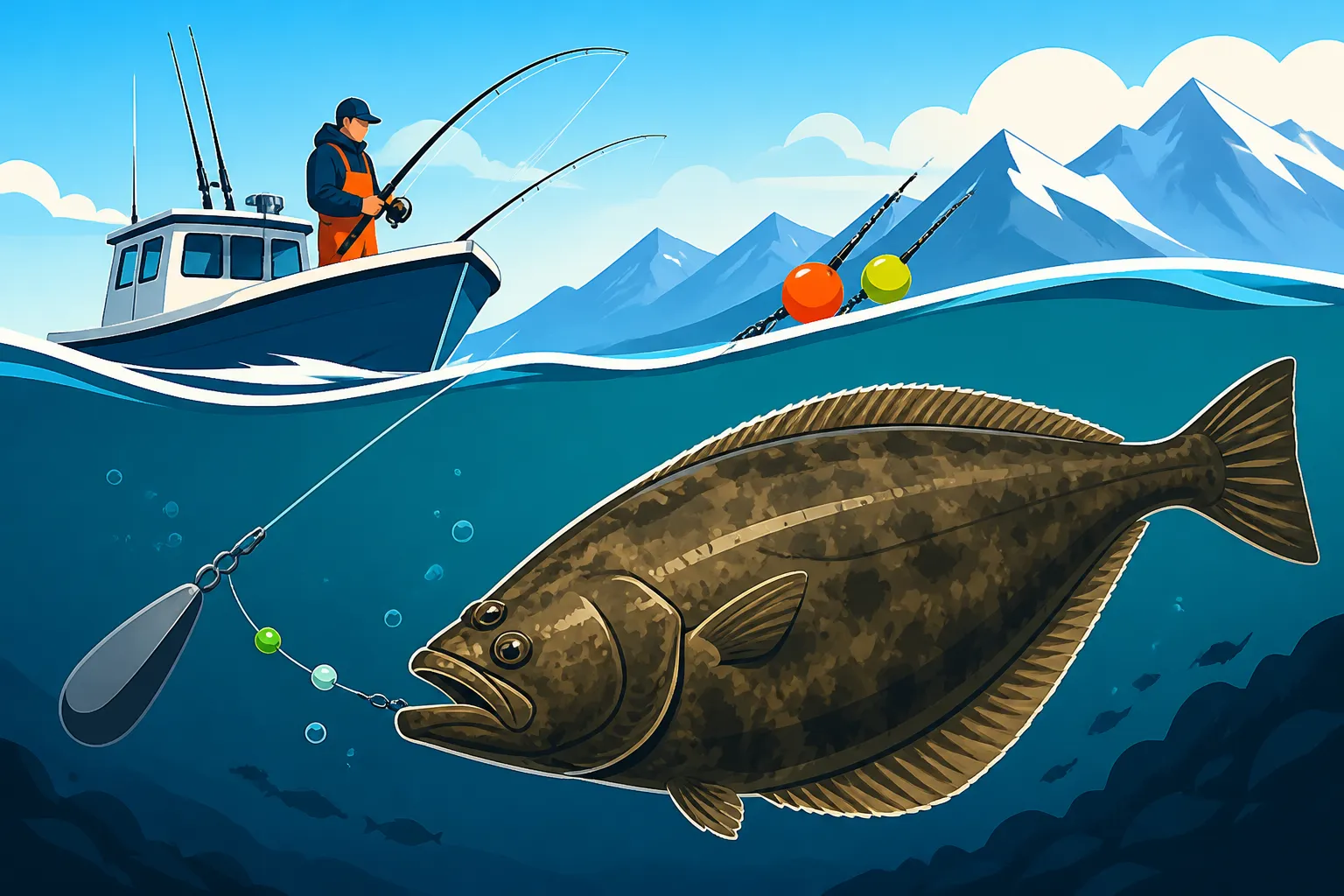
How to Drift for Alaska Halibut
There's nothing quite like the thrill of a big halibut hitting your line, but let's be honest, anchoring up and waiting for them to come to you can sometimes feel like an exercise in patience – or even futility when the fish are spread out. If you're looking for a more active, dynamic way to chase those Alaskan flatfish giants, drifting for halibut is an absolute game-changer, especially for those venturing out on their own or with smaller boats. This comprehensive guide will walk you through everything you need to know to successfully drift for Alaska halibut, transforming your approach and boosting your chances of success.
Understanding the Halibut's World: Why Drifting Works So Well
To truly master the art of drifting for halibut, you first need to get inside their heads, or rather, understand their preferred hangout spots and dining habits. These magnificent bottom dwellers aren't always keen on coming to you; sometimes, you need to bring the buffet to them.
Halibut Behavior and Habitat Preferences
Pacific halibut are fascinating creatures, perfectly adapted to life on the seafloor. They're ambush predators, often lying camouflaged on sandy or gravelly bottoms, waiting for an unsuspecting meal to swim by. They love areas with structure – think rocky reefs, submerged pinnacles, and even subtle changes in bottom contour like shelves or drop-offs. These spots create current breaks and offer ideal hiding places. They're not always in the deepest canyons, either; often, you'll find them on flats adjacent to deeper water, or along channel edges in places like Cook Inlet or Kachemak Bay, where food is swept past them by the tides.
The crucial bit about halibut behavior that makes drifting so effective is their mobility. While they can be relatively sedentary, especially the larger "barn door" halibut, they do move. They're not stuck to one tiny patch of ocean floor. When you're drifting, you're constantly covering new ground, presenting your bait to a wider range of potential fish. It's like walking a buffet through a restaurant instead of waiting for diners to come to a stationary table. This is particularly effective when the halibut are scattered rather than concentrated in tight schools.
The Limitations of Anchoring for Halibut
While anchoring certainly has its place, especially in known halibut holes or when targeting very specific pieces of structure, it comes with distinct drawbacks. The most obvious is that you're static. If the fish aren't under your boat, you're out of luck. You might be parked right next to a halibut, but if your bait isn't directly in its strike zone, it might never see it.
Strong currents are another major headache for anchored boats. In many prime Alaska halibut fishing areas, like parts of Resurrection Bay or Prince William Sound, the tides can rip. When anchored, heavy currents can make it incredibly difficult to keep your bait on the bottom without using an absurd amount of weight, which, in turn, kills sensitivity. Your line might be bowing out far behind the boat, making hook sets nearly impossible and tangles a nightmare if multiple lines are down. Anchoring also limits your ability to explore. If your chosen spot isn't producing, weighing anchor and resetting can be a time-consuming and energy-draining task, especially if you're battling a stubborn anchor or deep water. This is where the ability to effortlessly glide over productive ground truly shines, offering a dynamic alternative to static fishing.
Essential Gear for Drifting Alaska Halibut
Drifting for halibut requires specialized gear that can handle the sheer power of these fish, the depths they inhabit, and the rigorous conditions of Alaskan waters. Skimping on tackle here is a recipe for heartbreak.
Rods, Reels, and Line Selection
When you're fighting a halibut that could easily outweigh you, your rod, reel, and line are your lifeline.
For rods, think heavy-duty. You'll want a sturdy, fast-action rod, typically 6 to 7.5 feet long, with a strong backbone to lift heavy weights from the bottom and muscle big fish. Brands like Penn, Shimano, and Lamiglas offer excellent halibut rods designed for this kind of brutal force. The rod needs to be sensitive enough to feel subtle bites but powerful enough to absorb the head shakes of a "barn door" halibut. Many anglers prefer a shorter rod for easier handling in a boat, especially when using heavy jigs.
Reels are where you absolutely cannot compromise. You need a conventional reel with a robust drag system and plenty of line capacity. Look for reels designed for big game, like the Penn Fathom or Senator series, or an Avet HX/JX model. A good halibut reel should hold at least 300-400 yards of 80-100 lb braided line. The drag must be smooth and capable of handling significant pressure without faltering. A lever drag system is often preferred for its ease of adjustment during a fight.
Speaking of line, braided line is the only way to go for halibut. Its lack of stretch provides incredible sensitivity, allowing you to feel every bump and nibble, even in hundreds of feet of water. It also offers a much thinner diameter for its breaking strength compared to monofilament, which reduces drag in the water and allows you to use lighter weights. Aim for 80-150 lb test braided line. While 80 lb is often sufficient, going heavier can be wise if you anticipate truly massive fish or fishing around a lot of structure. Many anglers spool up with PowerPro or Daiwa J-Braid Grand, which are known for their durability and performance. Remember to use a good quality leader, as braid can be visible to fish and susceptible to abrasion.
Terminal Tackle for Drifting Success
Your terminal tackle is the business end of your fishing system, directly interacting with the halibut. Each component needs to be robust and reliable.
Circle Hooks: These are non-negotiable for halibut fishing, especially in Alaska where regulations often mandate their use for bait fishing. Circle hooks are designed to hook fish in the corner of the mouth, significantly reducing gut hooking and making release easier for undersized fish or those you don't intend to keep. Popular choices include Mustad Demon Perfect Circle and Gamakatsu Octopus Circle hooks in sizes ranging from 16/0 to 24/0, depending on the size of your bait. You can find excellent quality circle hooks on Amazon to stock up before your trip. The key with circle hooks is not to set the hook forcefully. Instead, let the fish take the bait, reel down until the line is tight, and let the hook do its job.
Leaders, Swivels, and Snubbers: You'll need a heavy leader to connect your braided mainline to your hooks. Monofilament or fluorocarbon leaders in the 150-300 lb test range are common. This heavy leader resists abrasion from the halibut's rough mouth and provides a bit of stretch that braid lacks. A good quality swivel (ball-bearing or barrel swivel, 300+ lb test) is essential to prevent line twist, especially when using spreader bars. Some anglers also incorporate a "snubber" – a heavy-duty elastic shock absorber – between their main line and leader. This provides a crucial cushion against the violent head shakes of a large halibut, helping to prevent pulled hooks or broken lines.
Weights: The amount of weight you need will vary dramatically based on current, depth, and your drift speed. Having a range of pyramid, cannonball, or even specialized lead-head jigs from 1 to 5 pounds (or even more in extreme currents) is crucial. A good rule of thumb is to use just enough weight to keep your bait on the bottom at a 45-degree angle or less. Too little weight, and your bait will fly high in the current; too much, and you'll be constantly snagging and won't feel subtle bites. Investing in a variety of weights will save you frustration on the water.
Bait and Scent Strategies
Halibut are opportunistic feeders, but some baits are undoubtedly more effective than others.
Fresh Bait is King: Nothing beats fresh bait for halibut. Oily baits like herring are a perennial favorite. Large herring, either whole or butterflied, are excellent. Other highly effective fresh baits include salmon heads or strips (especially oily species like sockeye or coho), octopus, squid, and even cod or pollock cut into strips. The oilier the bait, the better, as it creates a scent trail in the water that halibut can follow from a distance.
Artificial Scents: While fresh bait is paramount, supplementing it with artificial scents can provide an extra edge, especially on slower days. Brands like Pro-Cure offer a range of salmon, herring, or shrimp-flavored "super gel" or "super sauce" that can be slathered onto your bait, jigs, or even plastic skirts. The lingering scent trail can entice hesitant halibut to commit.
When using bait, make sure it's securely attached to your circle hook. For whole herring, thread the hook through the lower jaw and out the top, ensuring the point is exposed. For strips, make sure the hook penetrates through a thick part of the bait. This ensures the bait stays on during the drift and that the hook can do its job effectively.
Mastering the Art of Drifting for Halibut
Drifting might sound simple – just let your boat go with the current – but there's a real art to doing it effectively for halibut. It's about control, observation, and adaptability.
Reading the Conditions: Tides, Currents, and Wind
Successfully drifting for halibut hinges on your ability to interpret and work with the elements. Ignoring them is a surefire way to frustrate yourself.
Tides and Currents: Alaska's tides can be massive, creating powerful currents that dictate everything. Before you even leave the dock, consult a tide chart for your specific fishing area, such as those available for the Homer Spit or Seward. You're generally looking for the "slack tide" periods – either high slack or low slack – when the current slows down, often making it easier to hold the bottom and get a more controlled drift. However, don't completely rule out fishing during stronger tides. Sometimes, a gentle drift with the current can be incredibly productive, as it mimics natural prey movement. The key is finding a current speed that allows you to keep your bait near the bottom without excessive drag. Strong currents might require significantly heavier weights or a slower drift speed. Understanding when the current is coming in (flood tide) or going out (ebb tide) will help you predict the direction and speed of your drift.
Wind: Wind adds another layer of complexity. It can push your boat independently of the current, creating an awkward drift. Ideally, you want the wind and current to be moving in the same direction, or at least not strongly opposing each other. If the wind is pushing you too fast, or in the wrong direction, you'll need to employ tactics to slow down or correct your drift. This is where drift socks or sea anchors come in incredibly handy. They create drag in the water, slowing your boat down and often helping to orient it more favorably, allowing for a slower, more controlled presentation. You can find robust drift socks from various marine suppliers, including those on Amazon.
Executing the Drift: Techniques and Best Practices
Once you understand the conditions, it's time to put theory into practice on the water.
Boat Positioning and Speed Control: This is perhaps the most critical aspect of effective halibut drifting. You don't just want to let your boat fly. You need to control your speed to keep your bait consistently near the bottom. If the wind or current is too strong, deploy a drift sock off the bow or stern to slow your boat down. For very slow drifts, or to slightly adjust your direction, you might use your main engine or a kicker motor in reverse (or forward, depending on your desired effect) to "power drift." The goal is to match your speed to the current and depth, allowing your line to enter the water at a manageable angle (ideally no more than a 45-degree angle off the stern). If your line angle is too steep, you're either drifting too fast or using too little weight.
Weight Management and Depth Control: Constantly feeling the bottom is paramount. You need to use enough weight to stay in contact with the bottom, but not so much that you're dragging and getting snagged. As you drift, the depth will change, and the current might vary, so you'll need to actively manage your line. Let out line as the depth increases, and reel in as it shallows. Don't be afraid to lift your rod tip, feel for the bottom, and drop it again. This "bounce" also helps to stir up the bottom and attract curious halibut. If you're constantly losing touch with the bottom, add more weight. If you're snagging frequently, try a slightly lighter weight or a different type of sinker (e.g., a flatter pyramid sinker might snag less than a round cannonball).
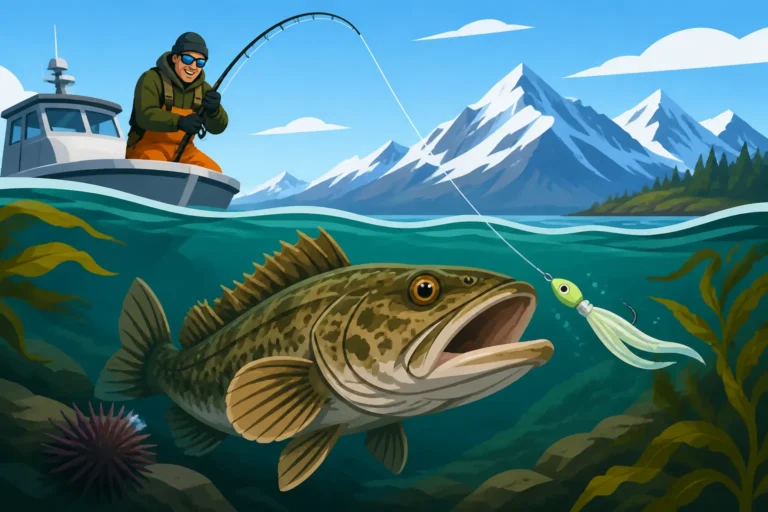
Spreader Bar Rigs and Jigs: A popular setup for drifting for halibut is a spreader bar rig. This typically consists of a main line running to a three-way swivel or a specialized spreader bar. One arm of the spreader bar holds your weight, keeping it on the bottom, while the other arm extends out to your baited hook or jig. This keeps your bait slightly off the bottom and away from your main line, reducing tangles and improving presentation. Some anglers prefer to fish large lead-head jigs (16-32 oz or more), often tipped with a piece of bait. Jigging involves a rhythmic lift and drop of the rod, making the jig "dance" on or near the bottom, which can be incredibly effective at attracting aggressive halibut. Experiment with both bait on a spreader bar and jigs to see what the fish prefer on any given day. To learn more about how to set up a halibut rig for Alaska, check out our detailed guide.
Setting the Hook and Fighting the Halibut
The moment of truth! When you feel that distinctive "thump-thump" or a heavy pull, it's easy to get excited, but patience is key with circle hooks.
Setting the Hook with Circle Hooks: As mentioned, resist the urge to rear back and "set" the hook like you would with a J-hook. Instead, when you feel a bite, let the fish pull the rod tip down. Slowly and steadily reel down until all the slack is gone, and you feel the weight of the fish. Then, simply lift the rod tip smoothly and begin to fight. The circle hook will typically slide into the corner of the fish's mouth as pressure is applied. This method results in higher hook-up ratios and fewer lost fish due to tearing mouth tissue.
Fighting the Barn Door Halibut: Once hooked, an Alaska halibut, especially a large one (often called a "barn door"), will put up an incredible fight. They'll often make powerful, deep runs, staying near the bottom. Your job is to keep constant pressure on the fish. Use a steady "pump and reel" technique: lift the rod tip to gain line, then drop the rod tip quickly while reeling in the slack. Do not lower the rod tip without reeling; this creates slack and gives the fish a chance to shake the hook. Halibut often perform a "death spiral" as they get closer to the surface, thrashing and kicking. Be ready for this, and keep the rod tip high. It can be an exhausting battle, so pace yourself. If you're wondering how to fight a barn door halibut, we have a dedicated article that delves deeper into this thrilling experience.
Safety and Regulations for Halibut Drifting
Fishing in Alaska is an incredible experience, but it comes with serious responsibilities. Safety and adherence to regulations are paramount, especially when drifting offshore.
Essential Safety Gear for Your Boat
Alaska's waters can be unforgiving, and conditions can change rapidly. Never venture out without the proper safety equipment. This isn't just about avoiding fines; it's about saving lives.
- VHF Radio: A reliable way to communicate with the Coast Guard and other vessels. Cell service is often nonexistent in many prime fishing areas.
- GPS and Chartplotter: Essential for navigation, marking productive drift lines, and avoiding hazards.
- First-Aid Kit: A comprehensive kit, stocked for marine emergencies.
- Survival Suits/PFDs: Immersion suits are highly recommended for cold Alaskan waters, especially in shoulder seasons. Always have enough properly fitting personal flotation devices (PFDs) for everyone on board.
- EPIRB or PLB: An Emergency Position Indicating Radio Beacon (EPIRB) or Personal Locator Beacon (PLB) can be a lifesaver, transmitting your location to rescue services in an emergency.
- Anchor System: Even if you're drifting, a robust anchor system with sufficient chain and rode is critical for emergencies, such as engine failure, or if you need to hold your position quickly.
- Flares/Signaling Devices: Visual distress signals are required.
- Bailer/Pump: For managing any water ingress.
- Fire Extinguisher: Essential for any onboard fire.
- Tool Kit: For minor engine or equipment repairs.
Always check the weather forecast before heading out, and if in doubt, stay in port. Alaska's ocean conditions can turn from calm to treacherous in a matter of minutes.
Understanding Alaska Halibut Regulations
Alaska Department of Fish and Game (ADF&G) regulations are complex and can change frequently via emergency orders. It is your responsibility to know and follow them.
Licenses and Harvest Cards: Every angler aged 16 or older needs an Alaska fishing license. Non-residents have specific license types and costs. Additionally, if you plan to keep certain species like king salmon, you'll need a King Salmon Stamp. For halibut, you'll also need a separate harvest record card to record your catch, which is critical for tracking effort and harvests. Always fill out your harvest card immediately upon retaining a halibut. You can find comprehensive information in our guide to the Alaska fishing license: complete guide.
Daily and Annual Limits: Halibut limits vary significantly depending on whether you are a resident or non-resident, if you're fishing on a guided charter, and the specific regulatory area. For unguided anglers, the general daily bag limit is often two halibut of any size. However, annual limits for non-residents apply in some areas. Charter anglers face additional restrictions, including potential Thursday closures and a "reverse slot limit" that dictates specific size ranges for retained fish. Always consult the current Alaska fishing regulations booklet and check for any emergency orders before you head out. These orders can close fisheries, change bag limits, or alter legal gear on very short notice. For more details on these rules, refer to our articles on Alaska halibut fishing regulations and limits and Alaska halibut charter regulations explained.
Size Restrictions: While unguided anglers often have a "two of any size" daily limit for halibut, be aware that regulations are subject to change, and specific size restrictions, like reverse slot limits, are common for guided trips. Always verify the current rules for the area you are fishing.
Gear Restrictions: As mentioned earlier, circle hooks are often mandated for bait fishing for halibut. Ensure your hooks meet the regulatory definition of a circle hook to avoid violations. Also, be aware of any restrictions on the number of lines you can fish at one time, which typically ranges from one to two lines per person, depending on the area.
Staying informed is your best defense against inadvertently breaking the rules. Bookmark the ADF&G website, download their app if available, and check local sporting goods stores for printed regulation booklets.
Drifting vs. Anchoring for Halibut: A Quick Comparison
To help you decide when drifting might be your best approach, here's a quick comparison of its pros and cons versus traditional anchoring.
| Feature | Drifting for Halibut | Anchoring for Halibut |
|---|---|---|
| Coverage | Covers wide areas, presents bait to more fish | Limited to a small, static area |
| Fish Mobility | Excellent for scattered fish or finding new spots | Best for concentrated fish in known holes |
| Currents | Can work with or against moderate currents with control | Challenging in strong currents; bait blows away |
| Bottom Contact | Requires active weight adjustment and bottom feel | Easier to maintain consistent bottom contact |
| Engagement | Active, dynamic, constant adjustments | Passive, patient waiting |
| Snags | Potentially fewer snags if managed well (less dragging) | Can be prone to snags if anchored over rough ground |
| Learning Curve | Higher initial skill for boat control and reading conditions | Lower initial skill (just drop and wait) |
| Fuel Usage | Might use more fuel for continuous boat positioning | Uses less fuel if stationary |
| Environmental Impact | Less impact on the bottom compared to repeated anchoring | Repeated anchoring can disturb sensitive habitats |
Drifting for halibut offers a truly exhilarating and often more productive way to fish Alaska's vast waters. By understanding halibut behavior, equipping yourself with the right gear, and mastering the techniques of boat control and bottom contact, you'll be well on your way to catching those legendary Alaskan flatfish.
Disclaimer
Always consult the most current Alaska Department of Fish and Game (ADF&G) regulations before fishing. Emergency orders can change regulations frequently. This guide provides general information and should not be considered legal advice regarding fishing regulations.