Best Northern Pike Fishing in Alaska
When you think of Alaska fishing, your mind probably jumps straight to those legendary salmon runs or monstrous halibut. But for those in the know, there's another apex predator lurking in the shallows and backwaters, offering an adrenaline-pumping fight and a unique challenge: the northern pike. It can be tough to pinpoint where to find these elusive, toothy critters, especially given Alaska's vastness. This guide is here to shed light on the best spots, techniques, and insider tips to help you conquer your quest for northern pike in the Last Frontier.
Understanding Northern Pike in Alaska's Waters
Northern pike, often just called "pike," are freshwater torpedoes with a reputation for aggressive strikes and tenacious battles. In Alaska, they thrive in specific environments, often overlooked by anglers focused solely on salmon. This makes them a fantastic, often less crowded, target for those seeking something different.
Pike's Unique Habitat and Behavior in Alaska
Unlike salmon, which are anadromous (living in salt and fresh water), pike are strictly freshwater fish, preferring slow-moving, shallow, weedy areas in lakes, sloughs, and river backwaters. They are ambush predators, perfectly camouflaged to hide among submerged vegetation, waiting for an unsuspecting fish, frog, or even a duckling to swim by. This means you won't typically find them in the raging main channels of glacial rivers, but rather in the calmer, warmer offshoots and interconnected lake systems.
In Alaska, pike have a complex history. They are native to some parts of Interior and Arctic Alaska, where they play a natural role in the ecosystem. However, they have also been illegally introduced into some Southcentral Alaska drainages, particularly in the Susitna River basin, where they are considered invasive and can severely impact native salmon and trout populations. The Alaska Department of Fish and Game (ADF&G) even has specific regulations and management strategies to control their spread in these areas, sometimes encouraging removal. This distinction is crucial for anglers, as regulations can vary significantly depending on whether you're fishing native or invasive pike populations. Knowing your location and adhering to the Alaska Fishing Regulations Explained is always paramount.
Why Alaska Pike Fishing is So Special
Fishing for northern pike in Alaska offers a thrilling experience distinct from other fisheries. First, their aggressive nature means they hit lures with incredible force, often resulting in spectacular topwater explosions or jarring strikes that will test your tackle and your nerves. Second, the sheer size of some Alaskan pike can be truly impressive. While a "hammer handle" pike (a small one) is common, these waters hold trophy-sized fish, sometimes exceeding 40 inches and weighing over 20 pounds, offering a genuine challenge to even seasoned anglers.
Beyond the fight, pike fishing often takes you to quieter, more remote corners of Alaska, far from the bustling salmon combat zones. You might find yourself casting in a serene slough, surrounded only by the sounds of loons and the occasional splash of a moose. This immersion in Alaska's wilderness adds another layer to the experience, making each catch feel like a hard-won victory in an untamed landscape. It's an opportunity to truly connect with the wild.
Top Spots for Northern Pike Fishing in Alaska
Alaska is a massive state, and while pike aren't everywhere, they are concentrated in a few key regions that offer fantastic angling opportunities. Knowing these zones is the first step to a successful pike hunt.
Interior Alaska's Pike Hotbeds
This is arguably the heartland of native northern pike in Alaska. The vast networks of rivers, lakes, and sloughs provide ideal habitat for these ambush predators.
- Minto Flats State Game Refuge: Located west of Fairbanks, the Minto Flats are legendary for their abundant and large northern pike. This sprawling area of interconnected sloughs, lakes, and wetlands is a pike paradise. Access can be challenging, often requiring a boat launch from the Tanana River near Fairbanks or Nenana, or a floatplane trip. Once you're in, though, the fishing can be phenomenal. Anglers regularly report multiple fish days, and the chance at a true trophy pike here is very real. The shallow, weedy nature of the flats makes for excellent fly fishing opportunities as well. Remember to consult ADF&G for specific Alaska Northern Pike Regulations and Limits for this region, as rules can differ.
- Yukon River Tributaries: The massive Yukon River system and its numerous clear-water tributaries, sloughs, and oxbow lakes are teeming with native pike. Destinations like the Chena River Lakes Recreation Area near Fairbanks offer accessible bank fishing and canoe opportunities for pike in slower sections. Further afield, areas around the villages of Tanana, Ruby, and Galena, while remote, are known for robust pike populations. These areas often require bush planes or extended river travel, making them perfect for those seeking a true wilderness adventure.
- Other Interior Lakes: Many smaller, less-known lakes scattered throughout the Interior, especially those with good weed growth and shallow margins, can hold good numbers of pike. Lake Minchumina, though very remote, is another well-regarded destination.
Southcentral Alaska Pike Waters
In Southcentral Alaska, particularly in the Susitna Valley and Mat-Su Borough, northern pike are largely considered an invasive species in many drainages. This has led to specific management goals, including encouraging anglers to harvest pike in certain areas to protect native salmon and trout.
- Susitna Valley: This region, easily accessible from Anchorage, offers numerous pike fishing opportunities. The Nancy Lake State Recreation Area is a popular choice, with a chain of lakes like Nancy Lake, Big Lake, and Red Shirt Lake, connected by portages or navigable channels. These lakes are relatively shallow and weedy, providing perfect pike habitat. Many anglers use canoes or kayaks to navigate these waters effectively. Other notable spots include the extensive sloughs and backwaters of the Talkeetna River and portions of the lower Susitna River drainage.
- Mat-Su Valley: Besides Nancy Lake, other lakes and sloughs within the Mat-Su Valley, such as Memory Lake near Palmer or the Finger Lake complex, can offer pike action. Access here is generally easier, often involving roadside turnoffs and boat launches. The close proximity to Anchorage makes these spots excellent for day trips or weekend excursions.
- Knik River Drainage: While known for salmon, the Knik River also has side channels and ponds that can hold pike, especially those that warm up in the summer months. Access can be tricky, often requiring ATVs or small boats.
For those planning an extensive trip, exploring the Best Fishing Spots in Alaska will undoubtedly lead you to some prime pike territory.
Remote Fly-In Opportunities
For the adventurous angler, Alaska offers incredible fly-in pike fishing experiences. Many remote lakes and river systems, particularly in Bristol Bay, the Yukon-Kuskokwim Delta, and even parts of the Alaska Peninsula, hold untouched populations of giant pike.
- Bristol Bay Drainages: While famed for its sockeye salmon, many of the non-salmon-bearing lakes and sloughs within the Bristol Bay region are teeming with large pike. Lodges and air taxi operators offer dedicated pike trips to these pristine waters.
- Yukon-Kuskokwim Delta: This vast, low-lying region is a labyrinth of lakes, sloughs, and meandering rivers, much of it perfect pike habitat. Fly-in camps provide access to some of the most phenomenal, unpressured pike fishing anywhere. Expect long days of casting and the chance to land multiple trophy fish.
These remote trips often involve staying at an Alaska Fly-In Fishing Lodges Guide or setting up a wilderness camp, providing a truly immersive Alaskan experience. These kinds of adventures are often booked well in advance, and a service like FishingBooker can sometimes help you connect with operators who specialize in these more niche, fly-in pike trips, making the planning process much smoother.
Essential Techniques and Gear for Alaskan Pike
Pike fishing requires specific tactics and tackle to be consistently successful. Their sharp teeth and aggressive nature demand robust gear.
Lures and Baits That Pike Can't Resist
Pike are opportunistic predators, and they'll hit a wide variety of lures. However, some stand out as consistent performers.
- Spoons: Classic spoons like Dardevles, Johnson Silver Minnows, and Five of Diamonds in red/white, red/yellow, or silver/blue patterns are deadly. Sizes from 3/4 oz to 1.5 oz work well. Their wobbling action and flash mimic injured baitfish perfectly.
- Spinnerbaits: Chartreuse, white, black, or perch-colored spinnerbaits with large single or tandem blades (like willow or Colorado blades) are incredibly effective, especially in weedy areas where pike hide. They're relatively snag-proof and create a lot of vibration. Brands like Terminator and Booyah make excellent pike spinnerbaits.
- Soft Plastics: Large swimbaits (5-8 inches), fluke-style baits, and curly-tail grubs rigged on heavy jig heads (1/2 oz to 1 oz) can be very productive, especially when fished slowly near drop-offs or submerged cover. Colors like white, perch, and chartreuse are popular.
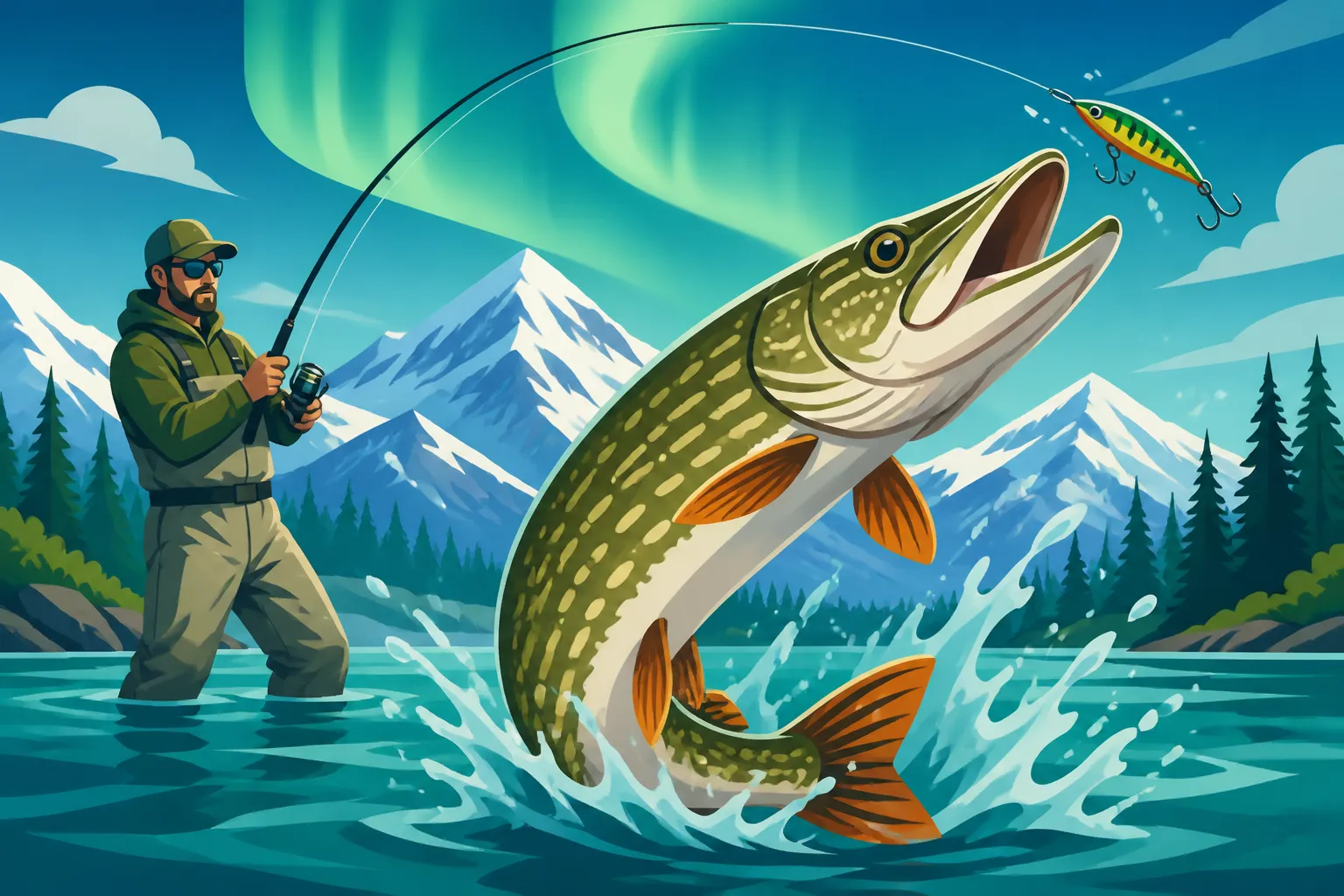
- Topwater Lures: For explosive strikes, nothing beats a topwater lure. Large poppers, walk-the-dog style baits (like Heddon Super Spook), and prop baits can drive pike into a frenzy, particularly during warmer summer months in calm waters. The visual thrill of a pike engulfing a topwater lure is unparalleled.
- Crankbaits: Deep-diving crankbaits in bright patterns (firetiger, perch) or natural baitfish colors can be effective when pike are holding deeper. Shallow-diving models are great for covering flats.
- Flies: For fly anglers, large streamer patterns (8-12 inches) imitating baitfish, mice, or even small birds are key. EP (Enrico Puglisi) flies, Pike Bunnies, and Dahlberg Divers are popular choices. Ensure your flies are tied on strong hooks and have plenty of flash and movement.
When it comes to bait, dead baitfish like herring, smelt, or suckers can be very effective, particularly through the ice in winter. Live bait is generally restricted or illegal in many Alaskan waters, so always check local regulations before using it. You can learn more about specific presentations in How to Catch Northern Pike in Alaska.
Rods, Reels, and Line for Serious Pike Anglers
Pike fishing demands tackle that can handle strong fish and sharp teeth.
- Rods: A medium-heavy to heavy power spinning or casting rod, 6'6" to 7'6" in length, is ideal. You need backbone to cast large lures and to set the hook firmly into a pike's bony mouth. A fast action tip is beneficial for lure control and sensitivity. For fly fishing, a 9-10 weight rod is recommended for casting large, wind-resistant flies and handling big fish.
- Reels: For spinning setups, a sturdy 3000-4000 series reel with a smooth drag system is sufficient. For casting setups (baitcasters), a robust low-profile or round-profile reel with good line capacity will do the trick. A quality reel is crucial for fighting these powerful fish.
- Line: Braided line is king for pike fishing. Its zero-stretch properties provide excellent sensitivity and hook-setting power, and its abrasion resistance is a huge advantage. 30-50 lb test braid is a good range. For fly anglers, a weight-forward floating line with a strong leader (often 40-60 lb monofilament or fluorocarbon) is necessary.
- Leaders: This is non-negotiable for pike. Their razor-sharp teeth will shred monofilament or fluorocarbon main lines in an instant. Use steel, titanium, or heavy (80-100 lb) fluorocarbon leaders of at least 10-12 inches. Wire leaders are the most reliable. Without a leader, you're just donating lures to the pike.
- Tools: A long-nosed pliers or hemostat is essential for removing hooks safely from a pike's mouth. A jaw spreader can also be very helpful, and a good measuring tape is always nice for documenting your catch.
If you're still piecing together your setup, a comprehensive Alaska Fishing Gear and Tackle Guide can provide more detail on general fishing equipment for the state.
Best Seasons and Times to Target Pike
Pike can be caught year-round in Alaska, but different seasons offer unique advantages.
- Spring (Post-Spawn, May-June): After the ice thaws and pike complete their spawning ritual in shallow, weedy areas, they are incredibly hungry. This is an excellent time for aggressive fishing with spoons and spinnerbaits in the warmed-up shallows. The water levels might be higher, and fish can be found in newly accessible flooded areas.
- Summer (July-August): This is prime time for topwater action, especially during warm, calm evenings or early mornings. Pike are very active and spread out, often holding near weed lines, lily pad fields, and submerged structure. The long daylight hours of the Alaskan summer mean you can fish late into the evening. Check out Alaska Fishing Seasons: Month-by-Month Guide for a broader overview of seasonal fishing.
- Fall (September-October): As water temperatures drop, pike often move to slightly deeper waters, concentrating around distinct structures like points, channels, and deeper weed edges. They feed heavily in preparation for winter, making them very catchable with crankbaits, large soft plastics, and dead bait.
- Winter (Ice Fishing, November-April): Ice fishing for pike is a popular pastime in many areas, particularly in the Interior and Southcentral. Tip-ups rigged with dead bait (like herring or smelt) or large jigging spoons can be very effective. Look for pike in shallower bays and near prominent weed beds under the ice. Always exercise extreme caution on the ice and ensure it's safe before venturing out.
Planning Your Alaska Pike Fishing Adventure
Successfully planning an Alaska pike trip involves more than just knowing where the fish are; it’s about understanding the logistics and ensuring you’re well-prepared.
Guided Trips vs. DIY for Pike
The decision between a guided trip and a do-it-yourself adventure often comes down to budget, experience, and the desired level of comfort and access.
- Guided Trips: If you're new to Alaskan pike fishing, or if you're targeting remote fly-in locations, a guided trip is often the best choice. Guides provide all the necessary equipment, knowledge of the local waters, transportation (often including boats or floatplanes), and can significantly increase your chances of success. They also handle the nuances of Alaska Fishing Regulations Explained and safety in the wilderness. Many lodges and outfitters, some of which you might find listed on platforms like FishingBooker, offer dedicated pike trips, especially in the Minto Flats or remote Bristol Bay areas. The Alaska Fishing Charter Cost Explained can vary widely depending on the duration and remoteness of the trip.
- DIY Trips: For more experienced anglers comfortable with wilderness travel, a DIY trip can be rewarding and more budget-friendly, especially for accessible road system lakes in the Susitna Valley or Mat-Su. You'll need your own transportation, boat (canoe, kayak, or small motorboat), and camping gear. Thorough research, including detailed maps and current ADF&G reports, is critical. Remember that even seemingly accessible areas can quickly turn remote in Alaska, so always inform someone of your plans and expected return. For instance, putting in a canoe on Nancy Lake or exploring the sloughs off the Talkeetna River can be a fantastic self-guided adventure.
Whether guided or DIY, preparation is key. Regardless of your choice, make sure you have your Alaska Fishing License: Complete Guide sorted before you cast a line.
Regulations and Conservation for Northern Pike
Alaska has specific regulations for northern pike, which can differ significantly depending on the region due to their native vs. invasive status. It’s absolutely critical to consult the current Alaska Sport Fishing Regulations booklet or the ADF&G website before heading out.
- Native Populations (e.g., Interior Alaska): In areas like the Minto Flats or the Yukon River drainage, pike are part of the natural ecosystem. Regulations typically include daily bag and possession limits, and sometimes size restrictions. The goal is sustainable harvest.
- Invasive Populations (e.g., Southcentral Alaska): In drainages where pike are invasive, such as the Susitna River basin, regulations are often more liberal. In many areas, there are no bag or possession limits, and anglers are encouraged to harvest all pike caught to help protect native fish species. Some specific regulations might also prohibit the release of any live pike back into the water.
- Harvest Recording: While not always required for pike, understanding the Alaska Harvest Record Card Explained is crucial for other species you might encounter. Always check if pike need to be recorded in your specific fishing area.
- Responsible Angling: Beyond regulations, practicing responsible angling is vital. This includes proper catch-and-release techniques if you're not harvesting, avoiding the spread of invasive species (never transport live fish), and respecting private property and wilderness areas.
Being informed and compliant ensures you're contributing to the health of Alaska's diverse fisheries for future generations.
| Region | Primary Pike Status | Typical Regulations | Key Access Points/Tips |
|---|---|---|---|
| Interior Alaska | Native | Bag limits, sometimes size restrictions (check current regs) | Remote fly-in, boat access from Tanana/Yukon, road access near Fairbanks (Chena) |
| Southcentral Alaska | Invasive | No bag/possession limits, harvest encouraged (check current regs) | Roadside access to lakes (Nancy, Big), small boat/canoe in Susitna/Mat-Su sloughs |
| Bristol Bay | Native (often) | Bag limits, sometimes size restrictions (check current regs) | Remote fly-in, wilderness lodges |
| Yukon-Kuskokwim Delta | Native | Bag limits (check current regs) | Remote fly-in, bush planes |
This table is a general guide; always check the latest ADF&G regulations for the specific waters you plan to fish.
Pike fishing in Alaska is a thrilling alternative to the more common salmon and halibut pursuits. It offers incredible action, the chance at a trophy fish, and the opportunity to explore some of Alaska's truly wild and beautiful freshwater systems. So, grab your heavy tackle, tie on a wire leader, and get ready for an unforgettable fight with Alaska's freshwater wolf!
Disclaimer
Please remember that fishing regulations in Alaska can change frequently due to emergency orders or annual updates. Always consult the latest Alaska Department of Fish and Game (ADF&G) regulations before planning and embarking on any fishing trip. This guide provides general information and should not be considered a substitute for official sources.