Arctic Grayling Identification and Dorsal Fin
Arctic Grayling identification details the distinct sail-like dorsal fin and body traits separating this fish from other Alaska trout.

Arctic Grayling identification details the distinct sail-like dorsal fin and body traits separating this fish from other Alaska trout.

Alaska sheefish typically average eight to fifteen pounds, while true trophy specimens exceed twenty pounds and reach lengths over forty inches.
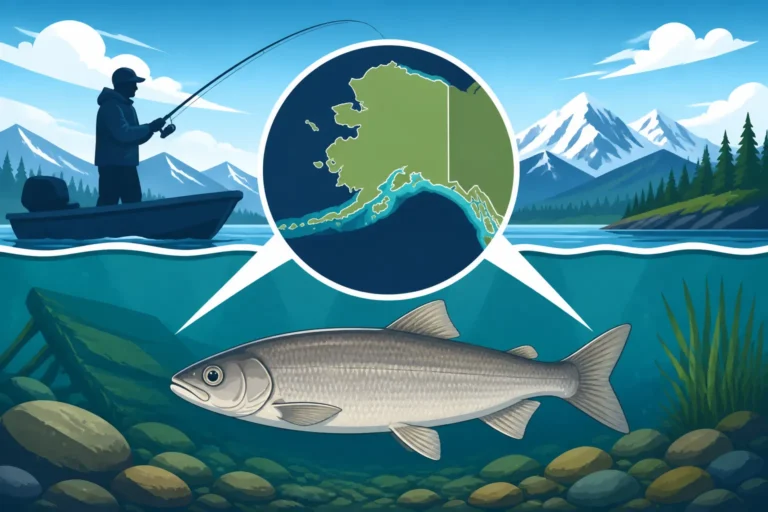
Alaska sheefish inhabit western and northern river systems, including the Yukon and Kobuk, alongside large lakes and brackish estuaries.
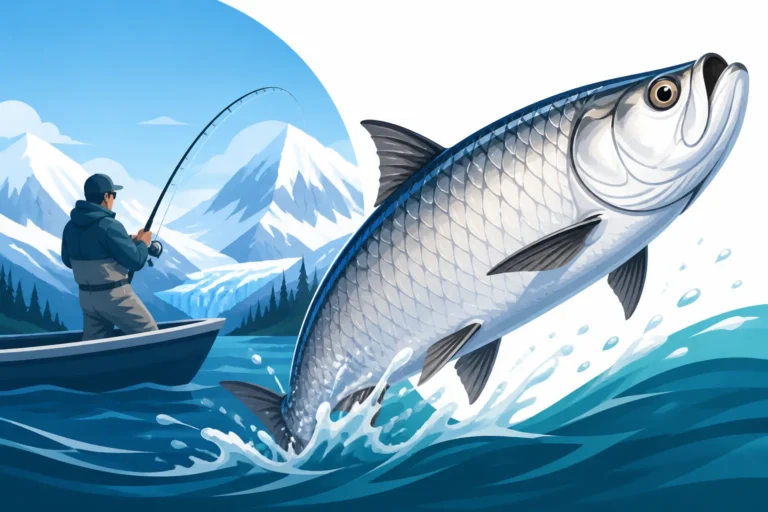
The sheefish is an elusive Alaskan game fish offering powerful runs, acrobatic jumps, and challenging freshwater angling experiences.
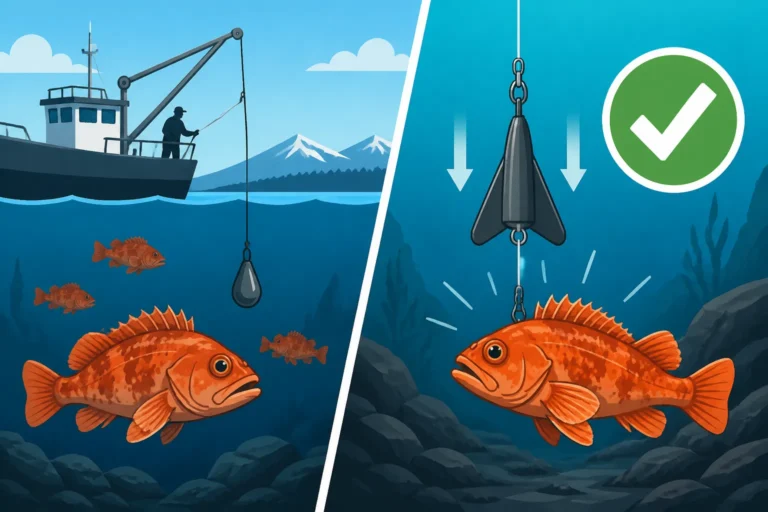
Descending devices reverse barotrauma in caught rockfish, recompressing their swim bladders and greatly increasing post-release survival rates in Alaska.

Alaska rockfish possess extreme longevity, with certain species living over two centuries through slow metabolic adaptation in deep marine environments.

Correct identification of Alaska Yelloweye and Black Rockfish enables anglers to follow regulations and protect vulnerable populations.

Chicken halibut refers to smaller Pacific halibut weighing 10 to 20 pounds, offering manageable sportfishing and superior culinary texture.

Female Pacific halibut grow faster, live much longer, and reach massive sizes to produce millions of eggs for population survival.

Pacific halibut male and female size differences show that males rarely exceed 60 pounds while mature females reach 450 pounds.