How to Casting for Salmon in Alaska
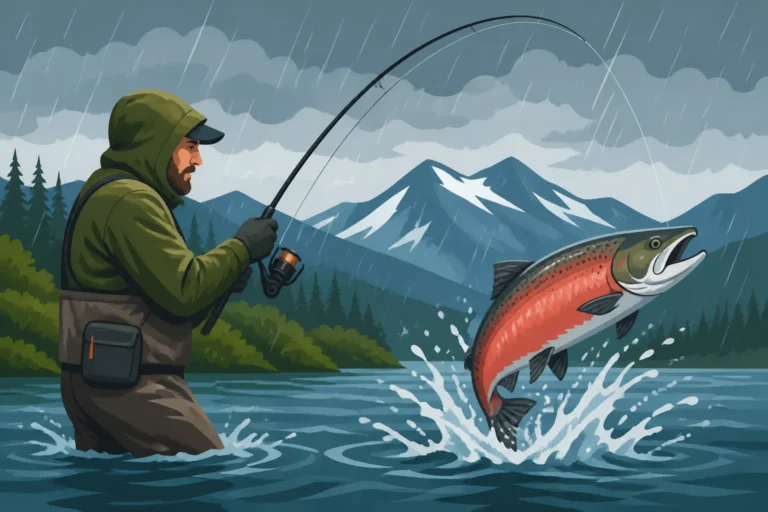
If you’ve ever stood on the banks of an Alaskan river, rod in hand, watching those powerful salmon leap and surge, you know the frustration. It’s not just about getting your line out there; it's about hitting a specific seam, accounting for blistering currents, and presenting your lure exactly right to a fish that might not even be actively feeding. It’s a challenge, but incredibly rewarding. This guide is dedicated to demystifying the art of casting for salmon in Alaska, offering practical, in-depth advice to help you improve your technique and increase your chances of hooking into that dream fish.
Understanding Salmon Behavior and Habitat for Effective Casting
Before you even think about throwing a line, understanding the salmon you're targeting and the water they inhabit is paramount. Alaska's salmon are on a mission, returning from the ocean to spawn, and their behavior shifts significantly once they enter freshwater. This isn't like fishing for trout that are always looking for a meal; these salmon are often driven by instinct, not hunger, which demands a different approach to your casting.
The Salmon Run Cycle and Where to Find Them
Salmon runs in Alaska are truly epic, with different species arriving at various times throughout the summer. Knowing when and where each species is expected can dramatically influence your casting strategy. For instance, early summer brings the mighty King Salmon, followed by the incredibly abundant Sockeye, then the hard-fighting Coho, and finally the Pink and Chum Salmon. Each species tends to utilize different parts of the river system. Kings, often the largest, prefer deeper, slower pools and current breaks where they can conserve energy. Sockeye, known for their sheer numbers, will often hold in shallower, faster-moving water, especially along river banks and gravel bars, making them a prime target for strategic bank casting. Coho, or silver salmon, are aggressive biters and can be found throughout the river, often chasing lures in faster runs or even the brackish water near river mouths.
Understanding the specific run timing for each species is vital. For example, if you're planning a trip in July, you'll likely encounter the peak of the Sockeye run on rivers like the Kenai, where thousands of fish push upstream daily. In contrast, late August and September are prime for Coho, which are often more aggressive and responsive to casted lures. Knowing these cycles helps you select the right gear and casting technique for the prevalent species. You might find our Alaska Salmon Run Timing Explained article particularly helpful for planning your trip around specific species.
Water Conditions and Optimal Casting Locations
Alaska’s rivers are dynamic, constantly changing with weather, glacier melt, and tides. A high, murky river demands a different casting approach than a low, clear one. In high water, salmon tend to stick closer to the banks, seeking refuge from the main current, making shorter, more precise casts into the eddies and seams near shore effective. When the water is low and clear, fish become warier, often holding in deeper pockets or under submerged structure, requiring longer casts and stealthier presentations.
Identifying optimal casting locations also means recognizing "holding water" – areas where salmon rest before continuing their journey upstream. These often include the tail-outs of pools, the heads of riffles, current seams where fast and slow water meet, and behind large rocks or logjams. Understanding how fish use these features allows you to anticipate their location and precisely place your cast. For example, a perfect cast might land your spinner just upstream of a visible current break, allowing it to tumble naturally into a salmon's holding lie, triggering a strike. In some areas, like the Kenai River, knowing the river's unique features, as detailed in our Kenai River Fishing: Complete Guide, can give you a significant edge.
Essential Gear for Successful Salmon Casting in Alaska
Having the right tools for the job can make all the difference, especially when you're battling a chrome-bright Alaskan salmon. The sheer power of these fish, combined with strong currents and varying water conditions, means your gear needs to be robust, reliable, and perfectly matched to your target species and casting style.
Rod and Reel Selection for Casting
Choosing the right rod and reel setup is foundational for effective salmon casting. For most Alaska salmon casting, you'll want a medium-heavy to heavy-power spinning or baitcasting rod, typically between 8 to 10.5 feet long. The extra length provides better line control, longer casts, and crucial leverage when fighting a strong fish in current. A moderate-fast to fast action is generally preferred, offering enough sensitivity to detect subtle takes yet sufficient backbone to drive hooks home and control powerful runs.
- King Salmon: For Kings, a heavy-power rod (rated for 1-4 oz lures, 15-40 lb line) around 9 to 10 feet is ideal. Pair this with a robust spinning reel in the 4000-6000 size range or a heavy-duty baitcasting reel, capable of holding 200+ yards of 30-60 lb braided line. Brands like Shimano, Penn, or Daiwa offer excellent options for this kind of heavy-duty application.
- Sockeye Salmon: Sockeye often require lighter, more sensitive setups, especially if you're "flossing" or using smaller presentations. A medium-heavy rod (rated for 1/2-1.5 oz lures, 10-25 lb line) around 8.5 to 9.5 feet with a 3000-4000 size spinning reel spooled with 20-30 lb braid is common. The lighter setup allows for better feel and more precise casting of small lead or fly setups.
- Coho Salmon: These aggressive fighters can be targeted with a versatile medium-heavy rod (rated for 3/4-2 oz lures, 12-30 lb line) around 9 feet, paired with a 4000-5000 size spinning reel or a good baitcasting reel, spooled with 30-40 lb braid. This provides the power needed for heavier spinners and spoons while maintaining enough finesse for accurate casting.
For those looking to build their arsenal, you can often find a wide array of reliable rods and reels on Amazon, making it easy to compare specs and read reviews before making a purchase. Remember, a balanced setup prevents fatigue and improves casting accuracy, which is critical during long days on the water.
Line, Lures, and Bait for Effective Casting
Once you have your rod and reel, selecting the right line, lures, and bait is the next critical step. Your line choice is especially important for casting.
-
Line: Braided line has become the standard for salmon casting due to its incredible strength-to-diameter ratio, zero stretch for superior sensitivity and hook sets, and excellent casting distance. Common choices range from 20 lb to 60 lb test, depending on the species. Always tie a fluorocarbon or monofilament leader (20-40 lb test) to your braid. This leader provides abrasion resistance, makes the line less visible to fish, and acts as a shock absorber. For example, a 30 lb braid with a 25 lb fluorocarbon leader is a great all-around choice for Coho and Sockeye. For Kings, you might step up to 50 lb braid with a 40 lb leader.
-
Lures: The world of salmon lures is vast, but some stand out for casting in Alaska.
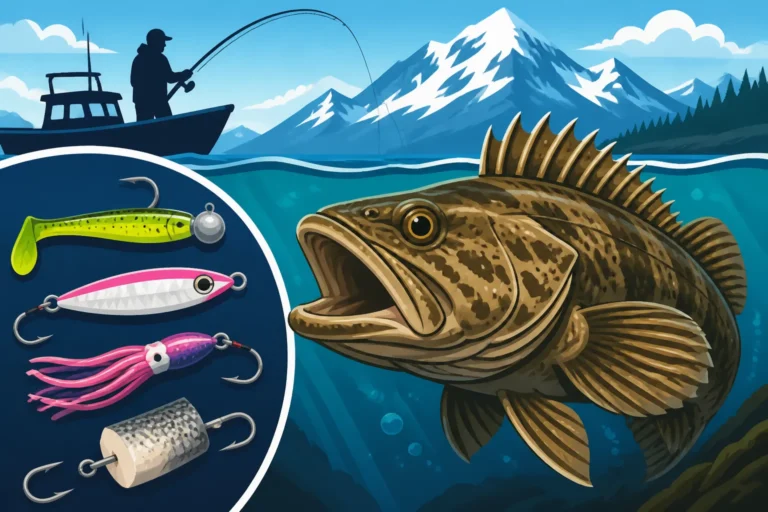
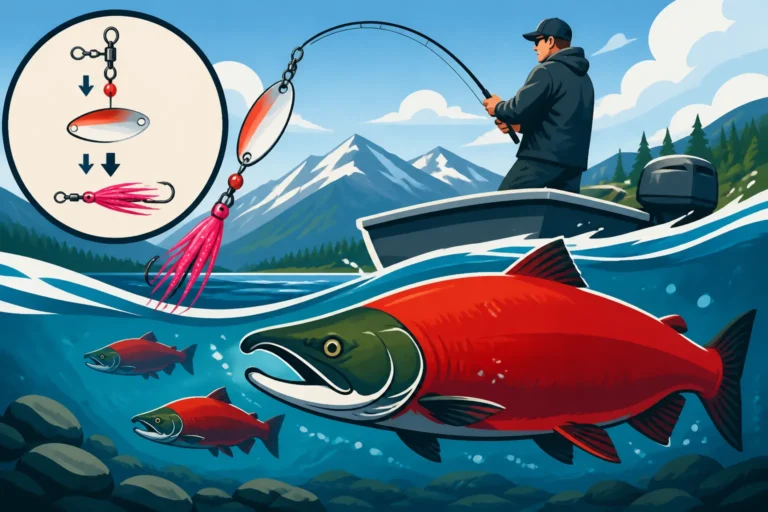
- Spinners: Iconic for salmon, especially Coho and Kings. Popular brands include Blue Fox Vibrax, Mepps Aglia, and Rooster Tail. Sizes vary, but a #4 to #6 spinner is common. The flashing blade and vibration mimic baitfish, triggering strikes.
- Spoons: Classic metal lures like the Pixee Spoon, Lil' Cleo, and Krocodile are incredibly effective. Their wobbling action in the current can entice all salmon species. Sizes from 1/2 oz to 1.5 oz are versatile.
- Plugs/Hard Baits: Kwikfish and Mag Lip plugs are favorites, particularly when back-trolling, but can also be cast and retrieved. They dive and wiggle aggressively, often triggering a territorial strike from Kings.
- Soft Plastics/Jigs: Various soft plastic baits, often tipped with cured roe or scent, can be deadly for Coho. Lead head jigs dressed with marabou or rabbit fur are also excellent for casting and retrieving or jigging.
-
Bait: While many anglers prefer artificial lures, cured salmon roe is an irresistible bait for all salmon species, especially Kings. It can be fished under a float, drifted with lead, or used to tip jigs and lures. For more specific insights into these options, our guides on Best Lures for Alaska Salmon and Best Bait for Alaska Salmon offer a deeper dive. When stocking up on your terminal tackle like swivels, snaps, and leader material, you'll find a massive selection on Amazon, often at competitive prices.
Mastering Casting Techniques for Alaska Salmon
Okay, you've got your gear sorted, and you've got a decent understanding of where the fish might be. Now comes the moment of truth: putting your lure where it needs to be. Alaska's diverse waterways demand a versatile approach to casting, from open river stretches to tight, brush-lined banks.
Overhead and Roll Casting for Rivers
These are the bread-and-butter casts for most river fishing, and mastering them will serve you well for Alaska salmon.
-
Overhead Cast: This is your power cast, used for maximum distance and accuracy when you have ample room behind you.
- The Wind-Up: Start with your lure hanging about a foot from the rod tip. Point your rod tip towards your target.
- The Back Cast: Smoothly bring the rod straight back, stopping abruptly at about the 1 o'clock position (just past vertical). Let the rod load, feeling the weight of the lure bend the rod tip. Don't rush this; it's the most crucial part.
- The Forward Cast: Once you feel the rod load, smoothly drive the rod forward, stopping around the 10 or 11 o'clock position. Release the line as the rod comes forward, allowing the lure to slingshot towards your target. Keep your wrist firm and let the rod do the work. The key is a smooth, continuous motion, not a jerky snap.
- Follow-Through: Allow the rod to follow the lure, pointing towards your target as it flies, ensuring a straight trajectory. This cast is perfect for covering broad sections of water, reaching distant seams, or getting your heavy spinner out to a King Salmon holding in the middle of a big river. Practicing this in an open field without a lure helps build muscle memory.
-
Roll Cast: This is your stealth cast, indispensable when you have obstructions behind you (like dense brush common on Alaskan riverbanks) and can't perform an overhead cast.
- The Setup: Begin with your rod tip low, pointing slightly downstream, with your lure in the water or just touching the surface. Create a "D-loop" of line behind your rod tip by lifting the rod slowly and pulling a bit of line off the reel. The key is to have enough line on the water to create tension, but not too much slack.
- The Roll: With the D-loop formed, quickly and smoothly sweep the rod forward and slightly downwards, releasing the line as you do. The line "rolls" over itself, propelling the lure forward in a tight loop. It's a single, fluid motion from the shoulder, not just the wrist.
- Presentation: This cast is shorter than an overhead cast but incredibly accurate for pitching lures into tight spots, under overhanging branches, or along specific current lines close to shore. It's particularly useful when targeting Sockeye that are often holding tight to the bank.
Mastering both of these will make you a much more versatile angler in Alaska. Remember, practice makes perfect, and even experienced anglers continue to refine their casting skills. For those just starting out, our How to Spin Fishing for Salmon in Alaska guide might provide additional foundational tips.
Sinking vs. Floating Lines and Presentations
The type of line you use (beyond just braid) and how you present your lure are crucial for getting your offering to the fish in the strike zone.
- Sinking Lines and Lead: When you're casting for salmon in deeper runs or faster currents, you often need to get your lure or bait down quickly. This is where sinking lines or added weight comes in. For spinning or baitcasting setups, this typically means adding lead weights (pencil lead, slinky weights, or split shot) to your leader, upstream of your lure or bait. The amount of weight depends on the current speed and depth. A good rule of thumb is to use just enough weight to allow your lure to tick the bottom occasionally without snagging constantly. This is particularly important when targeting bottom-oriented Kings or drifting eggs for Sockeye. Your goal is to keep your offering in the lower third of the water column where salmon typically hold.
- Floating Lines and Surface Presentations: While most salmon casting targets subsurface fish, there are times when a floating line or surface presentation can be effective, especially for aggressive Coho. In calmer water or when Coho are actively chasing bait near the surface, a topwater plug or a quickly retrieved spinner can be dynamite. For fly anglers, floating lines are essential for dry flies and indicators, but for gear casters, it's more about lure buoyancy and retrieve speed. If you’re targeting aggressive fish that are hitting the surface, keep your rod tip high and retrieve quickly to keep your lure higher in the water column. However, for the majority of salmon fishing in Alaskan rivers, you’ll be focused on getting your lure into the fish’s depth.
The distinction between sinking and floating presentations largely dictates how you rig your tackle. For bottom bouncing or drifting, a "drift rig" with an appropriately weighted slinky or pencil lead is common. For spinners and spoons, their inherent weight and retrieve speed usually dictate depth, but adding a small amount of weight a few feet above the lure can help them get down faster in strong currents.
Reading the Water and Adapting Your Cast
Casting isn't just about technique; it's about observation. The best anglers spend as much time "reading the water" as they do actually fishing. This means understanding how water moves, where fish might hold, and how to adjust your cast to present your lure naturally.
Identifying Holding Water and Travel Lanes
Salmon, like all fish, are energy conservers. They will seek out areas in the river where they can rest, protected from the main force of the current, but still be close to a travel lane to continue their migration.
- Current Seams: These are prime locations where fast water meets slower water. Salmon often sit in the slower water, darting into the faster current when they need to move. Casting your lure into the faster water and allowing it to drift or swing into the slower seam is a highly effective presentation. Look for visible lines on the surface where the current changes.
- Eddies and Back-Eddies: These are pockets of slack water or even reverse current, usually found behind large rocks, logs, or points of land. They are classic salmon holding spots. Cast into the main current just upstream of the eddy and let your lure swing into it, or cast directly into the eddy and retrieve.
- Riffles and Pools: Salmon will often hold in the deeper pools, especially during resting periods. As they move upstream, they’ll navigate the shallower, faster riffles. The "head" of a pool (where the faster water enters) and the "tail-out" (where the water shallows and speeds up again) are often key holding areas. Casting your lure to drift through these transition zones can be very productive.
- Bank Structure: Overhanging trees, undercut banks, and submerged logs provide cover and current breaks. Salmon will often hold tight to these features. Precision casting that places your lure right alongside or underneath this structure is often the ticket.
Recognizing these areas quickly and accurately is a skill developed over time, but actively looking for them will significantly improve your success rate. Our guide on Best Fishing Spots in Alaska provides more context on where these features are commonly found.
Adjusting for Current and Obstacles
Alaska's rivers are renowned for their powerful, often unpredictable currents. Learning to work with, not against, the current is crucial for successful casting.
- Upstream vs. Downstream Casts:
- Upstream Cast: Casting upstream and retrieving faster than the current allows you to fish your lure through a section before the current pushes it away. This is great for covering water and often used with spinners or spoons that need to be worked actively.
- Downstream Cast: Casting downstream and letting your lure swing or drift with the current is often effective, especially for Sockeye or when fishing eggs. This "dead drift" presentation aims to make your offering look as natural as possible. For Sockeye, where specific depth and angle are paramount, precise downstream casting to "floss" them (hooking them in the mouth as they open it to the current) is a common, though controversial, technique, often governed by specific Alaska Sockeye Salmon Limits by Species regulations.
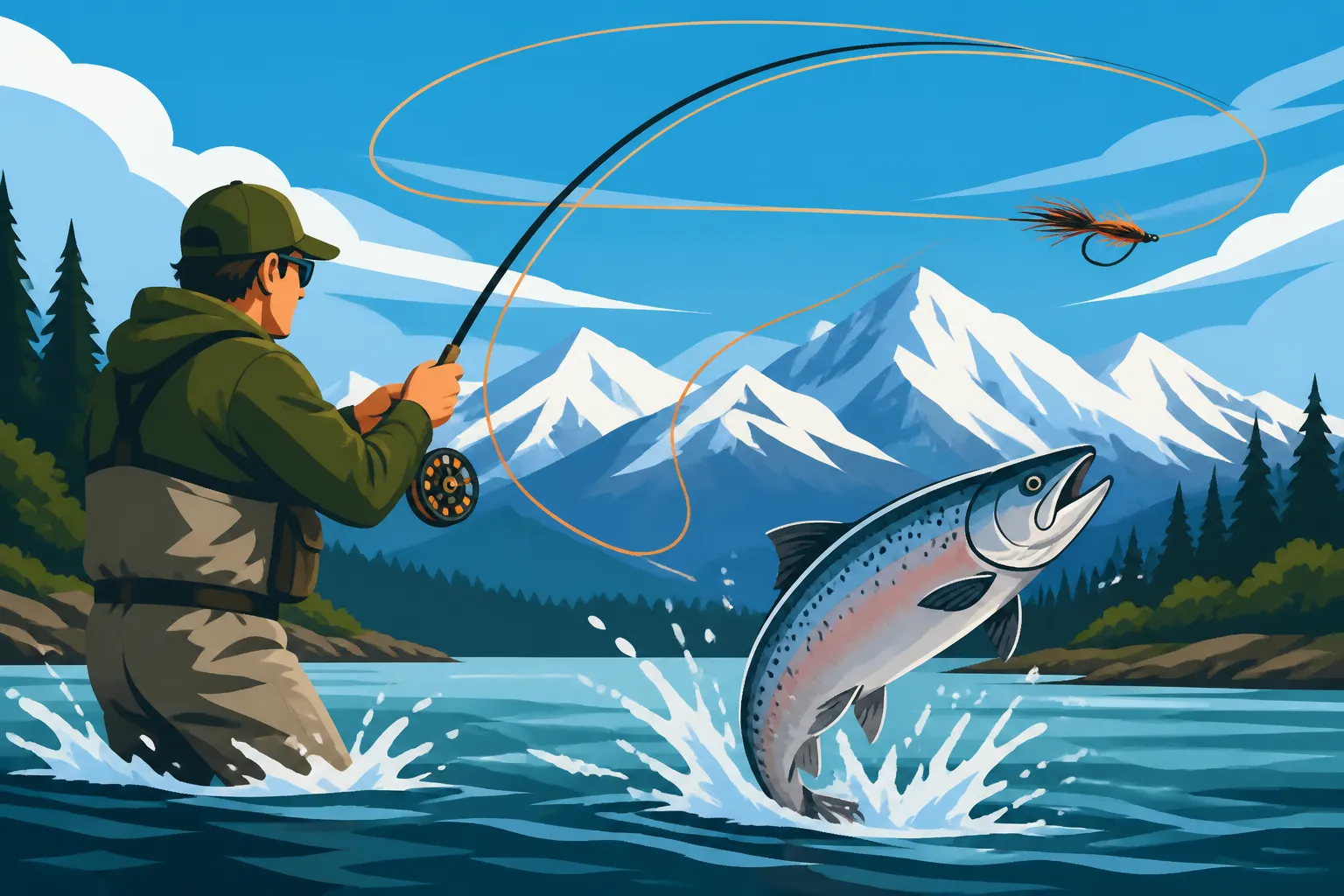
- Mending Line: When drifting a lure or bait in a strong current, your line can quickly bow, creating drag that pulls your lure unnaturally. "Mending" involves lifting your rod tip and flipping a loop of line upstream to straighten out the line and allow your lure to drift freely. This is a critical skill for fly anglers but also highly useful for gear casters using lighter setups or drifting bait.
- Casting Around Obstacles: Alaska's rivers are wild, full of snags, logjams, and submerged rocks. While these can be frustrating, they are also prime fish habitat. You need to develop the ability to cast accurately into tight pockets, just past obstacles, or along the edges of brush piles, without getting snagged. This often means using a roll cast, a sidearm cast, or a skip cast. It also means being ready to react the instant your lure hits the water, taking up slack immediately to maintain control. It's a constant battle between getting close to the fish and avoiding losing your gear.
Understanding these dynamics and practicing these adjustments will transform your casting from a simple motion into a strategic art form, significantly boosting your salmon fishing success in the challenging but incredibly rewarding waters of Alaska.
| Salmon Species | Recommended Rod Power/Action | Recommended Reel Size (Spinning) | Typical Line Weight (Braid) | Common Lure Types | Key Casting Considerations |
|---|---|---|---|---|---|
| King Salmon | Heavy, Moderate-Fast Action | 4000-6000 | 30-60 lb | Plugs, Large Spinners, Spoons, Cured Roe | Power casts for depth, strong current, fighting big fish |
| Sockeye Salmon | Medium-Heavy, Fast Action | 3000-4000 | 20-30 lb | Flies (unweighted/weighted), Small Lead Jigs, Beads, Cured Roe | Precise short casts, drifting, "flossing" technique |
| Coho Salmon | Medium-Heavy, Moderate-Fast | 4000-5000 | 30-40 lb | Spinners, Spoons, Soft Plastics, Jigs, Cured Roe | Versatile casting, active retrieval, targeting aggressive fish |
| Pink Salmon | Medium, Fast Action | 2500-3000 | 15-25 lb | Small Spinners, Spoons, Flies, Pink Soft Plastics | Covering lots of water, targeting schools |
| Chum Salmon | Medium-Heavy, Fast Action | 3000-4000 | 20-30 lb | Jigs, Large Spinners, Spoons, Bright-colored flies | Casting into strong currents, targeting powerful fights |
Disclaimer
Fishing in Alaska involves inherent risks, including rapidly changing weather, strong currents, and wildlife encounters. Always prioritize safety, wear appropriate gear, and be aware of your surroundings. Fishing regulations can change frequently via emergency orders; always check the latest Alaska Department of Fish and Game regulations before heading out. The information provided in this guide is for general informational purposes only and should not be considered professional advice.