Alaska Fishing Violations and Fines
There's nothing quite like the dream of an Alaska fishing trip, casting your line into pristine waters, hoping for that trophy King Salmon or a massive Halibut. But let's be honest, alongside that excitement often comes a creeping worry: "Am I doing this right? What if I accidentally break a rule?" The regulations can feel like a labyrinth, and the thought of an honest mistake leading to a hefty fine or worse can cast a shadow over even the most anticipated adventure. This guide is here to untangle that complexity, shedding light on common Alaska fishing violations and the real-world consequences you might face, so you can fish with confidence and peace of mind.
The Steep Cost of Angling Missteps in Alaska
Alaska's fisheries are a treasure, and they're managed with a deep commitment to conservation and sustainability. This means the rules aren't just arbitrary; they're designed to protect the very resources we all cherish. For anglers, this translates into a strict regulatory environment where ignorance of the law is rarely an excuse. Missing a minor detail can turn a dream trip into a costly headache, impacting not just your wallet but potentially your ability to fish in the future.
Understanding the Legal Framework
The backbone of Alaska's fishing rules lies with the Alaska Department of Fish and Game (ADF&G), which works in concert with the Alaska Board of Fisheries. These bodies establish seasons, bag limits, gear restrictions, and area closures, all based on scientific data, conservation needs, and public input. It's a dynamic system, with regulations often changing in-season via emergency orders to respond to fluctuating fish runs or environmental conditions.
Imagine planning a trip for months, studying the regulations booklet cover-to-cover, only to arrive and find that an emergency order has just closed the river you planned to fish for King Salmon. It's frustrating, absolutely. But these rapid changes are a necessary part of managing a healthy ecosystem. Alaska fishing regulations are not static, and it's your responsibility as an angler to stay current. This vigilance is crucial because the legal framework is designed to hold individuals accountable for their actions, ensuring that even well-intentioned errors can lead to penalties if they violate established rules.
Common Misconceptions Leading to Violations
Many anglers, especially those visiting from out of state, fall prey to misconceptions that unfortunately lead to violations. One of the most prevalent is assuming that if you're on a guided trip, the guide is solely responsible for knowing and adhering to all regulations. While a good guide is invaluable and will certainly help, the legal burden ultimately falls on you, the individual angler, for any fish you catch.
Another common mistake is applying rules from other states or countries to Alaska. What might be perfectly legal in Washington or Oregon, such as certain bait types or methods of retention, could be strictly prohibited in Alaskan waters. For instance, the use of bait for King Salmon on some sections of the Kenai River is often restricted to specific periods, and single-hook rules apply during king closures. The sheer variety of regulations across different regions and even different stretches of the same river can be bewildering. A final misconception is the "it's just one fish" mentality; thinking that going slightly over a bag limit or keeping a marginally undersized fish won't matter. In Alaska, every fish counts, and wildlife troopers take these infractions seriously to uphold the integrity of the resource.
Types of Alaska Fishing Violations You Might Encounter
The vast array of regulations means there are numerous ways an angler can inadvertently (or deliberately) run afoul of the law. From failing to correctly mark your catch to using the wrong type of hook, the devil truly is in the details when fishing in Alaska. Understanding the common categories of violations can help you avoid them.
License and Stamp Infractions
This is perhaps the easiest category to violate, sometimes without even realizing it. The most basic requirement is having an appropriate Alaska Fishing License: Complete Guide in your possession, either printed or digitally accessible. Many anglers forget to sign their license, which renders it invalid. Another common issue is purchasing the wrong type of license – for instance, a resident license when you don't meet the strict residency requirements, or a short-term license that expires mid-trip.
Beyond the general license, specific species or activities often require additional stamps or permits. The most notable example is the Do You Need a King Salmon Stamp in Alaska for anyone targeting or retaining King Salmon. It's not enough to simply have the stamp; it must also be affixed to your physical license or clearly associated with your digital one. Forgetting to purchase this stamp before you land that prize King can turn a moment of triumph into a significant legal issue, resulting in fines and the forfeiture of your catch. Always double-check what specific licenses and stamps are required for your intended fishing activity and target species.
Bag and Possession Limit Breaches
These violations are among the most frequently cited and are taken very seriously. Bag limits refer to the number of fish you can legally harvest in a single day, while possession limits refer to the total number of fish you can have in your possession at any given time, including those already processed and stored. These limits vary dramatically by species, location, and even time of year. For instance, Alaska Halibut Bag Limits Explained often include complex slot limits or reverse slot limits for charter anglers, which can be confusing.
Exceeding the daily limit, or holding more than the possession limit after multiple days of fishing, are clear violations. Another critical aspect is accurately completing your Alaska Harvest Record Card Explained. Certain species, primarily King Salmon and Halibut, must be immediately recorded on your harvest card once retained. Failing to do so can result in significant fines and the confiscation of your catch, even if you are otherwise within the legal limit. This record-keeping is vital for conservation efforts, allowing ADF&G to track harvests accurately. Furthermore, retaining undersized or oversized fish (outside legal slot limits) is also a common infraction, particularly with species like Rainbow Trout or certain Rockfish. It's imperative to know the size restrictions for your target species and have a measuring device handy.
Gear and Technique Violations
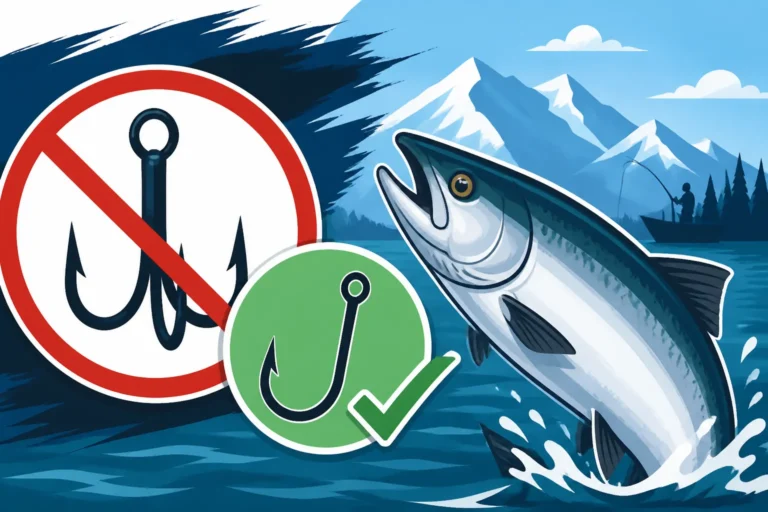
Alaska has very specific rules about the type of gear and fishing techniques allowed in different waters, largely to minimize harm to non-target species or to ensure fair chase. One of the most common gear-related issues involves Alaska Barbless Hook Requirements in many popular freshwater fisheries, especially on rivers like the Kenai and its tributaries. Using a barbed hook in these areas is an immediate violation, regardless of what you catch. It's often easy to crimp down barbs on your existing hooks, but many anglers forget this simple step.
Another frequent infraction concerns Alaska Bait Restrictions Explained. In numerous rivers and streams, particularly those with strong wild trout or steelhead populations, the use of bait (including cured eggs) is completely prohibited. Anglers accustomed to fishing with bait in other regions might unknowingly deploy it in a no-bait zone. Similarly, specific lure types, weights, or leader lengths might be regulated. Snagging, while legal in very limited "terminal fisheries" under specific conditions, is broadly prohibited and a serious violation if practiced outside those narrow allowances. These rules are in place to reduce mortality for released fish and prevent indiscriminate harvesting.
Closed Waters and Season Infringements
Fishing outside designated open seasons or in waters that are temporarily or permanently closed is a direct violation of conservation efforts and can carry severe penalties. Alaska's seasons for various species are highly regulated, with precise start and end dates that can sometimes change on short notice via emergency order. For example, Alaska King Salmon Fishing Regulations and Limits are often subject to highly dynamic openings and closures based on escapement goals.
Specific areas, such as spawning grounds or certain tributaries, might be permanently closed to fishing to protect vulnerable fish populations. Marine protected areas or zones around hatcheries also have strict access limitations. The challenge for anglers is keeping up with these changes. Relying solely on a regulation booklet printed months ago can be risky. You absolutely need to check for Alaska Fishing Emergency Orders Explained right before and even during your trip. Fishing in a closed area, even if you weren't aware it was closed, can result in fines, confiscation of gear, and potential prosecution. This applies equally to freshwater rivers and saltwater areas where species like Halibut or certain Rockfish might be protected.
The Fines and Penalties for Breaking Alaska Fishing Rules
The consequences of violating Alaska's fishing regulations can range from a minor slap on the wrist to severe penalties, including substantial fines, loss of equipment, and even jail time for serious offenses. It's a spectrum, and the severity often depends on the nature of the violation, the species involved, the number of fish, and whether it's a first-time or repeat offense.
Monetary Penalties: What to Expect
Fines in Alaska for sport fishing violations can quickly add up. For minor infractions, such as forgetting to sign your license or having a barbed hook in a barbless-only area, you might be looking at a fine in the range of $100-$300. These are often considered "minor offenses" or citations that can be paid without a court appearance, similar to a traffic ticket. However, don't let that fool you into thinking they are insignificant. These fines are still a chunk out of your vacation budget.
More serious violations, such as exceeding bag limits by one or two fish, retaining undersized trophy fish, or fishing in a closed area, can easily result in fines from $500 to over $1,000 per violation. If you're caught with multiple illegal fish, fines can be assessed per fish, compounding the cost rapidly. For instance, if you're found with three King Salmon over the limit, and the fine for one is $500 plus forfeiture, you're immediately looking at a $1,500 fine on top of losing your valuable catch. Repeat offenders face even steeper penalties, with fines often doubling or tripling, demonstrating that Alaska has zero tolerance for habitual disregard of its fishing laws.
Non-Monetary Consequences: Beyond the Fine
While the financial hit is often the most immediate concern, the non-monetary consequences of fishing violations can be even more impactful and long-lasting. One of the most common is the forfeiture of your catch. That prized King Salmon or enormous Halibut you worked so hard for will be confiscated, and you'll receive nothing for it. This stings, especially after all the effort and expense of an Alaska trip.
Even worse, wildlife troopers have the authority to confiscate your fishing gear, including rods, reels, tackle, and even boats or vehicles if they were used in the commission of a serious offense. Imagine losing your favorite Sage fly rod or your expensive Penn halibut setup because of a single mistake. Beyond property loss, a violation can lead to the suspension or revocation of your Alaska fishing license, and potentially your fishing privileges in other states through interstate compacts. For serious or repeat offenders, a criminal record can result, which can affect future travel, employment, and even gun ownership. For example, a violation like poaching can be classified as a misdemeanor, requiring a court appearance, legal fees, and potential probation.
Special Penalties for Commercial or Guide Violations
The stakes are significantly higher for those involved in commercial fishing or acting as a licensed fishing guide. Commercial violations are often subject to much larger fines, measured in thousands or even tens of thousands of dollars, reflecting the commercial value of the catch and the professional responsibility involved. A commercial fisherman found to be exceeding quotas or using illegal gear could face massive financial penalties, forfeiture of their entire catch, and the loss of their commercial fishing permit, which is their livelihood.
For sport fishing guides and charter operators, the consequences are equally severe. A guide found responsible for their clients' violations (especially if the guide facilitated or encouraged the illegal activity) can face not only personal fines but also the suspension or revocation of their guide's license. This can effectively end their career in the guiding industry. Furthermore, the vessel used in the violation can be seized, and their business reputation can be irrevocably damaged. These stringent penalties underscore the critical role guides play in ensuring compliance with Alaska Halibut Charter Regulations Explained and other rules, acting as a crucial line of defense for Alaska's fisheries.
How Violations Are Investigated and Prosecuted
Understanding how fishing violations are identified, investigated, and ultimately brought to justice can help you appreciate the seriousness of the rules and the diligence of the enforcement agencies. It's not uncommon to see Alaska Wildlife Troopers actively patrolling rivers, lakes, and marine waters, sometimes even incognito.
Role of Alaska Wildlife Troopers
The primary enforcement agency for Alaska's fishing regulations is the Alaska Wildlife Troopers (AWT). These are highly trained law enforcement officers with specific expertise in fish and game laws, conservation, and wilderness operations. They patrol extensively by boat, ATV, aircraft, and on foot, often conducting routine checks of anglers to ensure compliance. You might encounter them on the Kenai River checking licenses, or out in Kachemak Bay inspecting halibut catches.
Wildlife Troopers have full police powers, meaning they can stop, question, search (with probable cause or consent), and arrest individuals suspected of violating fish and game laws. They are typically equipped with cameras and other tools to document evidence, such as undersized fish or illegal gear. Their role is not just to issue tickets, but to investigate potential poaching operations, illegal sales of fish, and other serious wildlife crimes. Their presence is a critical deterrent and ensures that those who disregard the rules are held accountable, protecting the resource for everyone.
The Citation Process: From Encounter to Court
When a Wildlife Trooper observes a violation or has probable cause to suspect one, they will typically initiate a contact with the angler. This usually begins with asking for your fishing license, harvest card, and requesting to inspect your catch and gear. If a violation is confirmed, the Trooper will explain the specific regulation that was violated and the evidence gathered.
Depending on the severity, you might receive a warning, a citation (which is essentially a ticket), or be arrested for more serious offenses. A citation will detail the charge, the relevant statute, and provide instructions on how to respond – usually by either paying a fine or appearing in court. If you choose to pay the fine, it's an admission of guilt. If you believe you were wrongly cited or wish to contest the charges, you'll need to appear in court on the designated date. For significant violations, especially those involving large quantities of fish, commercial activities, or repeat offenses, immediate arrest and booking into jail are possible, followed by formal charges through the district attorney's office.
Navigating the Legal System: Pleading Guilty vs. Fighting a Charge
Once you receive a citation, you have important decisions to make. For minor infractions with a low fine, many anglers choose to simply pay the fine, accepting responsibility and moving on. While this is the easiest route, remember that it's still an admission of guilt that could be referenced in future encounters or lead to license point accrual if such a system is in place.
If you believe you are innocent, that the facts presented are incorrect, or that there was a misunderstanding of the law, you have the right to fight the charge in court. This will require a court appearance, potentially multiple trips, and you may want to consider hiring legal counsel specializing in fish and game laws. Presenting a defense often involves demonstrating a lack of intent, arguing misidentification of a species, or providing proof of compliance (e.g., a signed license or properly recorded harvest card). The legal process can be daunting, but it’s there to protect your rights. Familiarizing yourself with resources like "How to Avoid Alaska Fishing Violations" can help you be better prepared should you ever find yourself in this situation.
Preventing Violations: Your Best Defense
The best way to deal with Alaska fishing violations and fines is to avoid them entirely! This requires proactive effort, continuous learning, and a commitment to responsible angling. It's about being prepared and informed, not just hopeful.
Essential Pre-Trip Research
Before you even pack your bags, thorough research is your absolute best defense. Start by getting the most current Alaska sport fishing regulations booklet, either online through the ADF&G website or in a physical copy available at sporting goods stores like those found on Amazon. This booklet, often referred to as "the regs," is your bible. Don't just skim it; read the sections pertinent to the region, species, and dates you plan to fish. Pay close attention to the general regulations, then delve into the specific regional rules.
Crucially, check for Alaska Fishing Emergency Orders Explained just before your departure and again daily while you're in Alaska. These orders can change seasons, bag limits, or open/close entire areas with very little notice. Many areas, like the Kenai River, are especially prone to in-season changes for species like sockeye and king salmon. The ADF&G website is the primary source for these updates, and many local fishing shops or guides will also have them posted. Knowing How to Read Alaska Fishing Regulations is a skill that will serve you well.
On-the-Water Best Practices
Once you're actually out fishing, maintaining vigilance is key. Always have your signed fishing license and any required stamps physically with you or readily accessible on a waterproof device. Many anglers use a small, clear, waterproof pouch for their license and harvest card, easily found on Amazon. If you're targeting King Salmon, ensure your King Salmon Stamp is properly affixed and recorded.
Make it a habit to count your fish regularly and know your current bag and possession limits. If you're on a multi-day trip, keep meticulous records on your harvest card as soon as you retain a King Salmon or Halibut. Carry a measuring tape to verify fish lengths, especially for species with size restrictions. When in doubt about a specific regulation, err on the side of caution. If you're fishing with a guide, don't be afraid to ask questions. A good guide will appreciate your proactive approach to compliance. Also, always use appropriate gear; check your hooks for barbs in designated barbless areas, and ensure you're not using prohibited bait.
Leveraging Resources for Compliance
Beyond the official ADF&G regulations, there are many local resources that can help you stay compliant. Local tackle shops, particularly in popular fishing towns like Soldotna, Homer, or Seward, are invaluable. The staff often have the most up-to-date information on local emergency orders, hot spots, and specific gear restrictions. They are a treasure trove of local knowledge and typically eager to help responsible anglers.
Many reputable Alaska Fishing Charters: Complete Guide and lodges will also provide a briefing on current regulations before you head out. Don't dismiss this information; it's tailored to your specific trip. Additionally, various online forums and community groups can offer insights, though always cross-reference information with official ADF&G sources. Consider downloading the ADF&G mobile app, if available, which can provide quick access to regulations and emergency orders. Being proactive about gathering information is truly the best strategy.
Real-World Scenarios and Case Studies
To really bring this home, let's look at some hypothetical, but very realistic, scenarios that illustrate how easily one can run into trouble, and what the potential fallout could be. These stories aren't meant to scare you, but to highlight the nuances and consequences of different types of violations.
The "Oops, I Didn't Know" Scenario
Imagine Sarah, on her first ever Alaska trip, fishing for sockeye on the Kenai River with her family. They've read the regulations but, in the excitement, overlooked a small footnote in the "Alaska Sockeye Salmon Fishing Regulations and Limits" section about a specific river section being fly-fishing only, or requiring barbless hooks. Sarah is spin-fishing with a lure that has a barbed treble hook. A Wildlife Trooper approaches, inspects her gear, and spots the barbed hook.
Even though Sarah had no malicious intent and genuinely didn't know, the violation is clear. She receives a citation for using illegal gear in a restricted area. The fine might be around $250. Her fishing equipment, specifically the rod and reel she was using, could also be confiscated. This isn't a criminal charge, but it's a costly lesson and a frustrating end to her fishing day. It underscores the need to read every detail of the regulations, especially for specific river sections which can have micro-rules.
The "Just One More Fish" Temptation
Consider Mark, an experienced angler who has already caught his daily limit of two King Salmon on the Deshka River. As the day winds down, he hooks into another magnificent King, a real beauty. The fish fights hard, and Mark, caught up in the thrill, decides to keep it, rationalizing that "it's just one more, and nobody will know." He quickly stows it and leaves the river.
However, a savvy Wildlife Trooper observed Mark fighting the fish, noted the time, and then later conducted a vehicle check. Upon inspection, the Trooper discovers three King Salmon, one of which isn't recorded on Mark's harvest card. This isn't an "oops." This is a deliberate over-limit violation. Mark will face a substantial fine, likely upwards of $500 to $1,000 per illegal fish, plus the forfeiture of all three salmon. His fishing license could be suspended for a period, and his fishing gear used in the commission of the crime would be confiscated. This intentional act carries far heavier penalties because it's seen as a direct defiance of conservation laws.
The Egregious Violation
Let's look at a much more serious case. John and his buddy are operating an unlicensed charter service in Prince William Sound, taking clients out for Halibut and King Salmon. They consistently exceed bag limits, don't record fish on harvest cards, and even engage in the illegal sale of some of their "excess" catch to local restaurants. They also don't bother with proper deepwater release devices for rockfish, leading to unnecessary mortality.
After multiple complaints and an extensive investigation by Wildlife Troopers, John and his buddy are apprehended. The evidence includes client testimonials, surveillance, and documentation of illegal transactions. They could face multiple felony and misdemeanor charges, including operating an illegal charter, multiple counts of over-limiting, illegal sale of fish, and conspiracy. The fines would be in the tens of thousands of dollars, their boat and all associated fishing gear would be seized, and they would face significant jail time and a permanent criminal record. Their ability to ever hold a fishing license or work in the fishing industry again would be completely revoked. This kind of blatant disregard for the law highlights why enforcement is so critical in Alaska.
Table of Common Alaska Fishing Violations and Potential Penalties (Hypothetical)
| Violation Type | Example Scenario | Typical Fines (Approx.) | Other Penalties |
|---|---|---|---|
| License/Stamp | Unsigned license, no King Salmon stamp for retained King. | $100 – $300 | Forfeiture of catch (King Salmon). |
| Bag/Possession | Keeping one fish over the daily limit; not recording Halibut on harvest card. | $300 – $1,000+ (per fish) | Forfeiture of illegal catch, potential license suspension. |
| Gear/Technique | Using barbed hooks in a barbless-only river; using bait in a no-bait zone. | $250 – $500 | Confiscation of illegal gear (rod, reel, tackle). |
| Closed Water/Season | Fishing a river section closed by emergency order; fishing outside species season. | $500 – $1,500+ | Forfeiture of catch, confiscation of gear, potential license suspension. |
| Undersized/Oversized | Retaining a Halibut outside the legal slot limit; keeping undersized Rainbow Trout. | $250 – $750+ (per fish) | Forfeiture of illegal catch, potential license suspension. |
| Serious/Repeat Offense | Multiple large over-limits; operating an illegal charter; illegal sale of fish. | $5,000 – $50,000+ | Felony/misdemeanor charges, jail time, substantial forfeiture of assets (boat, vehicle), permanent license revocation. |
Note: These figures are approximate and purely for illustrative purposes. Actual fines and penalties are determined by Alaskan courts and vary based on jurisdiction, specific circumstances, and the severity of the offense.
Disclaimer
The information provided in this guide is for general informational purposes only and does not constitute legal advice. Fishing regulations in Alaska are complex and subject to change. It is always the responsibility of the individual angler to consult the official Alaska Department of Fish and Game regulations booklet and check for current emergency orders before and during any fishing activity. Non-compliance can result in severe penalties.