How Alaska Charters Process Your Fish
You’ve just had the fishing trip of a lifetime in Alaska, reeling in a magnificent King Salmon or a barn-door Halibut. But as the adrenaline fades and you look at your impressive catch, a common question often surfaces: Now what? The sheer volume of fish, coupled with the desire to preserve its pristine quality, can feel daunting, especially if it’s your first time up here. This guide is here to demystify the entire process, walking you through exactly how Alaska fishing charters handle and process your hard-earned catch, ensuring it makes it from the icy waters to your dinner plate, perfectly preserved and ready to enjoy.
The Critical First Steps: Handling Your Catch Onboard
The journey of your fish from the ocean or river to your cooler starts the moment it's brought onto the boat. Professional Alaska fishing charters understand that the quality of your catch hinges on immediate and proper handling. This isn't just about being tidy; it's about food safety, preserving flavor, and adhering to strict regulations. Many anglers ask, "Do you need a license to fish on a charter in Alaska?" The answer is yes, and understanding how your charter handles your catch is just as crucial as understanding the licensing.
Bleeding and Icing for Optimal Quality
The very first thing a good deckhand will do with a keeper fish, especially salmon and halibut, is to bleed it. This might sound a little graphic, but it's a vital step. Bleeding removes the blood from the fish's system quickly, which greatly improves the flavor and extends the shelf life of the meat. If left unbled, the blood can break down in the flesh, leading to a "gamey" taste and a shorter window of freshness. Typically, the fish is bled by cutting an artery near the gills or tail, allowing it to bleed out in a designated area or into a bucket of seawater.
Immediately after bleeding, your fish is placed on ice. This isn't just a handful of cubes; we're talking about large coolers or fish holds packed with crushed ice. The goal is to rapidly lower the core temperature of the fish to inhibit bacterial growth. Imagine bringing a beautiful Kenai River King Salmon aboard; if it's left to warm in the sun, even for a short time, its quality will degrade rapidly. Keeping it on ice from the moment it hits the deck is non-negotiable for preserving that "fresh-caught" taste. This meticulous attention to detail on the boat sets the stage for the quality you'll receive weeks or months later.
Initial Cleaning and Storage
While some charters might do a full gutting on the boat, it's more common for them to focus on bleeding and icing. For larger fish like halibut, the internal organs are often removed soon after bleeding, which further aids in cooling the body cavity and preventing spoilage. The goal is to get the fish cleaned enough to ensure proper cooling and transport, without necessarily doing the final filleting on the sometimes-rocky deck of a boat. When you're looking into booking an Alaska Fishing Charters: Complete Guide, pay attention to their onboard handling practices; it speaks volumes about their commitment to quality. The crew knows that every minute counts in maintaining the premium quality of your catch, especially when fishing for highly prized species like Alaska King Salmon or giant Halibut.
Seamless Transition: From Boat to Professional Processing
Once your charter boat pulls back into port, the real logistics begin. For many visitors, the thought of processing a massive halibut or a boatload of salmon is completely overwhelming. Thankfully, the vast majority of Alaska fishing charters have well-established systems in place to make this transition effortless for you.
Offloading and Tagging Your Catch
When your boat docks, whether it's at the bustling harbor in Homer or a quieter marina in Seward, the crew will efficiently offload the catch. This is often a spectacle in itself, with fish being hoisted onto the dock. What happens next is critical: identification. Each fish or group of fish from your party will be carefully tagged. This tag typically includes your name, the date, the species, and sometimes the weight. This ensures that your fish never gets mixed up with another angler's, a common worry that professional operations meticulously address.
The process of offloading and tagging is often integrated with discussions about Alaska Fishing Limits and Bag Limits Explained. The crew will ensure that all fish retained are within the legal limits and that any specific regulations, like the Alaska Halibut Charter Reverse Slot Limit, have been properly observed. This is where the charter's expertise really shines, as they navigate these complex rules daily.
Transport to a Dedicated Processing Facility
Most reputable Alaska fishing charters don't do the final, detailed processing themselves. Instead, they partner with professional, state-of-the-art fish processing facilities. These facilities are usually located close to the docks, making transport quick and efficient. The crew often has a system for transporting your tagged fish directly to these processors, sometimes with a dedicated pick-up service.
This partnership is a huge benefit to anglers. These aren't just folks with a fillet knife; they are businesses specializing in high-volume, high-quality fish processing. They have the right equipment, the sanitary conditions, and the skilled staff to handle large quantities of fish quickly and efficiently, ensuring maximum preservation. When you book a charter, especially through platforms like FishingBooker, you can often see if they have established relationships with specific processors, which is a good indicator of a smooth post-fishing experience. They'll know exactly what to do with your Alaska King Salmon or Alaska Halibut.
The Art of Preservation: What Happens at the Processor
Once your fish arrives at the processing facility, it enters a streamlined system designed to turn your raw catch into perfectly preserved, ready-to-cook portions. This is where the true value of professional processing comes into play.
Precision Filleting and Portioning
Skilled fish cutters at the facility will take your whole fish and transform it into fillets or steaks, depending on the species and your preference. For instance, a large halibut might be cut into manageable steaks or boneless fillets, while salmon is often filleted whole or steaked. This isn't just about cutting; it's about minimizing waste and maximizing the edible meat. They'll expertly remove bones, skin, and any remaining dark bloodline, leaving you with clean, prime cuts. You can often specify how you'd like your fish cut – for example, how thick you want your halibut steaks or if you prefer skin-on or skin-off salmon fillets. This customization ensures that your fish comes home exactly how you want to prepare it. Many processors are so efficient they can process hundreds of pounds of fish in a day, maintaining exceptional quality.
Vacuum Sealing and Flash Freezing for Longevity
After portioning, the next crucial step is vacuum sealing. Each portion of your fish is placed into a heavy-duty, commercial-grade vacuum-seal bag, and all the air is removed before the bag is sealed tight. This is arguably the most important step for long-term preservation. Removing oxygen prevents freezer burn, maintains moisture, and locks in the freshness, taste, and texture for months, sometimes even over a year. If you want to learn more about this, check out our guide on How to Vacuum Seal and Ship Alaska Fish.
Immediately following vacuum sealing, your fish goes into a flash freezer. Unlike a typical home freezer that slowly lowers the temperature, flash freezers rapidly freeze the fish at extremely low temperatures, often -30°F or colder. This rapid freezing process prevents the formation of large ice crystals that can damage the cellular structure of the fish, which would otherwise result in a mushy texture when thawed. Flash freezing ensures that when you finally thaw your fish back home, it will taste as close to fresh as possible.
Labeling and Packaging for Your Convenience
Every vacuum-sealed package of fish is meticulously labeled. These labels typically include the species (e.g., King Salmon, Halibut), the date it was caught and processed, and your name. This organization is incredibly helpful, especially when you return home with a variety of species from different days. Once frozen, your individually packaged portions are usually grouped and placed into sturdy, insulated fish boxes, ready for transport. These boxes are designed to keep your fish frozen solid for an extended period, which is essential whether you're driving, flying, or shipping your bounty.
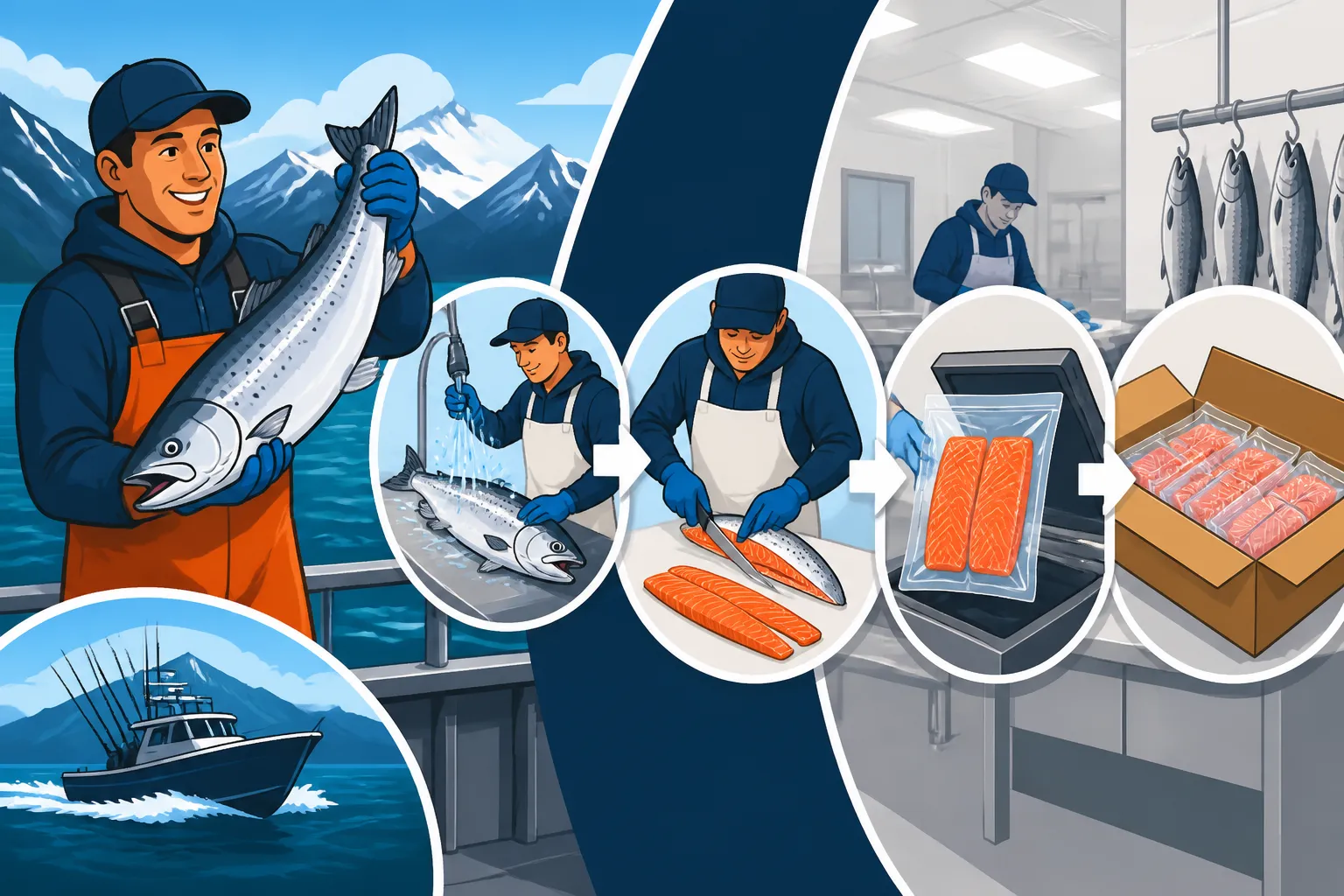
Here's a quick look at a typical processing flow:
| Step | Description | Benefits |
|---|---|---|
| Onboard Bleeding | Severing arteries to drain blood from fish immediately. | Improves flavor, extends shelf life, cleaner meat. |
| Onboard Icing | Placing bled fish into coolers packed with crushed ice. | Rapidly lowers core temperature, inhibits bacterial growth. |
| Transport | Moving tagged fish from dock to professional processing facility. | Ensures efficient, hygienic transfer to specialized equipment. |
| Filleting/Steaking | Expert removal of bones, skin, and undesirable parts; custom cuts. | Maximizes edible yield, caters to cooking preferences. |
| Vacuum Sealing | Removing air from individual fish portions before sealing. | Prevents freezer burn, maintains moisture, locks in flavor. |
| Flash Freezing | Rapidly freezing fish at extremely low temperatures (-30°F or colder). | Preserves texture, prevents large ice crystal formation, extends shelf life. |
| Labeling | Marking packages with species, date, and angler's name. | Easy identification, inventory management at home. |
| Boxing | Packing frozen, labeled fish into insulated, airline-approved boxes. | Ready for transport, keeps fish frozen during transit. |
Navigating the Journey Home: Transporting Your Valued Catch
The final hurdle is getting your processed, frozen fish from Alaska all the way back to your kitchen. Charters and processors understand this can be a major concern, and they offer several reliable options. Understanding Alaska Fish Transport and Shipping Rules will make your journey home much smoother.
Shipping Your Fish
For many visitors, especially those flying a long distance or not wanting to deal with extra baggage, shipping your fish is the most convenient option. Most processing facilities offer shipping services through major carriers like UPS or FedEx. They'll typically use specialized insulated shipping containers with gel packs or dry ice to ensure your fish remains frozen solid during transit. You can arrange for your fish to be shipped directly to your home or a local pick-up point.
The cost of shipping varies greatly depending on the weight of your boxes, your destination, and the speed of service you choose. While it can be a significant expense, it offers peace of mind knowing your valuable catch is being professionally handled every step of the way. When discussing options with your charter or processor, clarify costs and estimated delivery times. Some operations, like those found through FishingBooker, might even offer packages that bundle processing and shipping for simplicity, providing a seamless end-to-end experience.
Traveling with Your Fish on the Plane
If you prefer to carry your fish with you, flying with frozen fish is a very common practice. Your insulated fish boxes are designed to be checked as luggage. Airlines have specific regulations regarding cooler sizes, weight limits, and how long items can remain frozen. Typically, a hard-sided cooler or a sturdy, approved insulated box is required. It's crucial to ensure your fish is solidly frozen when you check it in, as airlines often have rules against items leaking or thawing. Adding a couple of frozen gel packs or a small amount of dry ice (check with your specific airline about dry ice allowances) can extend the freeze time significantly.
Remember, every airline has its own policies, so always check with your carrier about their specific rules for flying with frozen perishables and for How Much Fish Can You Bring Home from Alaska. A useful tip is to try and schedule your flight to arrive when you can get your fish directly into your freezer at home, avoiding extended periods in warm temperatures.
Driving Home with Your Catch
For those on a road trip or residents driving back, transporting your fish is a bit simpler but still requires preparation. High-quality coolers are your best friend here. Pack your flash-frozen, vacuum-sealed fish tightly into coolers, filling any empty spaces with crumpled newspaper or insulation to reduce air pockets. Using a layer of dry ice on top (wrapped in newspaper or a towel, never directly touching the fish) can keep your fish frozen for several days, far longer than regular ice. Just remember to ensure proper ventilation in your vehicle when using dry ice. Always keep the coolers out of direct sunlight and consider covering them with a blanket for extra insulation during your drive.
No matter how you choose to transport your catch, the professional processing provided by Alaska fishing charters and their partners is designed to make your post-fishing experience as smooth and worry-free as possible. It’s their way of helping you cherish the memories and the flavors of your Alaskan adventure long after you’ve left the Last Frontier.
Disclaimer
Please note that fishing regulations, charter services, and processing options in Alaska can change. Always confirm current regulations with the Alaska Department of Fish and Game (ADF&G) and discuss specific processing and transport options directly with your chosen fishing charter and processing facility before your trip.