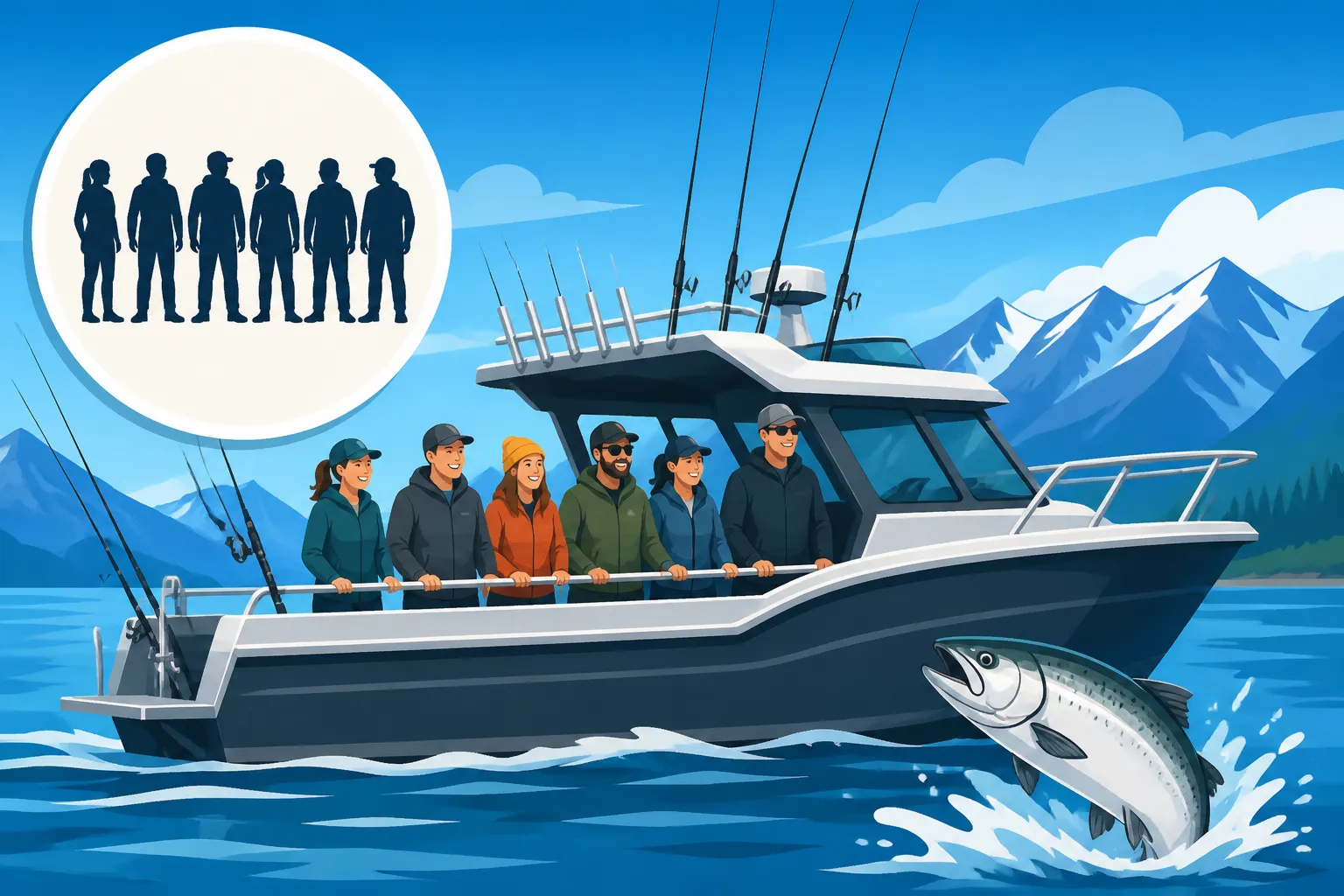
How Many People Fit on an Alaska Charter
One of the trickiest parts about planning an Alaska fishing adventure, especially if you're traveling with friends or family, is figuring out just how many people can comfortably fit on a fishing charter. It's not always as simple as checking a website, and the last thing you want is a cramped boat ruining your dream trip. This guide is here to clear up the confusion, explaining what impacts charter capacities and how to ensure your group has the best, most comfortable experience on the water.
Understanding Alaska Fishing Charter Capacities
When you think about fishing in Alaska, you might imagine a vast, open ocean or a sprawling river. While that's often true, the boats themselves have very real limits on how many anglers they can safely and legally carry. These limits are far from arbitrary; they're based on everything from vessel design to strict federal regulations designed to keep everyone safe. It's not just about squeezing people onto a deck; it's about providing a quality, secure fishing experience.
Why Vessel Type Matters for Group Size
The kind of boat you'll be fishing from plays a huge role in determining how many people can come along. Alaska's diverse waters demand different types of vessels, each with its own inherent capacity.
For instance, if you're heading out for some epic salmon or trout fishing on a river like the Kenai River, you'll likely be on a drift boat or a smaller power boat. These boats are designed for maneuverability in currents and shallower waters. A typical drift boat, rowed by a guide, often comfortably accommodates just two to three anglers, allowing ample room for casting, fighting fish, and the guide to manage the boat safely. Power boats on rivers might take a few more, perhaps up to four or five, but space is still a premium when you consider rods, gear, and the need for elbow room during a hot bite. You can imagine trying to fit more people than that; it quickly turns into a tangle of lines and frustrated sighs.
Then you have the larger vessels for saltwater excursions. If you're chasing the behemoth halibut out of Homer or the prolific salmon runs near Seward, you'll be on a much sturdier, ocean-going boat. These can range from smaller cabin cruisers designed for a handful of people to larger, purpose-built charter boats. These boats have more deck space, often enclosed cabins for shelter, and specialized equipment for deep-sea fishing. Their larger size inherently means they can handle more passengers while still maintaining a reasonable level of comfort and safety for everyone onboard.
The Role of Coast Guard Regulations
Beyond the physical size of the boat, the U.S. Coast Guard (USCG) has stringent regulations that dictate the maximum number of passengers allowed on a commercial charter vessel. This isn't just a suggestion; it's the law, and charter operators face severe penalties for non-compliance. These rules are in place for passenger safety, ensuring there are enough life vests, emergency equipment, and trained crew for everyone onboard.
The most common distinction you'll encounter is between a "6-pack" charter and a larger "inspected vessel." A "6-pack" charter refers to a vessel that is certified to carry a maximum of six paying passengers. These are often operated by a single captain and are common for smaller, more intimate fishing experiences, especially for saltwater species like halibut or a mixed bag of rockfish. The regulations for these boats are less extensive than for larger vessels, but safety is still paramount.
For groups larger than six, you'll need an "inspected vessel." These boats undergo much more rigorous inspections by the Coast Guard, including stability tests, fire safety equipment checks, and more comprehensive crew training requirements. Because of these higher standards, inspected vessels can be certified to carry 7, 12, 20, or even more passengers, depending on their size and design. It's crucial for charter operators to adhere strictly to these certifications, not just for legal reasons, but because your safety depends on it. When you're looking for a good charter, don't be shy about asking about their Coast Guard certification and passenger limits; reputable operators will be transparent about this vital information.
Comfort vs. Capacity: What to Expect
While a boat might technically be certified to carry a certain number of passengers, there's a big difference between legal capacity and comfortable capacity. Imagine being on a boat that's packed to the brim—it might be legal, but it certainly won't be enjoyable. This is especially true on a long day of fishing.
Consider a "6-pack" charter that's full. With six anglers, plus the captain and deckhand, that can feel pretty crowded, particularly if everyone is actively fishing. Six lines in the water on a smaller vessel, especially when a fish is on, can quickly lead to tangled lines and frustration. You want enough room to cast without hitting your neighbor, to reel in a fish without snagging someone else's line, and simply to move around the deck comfortably.
On river boats, "comfort" often translates to casting space. If you're fly fishing for Rainbow Trout in Alaska, you'll want plenty of room for your backcast, which naturally limits the number of anglers a guide will take. Even spin fishing for Sockeye Salmon on a busy river like the Russian River, too many people can turn a relaxing day into a combat fishing scenario where you're constantly negotiating for space. When you're talking to a potential charter, ask not just about the maximum capacity, but about what they consider a comfortable number for the type of fishing you'll be doing. A good guide prioritizes your experience over simply filling every spot.
Common Charter Sizes for Different Fishing Experiences
Alaska offers such a wide array of fishing opportunities, and the type of experience you're seeking will often dictate the size of the charter boat and the number of people on board. From small, intimate river trips to large, bustling deep-sea excursions, there's a fit for almost any group. Understanding these common capacities can help you plan your trip effectively.
Freshwater River Charters (Drift Boats and Smaller Power Boats)
When you picture fishing Alaska's world-famous rivers like the Kenai River or the Kasilof River, you're usually thinking of targeting salmon or trout. For these river systems, drift boats and smaller power boats are the workhorses of the guiding world.
Drift boats, often seen on scenic stretches of the Kenai or Anchor River, are designed to be rowed by a guide, allowing for quiet approaches to prime fishing holes. Due to their design and the nature of drift fishing, these boats typically accommodate two to three anglers very comfortably. This allows each person ample room to cast, manage their line, and fight a fish without interfering with others. If you're looking for a more personalized, focused fishing experience, especially for fly fishing or a dedicated trout trip, a drift boat with a small group is often ideal. You get direct attention from the guide, and the experience feels less like a group outing and more like a tailored adventure.
Smaller power boats used on rivers might accommodate a slightly larger group, often three to four anglers, sometimes up to five depending on the specific boat and target species. These boats allow guides to cover more water quickly, which can be advantageous when following migrating salmon runs. However, even with power boats, space is a consideration. You still need room for everyone to fish effectively, store their gear, and move about safely, especially if you're back-trolling with Kwikfish or drift fishing with cured eggs.
Nearshore and Bay Fishing Charters (Smaller Ocean Vessels)
For those looking to experience the saltwater bounty of Alaska without venturing too far offshore, nearshore and bay fishing charters are a fantastic option. Locations like Kachemak Bay near Homer or Resurrection Bay out of Seward offer incredible opportunities for salmon, rockfish, and even smaller halibut.
These charters typically operate on slightly larger vessels than river boats, but they aren't the massive deep-sea boats. They are often comfortable cabin cruisers or custom-built fishing boats ranging from 25 to 35 feet. These boats usually target a capacity of four to six anglers. This is a popular size for families or small groups of friends who want a taste of saltwater fishing. You'll often find these trips focusing on techniques like trolling for King Salmon or Silver Salmon, or bottom fishing for a variety of rockfish species.
The "6-pack" limit (six passengers) is very common in this category due to Coast Guard regulations. This size allows for a more intimate experience than larger party boats, but still provides enough room for everyone to fish comfortably. The enclosed cabin offers shelter from the elements, which is a welcome feature on those typical Alaskan rainy days. These charters strike a great balance between a private feel and a more affordable shared trip, making them a popular choice for many visitors. If you're unsure how to choose an Alaska fishing charter, considering a 6-pack for bay fishing is a solid starting point.
Offshore Halibut and Deep-Sea Charters (Larger Ocean Vessels)
When the target is the truly legendary "barn door" halibut, or a mixed bag of deep-dwelling lingcod and yelloweye rockfish, you need a vessel built for the open ocean. These are the larger, more robust charter boats that depart from fishing hubs like Homer, Seward, and Sitka.
These deep-sea charters are designed for longer runs to offshore fishing grounds and can handle the choppier conditions sometimes found in the Gulf of Alaska. They come equipped with powerful engines, advanced navigation systems, large fish holds, and often spacious cabins with amenities. Consequently, these boats can accommodate significantly more passengers, typically ranging from 6 to 12+ anglers. It's not uncommon to see boats certified for 10 or even 16 passengers on a busy summer day.
On these larger vessels, the fishing experience is often a bit different. While still personalized, there's more of a communal atmosphere. You'll likely be bottom fishing or jigging for halibut, and the deck space is designed to allow multiple anglers to fish simultaneously without too much tangling. These boats are excellent for larger groups, corporate outings, or for solo travelers and couples who don't mind sharing the experience with other passionate anglers. If you're looking into specific Alaska Halibut Charter Regulations Explained, you'll see that these larger vessels are key to accessing prime halibut grounds and adhering to specific limits like the Alaska Halibut Daily Limit for Charter Anglers.
Here's a quick overview of typical charter capacities:
| Charter Type | Common Vessel Type | Typical Angler Capacity | Prime Fishing Locations | Primary Target Species |
|---|---|---|---|---|
| Freshwater River (Drift) | Drift boat (no motor) | 2-3 | Kenai, Russian, Anchor, Kasilof | Sockeye, Rainbow Trout, Dolly Varden |
| Freshwater River (Power) | Smaller jet boat / rigid hull | 3-5 | Kenai, Kasilof, Deshka, Susitna | King Salmon, Silver Salmon, Sockeye |
| Nearshore & Bay Saltwater (6-pack) | Cabin cruiser, smaller charter | 4-6 | Kachemak Bay, Resurrection Bay | Coho Salmon, Rockfish, smaller Halibut |
| Offshore Deep-Sea (Inspected Vessel) | Larger charter boat (35ft+ cabin) | 6-12+ | Homer, Seward, Sitka offshore waters | Halibut, Lingcod, King Salmon, Rockfish |
Factors Influencing Your Group's Charter Choice
Deciding on the perfect Alaska fishing charter isn't just about how many chairs are on the boat. It's a blend of your group's unique needs, what kind of fishing adventure you envision, and, let's be honest, how much you're willing to spend. Each of these elements plays a critical role in finding a charter that truly fits.
Group Size and Composition
Your group's characteristics are paramount. Are you a couple looking for a romantic fishing getaway? A family with young kids hoping to introduce them to the joys of fishing? Or a large group of seasoned anglers ready to tackle trophy fish? Each scenario calls for a different approach to charter selection.
For instance, a small family with children might prefer a charter that prioritizes comfort and a slightly less intense fishing pace. A boat with an enclosed cabin, a restroom, and a friendly, patient crew can make all the difference for a successful family outing. In this case, a 6-pack nearshore charter might be ideal, as it offers a balance of privacy and affordability. On the other hand, a corporate group of 10 might require a larger inspected vessel that can accommodate everyone together, fostering team building and shared excitement.
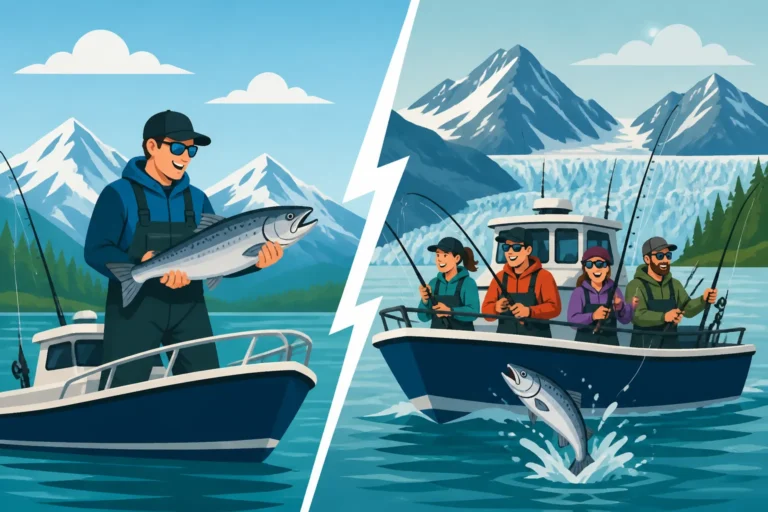
Solo anglers or small groups of two often have the most flexibility. They can easily join a shared charter, which is a great way to experience Alaska fishing without having to pay for an entire boat themselves. Many reputable charter operations, like those you can find on FishingBooker, offer options for joining mixed groups, allowing you to meet other enthusiasts and split the cost. When you're thinking about Guided vs Unguided Fishing in Alaska, the group size largely determines the logistics and cost, making guided trips a more accessible option for smaller parties by joining others.
Desired Fishing Experience and Species
The type of fish you want to catch and the method you prefer can significantly influence the optimal group size and charter type. Alaska boasts an incredible diversity of fish species, each requiring different techniques and environments.
If your heart is set on the thrill of fly fishing for elusive Steelhead or aggressive Rainbow Trout, you'll find that smaller groups are almost always better. Fly casting requires a lot of room for the backcast, and even two anglers can feel crowded in a drift boat if they're not coordinated. Guides often limit these trips to one or two anglers to ensure everyone has ample space to cast safely and effectively. Similarly, if you're trying to fish Alaska Salmon Bag Limits by Species, the technique might dictate how many can fish simultaneously.
For those eager to battle a monstrous halibut, which often involves heavy gear and potentially long fights, a larger saltwater vessel is usually preferred. These boats are specifically set up for bottom fishing or jigging, and their spacious decks allow multiple anglers to drop lines, land big fish, and navigate the deck safely, even when the boat is full. Trying to land a 100-pound halibut on a tiny boat with too many people would be a recipe for chaos and potentially lost fish. Different Alaska fishing techniques for certain species also mean different space requirements, so it's vital to communicate your target species and preferred fishing style when booking.
Budget Considerations for Private vs. Shared Charters
Money talks, and in Alaska, it often speaks loudly when it comes to charter fishing. The cost per person can vary dramatically based on whether you book a private charter for your group or join a shared trip with other anglers.
A private charter means your group has the entire boat to yourselves. This offers maximum flexibility in terms of departure times, fishing locations (within reason and regulation), and the species you prioritize. You'll get the undivided attention of the captain and crew, and the experience is completely tailored to your group. However, this exclusivity comes at a higher price, as you're covering the entire operational cost of the boat and crew. For a small group, splitting the cost might be manageable, but for a large family or corporate outing, it can add up quickly.
Shared charters, on the other hand, are a more budget-friendly option. You pay a per-person rate and join other individuals or small groups on the boat. This significantly reduces your individual cost while still allowing you to experience world-class Alaska fishing. The downside is less flexibility; you adhere to the boat's schedule and the captain's plan for the day, which might involve targeting multiple species or visiting specific fishing grounds. If you're a solo angler or a couple, a shared charter is often the most economical way to get out on the water. Many platforms allow you to compare Alaska Fishing Charter Cost Explained options for both private and shared trips, giving you a clear picture of what fits your budget. For example, FishingBooker is a great resource for seeing the range of prices for different group sizes and boat types across various Alaskan ports.
Booking Your Alaska Fishing Charter for the Right Fit
Once you have a good grasp of charter capacities and how your group's needs align with different boat types, it's time to actually book your adventure. This stage requires clear communication, smart research, and often, prompt action, especially for prime fishing seasons.
Communicating Your Needs Clearly
The most important step in booking the right charter is to be utterly transparent with the charter operator about your group's size, expectations, and any specific needs. Don't assume anything; ask questions!
When you make that initial inquiry, clearly state:
- The exact number of people in your party: Include any children and their ages, as some charters have specific rules or recommendations for young anglers.
- Your primary target species: Do you want to catch King Salmon, Sockeye Salmon, Halibut, or maybe a mix? This helps the operator recommend the right boat and fishing grounds.
- Your preferred fishing style: Are you a fly fishing purist, or do you prefer spin fishing? This influences the space needed on the boat.
- Any special requirements: Do you need an accessible boat, have mobility issues, or prefer a boat with a head (restroom)?
- Your comfort level: If you're sensitive to motion sickness, or simply prefer more personal space, communicate that. The operator might suggest a larger, more stable vessel or a less crowded trip.
A good charter company will listen carefully to your needs and offer the best possible solution. If they seem to be pushing you into a boat that feels too small for your group or doesn't meet your expectations, it might be a red flag. Remember, you're investing in an experience, so it's worth taking the time to ensure it's a good fit. Understanding what to expect on an Alaska fishing charter can help you frame your questions more effectively.
Utilizing Online Platforms for Research
In today's digital age, online platforms are invaluable tools for researching and comparing Alaska fishing charters. Websites like FishingBooker provide a wealth of information that can simplify your booking process.
These platforms allow you to:
- Filter by boat capacity: Easily search for charters that can accommodate your specific group size.
- Compare different vessel types: See photos and descriptions of various boats, helping you visualize the space available.
- Read reviews: This is crucial! Previous anglers often mention comfort levels, how crowded the boat felt, and the quality of the guide's attention. Look for consistent themes related to group experience.
- Check availability and pricing: Quickly see what's available for your desired dates and compare costs for private versus shared trips.
- Explore specific fishing locations: Whether you're interested in Best Halibut Fishing in Alaska or looking for fishing near Anchorage, these platforms can help you narrow down options by region.
When using these platforms, always double-check the details directly with the charter operator before confirming your booking. While online listings are helpful, a direct conversation can clarify any specific questions about your group's unique needs. This is part of how to book an Alaska fishing trip effectively.
The Advantage of Booking Early
Alaska fishing is incredibly popular, and the best charters with the most suitable boats for larger groups or specific needs book up incredibly fast. This is especially true for peak season months like July and August, when salmon runs are at their strongest and the weather is generally favorable.
If you're planning a trip for a larger group or during a prime fishing window, you should be looking to book 6 to 12 months in advance. Yes, that early! Waiting until a few weeks or even a couple of months before your trip can leave you with limited options, forcing you to compromise on boat size, availability, or even the type of fish you can target.
Early booking also gives you the luxury of choice, allowing you to secure the exact type of boat and charter experience that perfectly matches your group's size and preferences. You'll have access to the most reputable operators and the prime dates, which can make all the difference between a good trip and a truly unforgettable one. Don't underestimate the competition for quality charters; early birds definitely catch the fish in Alaska! Whether you're considering a Half-Day vs Full-Day Alaska Charters, securing your spot early ensures you get the experience you're hoping for.
Disclaimer
Please remember that fishing regulations and conditions in Alaska can change rapidly due to emergency orders, conservation efforts, or weather. Always verify the latest regulations, bag limits, and any specific requirements with the Alaska Department of Fish and Game (ADF&G) and your chosen charter operator before your trip. This guide is for informational purposes only and does not constitute official legal or regulatory advice.