Alaska Sport Fishing vs Personal Use
Navigating Alaska's intricate fishing regulations can feel like trying to untangle a particularly stubborn knot in your fishing line, especially when you encounter terms like "sport fishing" and "personal use." Many anglers, both visitors and residents, find themselves scratching their heads, wondering which rules apply to them and why these distinctions even exist. This comprehensive guide is designed to cut through that confusion, clearly outlining the differences between Alaska's sport fishing and personal use fisheries, and helping you understand what you need to know before you cast a line.
What Exactly is Sport Fishing in Alaska?
When most people picture fishing in Alaska, they're likely imagining sport fishing. This is the recreational pursuit of fish, primarily for enjoyment, challenge, and perhaps to bring home a delicious meal. Sport fishing is broadly accessible, open to both residents and non-residents, and it's regulated under a different set of rules compared to personal use.
The Recreational Pursuit
Sport fishing is all about the experience. It's the thrill of the catch, the beauty of the Alaskan wilderness, and the camaraderie of fishing with friends or family. Whether you're casting flies for rainbow trout in a remote stream, jigging for halibut in Kachemak Bay, or battling a king salmon on the Kenai River, you're engaging in sport fishing. The primary intent here isn't to put up a season's worth of food, but to enjoy the act of fishing itself. While harvesting fish is definitely part of the fun, the daily and annual limits are generally more conservative, designed to sustain populations for recreational angling.
For instance, a group of friends visiting from out of state might book a charter out of Seward for a day of halibut fishing. They're seeking the excitement of catching a "barn door" halibut and enjoying the scenic views of Resurrection Bay. They will need to purchase an Alaska Non-Resident Fishing License Guide and adhere to the specific daily and annual bag limits for halibut, which can differ significantly from those in personal use fisheries. They’ll also need to be aware of regulations like the Alaska Halibut Charter Reverse Slot Limit.
Licensing and Gear Requirements
To participate in sport fishing, almost everyone over a certain age needs an Alaska Fishing License: Complete Guide. The specific age requirements vary, but generally, residents 18 and older, and non-residents 16 and older, must have a license. This license is your legal pass to participate in sport fishing across the state, though specific areas or species might require additional stamps, like a King Salmon Stamp. Licenses can be purchased online through the Alaska Department of Fish and Game (ADF&G) website or from authorized vendors, which you can easily find at most sporting goods stores or even smaller grocery stores throughout the state.
Gear for sport fishing is diverse, ranging from fly rods and reels for trout and salmon in rivers like the Russian River, to heavy-duty conventional tackle for deep-sea halibut. While there are some general gear restrictions, such as limitations on the number of hooks or the use of bait in certain areas (like those noted in the Alaska Bait Restrictions Explained or Alaska Barbless Hook Requirements), sport fishing generally allows for a wide array of conventional angling methods. Anglers often spend time researching the best lures for Alaska salmon or specific tackle setups, and platforms like Amazon offer a vast selection of rods, reels, lines, and tackle suitable for various Alaskan sport fishing adventures.
Understanding Personal Use Fishing in Alaska
Personal use fishing in Alaska is a completely different beast from sport fishing, and it's a concept that often causes the most confusion for those unfamiliar with Alaskan traditions and resource management. This type of fishing is specifically designed to allow Alaska residents to harvest fish for food security and traditional purposes, supplementing their diets with wild protein.
The Purpose: Food and Tradition
Personal use fisheries are established not for recreation, but for the direct consumption and preservation of fish by Alaska residents and their immediate families. Think of it as a bridge between sport fishing and subsistence fishing, primarily aimed at providing a substantial food source. These fisheries are often characterized by high-volume harvests of specific species, like sockeye salmon, and are critical for many Alaskan families stocking their freezers for the winter.
A prime example is the dip net fishery on the Kenai River, which allows residents to harvest thousands of sockeye salmon during peak runs. Another well-known personal use fishery is the Chitina dip net fishery on the Copper River, targeting king and sockeye salmon. These fisheries aren't about landing one trophy fish; they're about efficient, large-scale harvesting for food. For many, participating in these fisheries is a deeply ingrained family tradition, passed down through generations.
Permits and Unique Gear
Unlike sport fishing, which typically requires a general fishing license, personal use fisheries almost always require a specific permit. This is not a "license" in the traditional sense, but a permit issued by ADF&G for a particular fishery, often with a specific permit number that must be recorded. For example, to participate in the Kenai River personal use dip net fishery, you need to apply for and obtain a specific personal use permit, usually through a lottery system or an online application process at the beginning of the season. These permits are typically issued to an Alaska Resident Fishing License: Cost and How to Buy holder and specify the dates and locations where fishing is allowed.
The gear used in personal use fisheries is also distinct. While sport fishing emphasizes rod and reel, personal use often involves more traditional or communal harvesting methods. The most common examples are dip nets – large, hoop-shaped nets on long poles used to scoop salmon directly from the water, especially in high-density areas like river mouths. In certain personal use areas, gillnets are also permitted, allowing residents to set nets to catch migrating salmon. You won't typically see these methods used in sport fisheries, and the regulations regarding their use, size, and deployment are extremely strict and specific to each personal use fishery, as detailed in the Alaska Dip Netting Regulations. You can find durable dip nets and associated gear for these fisheries, sometimes even specialized rigging, on platforms like Amazon.
Key Differences: Sport Fishing vs. Personal Use
Understanding the fundamental distinctions between sport fishing and personal use is paramount to staying compliant with Alaska's regulations and ensuring you're participating legally. These differences touch on everything from intent to gear to who can actually participate.
Intent and Eligibility
The most significant difference lies in the intent behind the fishing activity and who is eligible. Sport fishing is for recreation and leisure, open to virtually anyone who purchases the appropriate Alaska Fishing License Cost and Types. A non-resident can come to Alaska, buy a 7-day or 14-day fishing license, and go sport fishing for salmon, halibut, or trout. Their primary goal is the recreational experience, with the harvest being a bonus. They might catch a limit of salmon, have it processed, and ship it home, but their core purpose is the sport itself.
Personal use fishing, on the other hand, is specifically for Alaska residents to harvest fish for their direct consumption and customary family uses. The intent is not recreation, but food acquisition. Non-residents are generally not eligible to participate in personal use fisheries, regardless of how long they are staying in Alaska or how much they might want to stock their freezer. There are extremely rare and highly localized exceptions for certain rural subsistence fisheries, but for the vast majority of personal use fisheries (like those on the Kenai or Copper River), residency is a strict requirement. This distinction is often highlighted in the Alaska Non-Resident Fishing License Guide, emphasizing what non-residents can and cannot do.
Regulations and Harvest Limits
The regulatory frameworks for sport and personal use fisheries operate largely in parallel but with distinct rules. Alaska Fishing Regulations Explained cover both, but they are detailed in separate sections within the annual regulation booklets.
-
Sport Fishing Regulations: These are usually found in the green-colored sport fishing regulations booklet. They dictate daily bag limits (how many fish you can keep per day), possession limits (how many fish you can have on hand at any one time, which can be higher than the daily limit in some areas), and annual limits for certain species like King Salmon. These limits are designed to spread the harvest among many anglers and ensure sustainable recreational opportunities. For example, the Alaska Halibut Daily Limit for Charter Anglers will differ from what an unguided angler might retain, and both are part of the sport fishing regulations. You can also find specifics like the Alaska Rainbow Trout Regulations or Alaska Steelhead Catch-and-Release Rules here.
-
Personal Use Regulations: These are typically found in the blue-colored personal use fishing regulations booklet, or specific emergency orders may be issued. They often allow for much larger harvest numbers per household, sometimes defining limits by specific quantities for the permit holder and their dependents. For example, a personal use dipnetter on the Kenai River might be allowed a base limit for the permit holder plus additional fish for each household member, leading to totals that far exceed typical sport fishing daily or possession limits. The gear restrictions are also far more specific, often detailing net dimensions, mesh sizes, and fishing hours. The Alaska Sockeye Salmon Limits on the Kenai for personal use are a prime example of these unique regulations. Understanding these differences is crucial, and knowing How to Read Alaska Fishing Regulations for both types of fisheries is a valuable skill.
Gear and Methods
As touched upon earlier, the approved gear and fishing methods diverge significantly.
| Feature | Sport Fishing | Personal Use Fishing |
|---|---|---|
| Primary Intent | Recreation, leisure, challenge, incidental harvest | Food acquisition for residents, traditional purposes |
| Eligibility | Residents and Non-Residents | Primarily Alaska Residents (with rare exceptions) |
| Primary Gear | Rod and reel, lures, bait, flies | Dip nets, gillnets, sometimes rod and reel in specific PU areas |
| Permit/License | Alaska Sport Fishing License (and stamps) | Specific Personal Use Permit (e.g., Chitina, Kenai) |
| Harvest Limits | Generally lower daily/annual limits per person | Often higher household limits, designed for bulk harvest |
| Management | ADF&G Sport Fish Division | ADF&G Commercial Fisheries Division (often manages PU) |
| Recording | Harvest Record Card for certain species | Specific recording requirements on the PU permit |
Sport fishing emphasizes active engagement with a rod and reel. Whether you're back-trolling a Kwikfish for Kings, or flipping for Sockeye Salmon, the method involves a singular line from a rod. Limitations like single-hook rules, barbless hooks, or bait restrictions are common to ensure fair chase and minimize harm to released fish.
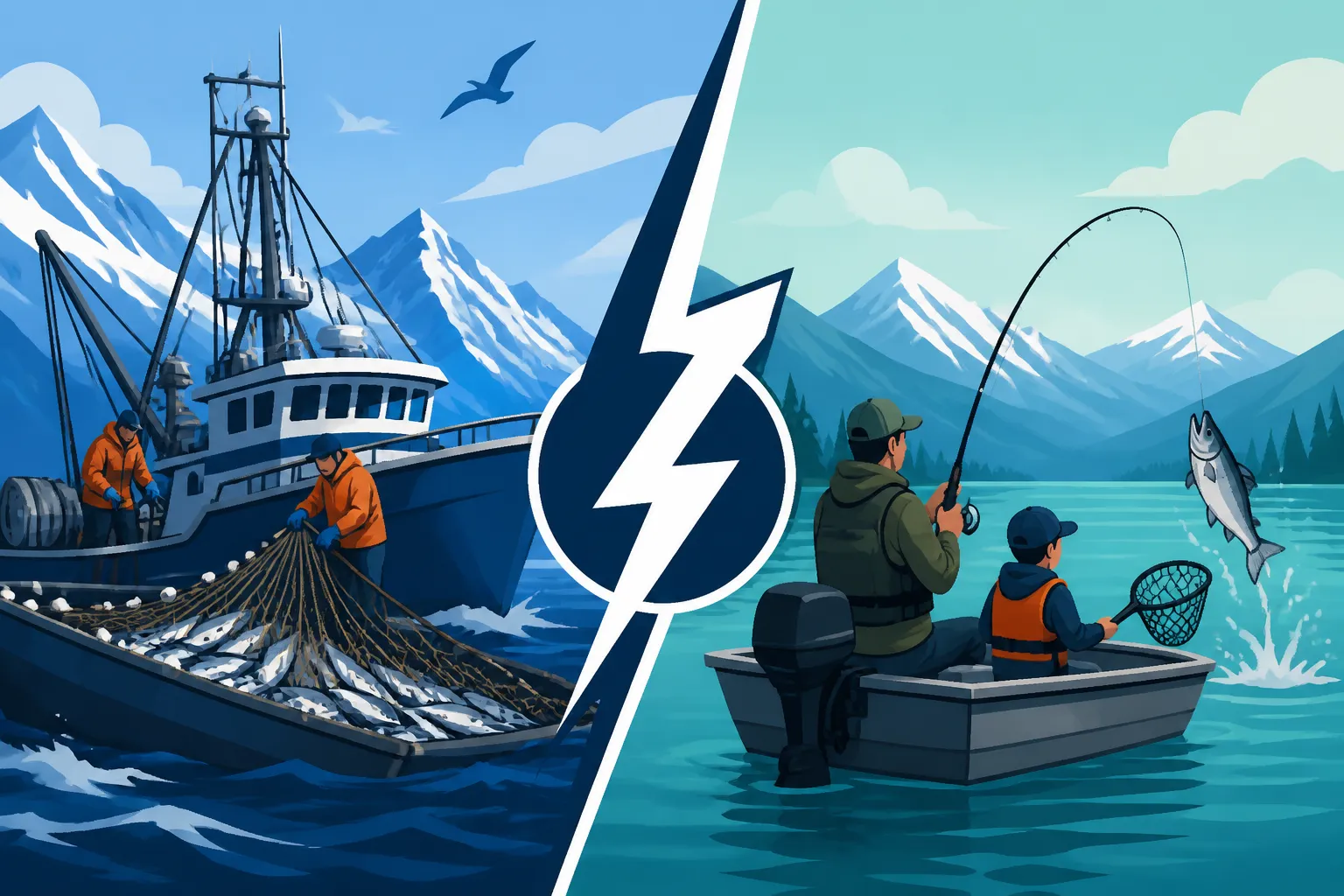
Personal use fishing, conversely, often employs passive or large-scale gear. Dip nets are common, especially in high-density salmon runs. Gillnets, set from shore or boat, are also used in certain designated personal use areas. These methods are chosen for their efficiency in harvesting large numbers of fish, not for the "sport" of it. The regulations on dip net design, gillnet length, mesh size, and even how close nets can be set to each other are extremely detailed and must be followed precisely. Using illegal gear in either fishery can lead to serious consequences, including significant fines and forfeiture of equipment.
Eligibility and Permit Requirements
Getting it right from the start is half the battle when it comes to fishing in Alaska. The requirements for who can fish and what paperwork you need are the first hurdles, and they differ significantly between sport fishing and personal use.
Sport Fishing License Basics
If you're planning a trip to Alaska with the dream of catching a salmon or halibut, you'll almost certainly be involved in sport fishing. The good news is that obtaining an Alaska Fishing License Online is straightforward. For most anglers, this means purchasing a general Alaska Sport Fishing License. For non-residents, these licenses come in various durations: 1-day, 3-day, 7-day, 14-day, and annual options. Residents also have annual options, as well as special considerations for seniors and military personnel. You can find detailed breakdowns of these costs in our guides like Alaska Non-Resident Fishing License Cost and How to Buy or Alaska Resident Fishing License Cost and How to Buy.
Beyond the basic license, there's the King Salmon Stamp. If you plan to fish for king salmon, and you're not a resident under 18 years old, you'll need this additional stamp regardless of whether you’re a resident or non-resident. This stamp is essential for tracking King Salmon harvest, a species that is often under great management scrutiny. It’s important to remember that these licenses and stamps are physical or digital documents you must carry while fishing, ready to present to an Alaska Wildlife Trooper upon request. Failure to do so can result in Alaska Fishing Violations and Fines.
Personal Use Permit Requirements
This is where things get truly distinct. Personal use fisheries are typically limited to Alaska residents who hold a valid Alaska resident sport fishing license. On top of that, you need a specific personal use permit for the particular fishery you intend to participate in. These permits are typically issued by the ADF&G Commercial Fisheries Division, not the Sport Fish Division, underscoring the different management objectives.
For instance, if you want to dipnet for sockeye salmon in the Kenai River's personal use fishery, you'll need to obtain a Kenai River personal use permit. This usually involves an application process, often online, at the beginning of the season. The permit will specify the location, dates, legal gear, and household limits. Similarly, the Chitina personal use fishery requires its own distinct permit. These permits are designed to allocate harvest shares among resident households and ensure that the fish are being taken for personal consumption, not for sale or commercial purposes. It is absolutely critical to check the specific regulations for the personal use fishery you are interested in each year, as rules can change due to run forecasts or in-season management actions. Sometimes, these permits can even be difficult to secure, particularly for popular fisheries, making advanced planning essential.
Harvest Limits and Reporting
Catching fish is only part of the equation; knowing how many you can keep and what you need to report is just as vital. Alaska's rigorous management relies on accurate harvest data, and the rules differ between sport and personal use.
Sport Fishing Bag and Possession Limits
Sport fishing limits are designed to provide a fair opportunity for many anglers to harvest a small portion of the resource, ensuring long-term sustainability. You'll encounter two main types of limits:
- Daily Bag Limit: This is the maximum number of fish of a specific species you can legally keep in a single day. For example, you might have a daily limit of two king salmon in a certain area, or three sockeye salmon in another. Once you've caught your daily limit, you must stop fishing for that species for the remainder of the day in that specific area.
- Possession Limit: This is the maximum number of fish of a specific species you can have in your possession at any given time, regardless of how many days you've been fishing. Often, the possession limit is the same as the daily bag limit, but in some areas, particularly for highly migratory species like salmon, the possession limit might be two or three times the daily limit, allowing anglers to accumulate fish over several days of fishing before traveling home. However, rules like the Alaska Fishing Possession Limits Explained clearly state that once fish are processed and "in transit" (e.g., at an airport fish processor or shipping facility), they typically no longer count towards your possession limit.
For species like King Salmon, there are often annual limits for non-residents, such as the Alaska Nonresident King Salmon Annual Limit Explained, which means a non-resident can only keep a certain number of kings throughout the entire fishing season, regardless of daily limits. This is a critical conservation measure for these highly valued fish. All kept king salmon must be immediately recorded on your Alaska Harvest Record Card Explained.
Personal Use Harvest Quotas and Recording
Personal use fisheries, aimed at bulk harvest for food, operate under different harvest limit structures, often referred to as household quotas. These quotas are typically much larger than sport fishing limits and are designed to provide a significant amount of fish for an entire family's consumption.
For instance, in the Kenai River personal use dipnet fishery, a typical household quota might be 25 sockeye salmon for the permit holder, plus an additional 10 sockeye for each dependent family member in the household. This means a family of four could legally harvest 55 sockeye salmon – a quantity unfathomable in a sport fishing context. These quotas are often tied directly to the personal use permit, and once the quota is filled, fishing must cease for that household in that specific fishery. It's not uncommon to see families using coolers and large totes to transport their substantial catches from these fisheries, ready for processing and freezing.
Reporting in personal use fisheries is also stringent. The permit itself usually serves as the harvest record, and anglers are required to immediately record all harvested fish directly on their permit. Accurate and timely recording is crucial for ADF&G to manage the fishery and ensure sustainable harvests. Failing to record fish, exceeding household quotas, or fishing outside of designated dates and areas can lead to severe penalties, including fines, permit revocation, and even confiscation of gear and catch. Therefore, knowing How to Fill Out an Alaska Harvest Record Card (even if it's your personal use permit) is essential for any participant.
Practical Scenarios: When Does It Matter?
Understanding the distinctions between sport and personal use isn't just academic; it has very real implications for how you plan your fishing trip, what gear you bring, and how you conduct yourself on the water.
Planning Your Alaska Fishing Trip
When you're mapping out your Alaskan adventure, deciding whether you're targeting a sport fishing experience or a personal use harvest will dictate many of your choices.
-
For the Visitor (Non-Resident): If you're coming from out of state, your options are almost exclusively limited to sport fishing. You'll focus on purchasing the correct non-resident license (and King Salmon stamp, if applicable), booking a sport fishing charter if you desire a guided experience, or researching the Best Bank Fishing in Alaska spots you can access on your own. Your gear will be typical rod and reel setups. You'll be looking at guides like Do Charters Include Alaska Fishing Licenses and asking questions like "What to Expect on an Alaska Fishing Charter." Your goal is the thrill of catching fish and enjoying the stunning scenery, perhaps bringing home a few fillets as a memento. You won't be participating in any personal use dipnet or gillnet fisheries, as those are reserved for residents.
-
For the Resident: As an Alaska resident, you have the flexibility to participate in both! You might spend a weekend sport fishing for rainbow trout on the Russian River, then plan a separate trip with your family to the Kenai River personal use dip net fishery when the sockeye are running. This means you'll need both an annual resident sport fishing license and the specific personal use permit for the dipnet fishery. Your gear locker will likely contain both your favorite rod and reel setups for sport fishing and your sturdy dip net and associated processing equipment for personal use. You'll be checking both the green and blue regulation booklets, and probably monitoring the Alaska Emergency Orders Explained frequently. This dual opportunity allows residents to enjoy the recreational aspect of fishing while also securing a valuable food source.
On the Water Enforcement
Alaska Wildlife Troopers patrol the state's waters diligently, ensuring compliance with fishing regulations. They are experts at differentiating between sport and personal use activities, and they will expect you to know and follow the rules applicable to your chosen fishing method.
Imagine you're fishing the Kenai River during a salmon run. If you're on a boat with a rod and reel, you'll be treated as a sport angler, subject to sport fishing limits and gear restrictions. If a Trooper approaches, they'll check your sport fishing license, your King Salmon stamp (if you have one and are targeting kings), and verify your catch. If you are using a dip net from the shore or a designated boat launch, you'll be considered a personal use angler. Troopers will then ask to see your personal use permit, your resident sport fishing license, and inspect your dip net to ensure it meets legal specifications. They'll also verify that your catch is accurately recorded on your permit and that you haven't exceeded your household quota.
The penalties for violating regulations can be steep, ranging from monetary fines to forfeiture of your gear, boat, and even your catch. Ignorance of the law is generally not considered a valid defense. This is why always checking the most current Alaska Fishing Regulations by Region and specific emergency orders before you head out is absolutely crucial. These rules are put in place to protect Alaska's incredible fisheries for everyone, now and in the future.
Disclaimer
The information provided in this guide is for general informational purposes only and does not constitute legal advice. Alaska fishing regulations are complex and subject to frequent changes, especially through emergency orders. Always consult the most current official Alaska Department of Fish and Game (ADF&G) sport fishing and personal use regulation booklets and emergency orders before engaging in any fishing activity.